
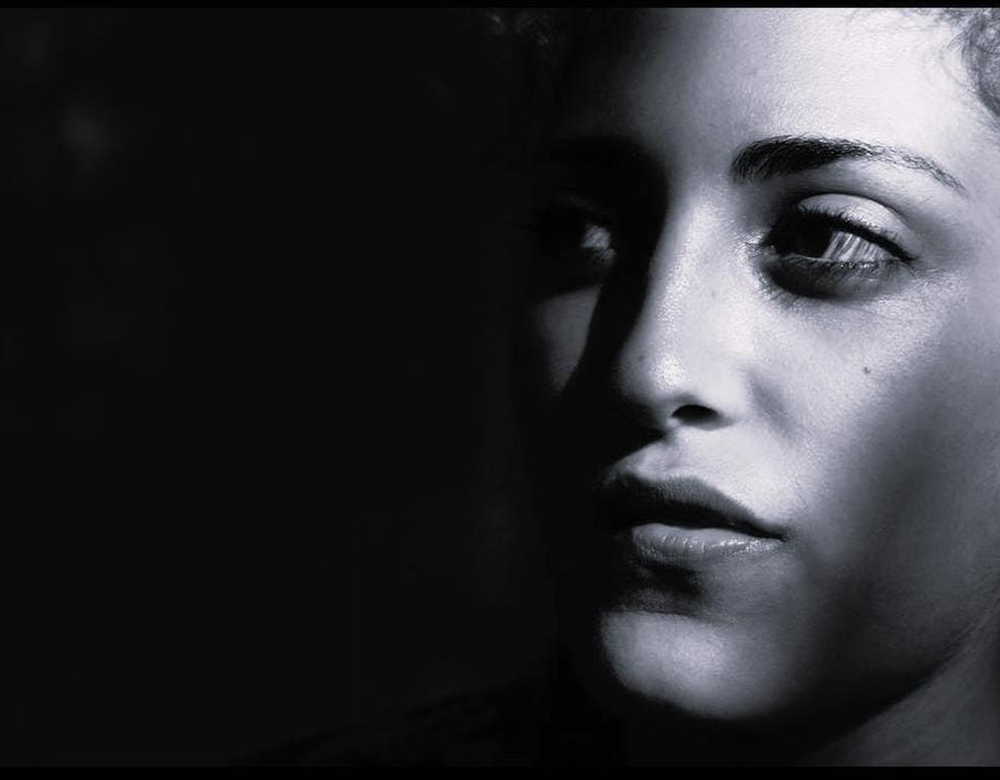
Maria Tabet
Your work often connects vivid, saturated colors with themes of anxiety, mortality, and existential reflection. How did this contrast become central to your visual language?
The themes themselves have remained consistent throughout my practice. What evolved was the way I chose to communicate them: incorporating strong colors into themes of existential weight, felt more digestible. When I began introducing vivid, saturated colors into works dealing with anxiety, mortality, and existential uncertainty, the subjects became more accessible without losing their depth.
We live in a world that is constantly searching for the next distraction, the next image that captures attention and offers momentary escape from difficult realities that have been normalized. In that context, using bold color felt entirely appropriate. It mirrors the way contemporary life packages even the heaviest experiences in visually appealing forms.
At the same time, bright colors allow me to express the contradictions of beauty and despair which rarely exist separately; they often occupy the same space. The vibrant palette draws viewers in, while the underlying themes ask them to confront something more uncomfortable. That tension between attraction and unease has become central to my visual language.
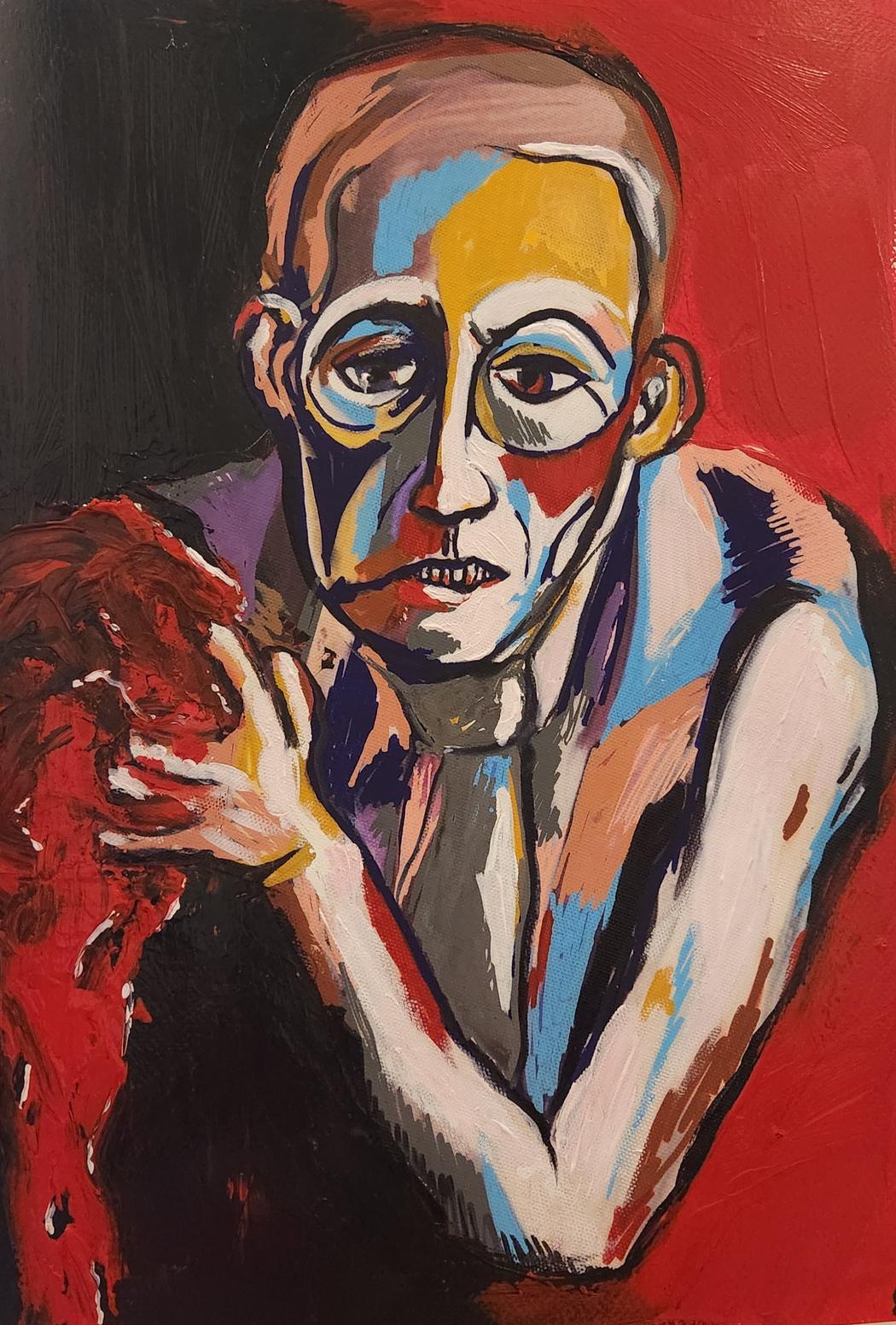 Maria Tabet | Beasts | 2026
You describe Lebanon as an unstable homeland that shaped your awareness of mortality from a young age. How does this personal and cultural background enter your paintings?
Lebanon is where many of these anxieties, questions, and emotional sensitivities were first planted, watered, and nurtured. It is a country of extraordinary beauty, yet it carries immense historical and psychological weight: through its past, its present condition, its people, its neighbors, and the ways it is perceived by the world. My work reflects the complex coexistence of beauty and sorrow that comes with loving a place like Lebanon. At the same time, it engages with the absurdity of global politics and the external forces that have contributed to cycles of instability and despair in my country much like other places. The paintings emerge from this tension of affection and grief, attachment and disillusionment.
Many of your figures appear fragmented, distorted, or emotionally tense. What does the human body represent in your work?
The human body functions as a vessel for raw emotional and psychological experience. It is the site where anxiety, consciousness, vulnerability, and mortality become visible. By fragmenting these figures, exposing, and distorting them, I explore states of emotional unease and existential dislocation. These bodies exist between presence and absence, familiarity and estrangement, reflecting the instability and the fragility of the human condition.
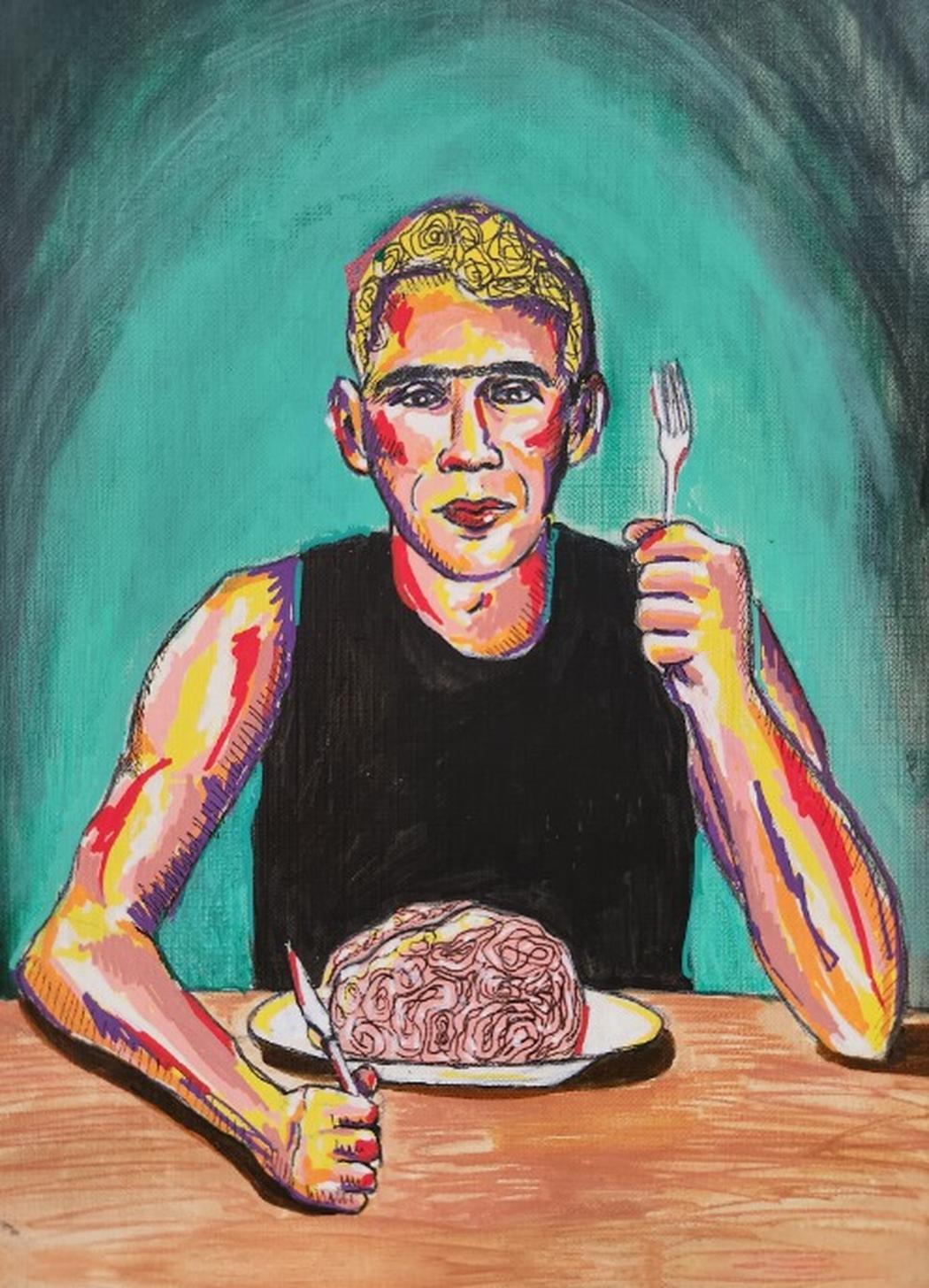 Maria Tabet | Breakfast | 2023
Food, dining tables, and domestic rituals appear in several of your works. Why are these everyday scenes important for exploring deeper existential questions?
As someone who experiences intense anxiety, I am fascinated by the way people move through daily life while carrying the knowledge of mortality. We cannot function if we constantly dwell on our inevitable end, yet there is something so profoundly absurd about performing ordinary rituals as though existence were entirely self-explanatory. The elements also represent the unfairness in many parts of the world, where awareness of mortality arrives so early and becomes woven into everyday life- just as naturally as dinner plans, grocery shopping, or taking a shower. Heavy realities normalized and ignored, mainly to not cause unease for the majority.
Domestic scenes allow me to explore this paradox of the coexistence of mundane routine and the existential uncertainty. And allow the viewer to face a familiar scene that is meant to make them consider their reality.
Your paintings can feel both visually seductive and psychologically uncomfortable. How do you balance attraction and disturbance in your compositions?
When I feel overwhelmed or psychologically triggered, my instinct is to translate that experience into a visual form. Once an emotion becomes an image, it shifts from something I am immersed in to something I can examine objectively. It becomes a study: how should it be represented, what colors best communicate it, what compositional structures support it? This process creates a certain distance that allows me to approach difficult emotions and heavy thoughts with clarity while preserving their intensity. The visual beauty invites the viewer in, while the underlying tension encourages them to stay and confront what lies beneath.
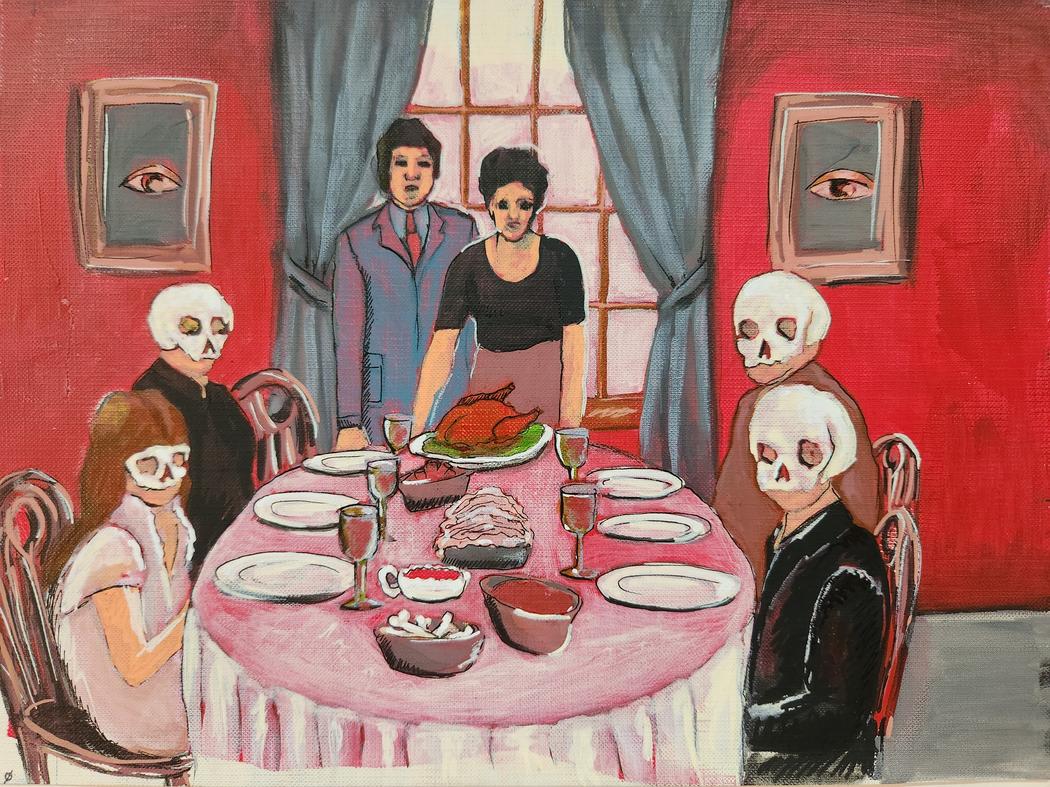 Maria Tabet | Dining Etiquette | 2023
As an artist pursuing a PhD, how does research influence your painting process? Do theory and practice develop together for you?
For me, painting and research are inseparable. Theory does not sit alongside practice because it generates it. The deeper I engage with philosophy, psychology, history, and other fields of inquiry, the richer my visual language becomes. Research has always been driven by genuine curiosity and fascination, but theoretical exploration offers frameworks that can be translated into visual forms and representations. Paintings grounded in philosophical inquiry feel especially rewarding because they allow complex ideas to be experienced emotionally as well as intellectually.
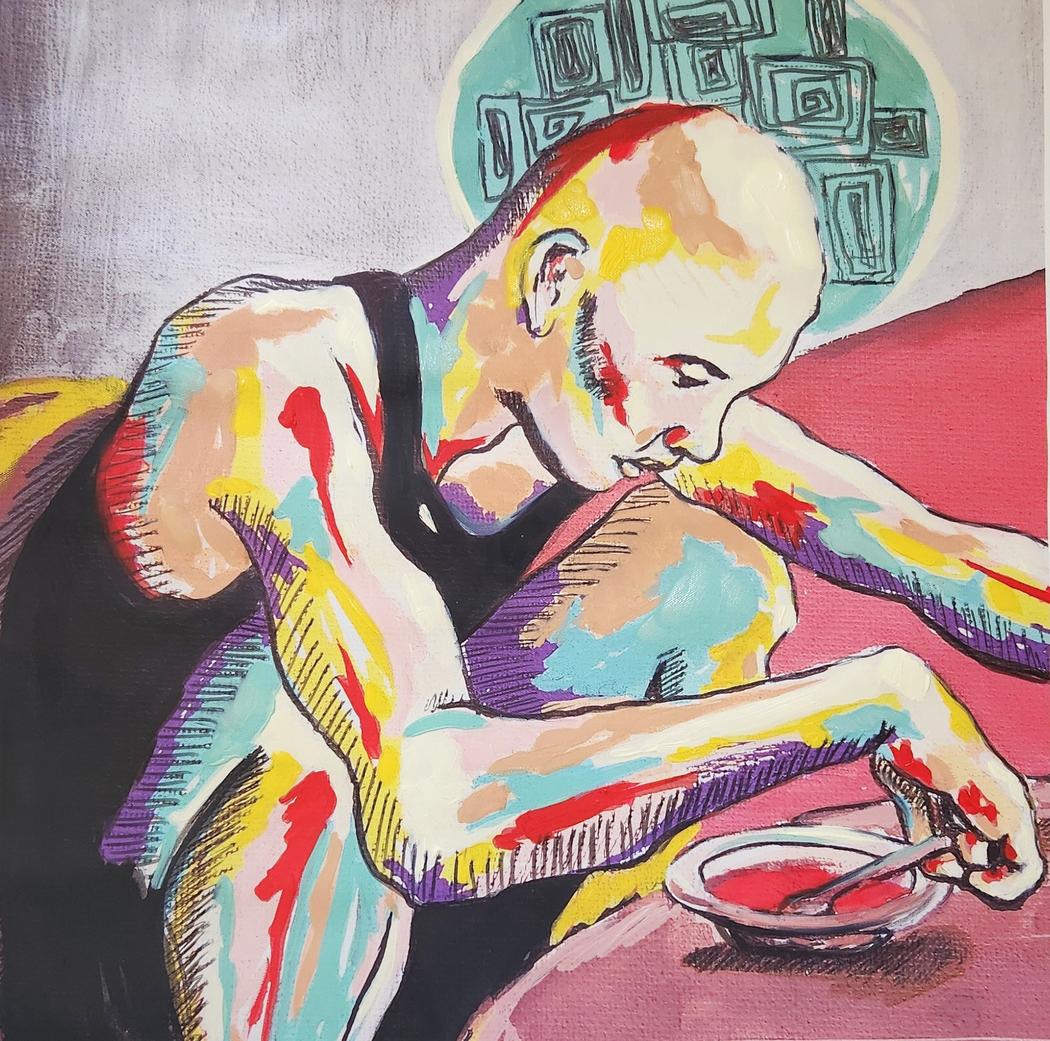 Maria Tabet | Evening Dinner | 2023
What do you hope viewers experience after the first visual attraction of bright colors fades and the darker emotional layers of the work begin to appear?
People often describe the work as sad and express a preference for more optimistic imagery. Yet, for me, this is not a sad place, it is simply an honest one. The bright colors remain, familiar objects remain, and the compositions continue to operate through visual harmony, but they coexist with deeper truths that are impossible to ignore. With raw feelings that are barely confronted because it is just not convenient. I hope viewers connect with the fear, curiosity, vulnerability, and frustration that shape our shared human experience. More than anything, I hope the work offers a space where difficult emotions can be acknowledged rather than avoided and embellished.
Leave a Reply
You must be logged in to post a comment.