
Alison Toft Davies
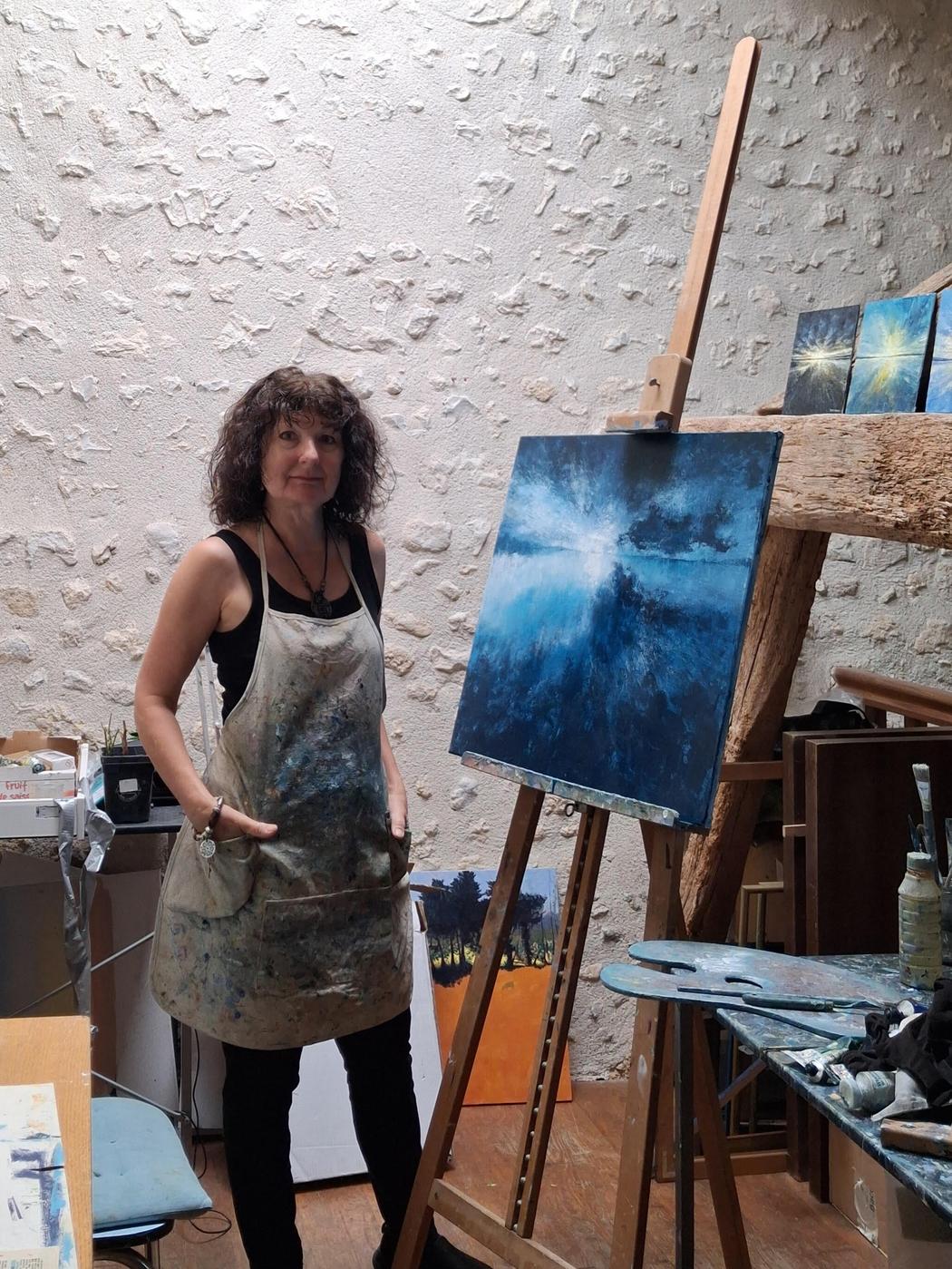
Your ‘Estuaire Abstrait’ series is inspired by the estuaries of South West France. What first drew you to these landscapes and their atmosphere?
The skies of SW France – where I live for half of the year – gives me an endless source of different atmospheric effects at twilight and dawn. I’m particularly fascinated at the moment with evening light & reflections on broad expanses of wet estuary sand. This environment is so powerful for mood which I like to link to emotions; melancholy, a sense of hope or anticipation for example.
Light seems to play a central role in these works, especially the light of early morning and twilight. How do these moments of transition influence your painting process?
I have to keep focusing on achieving a sense of freshness by not overworking the paint, so I favour a palette knife using brief strokes or a large plastic spreading tool. I also find using glazes with either linseed oil (if there’s no rush for the surface to dry) or liquin, which reduces the drying time. I’ve learnt from the great masters like Vermeer and Rembrandt. They used glazing to create luminosity and express light by applying thin, transparent layers of colour mixed with linseed oil over a dry underpainting. It allows underlying colours to show through, creating a glowing, rich depth that makes colours appear to glow from within and gives a sense of luminosity.
Often I start the work in acrylic paint, laying down the lights and darks, then oil paint can be worked over this – which again reduces the chance of overworking. A feel of transience and even better, ethereality, is always a goal. And beauty, if I can reflect the beauty of the natural world whilst express inner feelings I am satisfied.
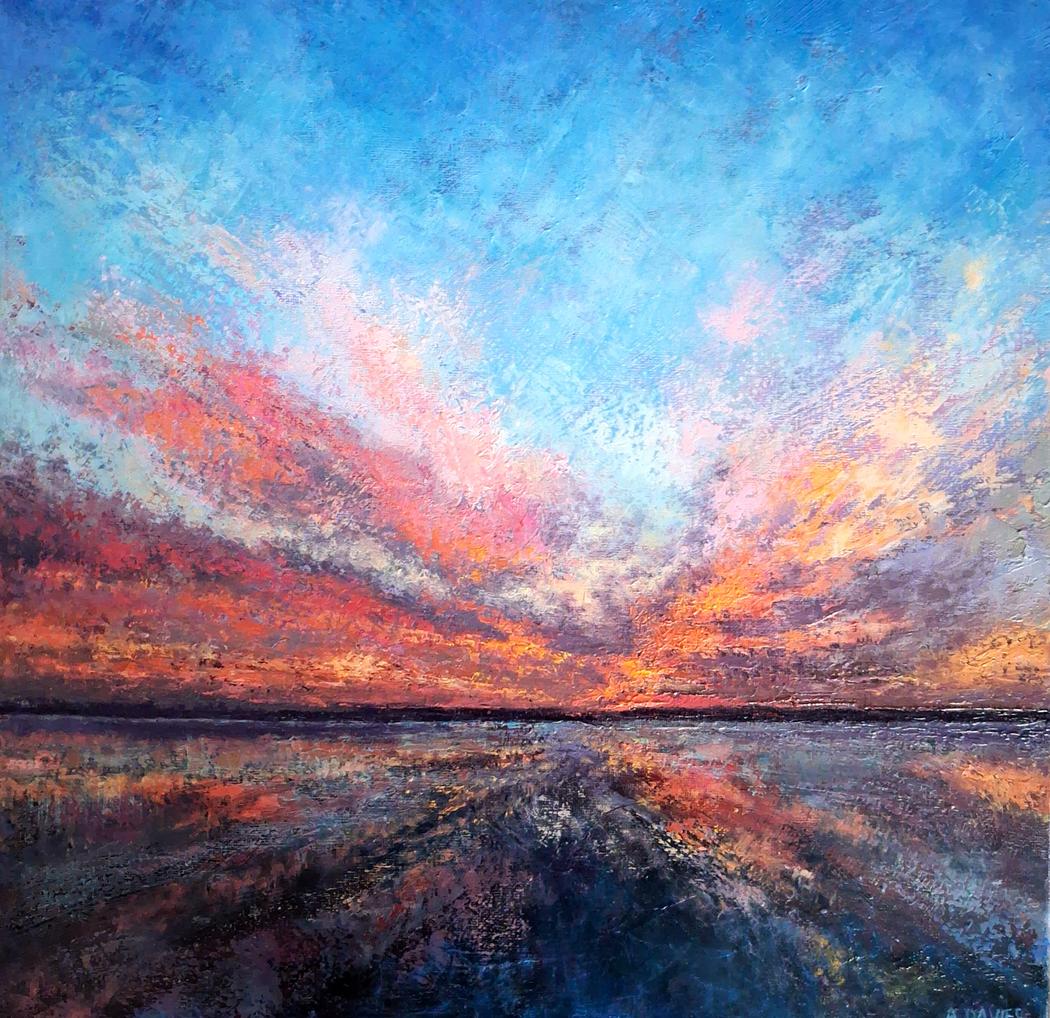 Alison Toft Davies | What Fades Stays | 2025
The series explores the idea of traces left behind as day and night pass. What kinds of “traces” are most important to you – emotional, physical, visual, or symbolic?
They are all important in that there is always more in painting than just a representation of the physical world, for me there should always be a connotation of something other.
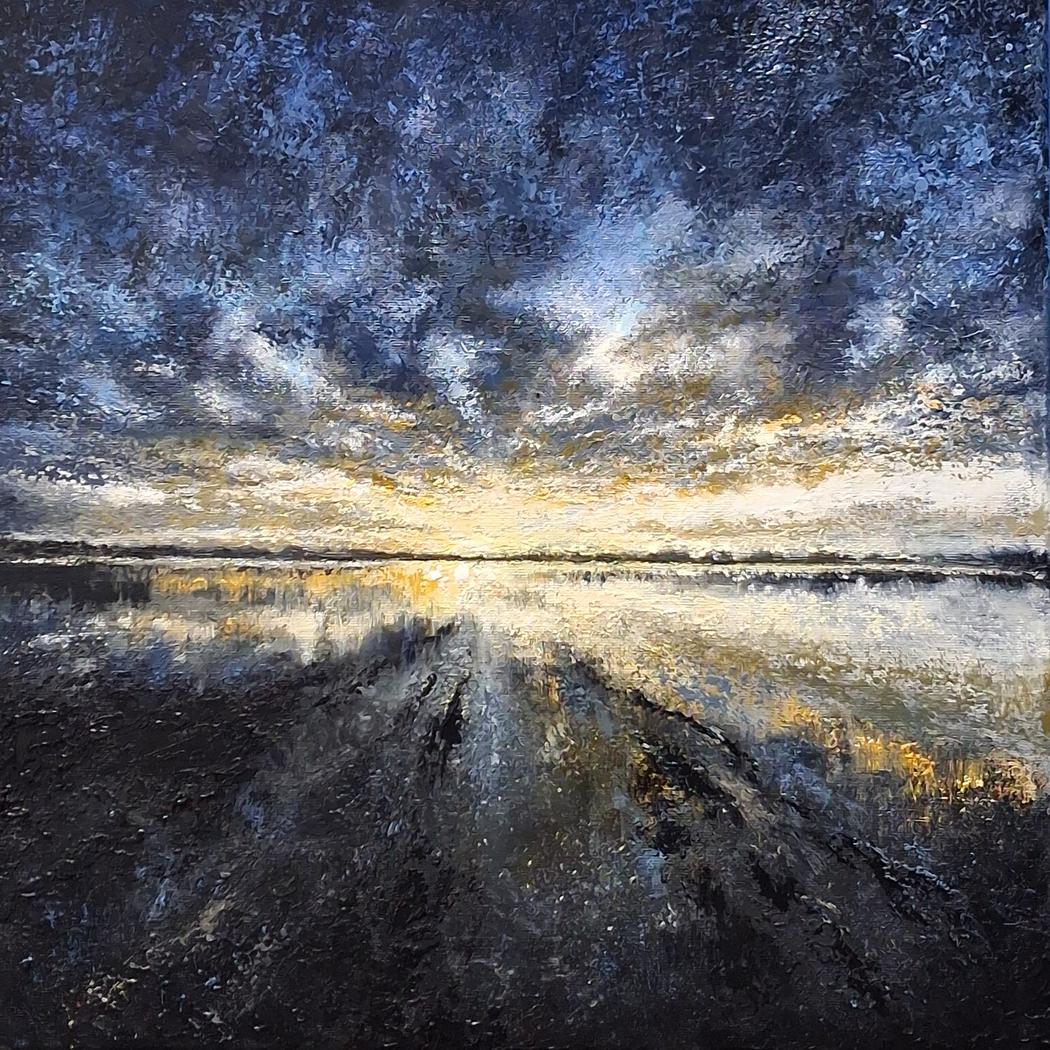 Alison Toft Davies | Night Falls | 2025
Your paintings balance abstraction with a strong sense of place. How do you decide how much of the landscape to reveal and how much to dissolve into abstraction?
There is currently less and less ‘real’ landscape and greater abstraction, which I regard as progress. One of the greatest painters of the abstract, Piet Mondrian, aimed to go ‘always further’, which is highly liberating for the artist. And yet, the sense of place is at the root. The place need not be a real place in the geographical sense, for me the place can be a state of mind or concept e.g. ‘Lost Horizon’ could be the loss of the physical and a journey towards the unconscious (rather than just literally a lost horizon between the sea and sky).
I try to equate landscape with mood and feeling, so it’s not just representational but emotional. JMW Turner and Charles Daubigny are great leaders for this. Even if your work is quite abstract I really believe more ‘traditional’ artists can fire up ideas and be a driving force in your own interpretations of similar themes.
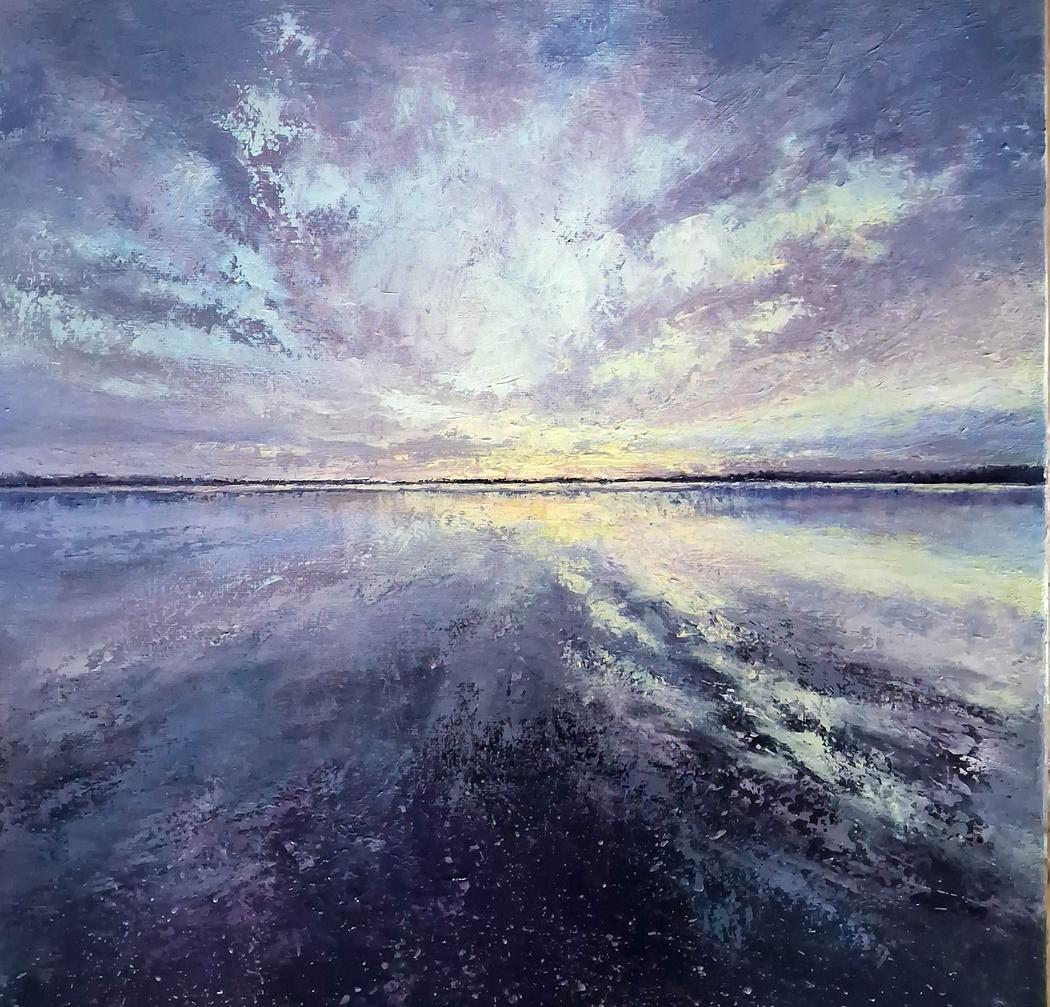 Alison Toft Davies | Dawn Treads A Path | 2025
Texture is very present in your paintings. How do you build the surface of the canvas, and what role does texture play in expressing memory and transience?
Texture is intrinsic to the idea of traces: My practice is often to build subtle textural layers with a palette knife & a minimum of brush work. Previous layers of textures become traces upon which to work. I like the idea of physical technique linking to the psychological aspect of traces. This could be a memory or just the idea of what has been before. For example recalling the incredible colours of an evening summer sky in the middle of a bleak winter ( ‘What Fades Stays’ ) or how morning light reveals nature and indeed ourselves in a raw state – as we really are – before the day takes over (‘Dawn Treads a Path’).
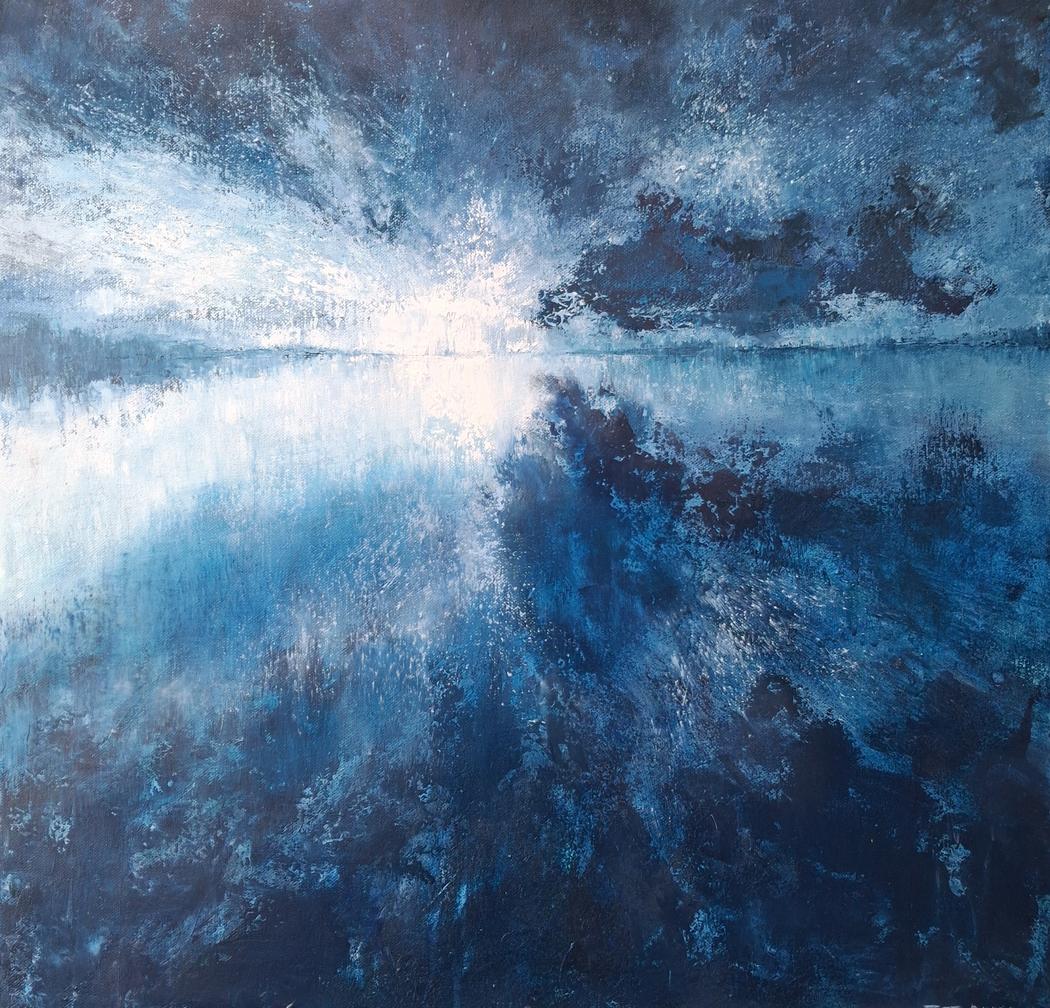
Your works reflect the human desire to hold onto moments, while nature itself is constantly changing. How do you explore this tension through colour, light, and composition?
I think in a way artists need massive egos to be able to indulge so single-mindedly into their practice, whilst simultaneously we understand our insignificance in the face of nature and infinity. So I try to grasp moments in time knowing this and this is enough.
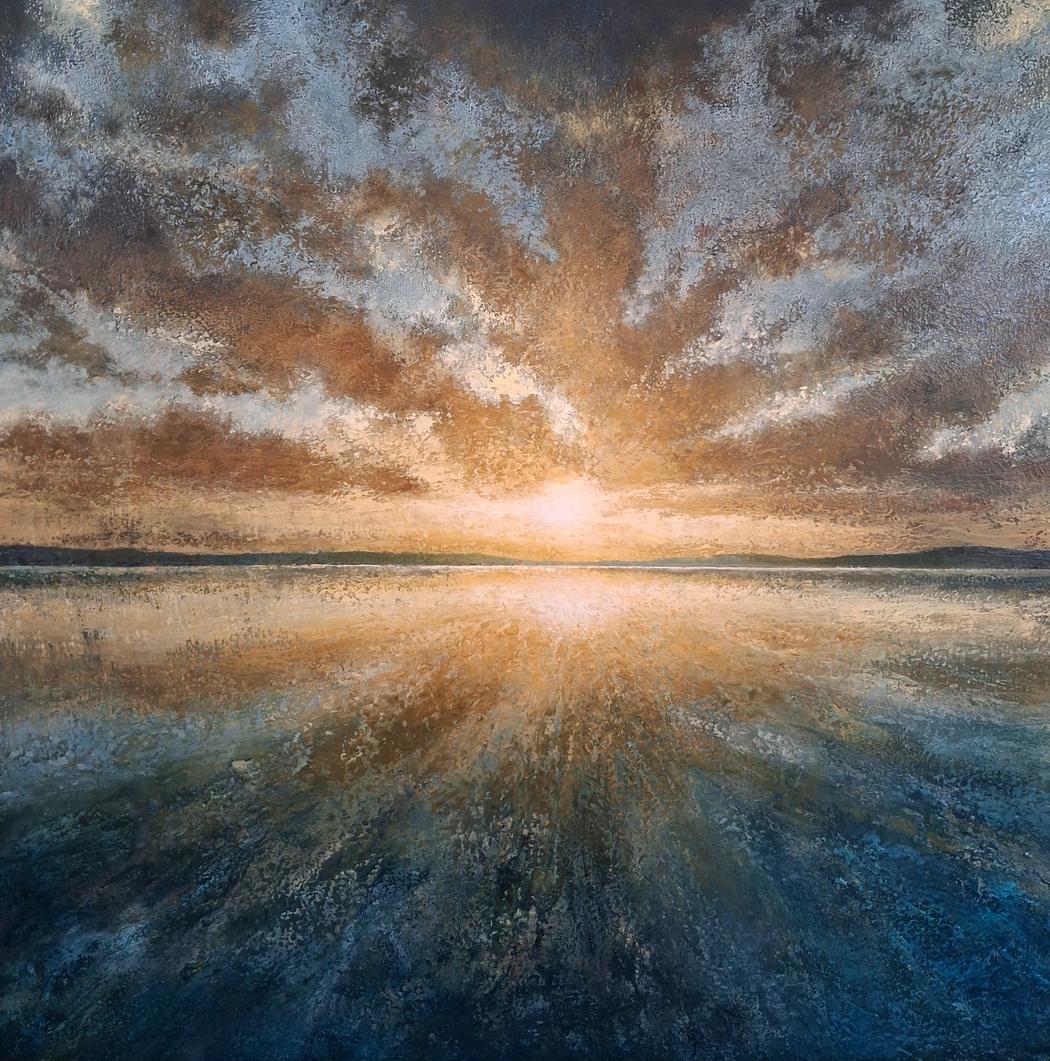
What does becoming a full-time artist mean to you now, after many years of artistic, educational, and community-based practice?
I knew it was going to be important but could not have imagined how much so. Painting is something I live and breathe. It’s also interesting how much tutoring and encouraging young people to succeed artistically prepared me to fully indulge myself in a personal journey as a painter.

Leave a Reply
You must be logged in to post a comment.