
Anika Reichert
Your work explores the influence of formal and informal social structures – how do these concepts first translate into a visual starting point on the canvas?
My work begins with a conceptual framework that translates directly into a visual structure on the canvas. I define three core elements from the start: an open white space as a field of action, a colored area representing the individual and its emotional state, and black lines that stand for formal and informal social structures.
Within this framework, the process remains intuitive. I build the colored form through layers, partially covering and extending it until it reaches a state that feels right. The lines are introduced later, when I consider how these structures interact with the individual in that specific moment and how both influence and shape each other.
In the series Pressure Marks, the central piece (Pressure Marks II – Exposed) was the starting point. It represents a moment in which the individual becomes aware of these structures, begins to resist them, and claims its own space. The conflict becomes visible, both sides asserting their presence.
From this state, I developed the other works in the series. I wondered what comes before this moment of confrontation and what follows after it. These states were then translated into visual form.
While the work is conceptually grounded, it is also connected to lived experience. Pressure from external and internal expectations is something many people recognize. At a certain point, it can become restrictive or even oppressive. What interests me is the moment of awareness within that pressure and the process of finding a way out of it.
In your Pressure Marks series, tension seems central. How do you recognize when a composition holds enough tension without resolving it?
Tension is something I recognize intuitively. There is no fixed point at which it is achieved. It is more a sense of balance that either holds or collapses.
Sometimes I push a composition too far, for example by adding too many structural lines. In those moments, I begin to work against that excess, often by covering parts of it with white until the image regains a sense of tension that feels right.
Each painting develops over a longer period of time. I take breaks, return to the work, observe it and make adjustments. This process of distancing and re-entering is essential for recognizing when the composition still holds tension without resolving it.
It is also important to me that the works within a series remain in dialogue with each other. I often look at them together and make further changes, adding or reducing elements until the overall balance of the series feels coherent.
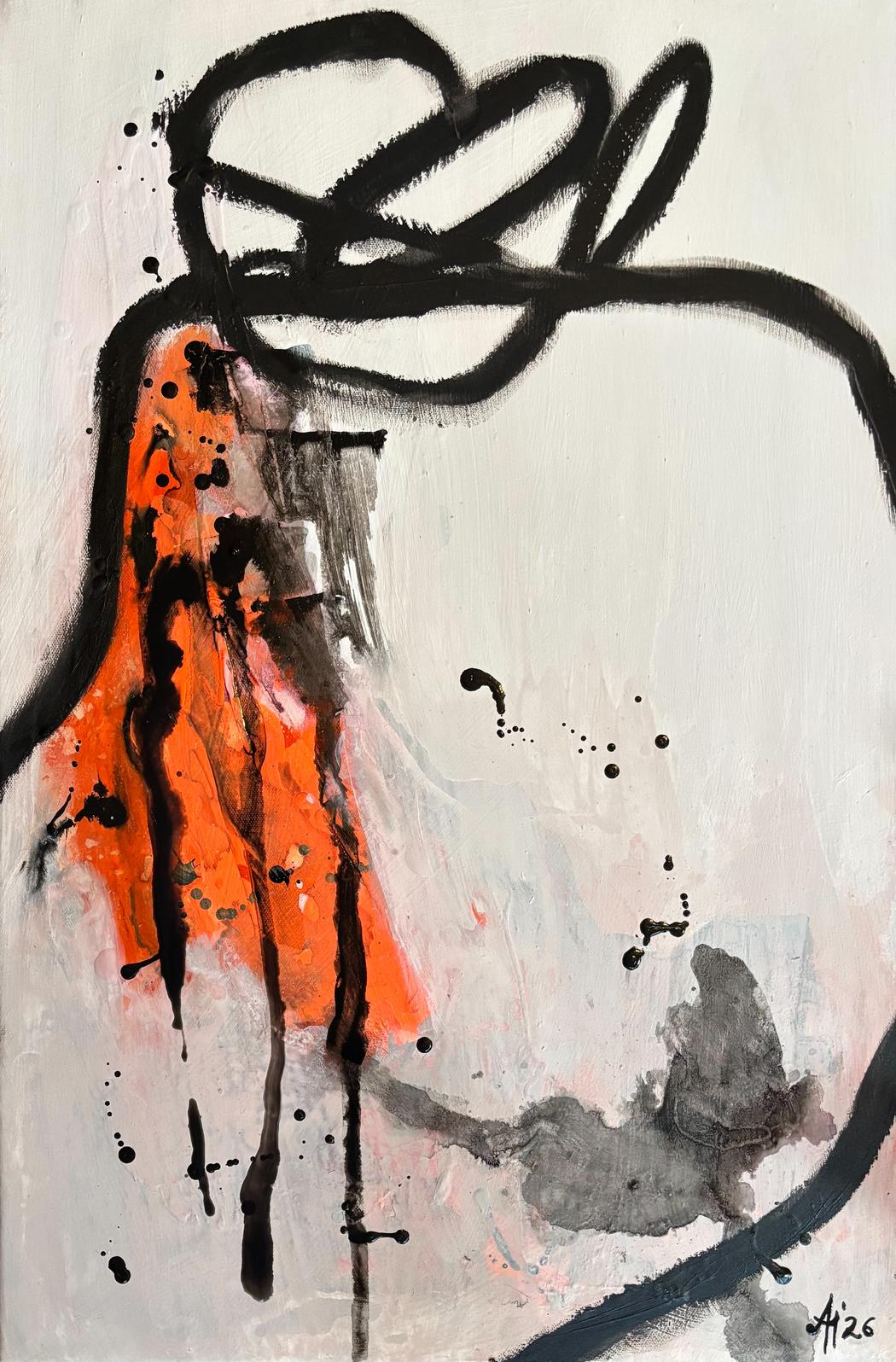 Anika Reichert | Pressure Marks I – Entangled | 2026
Your use of line feels both structural and disruptive – how do you approach the balance between control and spontaneity in these elements?
I approach line as both a controlled and intuitive element. Some lines are placed deliberately. These tend to be more structured and can be read as formal structures.
Other lines, especially the more fluid and curved ones, emerge intuitively. In these moments, I allow my hand to move more freely without fully controlling the outcome. These lines can be understood as informal structures.
Formal structures refer to defined and often codified frameworks such as laws or institutional rules. Informal ones are more flexible and less visible, emerging through relationships, unspoken expectations or emotional dynamics within a group.
The balance between control and spontaneity reflects the relationship between these two types. One imposes order, the other moves more freely, yet both shape the space of the individual at the same time.
The concentrated color zones suggest a kind of inner presence – can you describe how you develop these areas during your process?
The colored areas are developed intuitively. They emerge through a process of layering, covering and extending the surface until a certain presence becomes visible.
I work with glazes and partial overpainting, allowing the form to shift and condense over time. Rather than defining it in advance, I respond to what is already there and adjust it until it feels internally coherent. Color itself carries meaning. In the Pressure Marks series, the orange area suggests a state of alertness or tension within the individual.
At the same time, these areas are not fixed representations, but states that build up gradually through the process. The color and form may also reflect something of my own condition while painting.
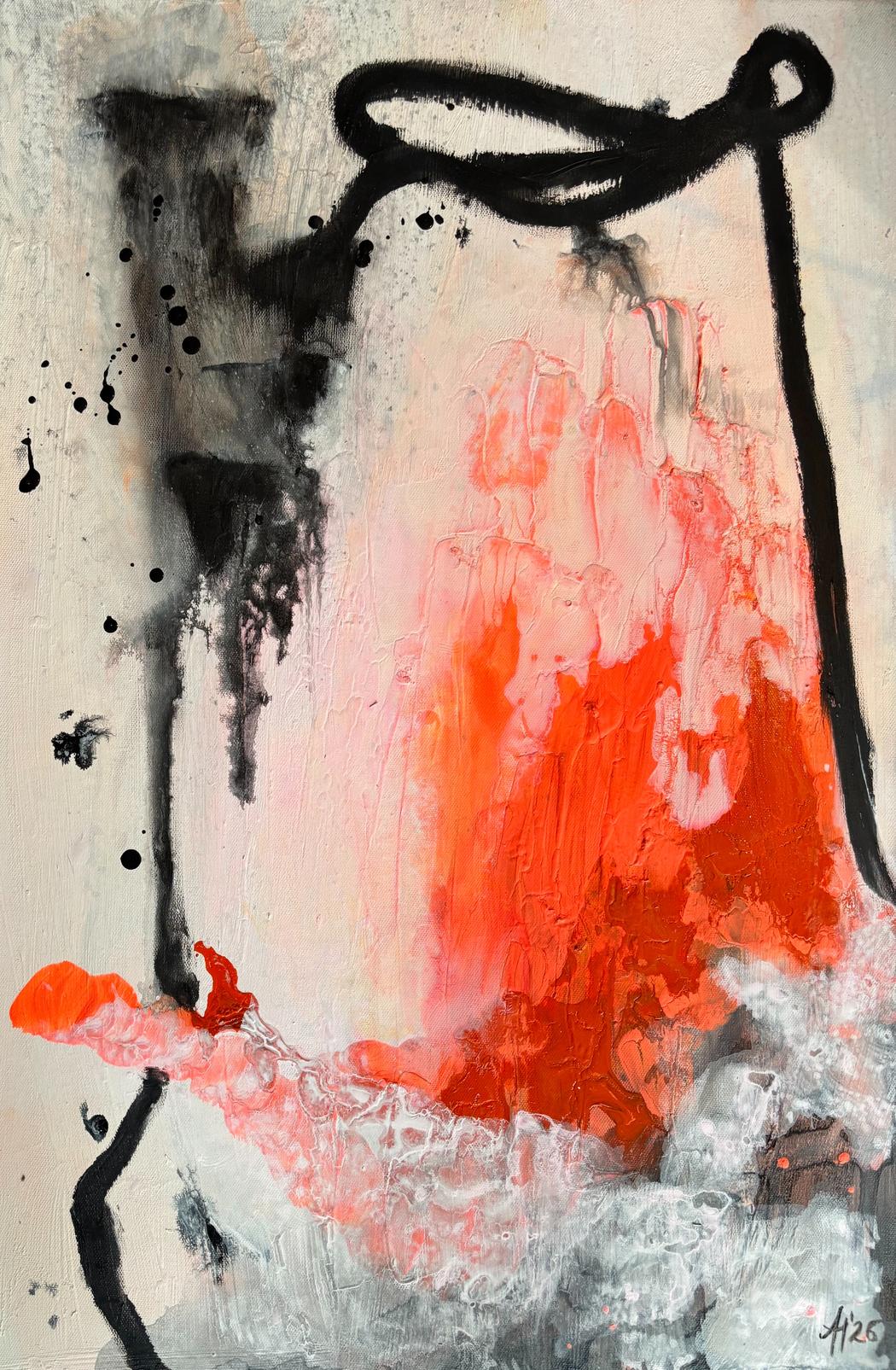 Anika Reichert | Pressure Marks II – Exposed | 2026
How does your background in sociology continue to shape your artistic decisions today?
My background in sociology allows me to reflect on experiences and place them within a broader theoretical context. This understanding shapes how I translate them into a visual language.
Rather than illustrating specific situations, I am interested in underlying structures and dynamics, and how they become visible through form, space and interaction within the image.
You mention that you are not illustrating emotion but translating it – what does that translation process look like in practice?
I don’t approach emotion as something to be illustrated directly. Instead, I begin by situating it within an experience and then reflecting on it in a broader theoretical context.
From there, the translation happens through my visual language. The emotional state becomes a colored form, while structures appear as lines that interact with it. Rather than depicting a specific feeling, I am interested in how it takes shape within a system and how it becomes visible through relationships within the image.
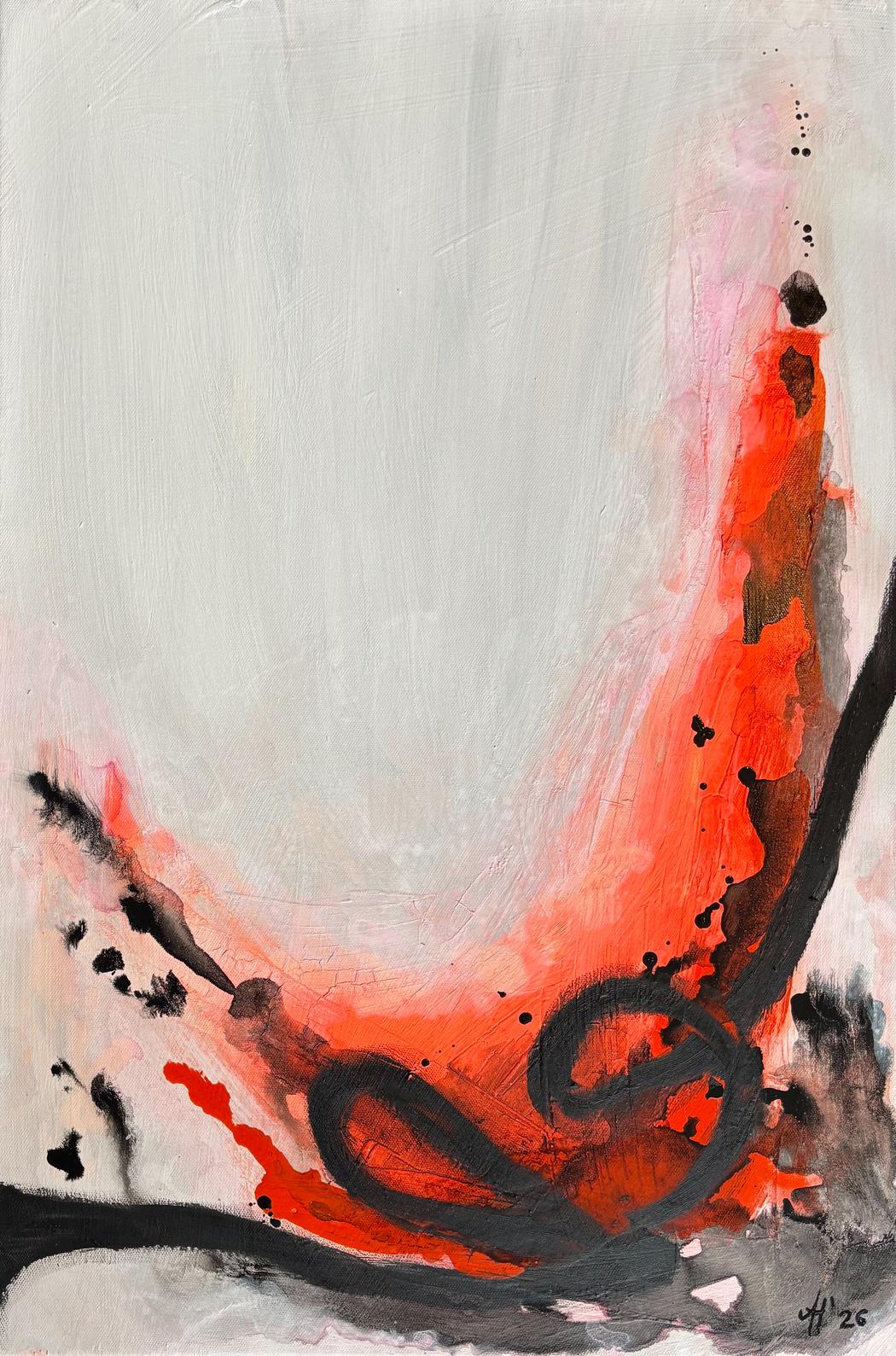 Anika Reichert | Pressure Marks III – Redirected | 2026
Do you see your works as reflections of specific social conditions, or as more universal psychological states?
I don’t draw a strict line between the two. My work focuses on the individual and its relation to surrounding structures, which connects to sociological ways of thinking on a more intimate level. At the same time, I often begin with a personal experience that includes emotional states. These experiences are then reflected on and placed within a broader theoretical context.
In that sense, the works move between specific social conditions and more universal psychological states. They are not meant to separate these dimensions, but to show how they are intertwined.
Leave a Reply
You must be logged in to post a comment.