
Danika Adams
Your work speaks about capturing “the gold of the present”. How do you personally define this “gold”, and how do you recognize it in a moment?
My definition of gold is subjective. One person’s gold-precious moments, memories, pieces of themselves- may not be another’s, which makes “gold” personal.
My work is unique to myself and to anyone I mold and cast. I like to think each piece has a “gold “signature, which is the narrative and emotion behind the physical art.. I feel the gold is something beneath the skin, beyond the sculpture, within the soul if the piece. The gold is the story that makes it art, not the material.
I don’t always realize it at the time; sometimes I just start shaping, and it’s what I feel in that moment, the closure or peace I need. My torment, insecurity, love, depression, pain, joy, and philosophies inject themselves into the veins of my work and morph into a shape with emotion and voice.
Lifecasting preserves the human body with striking realism. What draws you to this technique as a primary medium?
Lifecasting has a double meaning to me:
First, the obvious process of casting parts and freezing them in time is beautiful, physically.
Frost said, “Nothing gold can stay.” But with this, it can.
More importantly, lifecasting is a metaphor or a symbol of the gold or the ray of light behind each piece casting and pulsing through the surface, giving it a heartbeat, a life.
The realism lies in both the physical surface and also in the story of why it was chosen to become art.
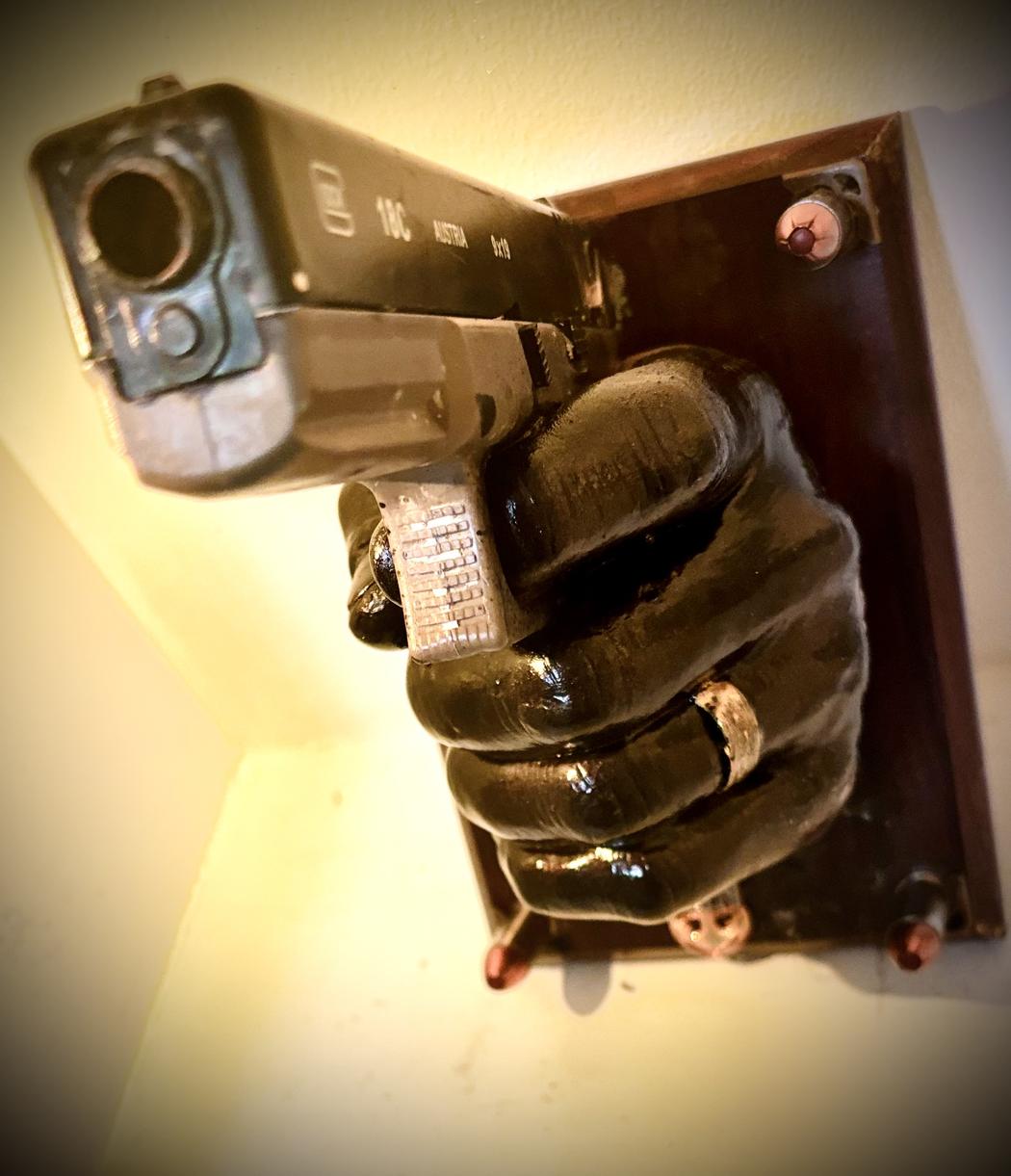
I started molding and casting the human body when I learned one of my dearest friends had breast cancer and opted for a double mastectomy. I offered to mold her chest so that she could keep that part of her in some form. It was painted gold because she cherished this part of her femininity and had a valuable story to share. She convinced me to dive into this type of art, and so I did.
Many of your works isolate fragments of the body rather than presenting it as a whole. What does fragmentation mean in your artistic language?
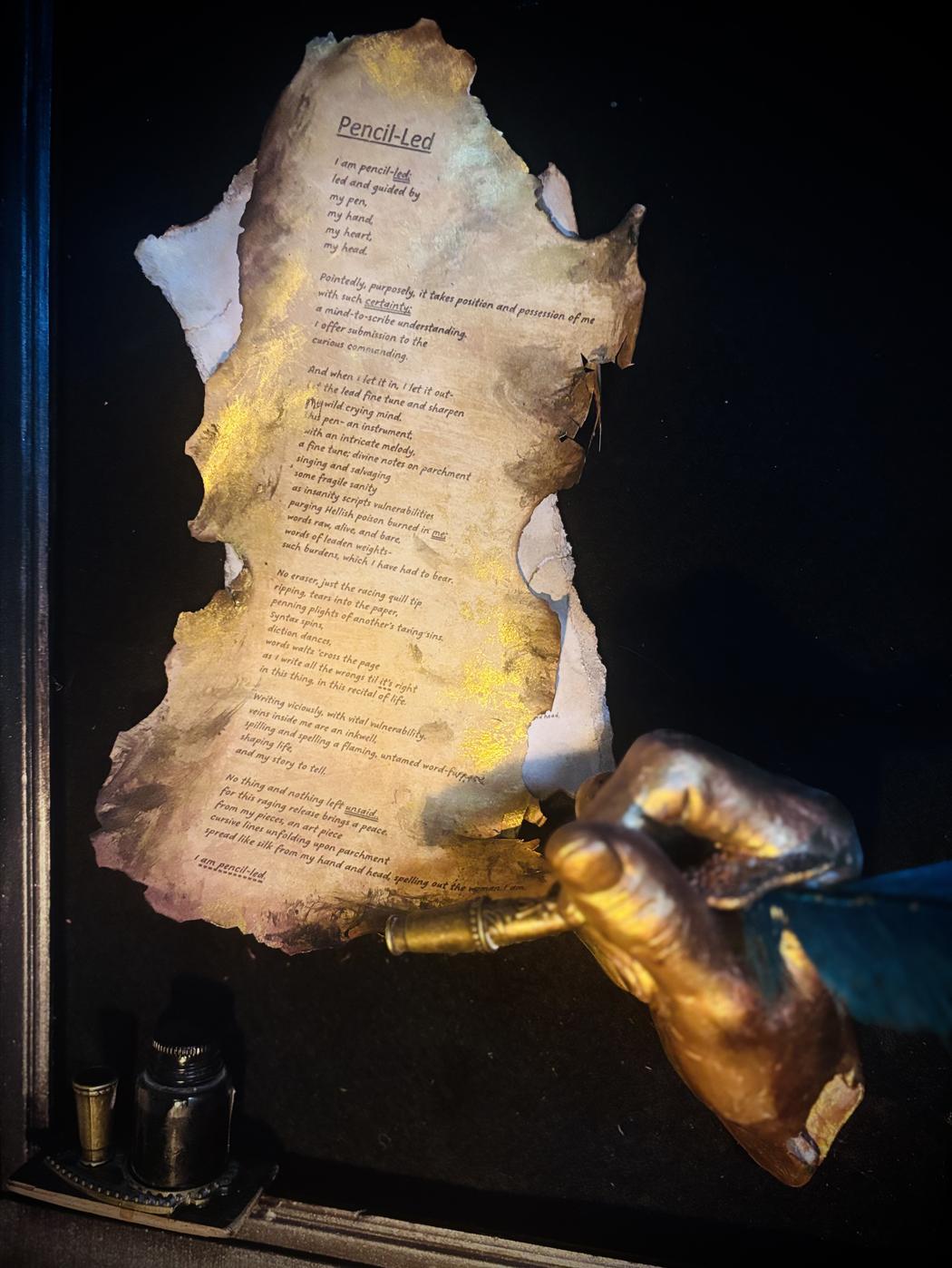
The word esemplastic comes to mind when I think of the language and the marriage of my art and poetry. The word is defined as “the ability to shape diverse elements, ideas, or concepts into a unified whole; a powerful unifying imagination or creative vision that harmonizes disparate parts.”
I appreciate that the word isolate was chosen for this question because that is part of how I had felt for years and, as a writer and artist, still do sometimes. I was once completely shattered, but not broken (if that makes sense). I had to work very hard to find and put myself back together after a few traumatizing events Life had thrown at me. I always leaned on writing to survive mentally. Sketching,, drawing, or painting were never my strong suits,, unlike my mother and brother (their discipline and talents are incredible). When I recently discovered this medium, I connected with it as it is a creative avenue in which I can visually express the emotions and stories I need to voice.
I began experimenting on my own body parts in the art studio my husband built for me in between writing poetry and a novel. This developed into taking these pieces of myself and combining them with the tornado of words that spin inside my mind. I created this bizarre thematic collection, a marriage of my words and sculptures, which shares a story of being shattered and feeling puzzled with the “why” something can break you and the “how” to pick up pieces of yourself then become whole again. I discovered a warped beauty and a humble pride in the fragmenting, isolation, and “re-piecing” of oneself. I appreciate the symbolism in the art:. You can display yourself anyway you want knowing every piece of a person holds a valuable truth and a strength we sometimes don’t realize.
You combine sculpture with text, poetry, and narrative. Which comes first in your process – the image or the words?
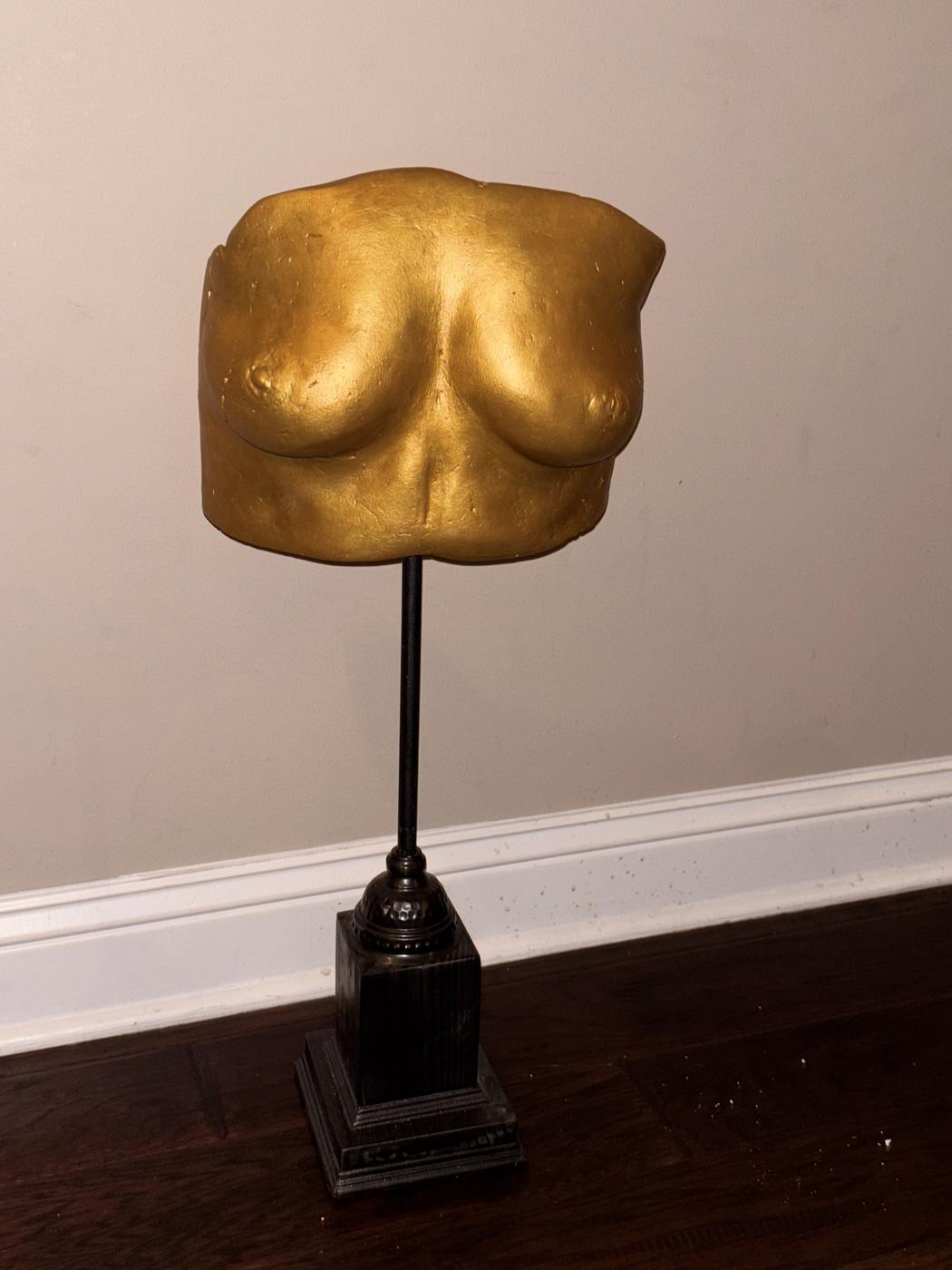
Oddly enough, neither the words nor the visuals come first. I think the art is the result of static web of emotions I carry that merge the narrative and the poetry and the visuals simultaneously.
Your pieces often feel both intimate and confrontational. How do you balance vulnerability and tension in your work?
Thank you- I am humbled for this to be noted in my work. I always found these two elements the pulse of art, for it is not art without a message and a reaction to it.
Ironically, Accidentally and naturally is my answer.
The intimacy is unquestionably a product of my emotions. Vulnerability is frightening, but it is also beautiful. There is a respect in sharing the “ugly” and exposing weakness and flaws, especially to the world. But there is value for the artist to expose this and for the audience to understand or relate to it.
I think any confrontation reflected in art or literature is in the eye of the beholder. My philosophies and perspectives unravel as I createI , and I would not expect everyone to agree or understand. But making a statement through art that has a voice, emphasizes a message, and sparks emotion fosters critical thinking. As teacher, mother, and artist, I find this to be of great value as well. .
Art is not art, in my opinion, without some confrontation or intimacy.
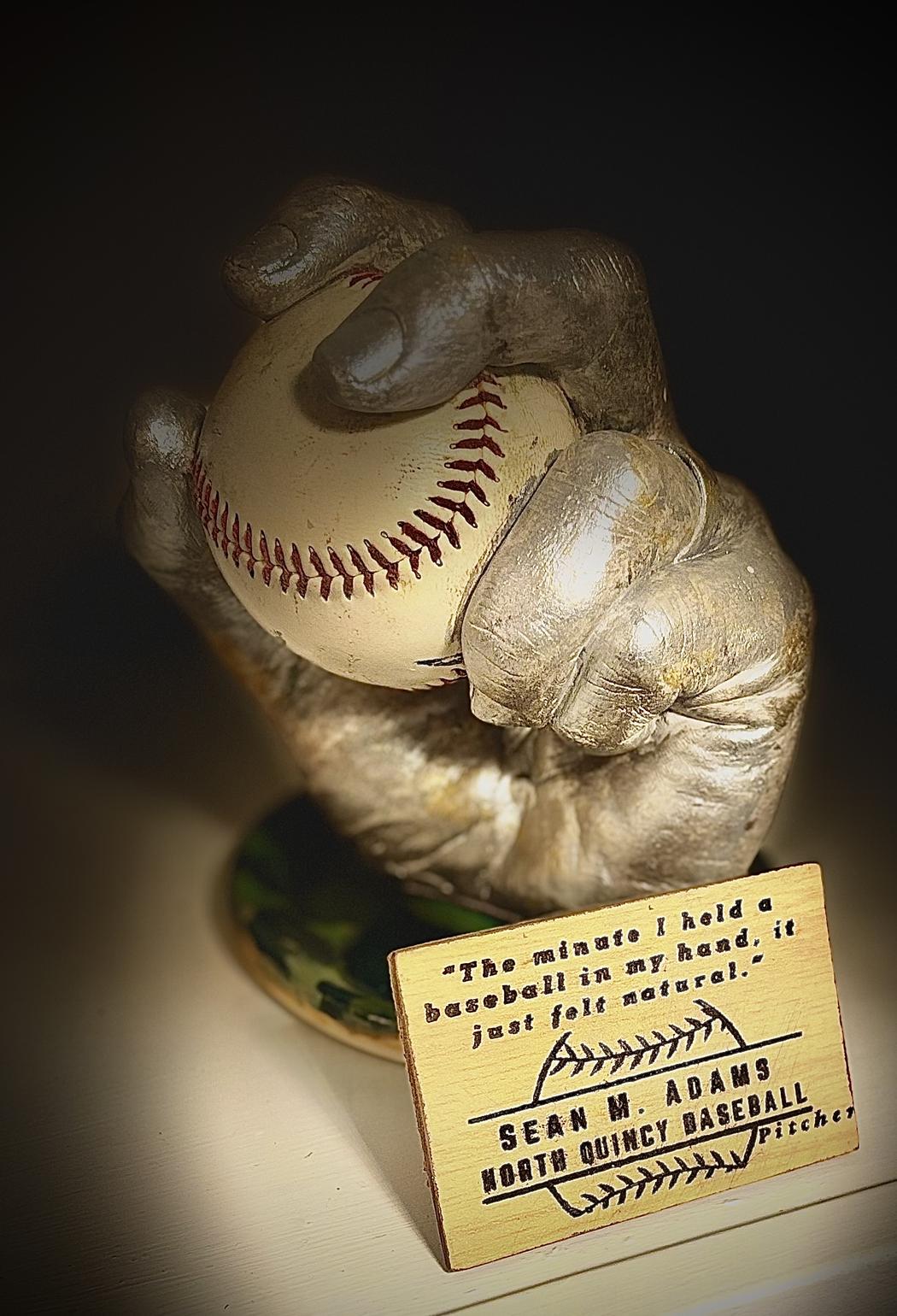
How does your work change when it is created as a commissioned piece (for families or athletes) versus conceptual artwork?
Creating a piece for others is based what they want in the “surface” of the piece. However, I hope that my signature of any creation (the narrative and the emotion behind it) shines through as well. With my own work, a lot of it is based on personal experiences. Many of my favorite pieces were, I have to admit, mistakes and accidents formed into the art you see now. And that is where the simultaneous marriage of words and visual elements evolve.
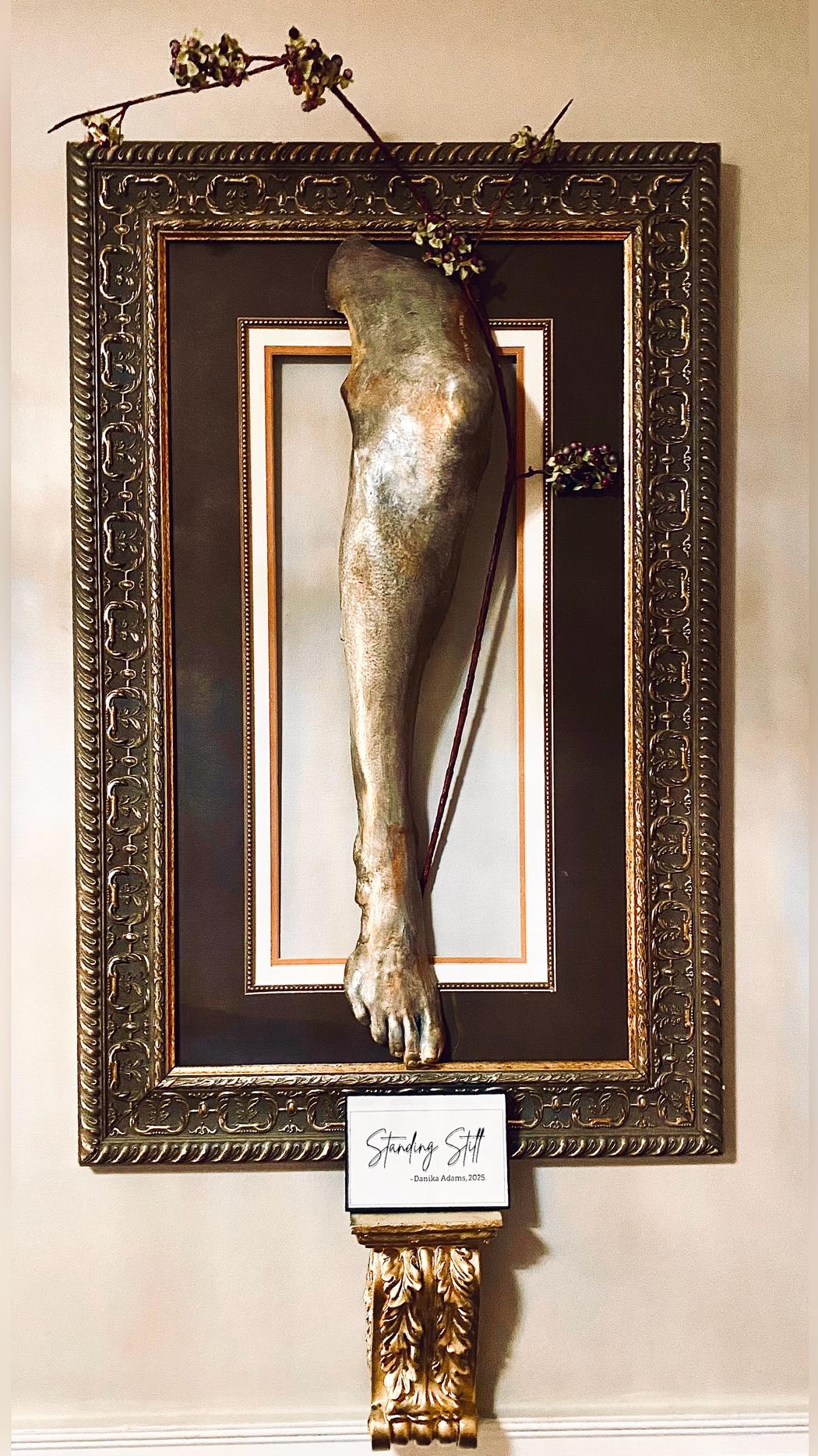
What do you hope remains with the viewer after encountering your work – an image, a feeling, or a question?
I hope that the viewers left with questions and curiosity, and an introspective need to reflect on themselves or the world around them. I hope that they are left with an interpretation, even if it’s not the story I intended. I think art should not be a one-dimensional experience, but I believe it should be a personal multifaceted rabbit hole, reflection-upon- reflection- upon-reflection (Escher-like) conundrum of an experience that drives them to continue thinking and questioning. A little bit of a shock factor is important as well because that is what brings to light the voice behind it all. I want my audience to connect with it, wonder about it, be angry with it, be inspired by it, and be puzzled until they find it a piece of their own lives, even if just for a few moments.
Leave a Reply
You must be logged in to post a comment.