
Huskee
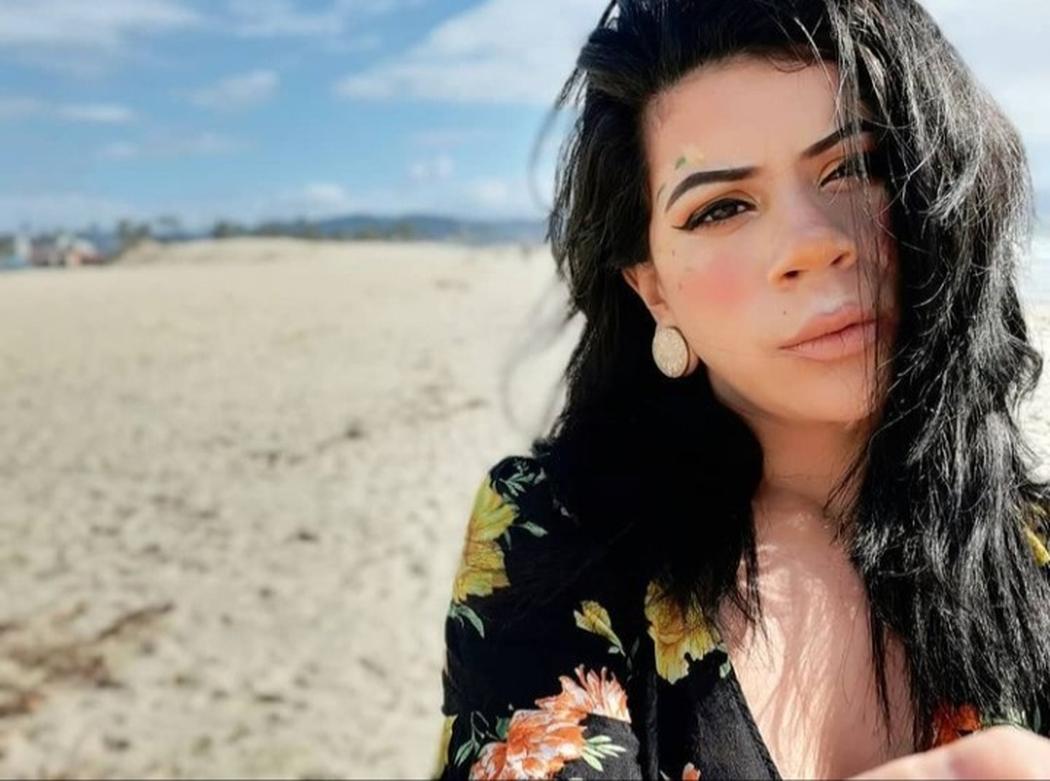
Your practice moves between abstract fine art and horror-inspired illustration. How do you decide which visual language to use for a particular idea or emotion?
It usually happens when I’m driving, walking through nature, or sitting alone in silence, in moments when my mind isn’t trying to produce anything. A random image appears, fully formed, and I can see it so clearly that I feel compelled to make it. I don’t consciously choose a visual language in those moments; the image arrives already knowing what it wants to be. This is mostly how my illustrative work begins. It has a form and an emotional charge that demands to exist.
My abstract work is different. It is completely fluid, unplanned, and freeform. Movement, color, and texture emerge almost as if the piece is dreaming itself into being. I am not trying to capture anything specific. I follow the flow of sensation and memory, letting the work take shape organically.
Sometimes my technical skill is not strong enough yet to capture what I see in my mind. That means carrying an idea with me for years, letting it live in notebooks or memory while I refine my abilities. I don’t experience that gap as failure. It is part of the relationship I have with making art, trusting that I will meet the image when I am ready. I write many of these ideas down and return to them when the time feels right.
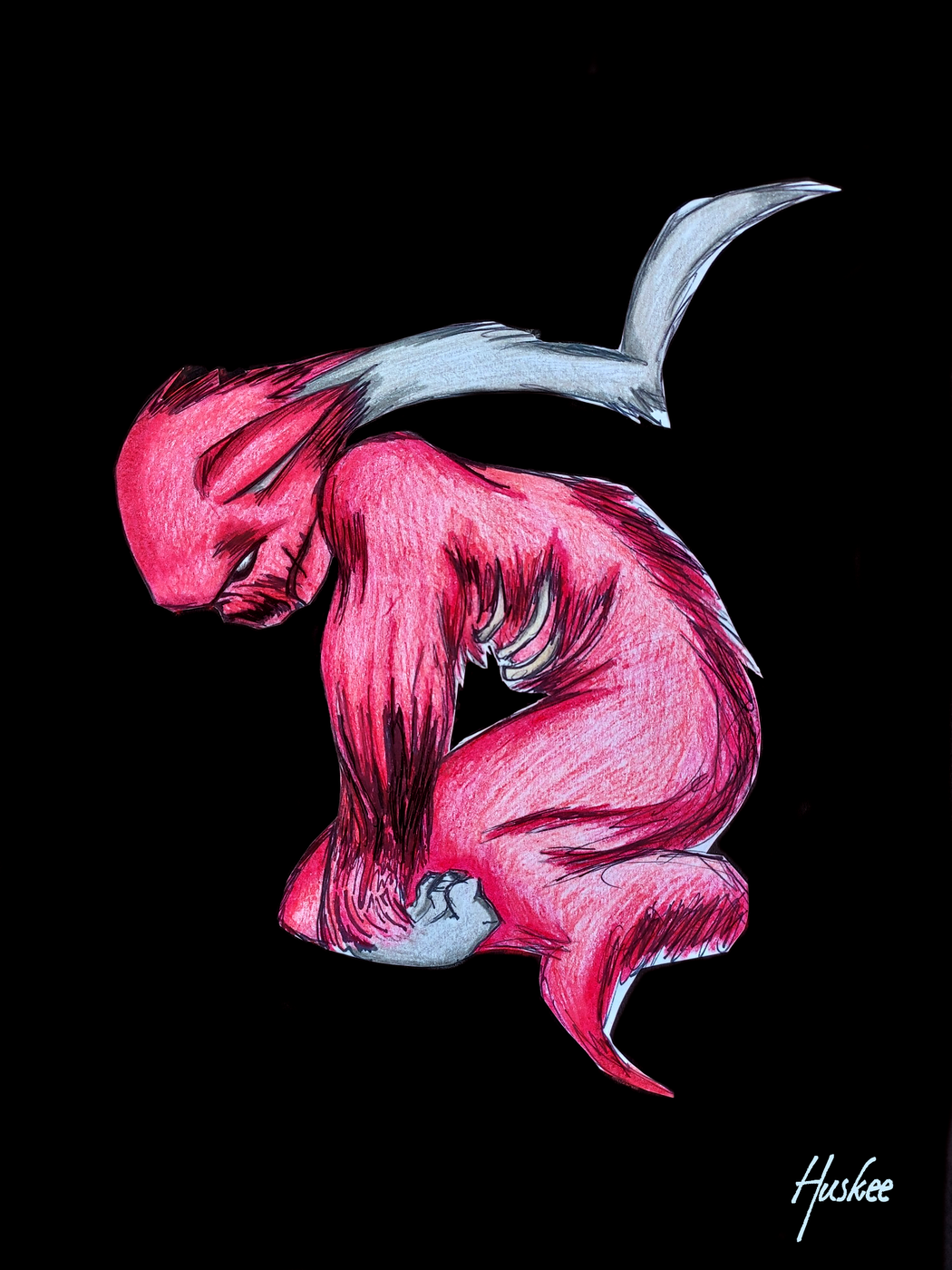 Huskee | Creature | 2025
Many of your horror-inspired works feature distorted, character-driven figures. What do these characters represent for you — are they personal, symbolic, or purely intuitive?
They’re a blend of personal, symbolic, and intuitive elements. Some grow from specific memories or emotional states, while others carry broader symbolic weight: fear, grief, vulnerability, or the hidden parts of ourselves we lack words for.
I usually start with a feeling I need to give form to, and the character becomes a vessel for that emotion. Their bodies stretch, twist, and distort because emotion itself is not neat or contained. Physical distortion lets the work breathe in a raw, immediate way, revealing what lives beneath the surface. These figures exist to make the invisible visible; a bridge between inner experience and outward form.
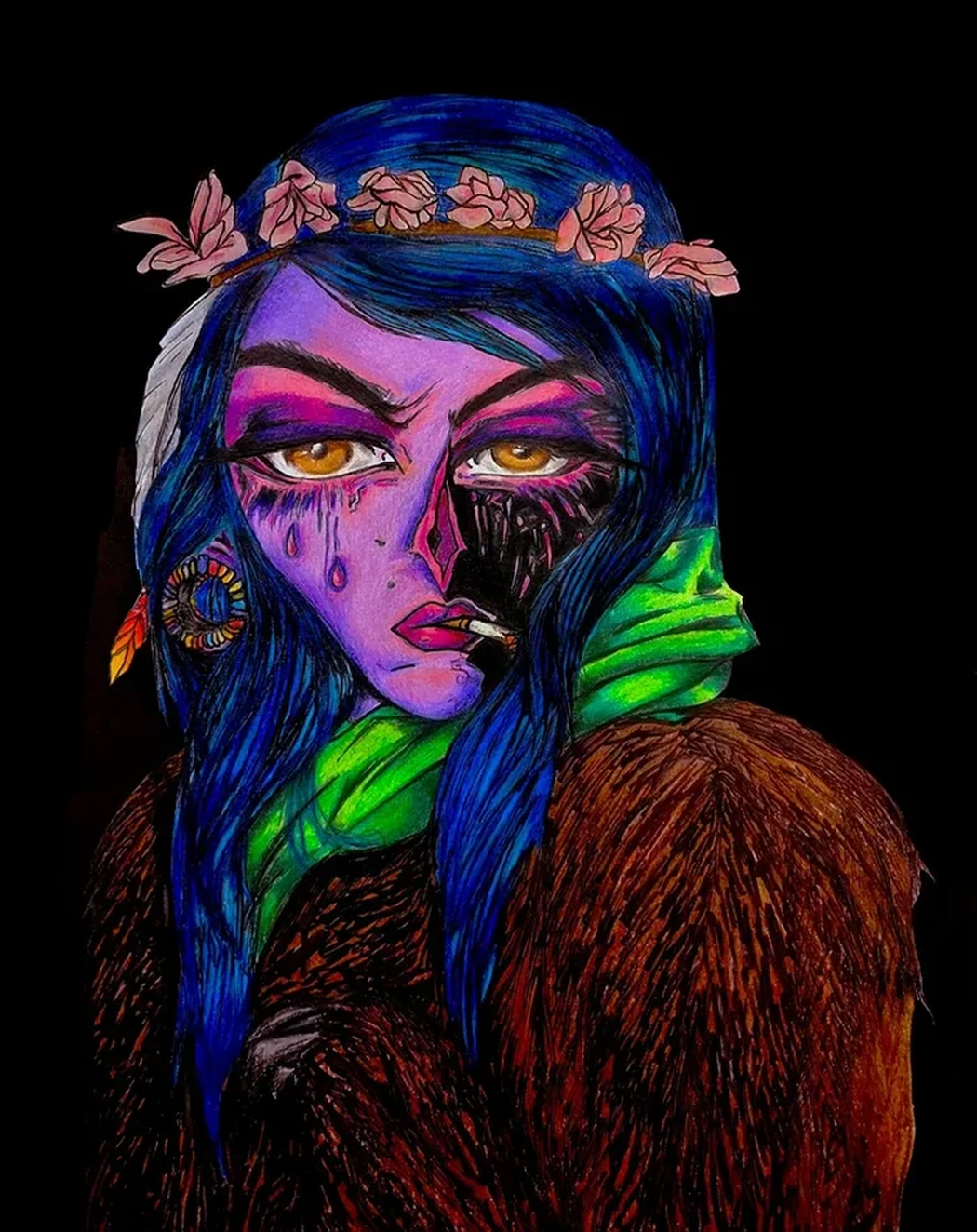 Huskee | Half-time Gypsy | 2024
Emotion and memory play a central role in your abstract paintings. Can you describe how personal experiences translate into color, line, and form in your work?
I don’t always recognize my personal experiences while I’m working; the connection usually reveals itself later. Memory isn’t linear, and neither is my process. Color comes first, carrying emotional temperature before I understand its source, while linework emerges unconsciously when I let my body lead. Lines trace and connect like routes or boundaries, turning the painting into a map of internal terrain that I’m still learning how to read.
You’ve been drawing since childhood and expanded into mixed media as a teenager. How has your relationship with materials evolved over time?
I started with the basics: graphite, colored pencils, markers, and crayons. Working with them was playful. I experimented freely, letting curiosity guide me rather than trying to make anything perfect.
My relationship with materials shifted in high school, when my art teacher introduced me to watercolor, ink, oil, acrylic, and sculpture. I could ask for guidance, but mostly I explored freely, discovering what each material could do on my own. College at the Maryland Institute College of Art was very different. Compositions, color, and form were scrutinized, and we were graded on mastery of each medium. That rigor taught me to understand materials deeply, but it could also feel creatively stunting, as I worried about making a “worthy” composition.
Expanding into mixed media broadened my ability to express myself creatively. Today, I choose materials based on concept and emotion, letting them guide the work as much as I do.
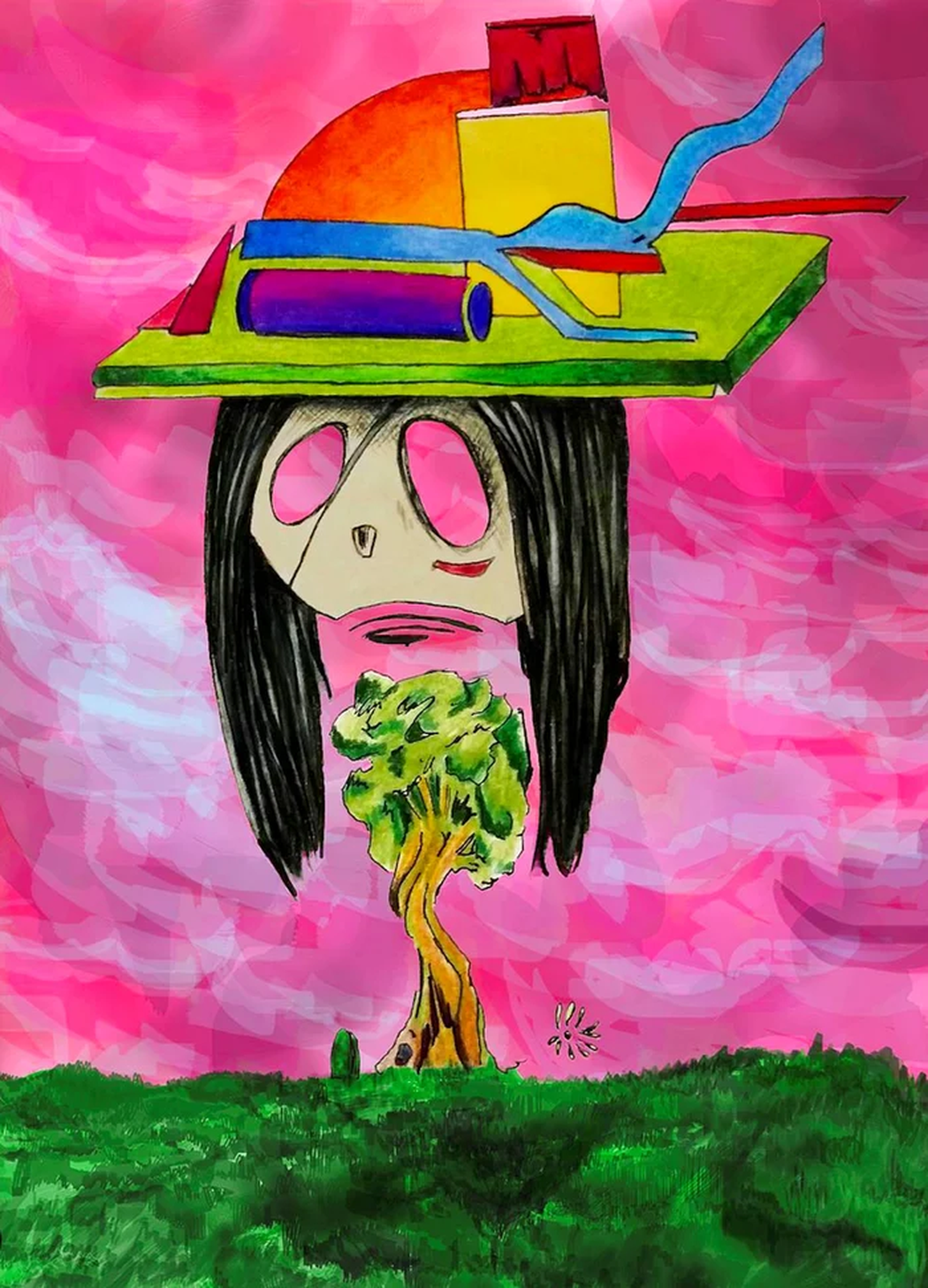 Huskee | Lucid | 2017
Horror and surreal imagery often provoke discomfort. What kind of emotional response are you hoping viewers will experience when encountering your darker works?
I’m not aiming to provoke fear or disgust, and I’m always a little surprised when people react that way. What I hope for is reflection, that viewers engage with their own emotions and stories through the work.
I’ll never forget one of my first shows in high school. A little girl lingered in front of my horror illustrations while others came and went. At the end, her mother asked to buy a sketch of an emaciated scarecrow nailed to a wooden post. Perhaps her daughter saw something beyond the horror, creating her own story within the piece. That was the first art piece I ever sold, and I still have a copy of the check on my refrigerator.
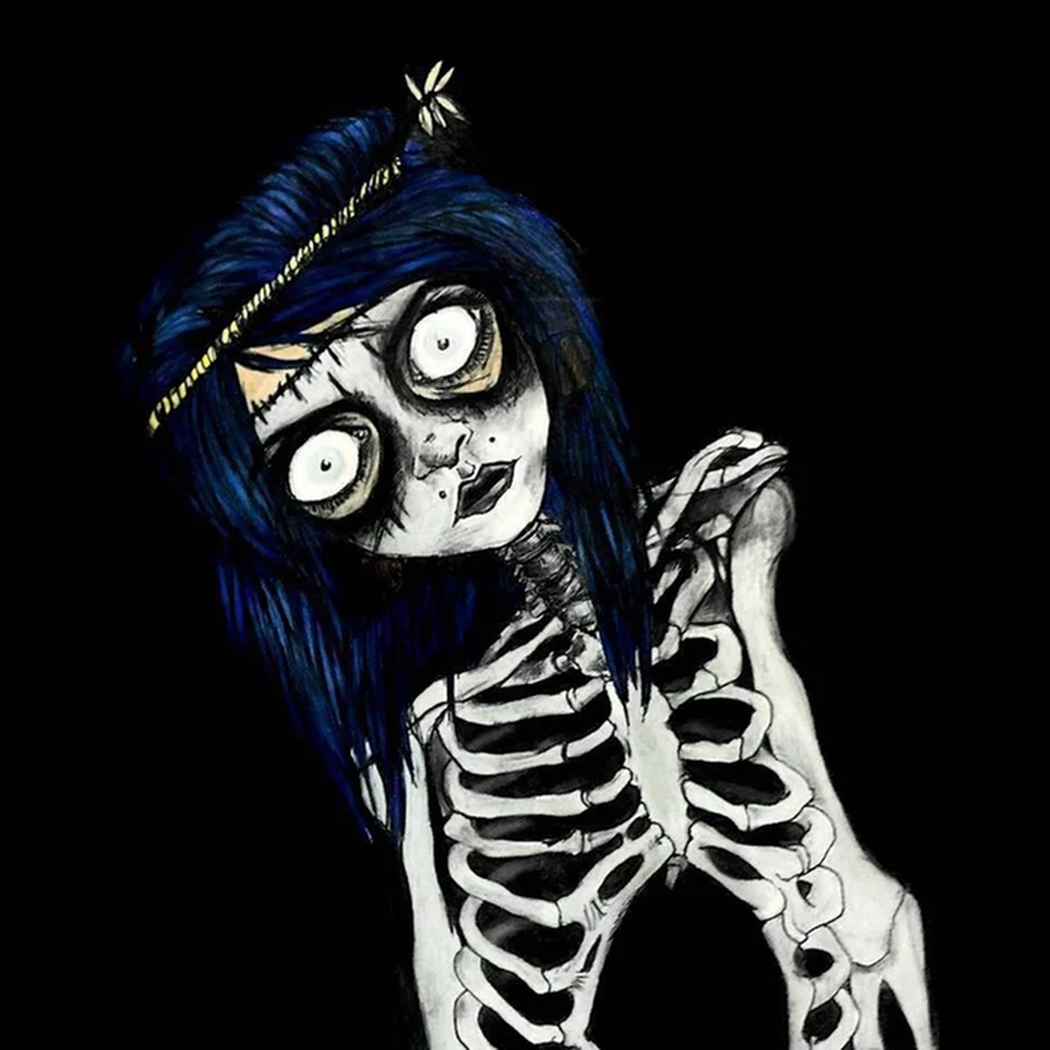 Huskee | Self-Portrait Skeleton Girl | 2016
In 2011, you founded Whisky Kettle Collectives. How did building and managing an artist collective shape your perspective as an artist today?
I started Whisky Kettle Collectives because I knew so many incredible artists whose work was otherworldly, but who were introverted or unsure about sharing it. I enjoy connecting with people and learning about their work, so I thought I could help bring their art to the world. Running the collective was my first business, and it was intense and all-consuming, with very little capital and little experience. I learned about problem-solving, marketing, organizing events, and managing creative projects, and like any first business, it taught me lessons I still carry today. It also shaped how I approach my own art, helping me understand how to share it with others.
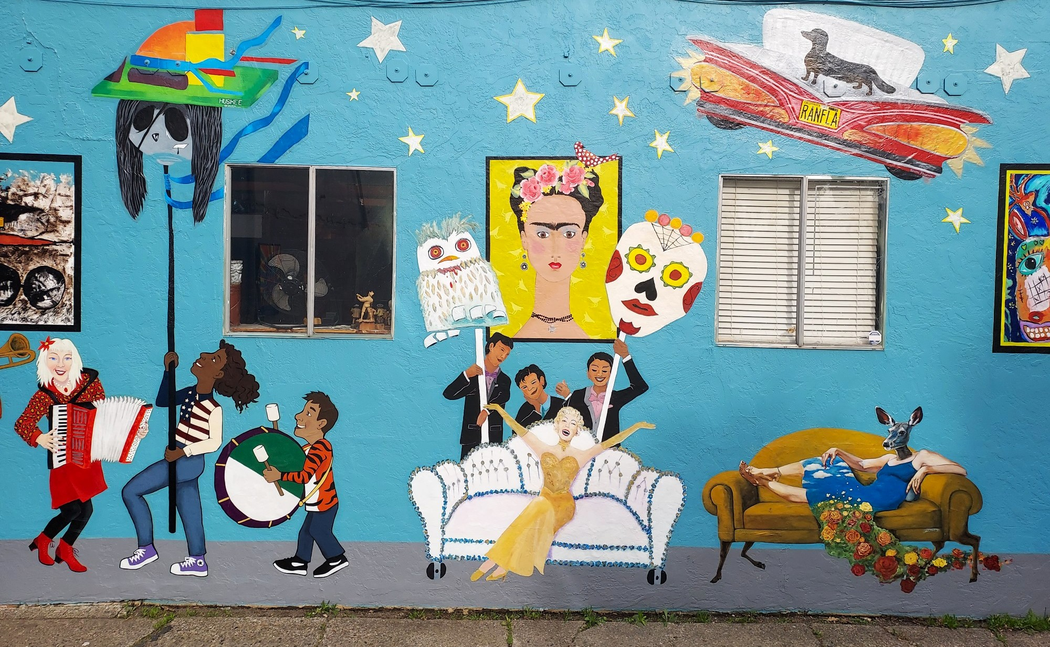 Huskee | SOFA Mural | 2024
Since launching Huskee Art and Designs by Huskee, how has running your own art business influenced your creative freedom or direction?
Running my own art business has taught me about almost every aspect of life. It has taught me patience, resilience, and how to trust my instincts even when the path ahead feels uncertain. I constantly check in with myself to make sure my work comes from curiosity and inspiration, not from what I think will sell. At the same time, I have to consider what works professionally and what captures attention. Balancing creation, learning new skills, and managing the business has strengthened my confidence, sharpened my discipline, and pushed me to take risks in how I approach my work. It has also encouraged me to explore new creative paths, expanding the boundaries of how I make and share my art. Running my business has not only shaped the art I make; it has also shaped the way I show up in the world, with authenticity, humility, and grace.
Leave a Reply
You must be logged in to post a comment.