
Ryta Slobodiana
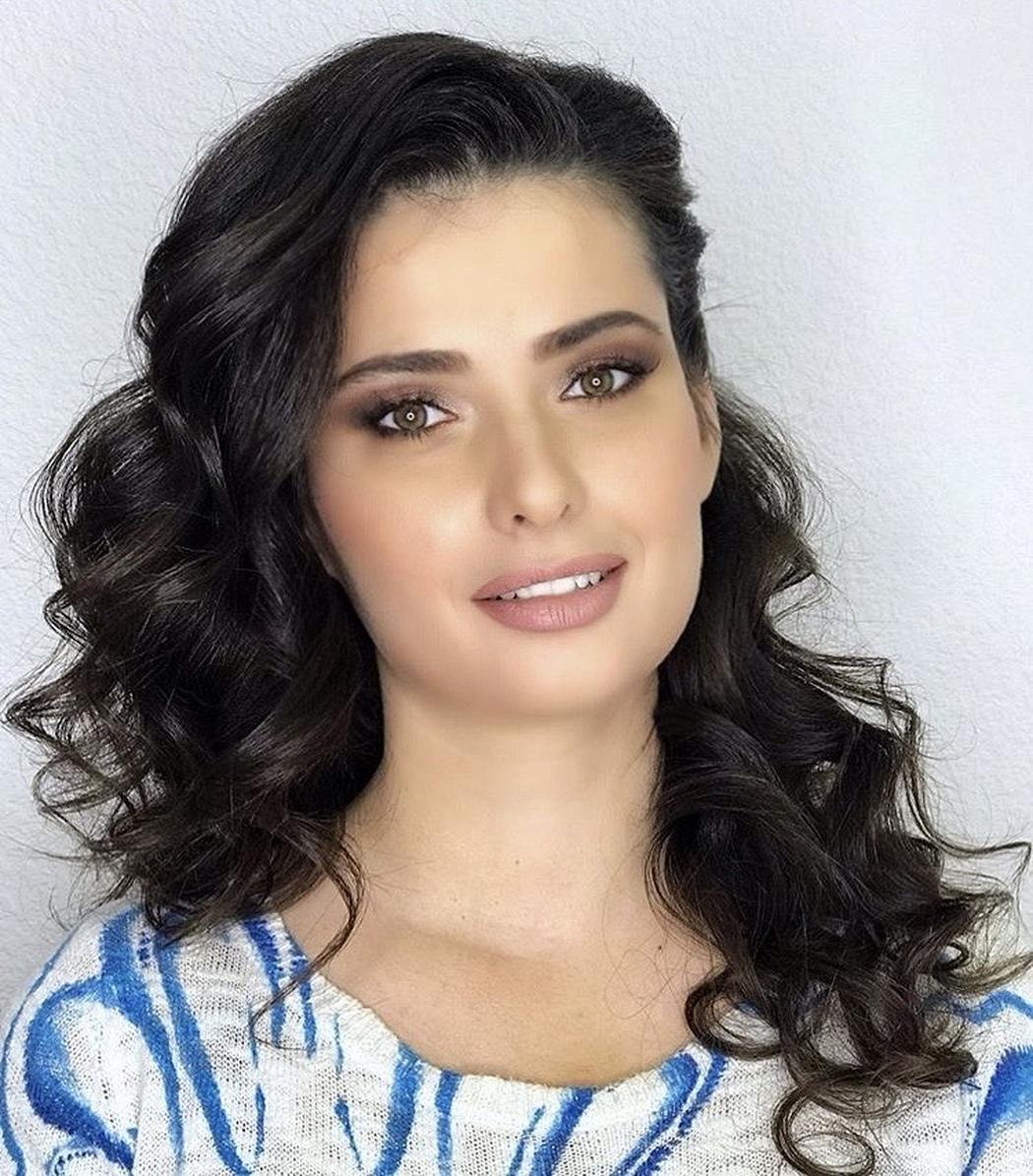
Your work often speaks about “brightness as a state of being.” When did this idea first become central to your artistic practice?
The concept of brightness as a state of being emerged gradually, during a period of both personal and societal uncertainty. It is not merely a visual or decorative choice, but a conscious assertion of clarity and emotional presence. Brightness in my work functions as a conceptual anchor — guiding composition, color, and emotional tone. It allows me to engage with fragility and resilience simultaneously, highlighting the coexistence of light and shadow. This approach became central when I recognized that my paintings could serve as spaces for reflection, offering both myself and viewers a sense of presence and attentive awareness, even amid chaos or instability. Over time, this idea has shaped not only my visual language but also the thematic direction of my entire practice.
Owls are recurring figures in your paintings. What personal or symbolic meaning do they hold for you?
Owls in my work operate on multiple conceptual levels. They symbolize harmony, wisdom, and inner strength, reflecting the relationship between humans and nature. I am particularly drawn to their ability to observe quietly, to remain fully present in darkness, and to navigate complexity without haste. In my paintings, owls are not merely illustrative; they are psychological presences that embody attentive awareness, memory, and the cumulative experience of perception. Conceptually, they encourage viewers to slow down, reflect, and engage with the subtle rhythms of life. Within a broader cultural context, this recurring motif resonates with contemporary concerns about balance, mindfulness, and conscious engagement, extending its relevance beyond personal narrative to shared human experience.
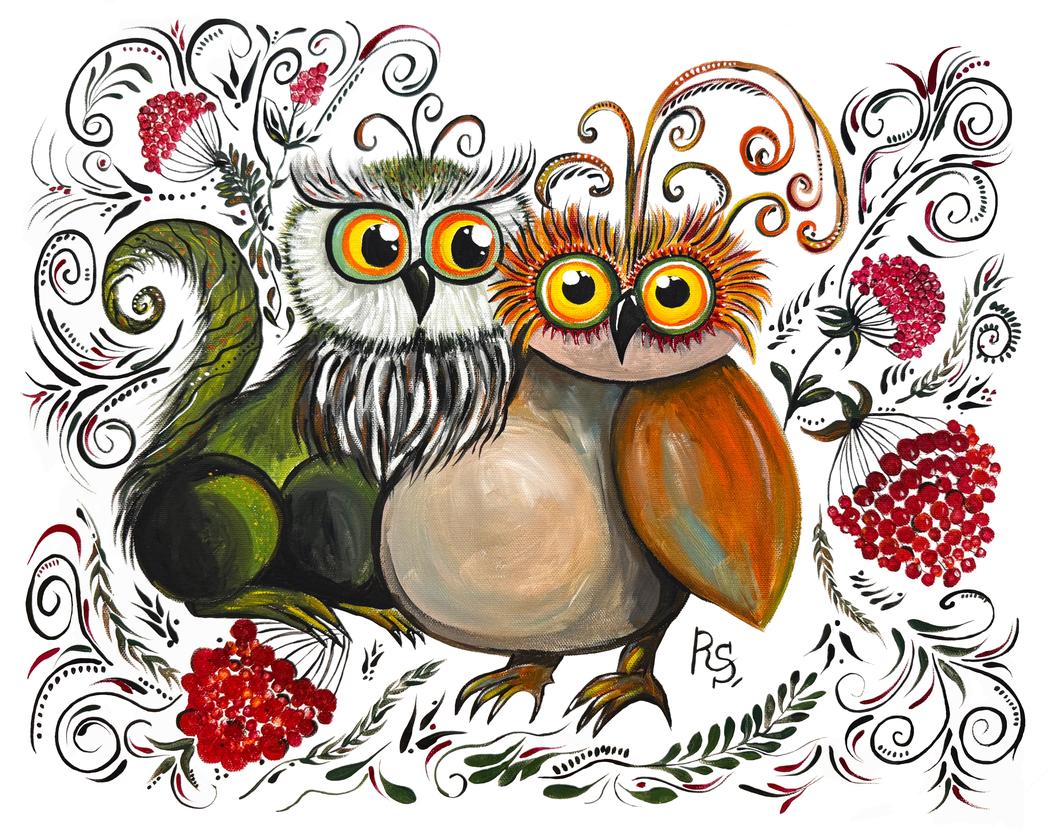 Ryta Slobodiana | Folk Owl Couple | 2025
Many of your works are highly detailed and layered. How do you know when a painting is complete?
The completion of a painting is determined by internal coherence rather than external deadlines or external feedback. Each layer, gesture, and mark must align conceptually, structurally, and emotionally. I often spend weeks refining textures, adjusting tonal relationships, and negotiating the interplay of foreground and background elements. A painting feels complete when it can sustain its presence independently — when nothing more is required to clarify its intent or emotional resonance. This approach is rooted in both intuition and disciplined observation, and it reflects my belief that a finished work should be capable of communicating directly with the viewer without intermediary explanation.
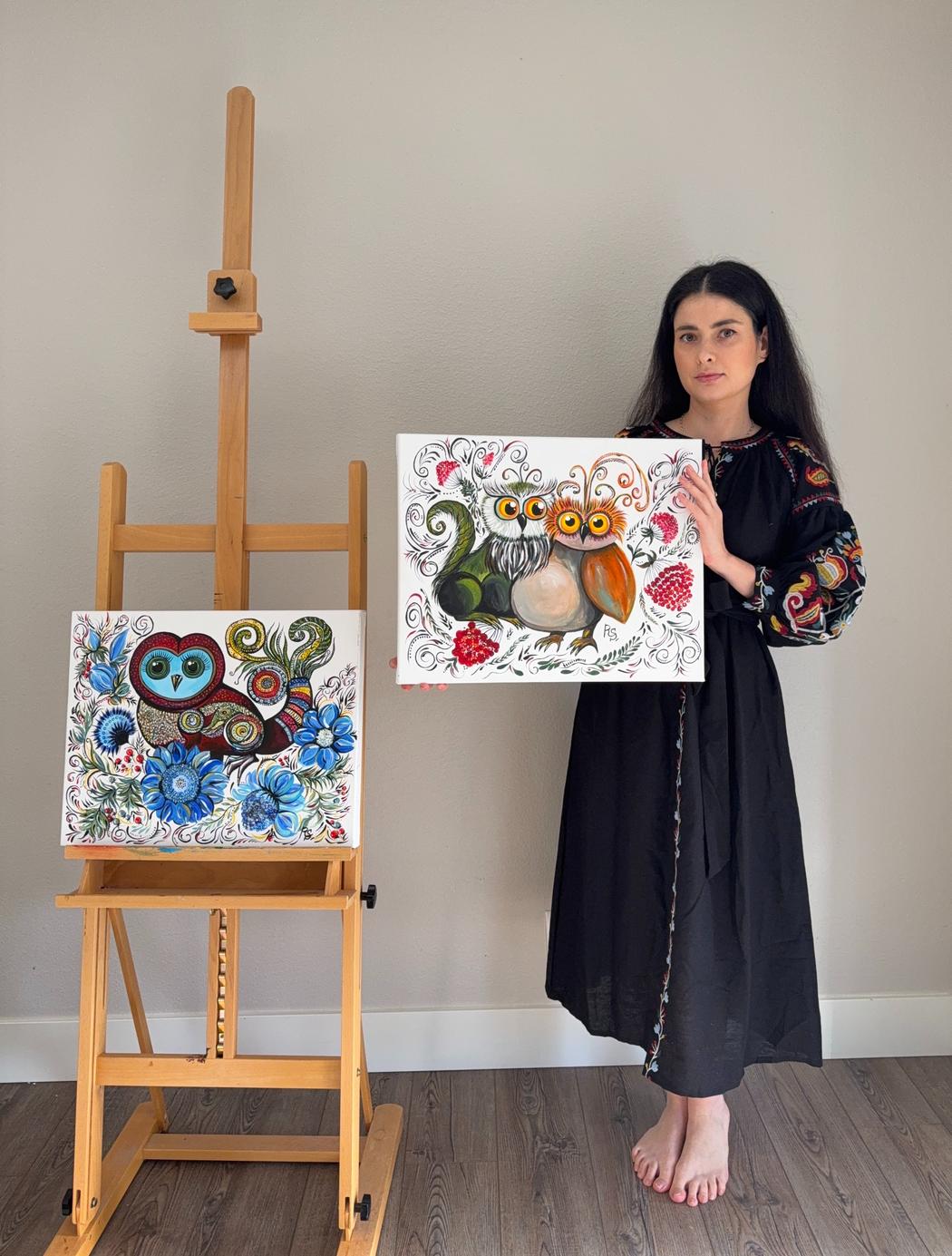
As a self-taught artist, how did you develop your visual language and confidence in your own style?
Being self-taught provided both freedom and responsibility. Without formal constraints, I could experiment with form, color, and composition, yet I had to develop rigorous self-discipline and critical assessment. My visual language evolved through iterative practice: constant observation, sketching, and reflective engagement with my own work. Confidence emerged not from external validation, but from sustained dedication and from seeing my visual concepts consistently materialize on canvas. Over time, I recognized that originality is not invented but uncovered — a process of uncovering patterns, motifs, and emotional truths that are uniquely my own.
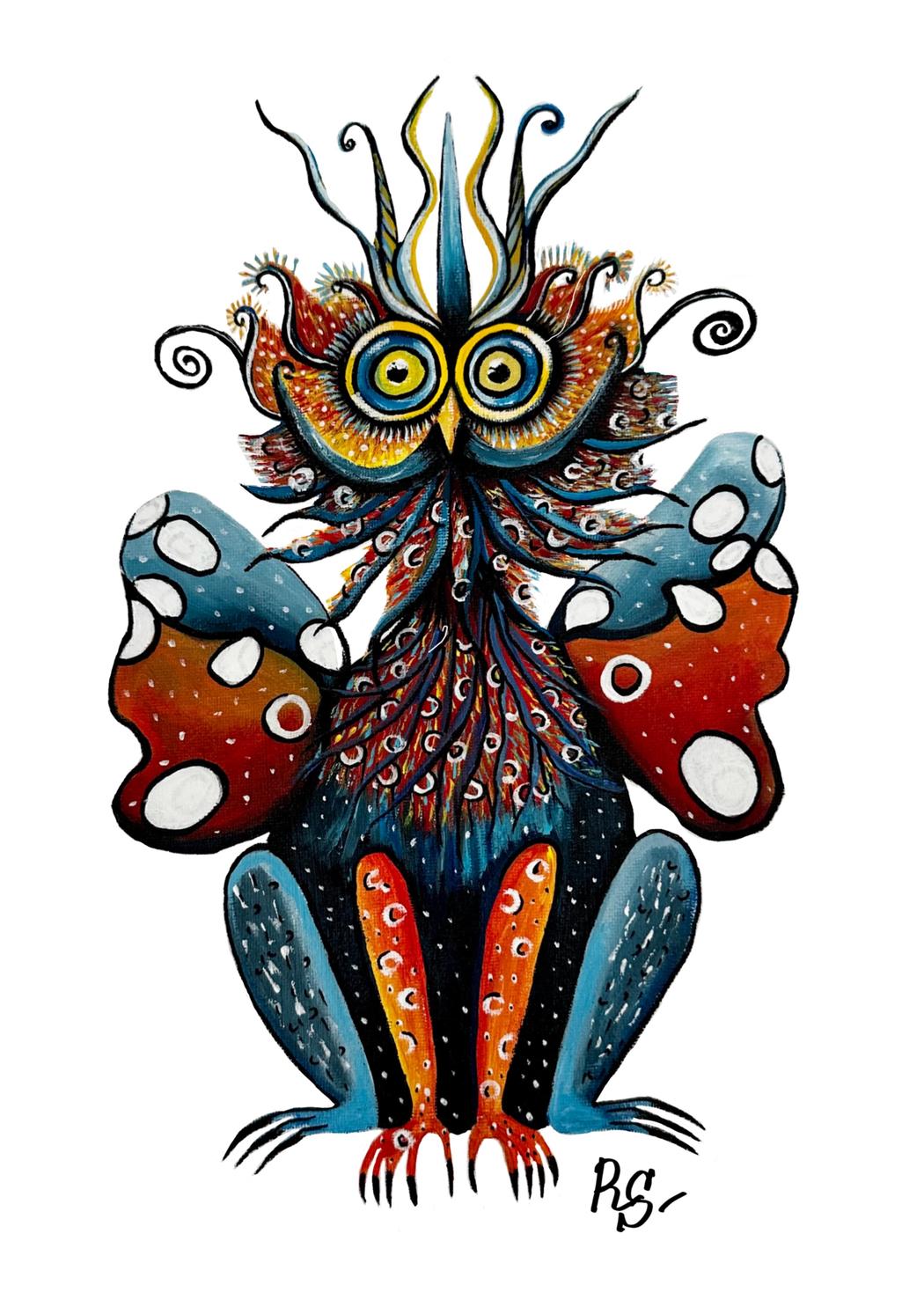 Ryta Slobodiana | Crazy Owl | 2024
You mention trusting emotion over control. Can you describe a moment when intuition completely guided a painting?
Intuition often serves as the guiding principle during the earliest stages of a painting. One memorable work began without a pre-conceived composition — only a feeling, a rhythm, and a color palette. I allowed gestures to emerge spontaneously, responding only to what felt necessary in the moment. The resulting painting achieved a balance and coherence that could not have been planned or imposed. Experiences like this reaffirm my belief that intuition, when anchored in experience and technical skill, can lead to deeper authenticity than deliberate control alone.
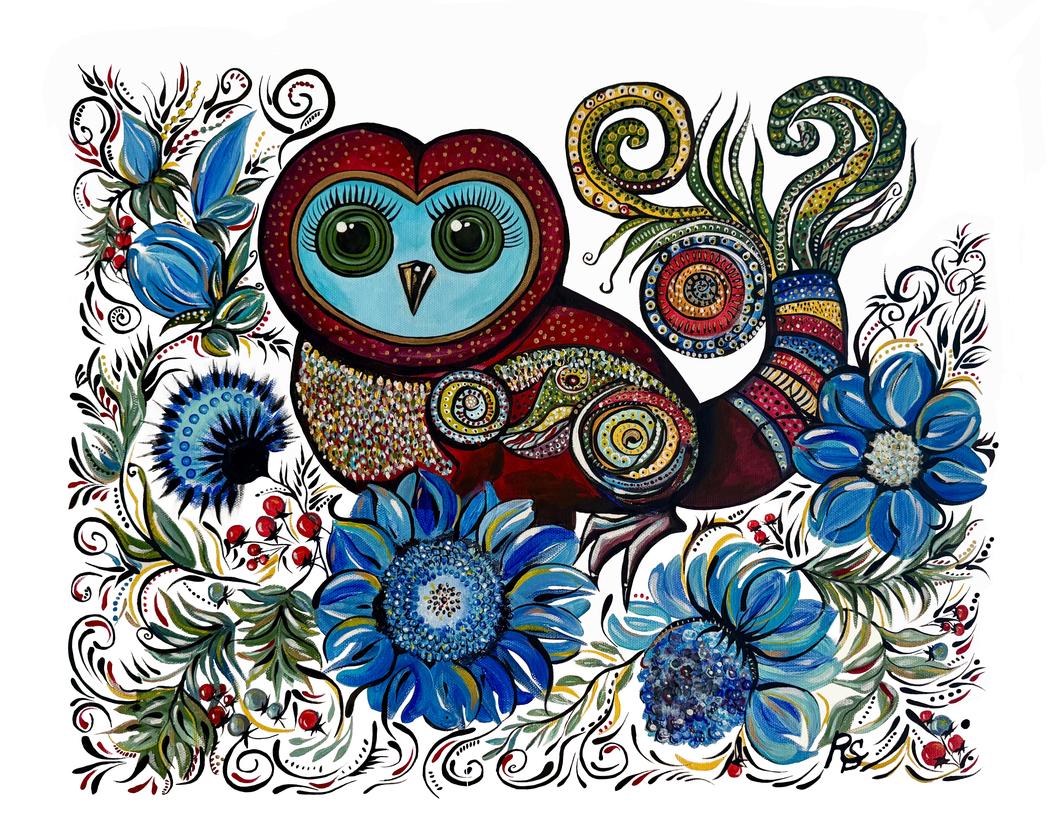 Ryta Slobodiana | Garden Owl | 2025
How do you want viewers to feel when they spend time with your work — especially during slow, attentive viewing?
I aim for viewers to experience a state of attentive presence. My paintings invite prolonged engagement, allowing individuals to connect with subtle textures, color harmonies, and layered meanings. Ideally, viewers feel a pause from external pressures, entering a space that encourages introspection, reflection, and a deeper awareness of perception itself. The emotional impact is subtle, often quiet, but intended to resonate long after the initial encounter. This approach aligns with my belief that art functions as both an aesthetic and reflective space, bridging personal experience and collective contemplation.
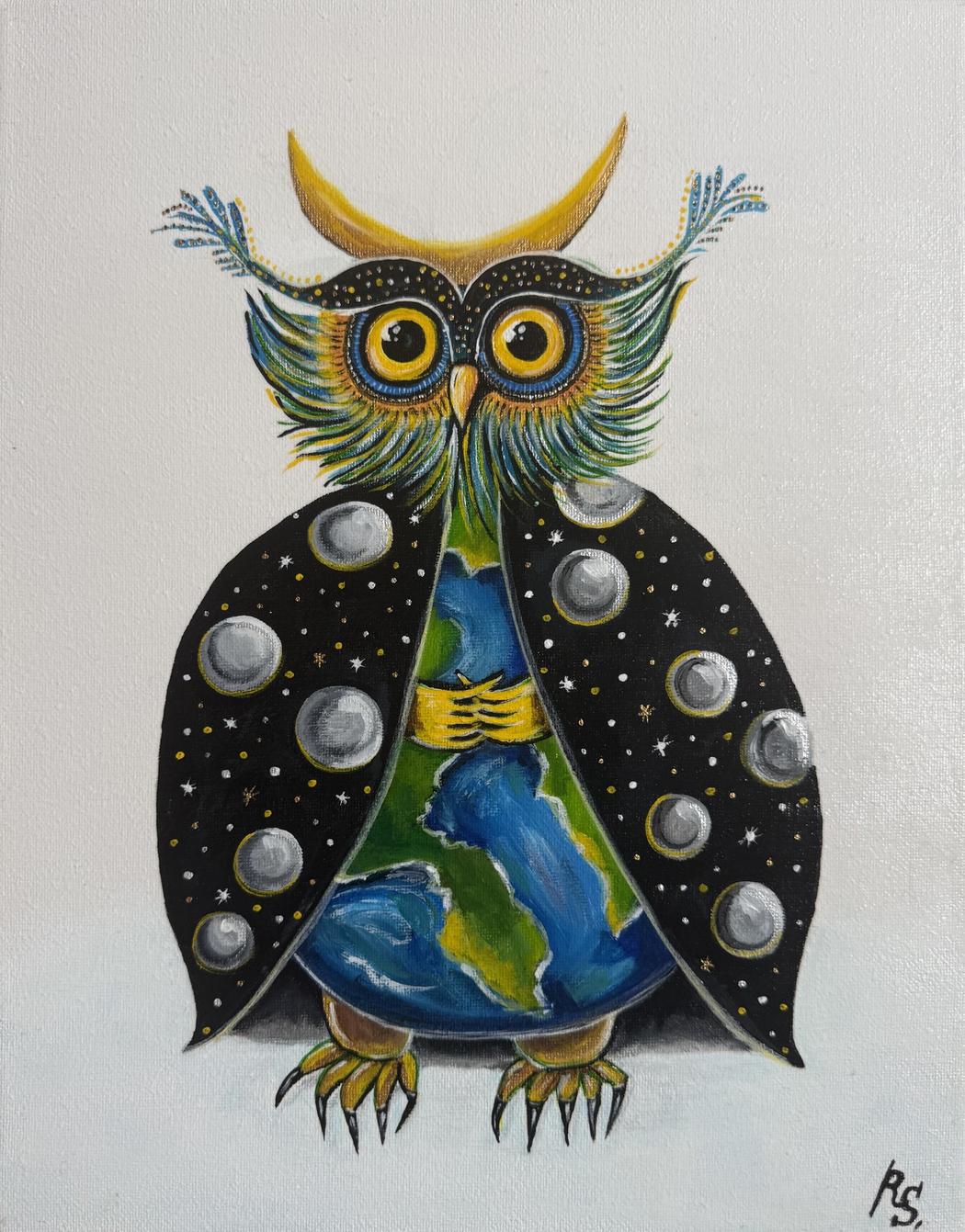 Ryta Slobodiana | Earth Guardian | 2024
How have exhibitions and awards in recent years affected your artistic confidence or direction?
Exhibitions and recognition have affirmed the broader relevance of my work and reinforced my commitment to depth and conceptual clarity. Being selected and awarded demonstrates that my paintings resonate beyond personal contexts and hold significance within contemporary artistic discourse. This professional acknowledgment has strengthened my responsibility to maintain integrity and originality, guiding the evolution of my practice while ensuring that each work continues to reflect meaningful engagement with both aesthetic and cultural themes.
Leave a Reply
You must be logged in to post a comment.