
Sandra Kemmann
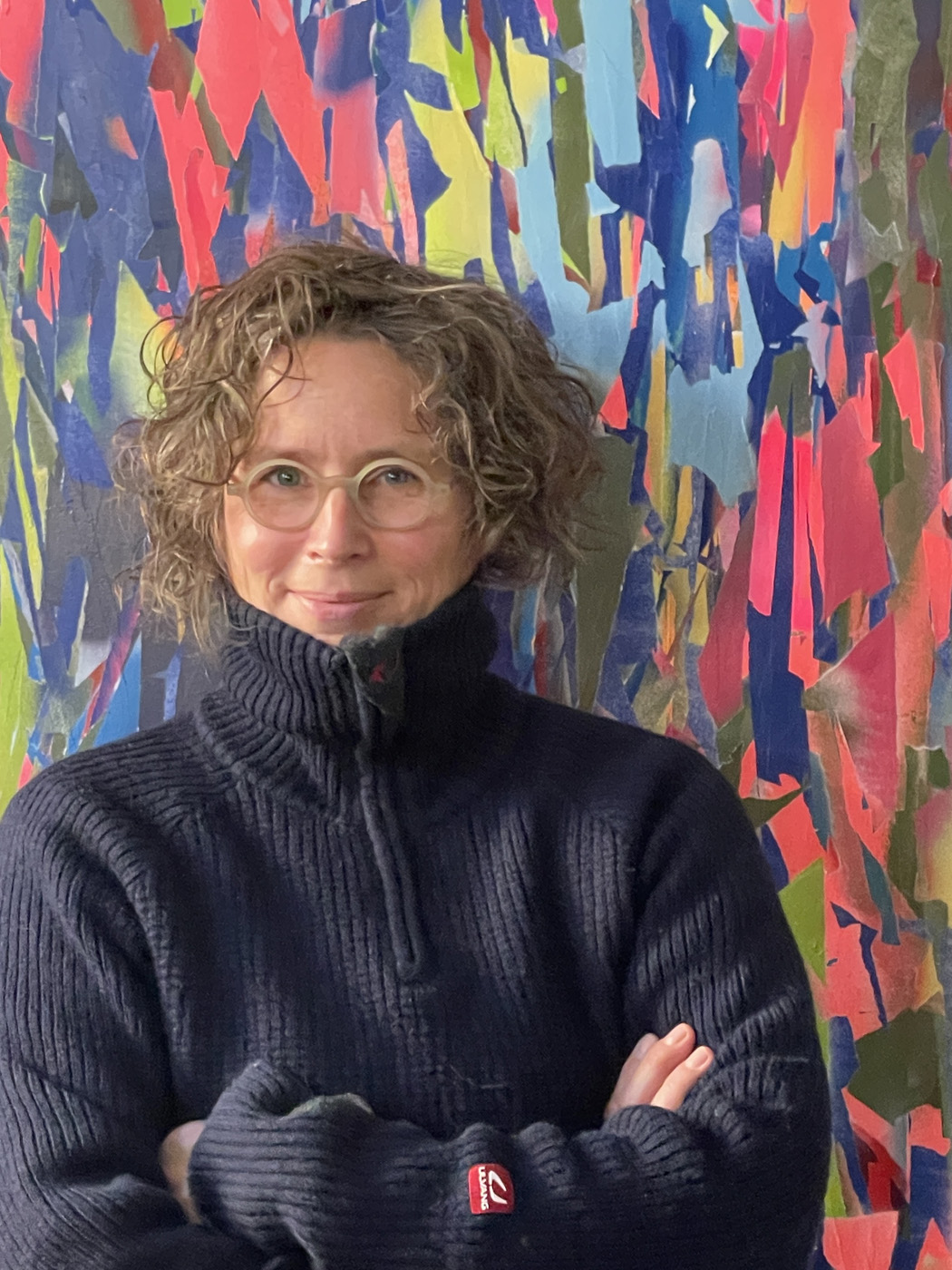
Your work is often described as a dialogue between control and openness. How do you know when a composition is complete?
A work is complete when it no longer asks for decisions. There is a moment when tension and calm reach a fragile balance and the painting begins to resist me. Any further intervention would become explanatory or decorative. Completion does not mean closure, but a stable inner instability.
You began your artistic path with sculptural thinking and by working as an assistant to a sculptor. How does this early experience still influence your approach to painting today?
Sculptural thinking remains fundamental to my practice. I do not think of painting as a surface, but as a body. Layers have weight, lines have tension and resistance. Working in space, moving around the work, testing it from different distances—all of this comes directly from my early sculptural experience.
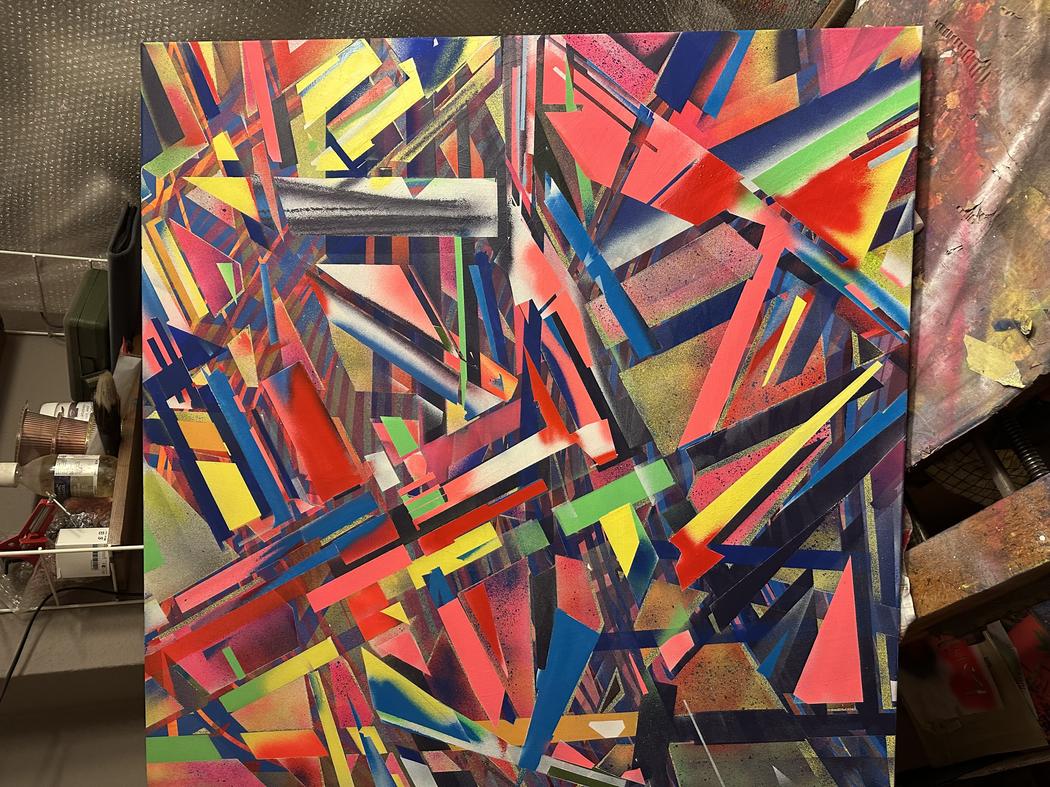
In your series Linientreu, the line becomes a carrier of meaning rather than a purely formal element. What does a line represent for you on a conceptual level?
For me, a line is a decision in time. It is trace, attitude, and persistence at once. In Linientreu, the line is not about drawing in a classical sense, but about action—about orientation that simultaneously exposes doubt.
Your working process has been described as both research-based and intuitive. How do intuition and method coexist in your studio practice?
I do not see intuition and method as opposites. Method creates a framework in which intuition can become precise. I work serially and analytically, almost protocol-like, but within that structure I decide moment by moment. Intuition, for me, is not instinct alone, but trained perception.
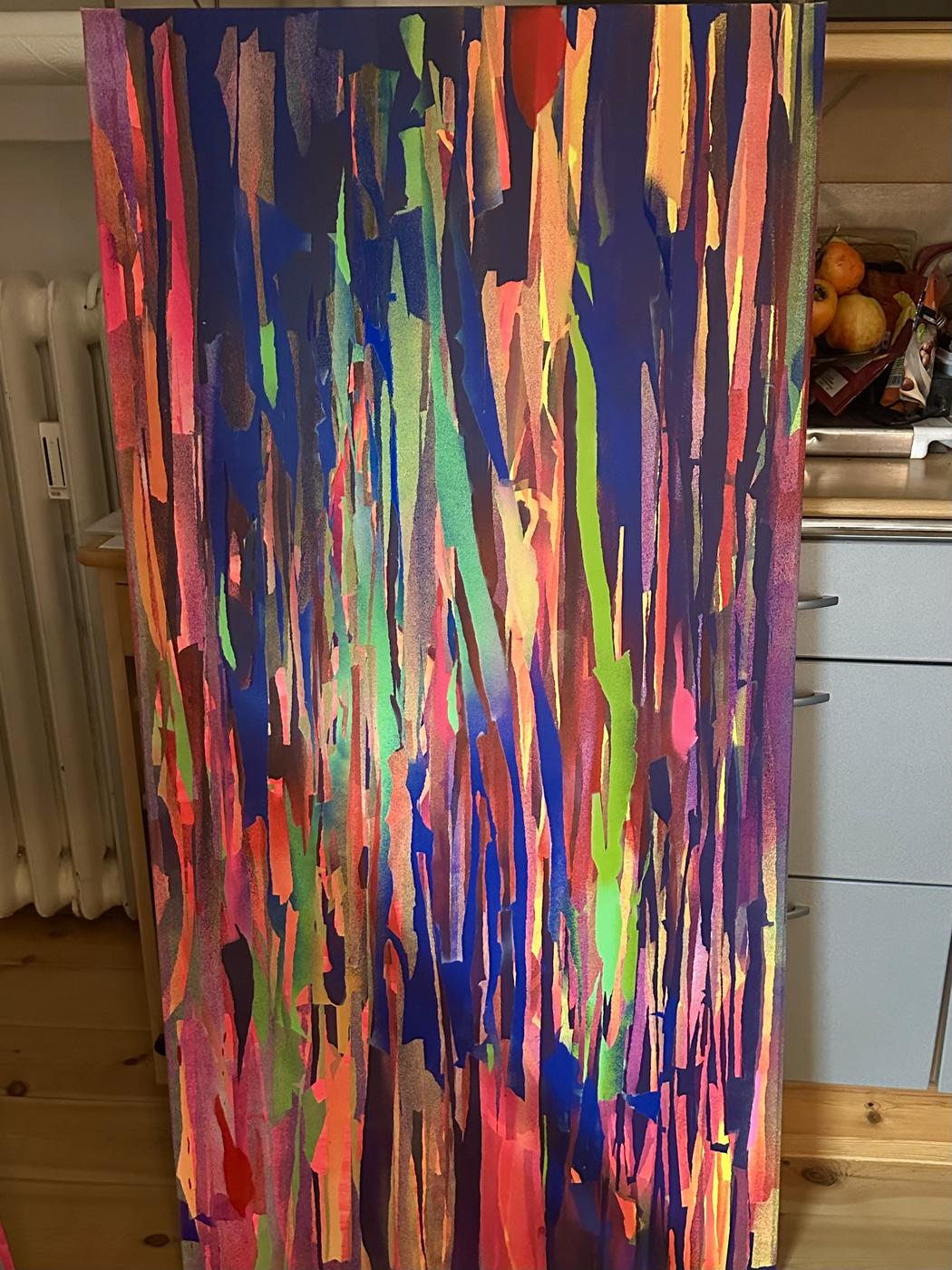
Many of your works appear dense, layered, and rhythmic—almost architectural. Do you consciously think about space and structure as something physical or spatial?
Very consciously. Space is not abstract to me. I think in terms of compression, pressure, and permeability. The works are meant to carry a physical resistance, as if one could lean against them or encounter an obstacle.
Your works resist quick consumption and invite slow looking. What do you hope viewers experience when they spend time with your paintings?
I hope for a suspension of quick judgment. When one stays with the work, it begins to shift and tilt. Ideally, a state emerges between focus and uncertainty—a moment in which meaning is not immediately clear, but something is unmistakably at stake.
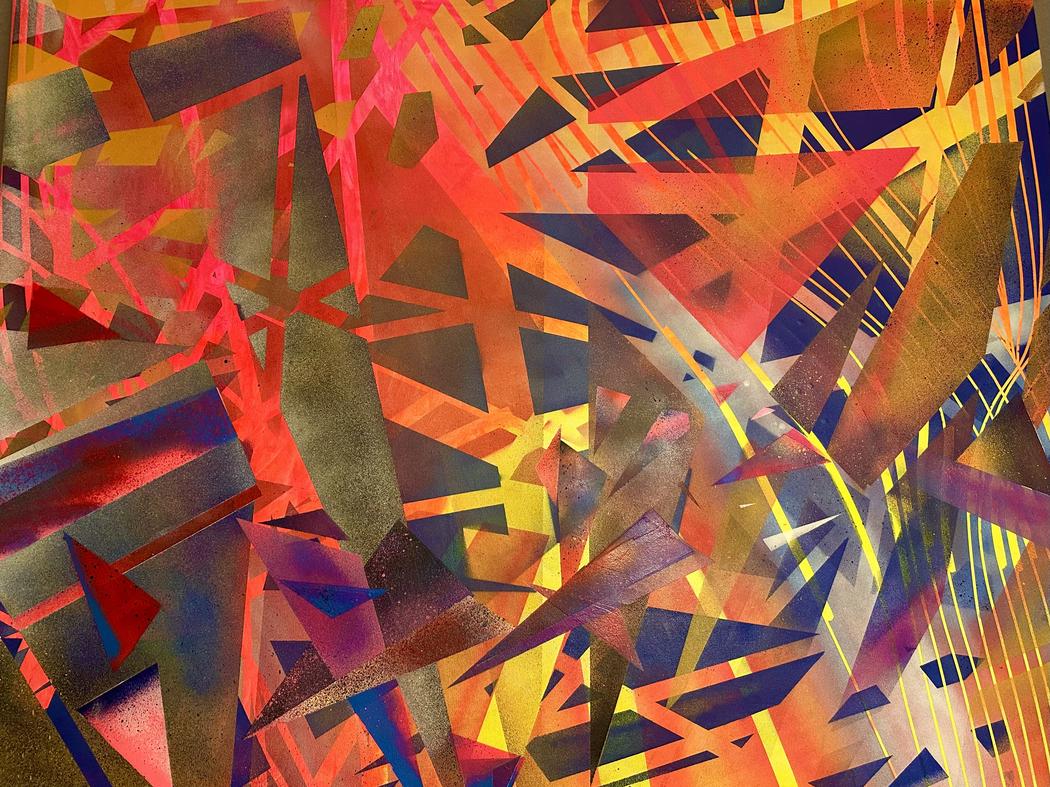
You have exhibited internationally, including in China. How does presenting your work in different cultural contexts affect your understanding of it?
Different cultural contexts sharpen my understanding of my own work. In China especially, rhythm, repetition, and process were read very directly, often beyond biographical or Western art-historical frameworks. This strengthened my trust in the autonomy of the work itself.
Leave a Reply
You must be logged in to post a comment.