
Nastasya Kudryashova

Your project “CÂMAX: Whiter Than White” immerses the viewer in a symbolic, mythopoetic space of Chuvash culture. What was the initial impulse that led you to create this work?
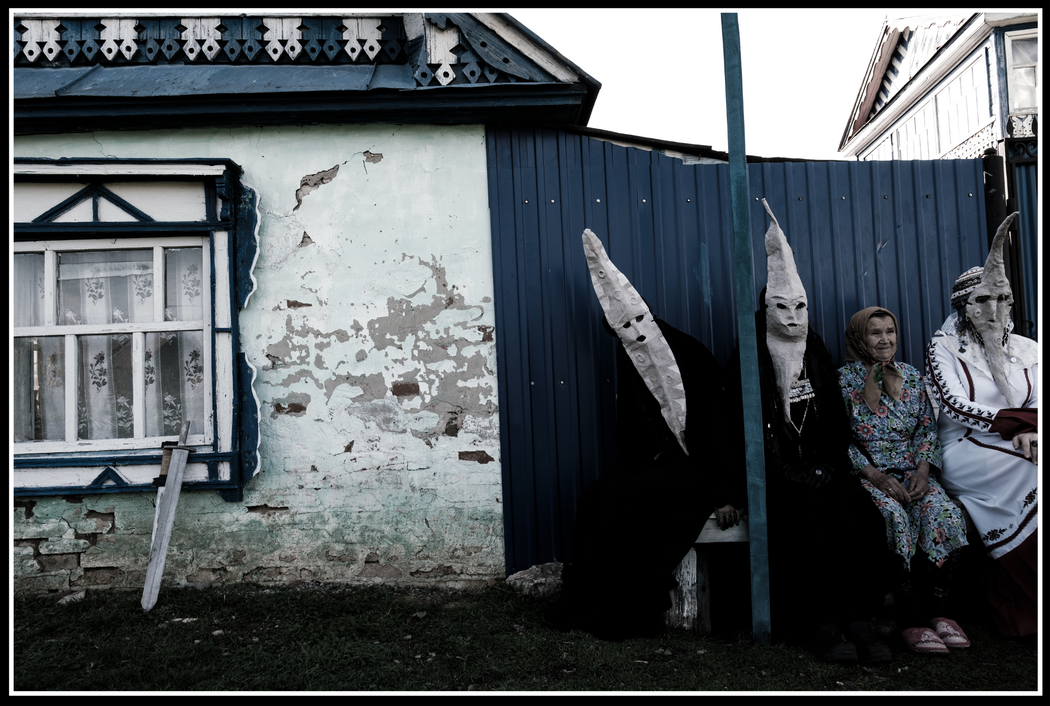
First of all, this is a photo project on behalf of my short artistic meter about Chuvash mythology through the prism of modernity, so the basic principle was laid down with the existence of the film – through a woman’s hand, through a woman’s face and a story to clothe mythology in a visual. Chuvashia is embroidered with a female costume line, skirting the depth of thousands of generations through centuries of history, eyes and whispers. And on the banks of the Volga River, tukhya granite (a national head ornament) lies like scales, illuminated by the sun. The Chuvash woman, like her wealth and a fairy tale, put on something that could become an extension of a person, a thing that preserves and transmits information about the personal qualities and properties of her kind. The most ancient beliefs in folk beliefs dictate that the undershirt was perceived as a “second skin”, and the pure ringing of jewelry cleansed, protected and protected. The silver on her chest and head, as well as the white color, was guarded by a symbol of purity. In the lines of her palm is the Volga, in the steps tapping on the ground with the heel of a boot is the rhythm of alternating cold, in the beating of her heart is the echo of the steppes. “The mother is sacred, you can not quarrel with her,” says the Chuvash proverb. In this world, the feminine maternal essence is sacred and inviolable.
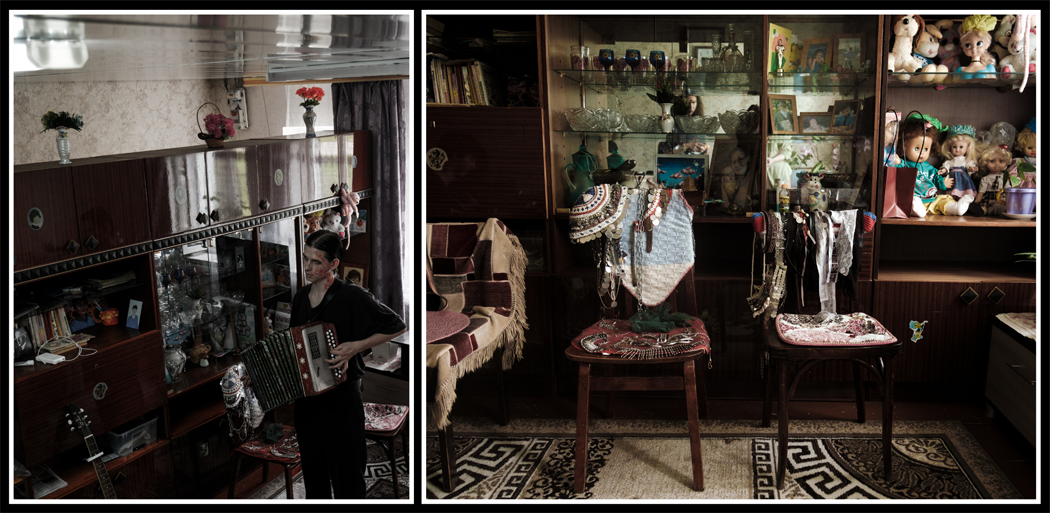 Nastasya Kudryashova | CâMax Whiter Than White
How do the landscapes of the Chuvash village – its fields, skies, and architecture – influence your visual language and directorial decisions?
Influence is rather the wrong word to describe it, because Chuvashia is a part of my being, in my bones and in my blood, I feel tribute and honor from her for the right that I can represent her on different levels and in different forms. My entire visual language has been absorbed into me since my mother’s milk, where fields, sky, wild wind, sweeping hills are not just a participant in the life process; it is the whole core, a symbol of unity, wealth and traditions. Our veins are her embroidery, our bones are the gold of her trees, our voice is the ringing of her meadows. And so, the edge of the plot looks out from the picture, where a statuesque figure, hunched over under the shadow of doubt, fear and power, gives the spirit and the sacred tree, trembling, his armful of faded jewelry to sacrifice, awarding the costume the title of Martyr, from where the story paved its way directly to the Patron Mother, granite opening her arms to the clouds and caressing her through the Chuvash side of the Volga River. I guess I was just lucky that from an early age I didn’t have to look for meaning and language, because it existed in me right away.
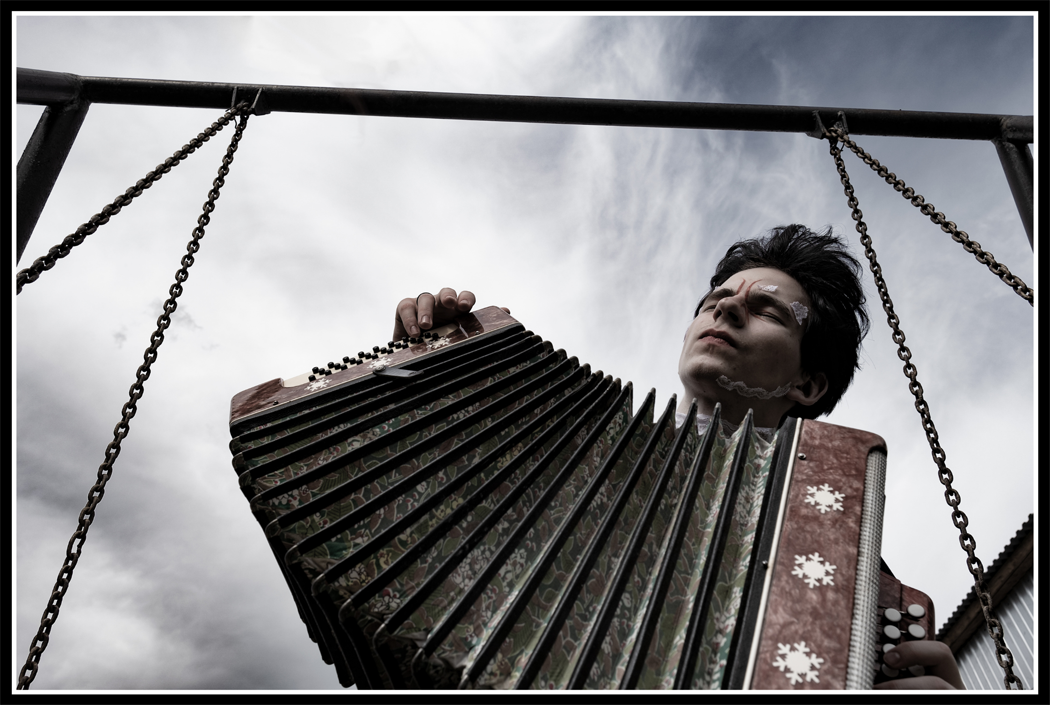 Nastasya Kudryashova | CâMax Whiter Than White
The imagery in your series seems deeply connected to ritual, sacrifice, and transformation. What role do ancestral traditions and folklore play in shaping your narrative concepts?
All I’m doing is looking for a solution to preserve the legacy that is fading into oblivion, so the role of ancestral traditions and folklore is not just the main role, but is the beginning, middle and end.
I have a law degree behind me, not art at all. I don’t have any artistic or directing education at all, so the process of work and creation – from conceptual to technical – always comes from my feelings and feelings of loyalty to one path or another. It’s like the etymology of village life: A village is not just a geographical concept, it is an entire ecosystem that has shaped cultural, social and economic aspects of life over the centuries, from which one of the main epics of all disputes about art, about the “traditional” form of creativity, that is, academic, has forever emerged. Behind all the arguments about the correctness of modern art, there is always an example of traditional knowledge of culture, which came straight from the villages, from folk art, when the traditional form of culture is based on a personal feeling – without school, rules and formulas, only an inner feeling: this is how what we rely on to this day was created. And so I create, starting from the history of my family. The history of my family began long before them, but they have become its center, and the only thing left for me is to keep and be. And maybe I’m still very happy that the Chuvash language in Cannes was heard from the lips of my grandmother in my short meter through her female history.
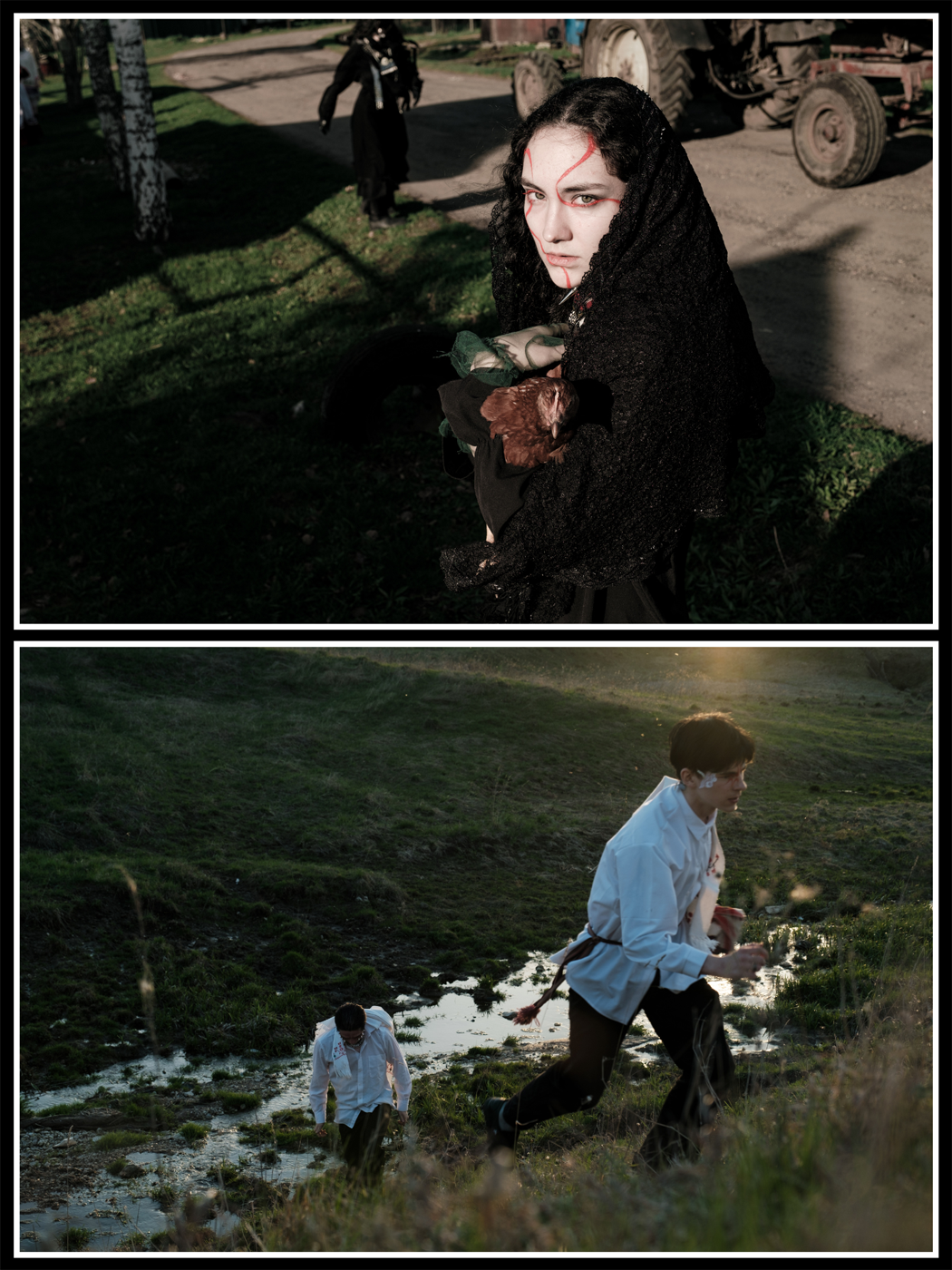 Nastasya Kudryashova | CâMax Whiter Than White
You work across multiple disciplines: filmmaking, creative direction, performance, visual art. How do these practices inform each other in a single project?
When I see the finished picture in front of my eyes, when the process hasn’t even begun, I already understand in what context, with what hands, with what intensity or subtlety, and where I can take the stage of work under my wing so that the final result is exactly what is called a competent presentation of cultural value. I work within the artistic reflection of the historical process and national traumas, so there is one oversight, one overlooked or overlooked detail, and the whole line breaks down to the ground. History does not tolerate mistakes. I have always adhered to the principle of “history is culture”, “politics is art”. One stands guard over the other, as a gateway to a reasonable society and the state of people during the change of centuries, catastrophes, climate and changes. Even while studying law, the main priority for me has always been “Art is not the result of politics, but art is a mirror as a history is a meaningful state of culture,” so now, adhering to this formula, I try to keep my finger on the pulse within several disciplines that touch in one project.
Maneuvering between administrative and artistic project management at the same time, I found a balance, and more than that, I found my own work formula: self–control + discipline + passion. Remove one coefficient and everything immediately collapses. For example, the work on my first play began not with technical processes, but with searches: In early summer, when we were discussing upcoming collaborations, my friend stopped me at my wedding performance idea with the words: “Save it, let’s hit it as a full-fledged play after the festival.” And it’s not that I don’t need to be told twice, give me the opportunity to fulfill a dream that I dreamed of, but which I didn’t approach, because the theater play.. What is a theater? I took only small steps towards theatrical art, starting with performances during concerts or with performative screenings, making mistakes, naturally doing what was in my power, but not doing what was ideal in my dreams. One of my favorite theatrical performances from my experience in the creative industry is the accompaniment of the old ensemble of the x Fashion x Music club at the concert “Winter Dream” in December. And then the opportunity to put on a full-fledged hour-long performance in my favorite walls with the unification of gastronomy, which has never been created in the Republic, looks cautiously into my eyes. Being a discoverer is, as usual, a favorite thing. And so many discussions, thoughts, conversations and sleepless nights have passed in understanding the idea. Throughout August, I rewound to reread almost every play and essay on the mythology of the Chuvash wedding of distant village times, after which I switched to Tatar, Bashkir, and Yakut mythology, and the roots of inspiration, surprisingly, took me by the hand in the Georgian play “Khanuma” by Avksenty Tsagareli in 1882. And after the rehearsal, the selection and sketches of costumes, budgeting, lighting, and more.
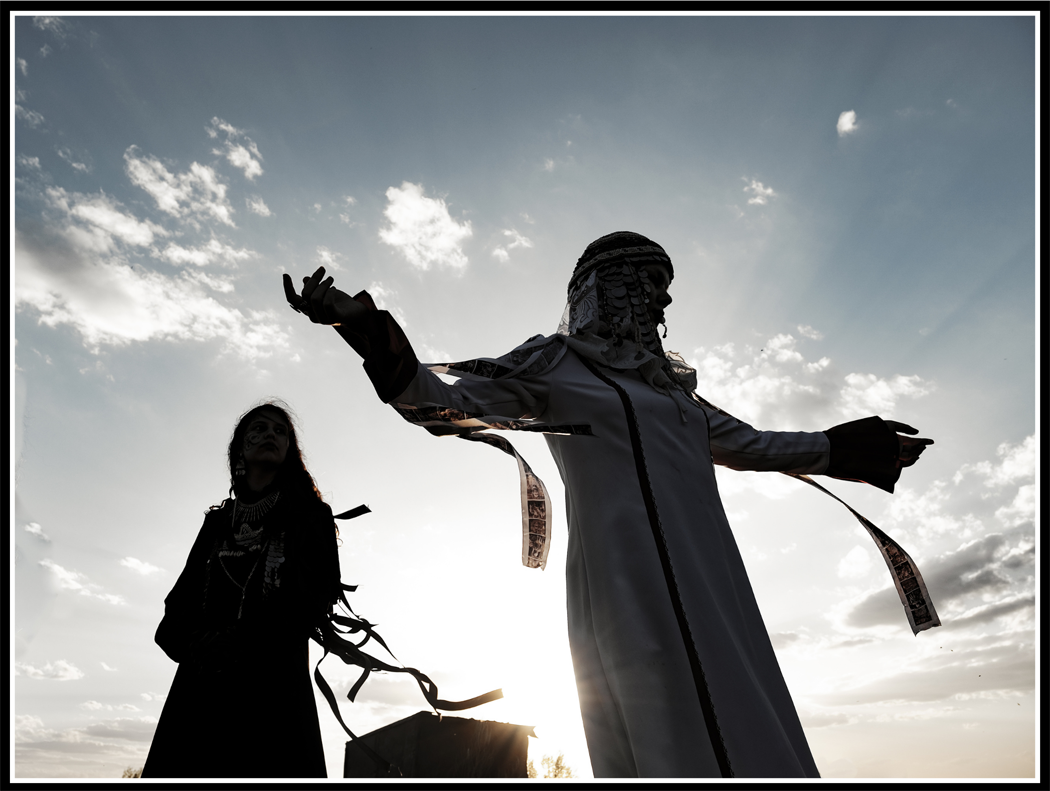 Nastasya Kudryashova | CâMax Whiter Than White
The characters in the photographs carry strong symbolic weight – particularly the figure offering jewelry to the sacred Keremeti tree. How do you approach building characters through costume, gesture, and myth?
Rather, it’s not me who creates the characters, but rather the mythology of the people itself that gives me the right to use its soil for my own vision. To a greater extent, I was raised by my grandmother in my early childhood among the rural steppes and thick wind, and since then her voice and attitude to the world around me have been fixed through me in a context where you are just an observer behind the scenes, anxiously guarding the main stage. And on the main stage – the nation, the characters of mythology and the original culture, taken straight from history. Therefore, here the costume, gesture and myth are independent characters that have already been created and correlate with each other with one main problem – disappearance, and somehow I had to find out and show it.
Your artworks are held in private collections of well-known actors. How do you feel about your art living in personal spaces rather than exclusively in institutional contexts?
It seems to me that this has the same respectful meaning as the storage of works in institutions. Museum curators often happen to be more enlightened in the idea of preaching the faithful preservation of works than in personal spaces. The main thing is for art to live, and it doesn’t matter where.
 Nastasya Kudryashova | CâMax Whiter Than White
As a researcher and cultural producer, how do you balance the desire to preserve tradition with the need to reinterpret and innovate?
I don’t find the balance. It’s a thin line between two eras, where every time you fall over one edge or another, crossing your own boundaries. But history doesn’t stand as a vertical straight line without ravines and high hills, imitating nature, then dying, then being reborn. Also here. The balance is understood and finds itself by itself after the result and the final picture of the whole process. The preservation of traditions and their transmission into the future through the present is not at all the preservation of any old rules in the oblivion of an untouched formula, it is a sensitive offering of oneself to the hem of folk art of the old school of art, where the concept of “old school of art” didn’t exist at all. And after that, there is a rethink. It is very easy to take traditional art, thoughtlessly put it through the prism of modern fashion and pass it off as a reinterpretation, when in truth it is an all–encompassing process of a large number of steps, where the most important thing is to listen to the origins and allow yourself to hear the truth, and not what you yourself want to hear.
Leave a Reply
You must be logged in to post a comment.