
Nadezhda Zheltkova
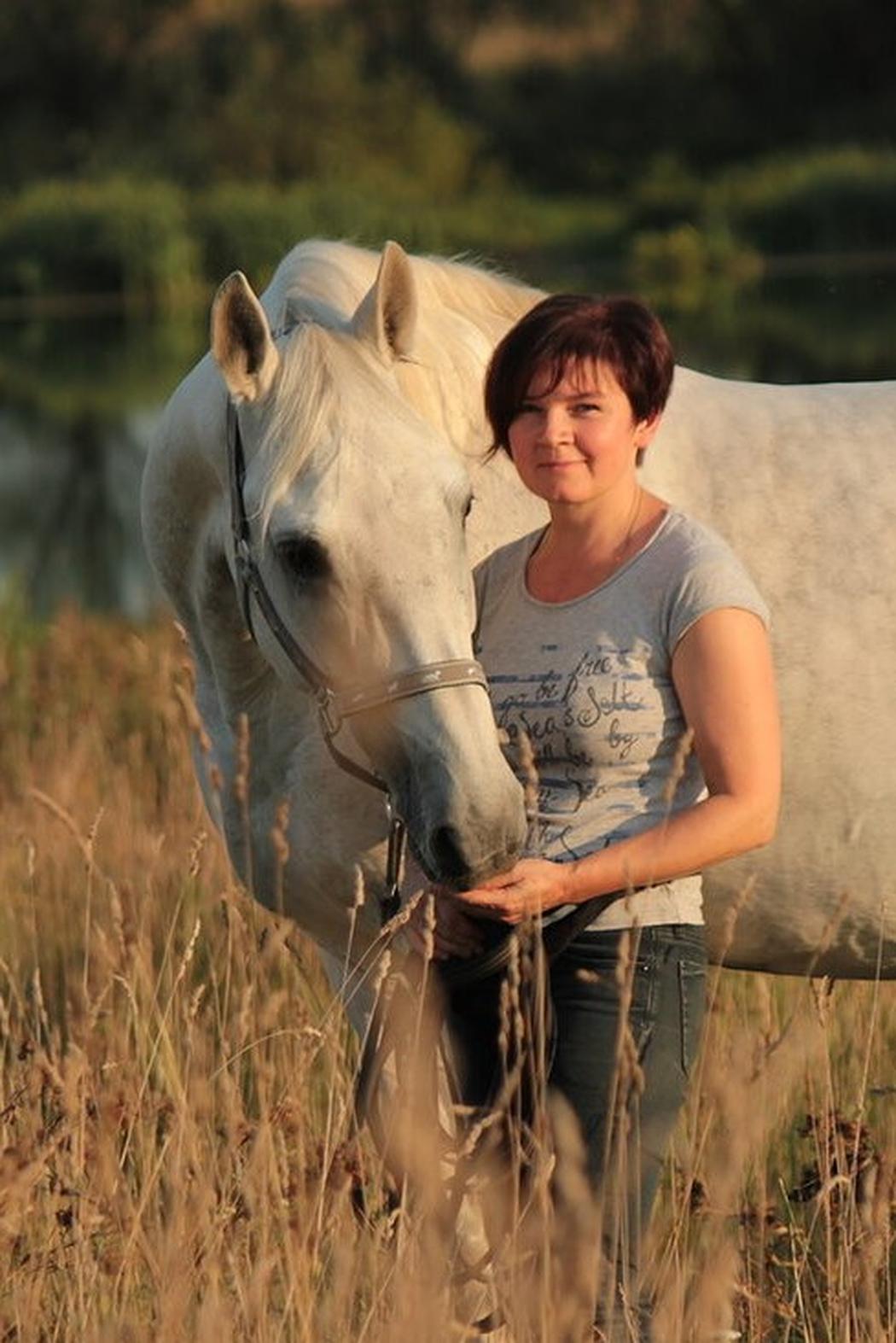
Your paintings combine texture, symbolism, and natural forms. How did you first come to explore textured painting as your main medium?
Once I tried textured painting, I was captivated forever. Working with a palette knife—shaping and building texture from pastes—is a meditative process that draws you in and becomes just as important as the final result. Emotions are released onto the canvas and freeze into thin, calm lines or thick, dynamic strokes. The movement of the hand with the palette knife is so uniquely personal that its texture cannot be replicated! This deeply inspired me.
While depicting nature, I felt a desire to bring back the tactile sensation of natural materials and move away from the modern glossy plastic aesthetic. I began to experiment—adding sand, stones, bark, and fabric to my pastes. The painting becomes not just an image of nature, but something more. You want to reach out and touch it, remembering the roughness of stones, the ruggedness of bark, the delicacy of petals, the silky feel of a mane.
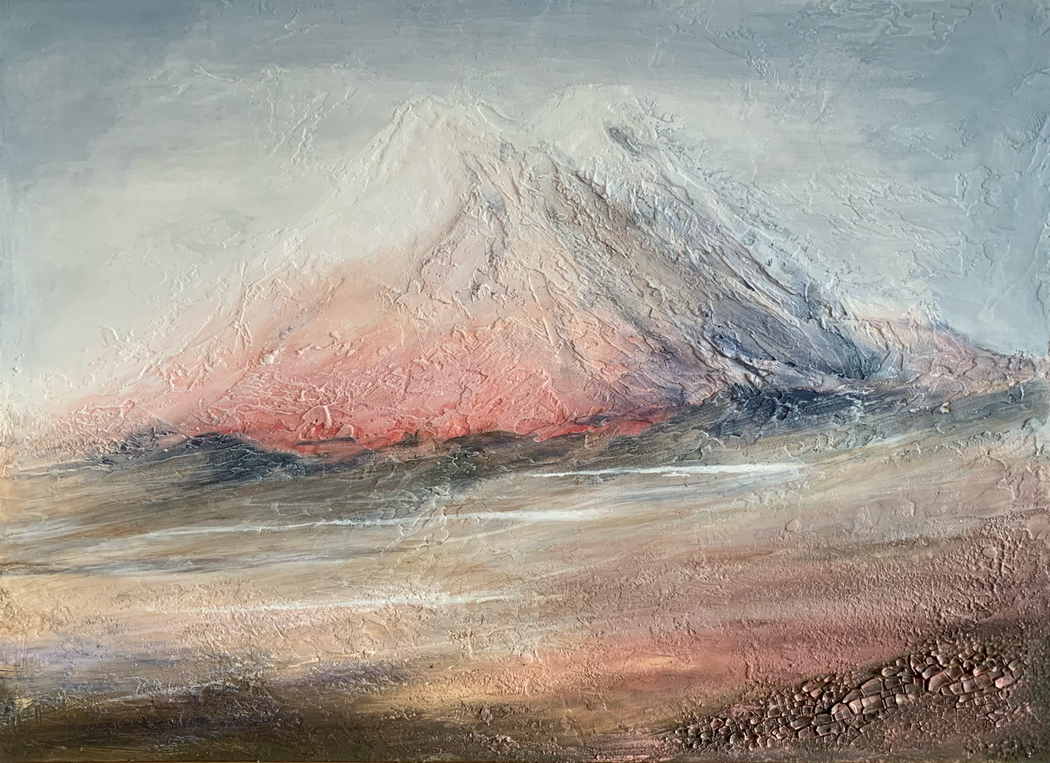 Nadezhda Zheltkova | Even Harsh Mountains Can Be Gentle | 2025
Horses appear frequently in your work — sometimes powerful, sometimes ethereal. What do they represent to you personally and artistically?
The history of humanity over many thousands of years is the history of domesticating and working with horses. This bond is imprinted in our subconscious. As a child, I often heard my grandmother’s stories about the temperament, beauty, intelligence, and sensitivity of the horses that lived in their family. My love for horses is a connection to my ancestors, to the history of our lineage.
To me, the horse is a symbol of voluntary service to humans, of nobility, and of freedom of spirit. From a psychological perspective, perhaps it represents the part of my personality that does not submit to logic, but lives by intuition and follows emotion. It is my inner voice and spirit.
In an artistic sense, the horse symbolizes antiquity, memory, primordial nature, a guardian, a guide between worlds. In my work, I depict horses in a stylized manner, striving to move away from outer beauty toward their inner essence — to convey their energy, inner world, feelings, and emotions.
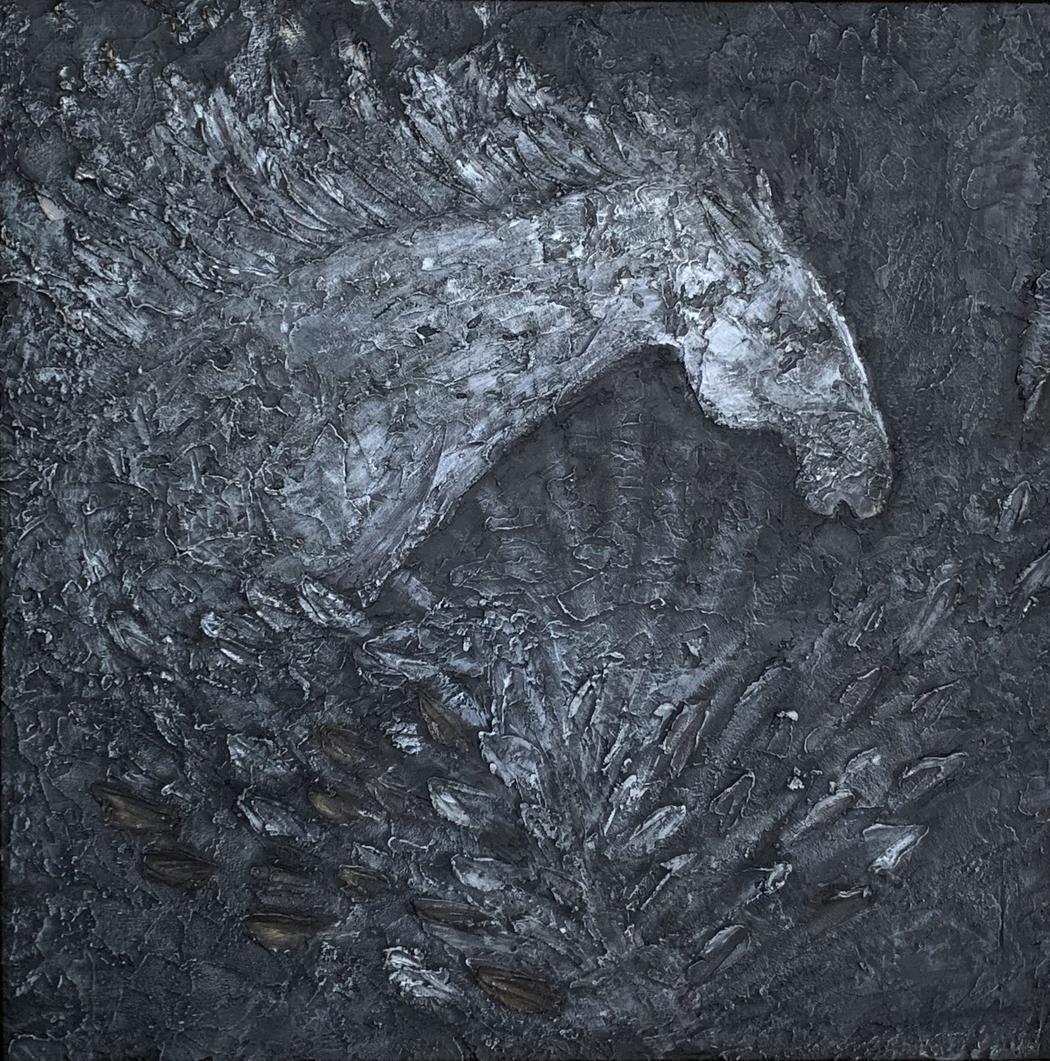 Nadezhda Zheltkova | Freedom To The Free | 2023
You mentioned your deep connection with horses and your studies in free hippovention. How has this experience influenced your creative vision?
When I got my own horse, I immediately realized that horseback riding is just the tip of the iceberg when it comes to the relationship with a horse. Being close to this animal, I felt its enormous emotional and spiritual potential. Horses are sometimes called “land dolphins” because of their highly developed emotional intelligence and complex social behavior.
As I began to explore different approaches to human–horse interaction, I discovered the field of free equine-assisted practices — supportive experiences that take place within a herd of freely living horses. This approach became the missing piece of the puzzle in my perception and understanding of horses. The stories that unfold within the herd during these sessions, the horses’ voluntary engagement in the therapeutic process — it is truly astonishing!
When I portray a horse, I strive to convey my experience — the understanding of equine psychology, their emotions and feelings, their true freedom and strength of spirit that I have come to discover. I want to depict not what a horse looks like, but what a horse feels like.
Many of your works seem to merge earthly and spiritual elements. Do you see your art as a dialogue between nature and the inner world?
We are part of nature, and our deepest emotions follow the same laws as the natural elements. By observing nature, we discover ourselves. Sometimes it is a dialogue between nature and the inner world of a human being; sometimes they are born simultaneously from the same source, and then no boundary exists between them.
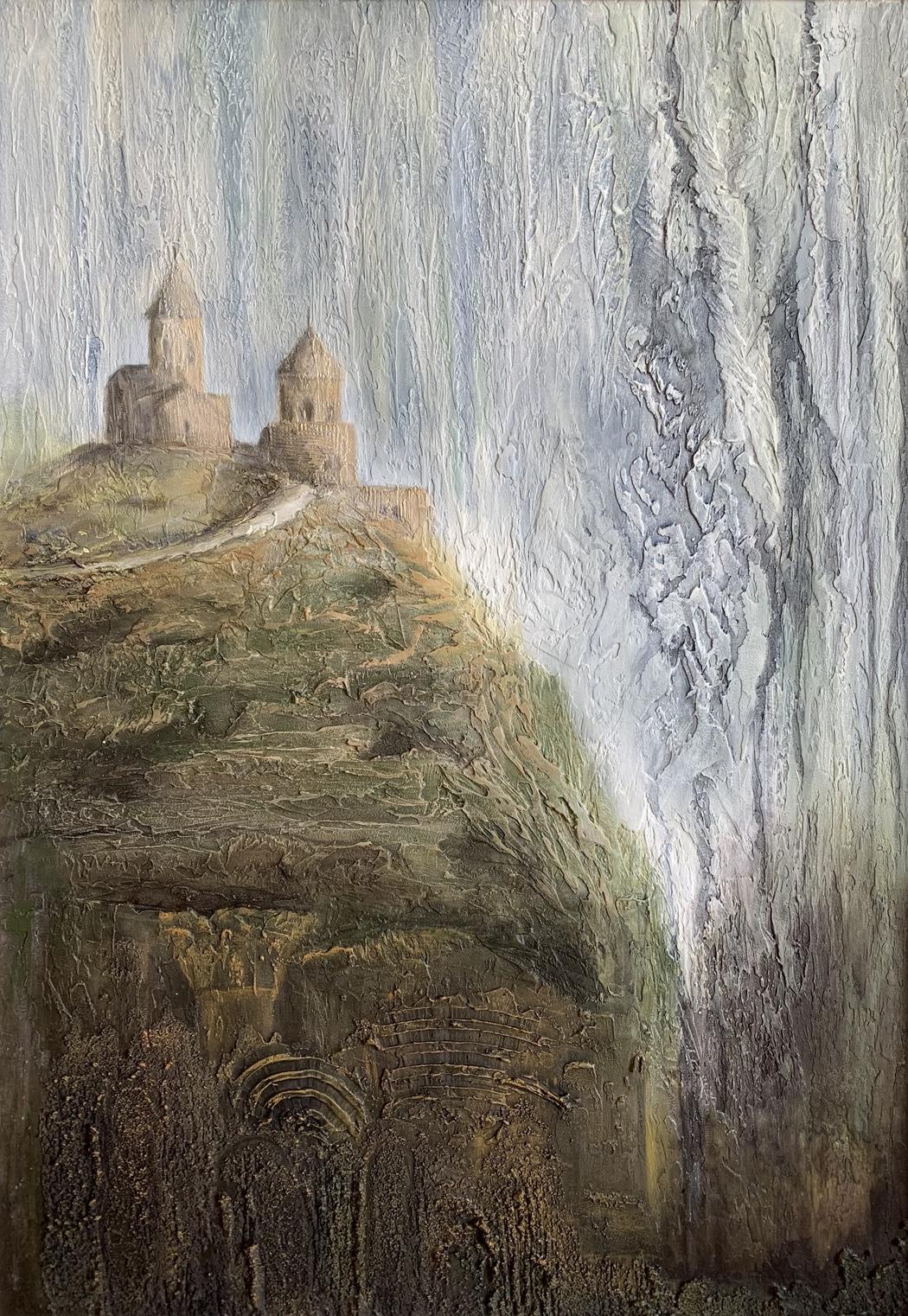 Nadezhda Zheltkova | Guardians | 2025
The color palette in your paintings — muted greys, golds, and earthy tones — evokes both serenity and mystery. How do you choose your colors?
For me, the primary source of inspiration is nature. I can spend hours walking with my dog in the forest in any weather, taking countless photos of stones, tree bark, aged surfaces, and the sky before rain — images that I later incorporate into my work. I love the palette of early spring and late autumn — nothing bright, just muted tones of brown, gray, and mossy green. During this time of year, all the decorative excess fades away, leaving only the essence. It puts me in a philosophical state of mind. In my work, I prefer a calm, subdued color palette so that nothing distracts from the meanings I embed in my art.
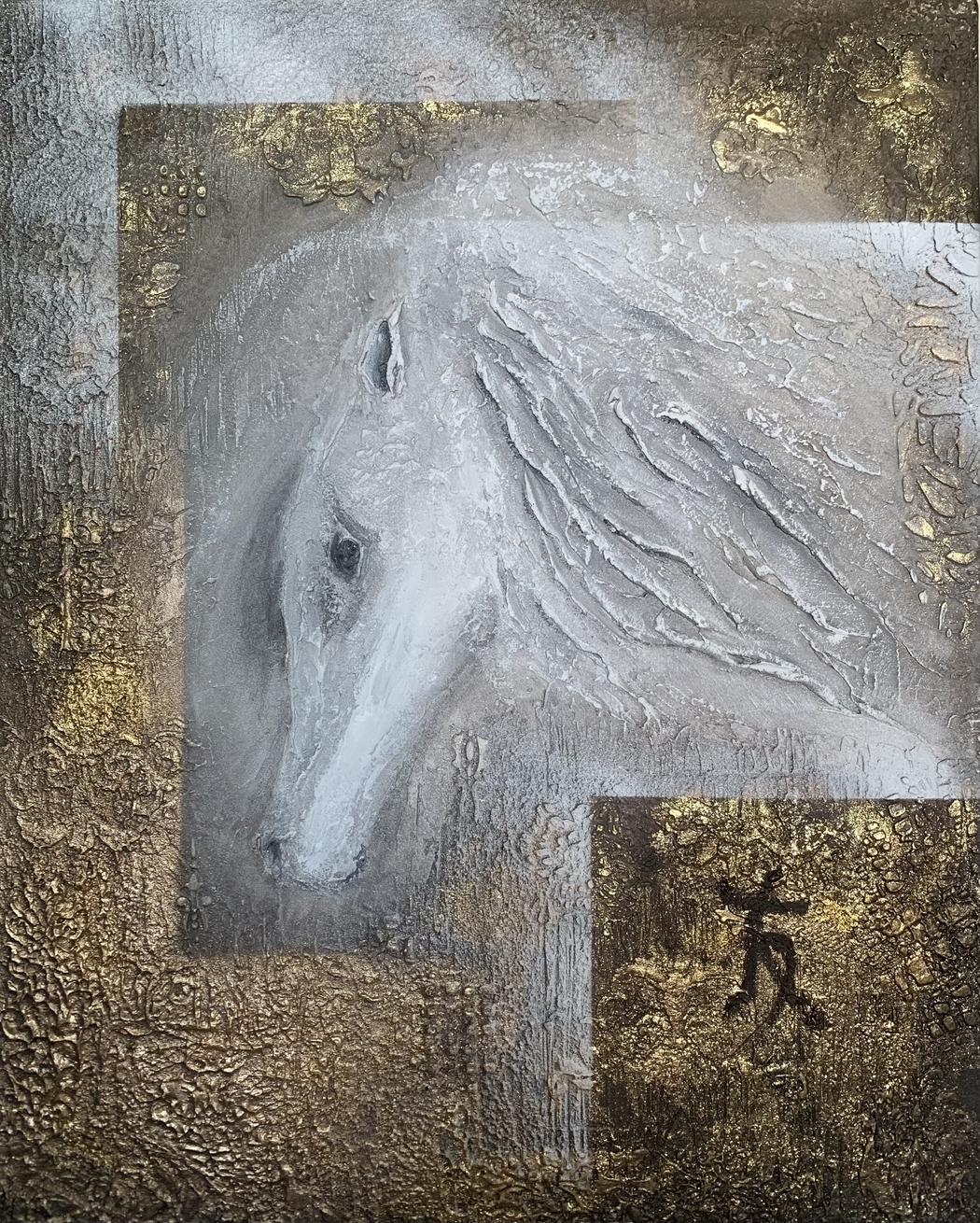 Nadezhda Zheltkova | Soul | 2024
You have an engineering and psychology background. How do these disciplines influence the way you approach composition and texture in your works?
My engineering background allows me to deeply understand the process of creating texture, always maintain structural balance in composition, and take bold creative risks while keeping in mind the specific properties of different materials—making the final result both intentional and predictable. As a psychologist, I look at a painting not merely as a beautiful image, but as a message where the viewer’s emotional response matters most. By using various compositional tools, it becomes possible to evoke a wide range of emotions in the audience.
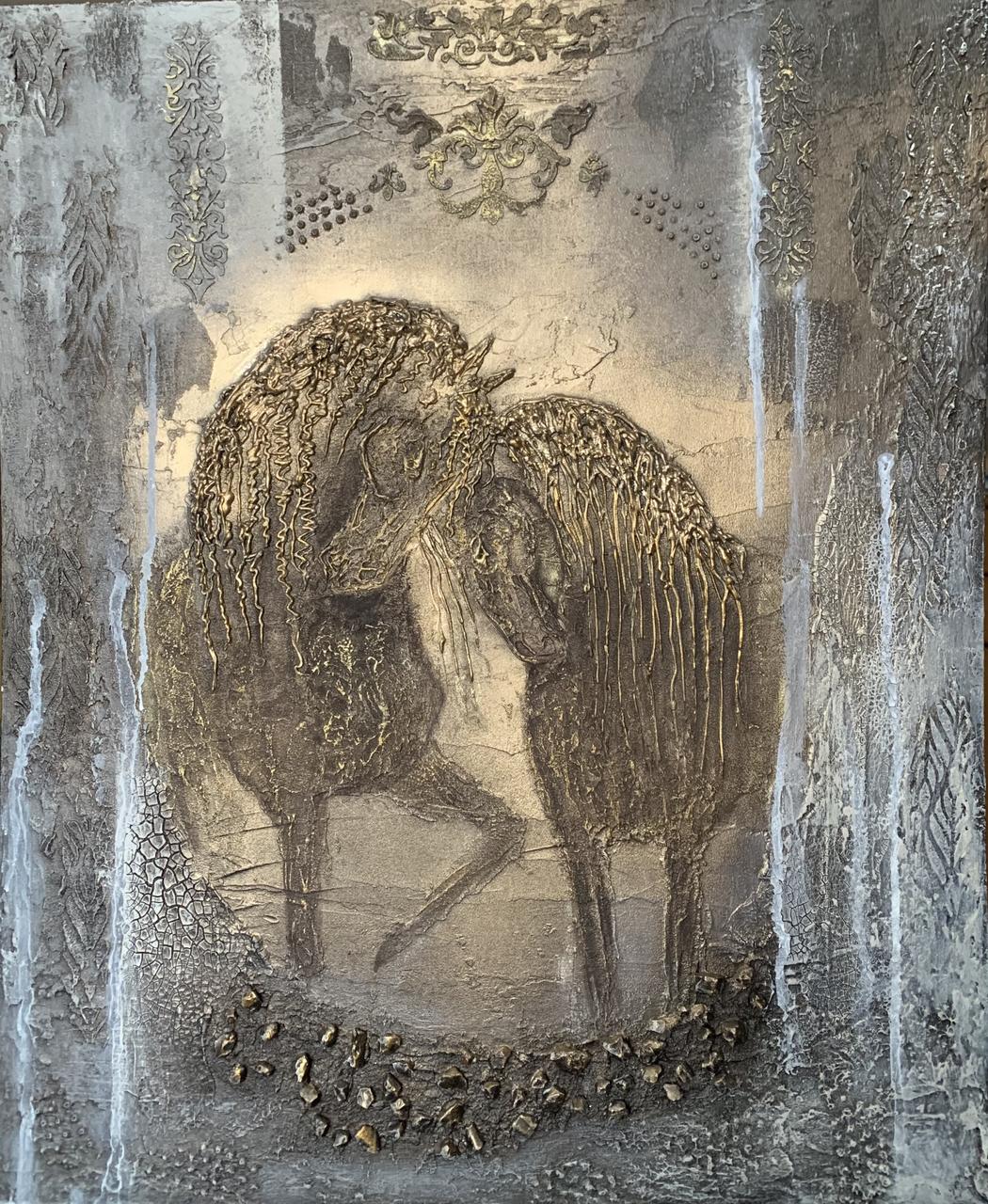 Nadezhda Zheltkova | Ode To Love | 2023
In your opinion, what role does art play today in helping people reconnect with nature and empathy toward animals?
Human beings tend to view the world through an anthropocentric lens — the belief that humanity is the center of the universe and that the value of everything in nature is determined by its usefulness to people. Unfortunately, we have grown increasingly distant from nature and often treat animals as mere resources. Until recently, we knew very little about the emotional lives of animals. Many great artists, striving for dramatic imagery, portrayed animals with expressions of intense pain and fear. Think, for example, of Bryullov’s The Rider or photographs of “hot” racehorses, exhausted after the track. Suffering, as a mode of existence, has become ingrained in our psyche on a subconscious level.
Art that represents not just an “animal” but an individual being with a unique inner world — an archetype of freedom and strength — can foster human empathy and, more importantly, inspire the desire to preserve the world that humans and animals share. Paintings depicting nature through a calm, muted palette and complex textures allow us to feel nature as if by touch, to recall our subconscious tactile experiences with natural surfaces. This deepens and personalizes the viewer’s emotional response, helping to restore our connection with the natural world.
Leave a Reply
You must be logged in to post a comment.