Mari Chung
How did your interest in visual storytelling develop, and what led you to create The Observer?
I’ve always been a huge fan of cartoons, and I’ve always believed that visual storytelling is one of the most powerful ways to communicate with people. A character can make you feel something or recognize something about yourself without saying a single word. I’ve always been fascinated by that ability.
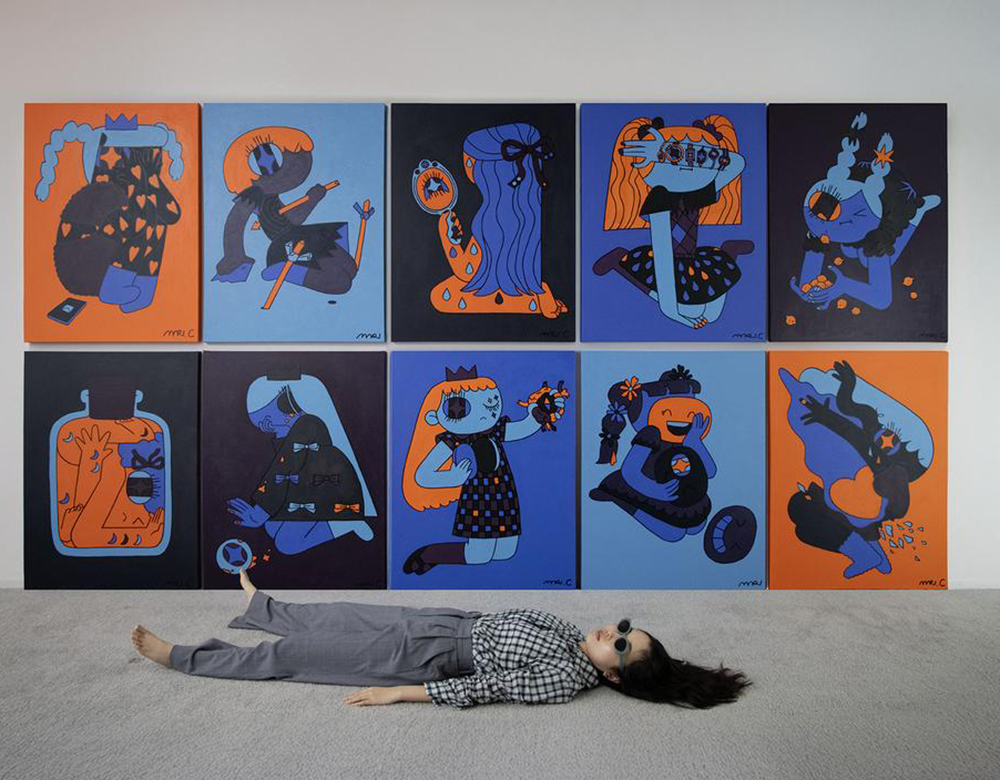
The Observer began as an experiment in exploring my own insecurities. They’re deeply personal subjects, and sometimes they can be uncomfortable or difficult to talk about. For me, the series also became a way of observing myself. As I went through different emotions and experiences, I began to discover these girls within me. Rather than approaching those feelings in a heavy or overly serious way, I wanted to make them feel delightful and intriguing. I felt that a cartoony visual language would be the perfect way to do that.
Visually, I was interested in creating a contrast between the girls’ cute, rounded shapes and their cooler color palettes. There’s something about that combination that feels both inviting and slightly mysterious. You might be drawn to a character because she looks cute, but then something about her expression or the atmosphere makes you pause and wonder: What is she thinking about? What is she going through? What is she trying to tell me? For me, that curiosity is the starting point of storytelling.
I think we all carry insecurities and parts of ourselves that we don’t always know how to understand. Through The Observer, I wanted to create characters who could make people curious about those feelings and perhaps help them recognize something familiar in themselves. I believe recognition is the first step toward understanding.
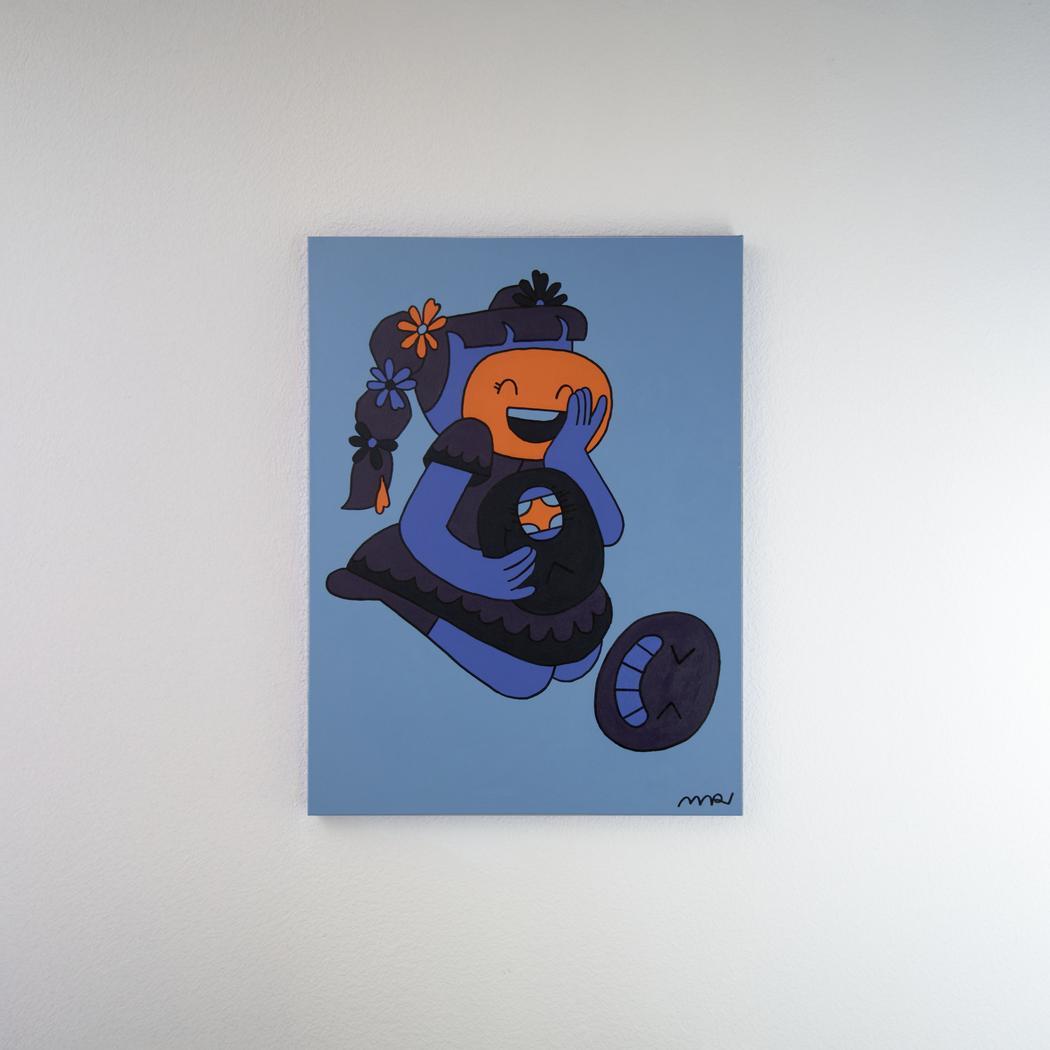 Mari Chung | Observer Emily | 2022
Who is “the observer” in this series — the character, the viewer, or yourself? How does this relationship shape the paintings?
I think the observer can be all three, but it begins with me.
As I observe my own emotions, I discover these girls within me. Once I give those feelings a form outside of myself, I can step back and look at them from a different perspective. Instead of simply experiencing an emotion, I can become curious about it and begin to understand it through the character.
Each girl also has her own perspective and emotional world. I want them to feel like individuals rather than just representations of my feelings, with their own stories that extend beyond what we see in the paintings.
Then the viewer becomes part of that relationship. Although the girls emerge from my personal experiences, their meanings don’t have to remain exclusively mine. I hope people can observe these characters, connect with their stories, and perhaps discover something about themselves, too. In that way, the paintings become a meeting point between my inner world and the viewer’s.
How has working in the Hollywood animation industry influenced your approach to storytelling within a single, still image?
Working in animation has taught me how much a single pose can communicate. A strong performance often starts with one strong key pose that immediately tells the audience something about the character, even before she moves.
I brought that same thinking into The Observer. I wanted each painting to feel like a single frame from a film: it tells us something, but also leaves us curious about what happened before and what might happen next.
For example, in No. 1 Mary, I’m exploring shame. I imagined her yelling, “Don’t look at me! Or my watches will watch you back!” She’s wearing watches with fake eyes on them, almost as a defense against being seen.
But her body language tells a different story. She’s hunched over timidly, hiding her own eyes behind the watches. Her other hand is tucked beneath her knee, and there’s even a little teardrop pattern on her skirt that hints at what she might really be feeling.
Is she trying to scare people away? Is she crying? Why is she hiding if she’s the one telling everyone not to look at her?
I love creating these little contradictions. A still image doesn’t need to tell the entire story. It just needs to capture the right moment to make someone stop, feel something, and want to know more.
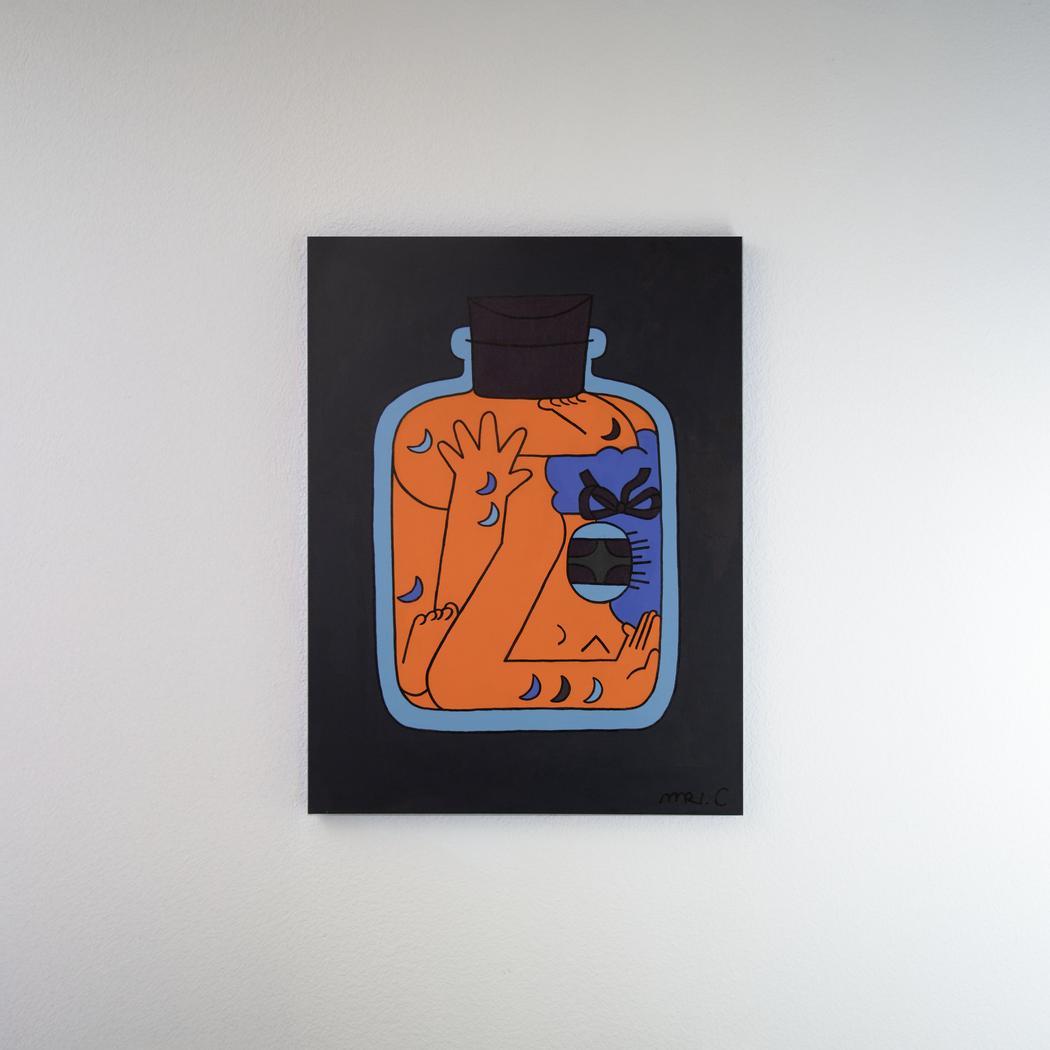 Mari Chung | Observer Ruby | 2022
How do you develop your characters — from their appearance to the emotional world they inhabit? Does a character usually begin with a feeling, a visual idea, or a story?
For The Observer, the characters usually begin with a feeling rather than a visual idea or a fully formed story.
As I go through different experiences in life, I try not to avoid the emotions that come up. Instead, I face them and listen. I often write in my journal because it’s sometimes difficult to understand exactly how I feel, and writing helps me find more precise words for those emotions.
Then I start sketching by hand and let the characters take shape naturally. I don’t necessarily know what they’ll look like at first.
And then, something funny happens! Once I finish a rough drawing, it’s almost as if the character starts yelling at me, telling me what she wants to say. Suddenly, her voice and story begin to emerge from the drawing.
So my process is less about deciding who a character should be and more about listening until I begin to understand who she is. I follow the feeling, let the character emerge, and discover her story along the way.
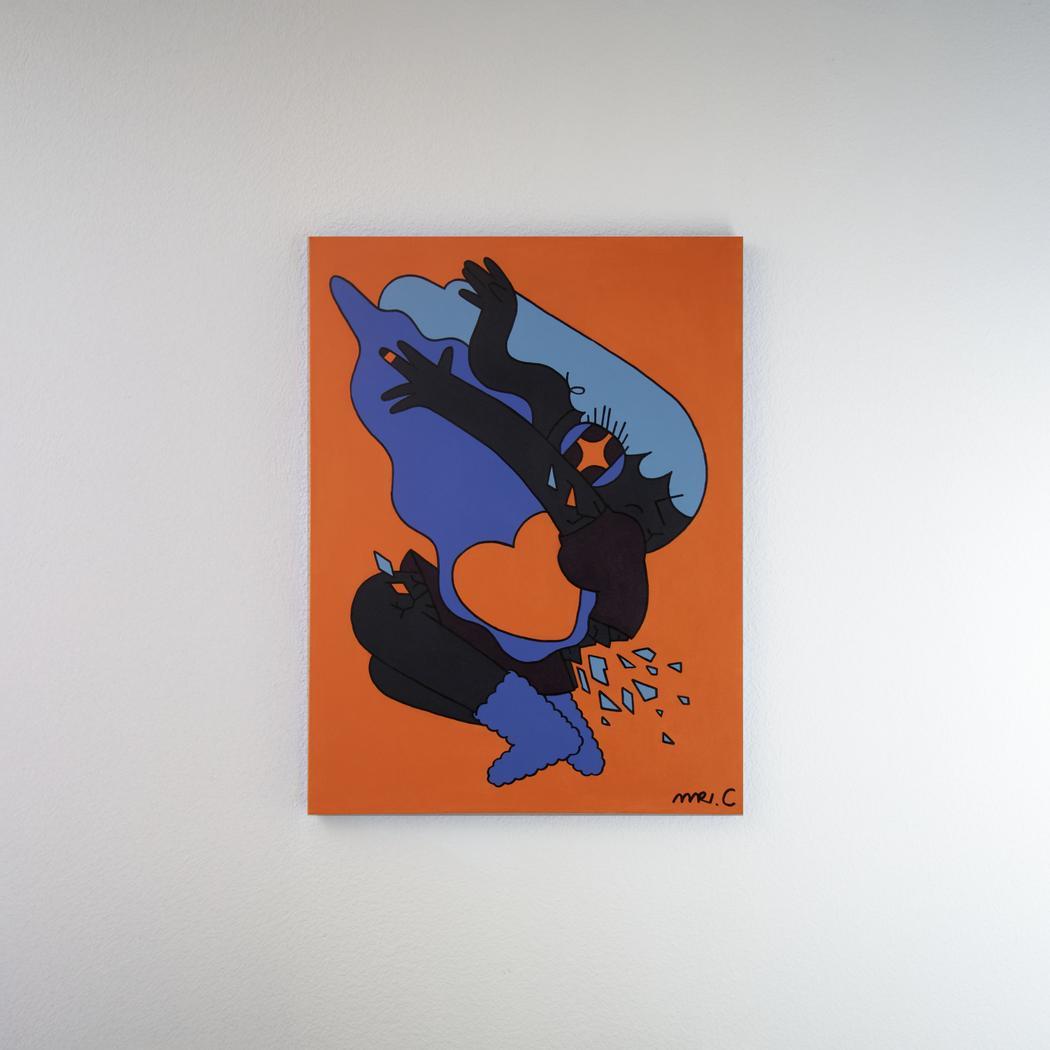 Mari Chung | Observer Sandy | 2022
The series explores vulnerability alongside the desire to protect oneself. How do you translate the tension between revealing emotions and keeping them hidden into a painting?
Even when I have a very specific emotion in mind while creating a painting, I don’t necessarily explain that emotion in its description. Instead, I give each girl a short, quirky, sometimes funny story. I like letting the viewer discover what’s happening beneath the surface rather than telling them exactly what to feel.
I think that tension comes through in the characters themselves. They might try to hide, protect themselves, or act as if everything is fine, but their poses and expressions reveal something more vulnerable. It’s almost like they’re trying to keep their feelings a secret, but they’re not very good at hiding them!
I enjoy that little contradiction between what a character seems to be saying and what her body language tells us. The humor makes the story feel lighthearted, while the emotions underneath give it another layer. I want viewers to enjoy the painting as a funny, curious little story, but also have a moment when they recognize something deeper in the character.
Your practice spans both 2D and 3D. How does working across these formats influence the way you think about the figures and spaces in your paintings?
Working across 2D and 3D has definitely influenced how I approach my characters. Even when I’m creating a flat painting, I don’t think of the character as just a drawing on a surface. I think about how she occupies space and how her body turns in perspective, even when the painting style is very flat. My animation background naturally makes me pay attention to the volume and physicality of the figure. I’m also interested in how a character’s pose can change depending on the viewer’s point of view. Small shifts in perspective can change how we interpret her emotions.
Actually, I’m planning to bring the girls from The Observer into the physical world by turning them into sculptures! I’m excited about the idea of letting people experience these characters beyond a flat image, seeing them from different angles and feeling as though they really exist in the space around us. For me, it’s another way to bring their little worlds to life.
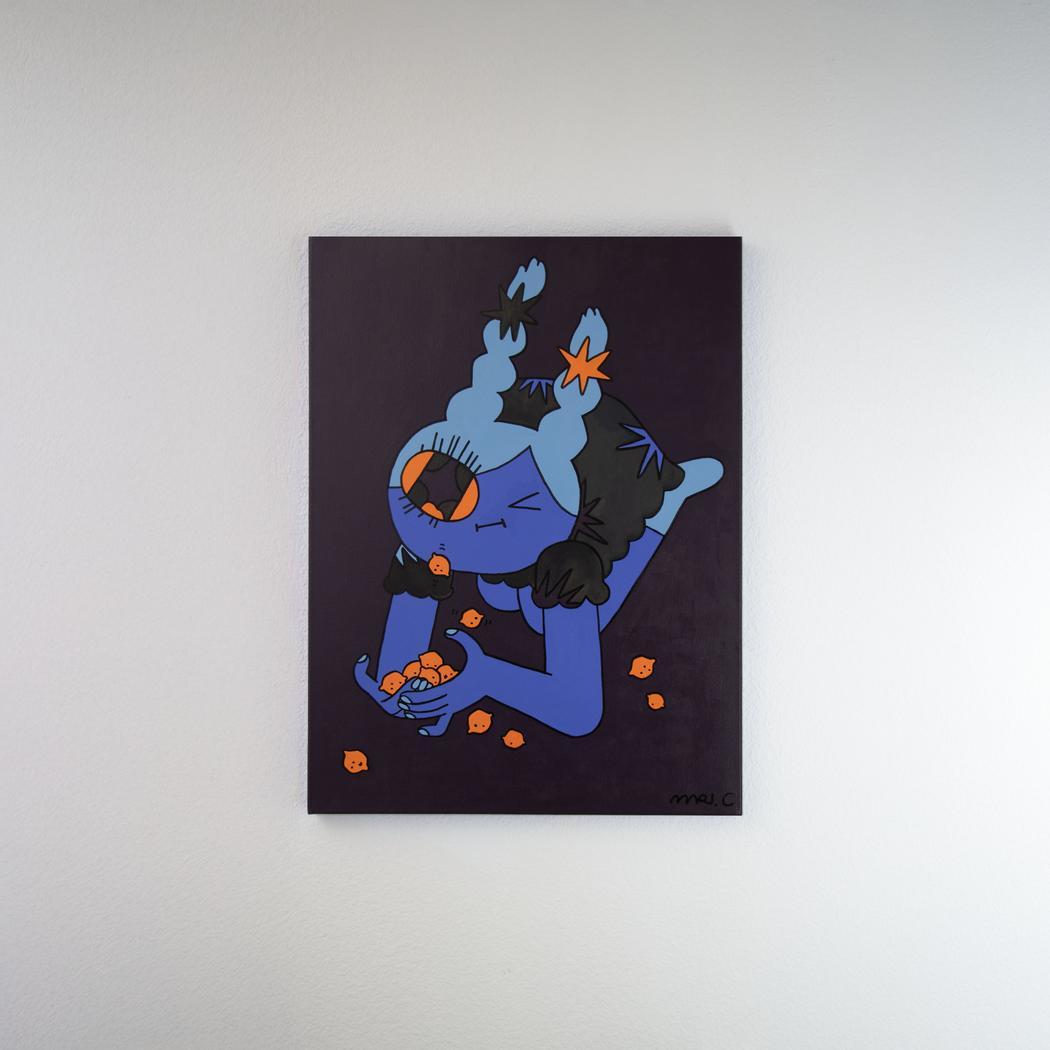 Mari Chung | Observer Wendy | 2022
What would you like viewers to recognize in these vulnerable figures? Have any responses to the series surprised you or changed your understanding of a painting?
I hope viewers can recognize a little bit of themselves in these girls in a fun, playful way. We all have insecurities and vulnerable parts of ourselves that we sometimes try to hide or avoid. I want people to feel that it’s okay to acknowledge those feelings rather than push them away.
Although the girls emerge from my own experiences, I don’t want to dictate exactly how people should interpret them. I want to leave room for viewers to bring their own experiences and emotions to the paintings.
What’s interesting to me is that a character can mean one thing to me but something completely different to someone else. A viewer might connect with a particular expression or pose because of something they’ve experienced in their own life. I find that possibility really exciting because it means the story can grow beyond what I originally put into the painting. Ultimately, I hope these girls encourage people to observe themselves with a little more curiosity and kindness, just as I did when creating them. Sometimes, seeing a part of ourselves reflected in a character helps us recognize feelings we haven’t fully understood before. I think that’s the beauty of visual storytelling: the work doesn’t end when the artist finishes the painting. It continues through the people who connect with it.