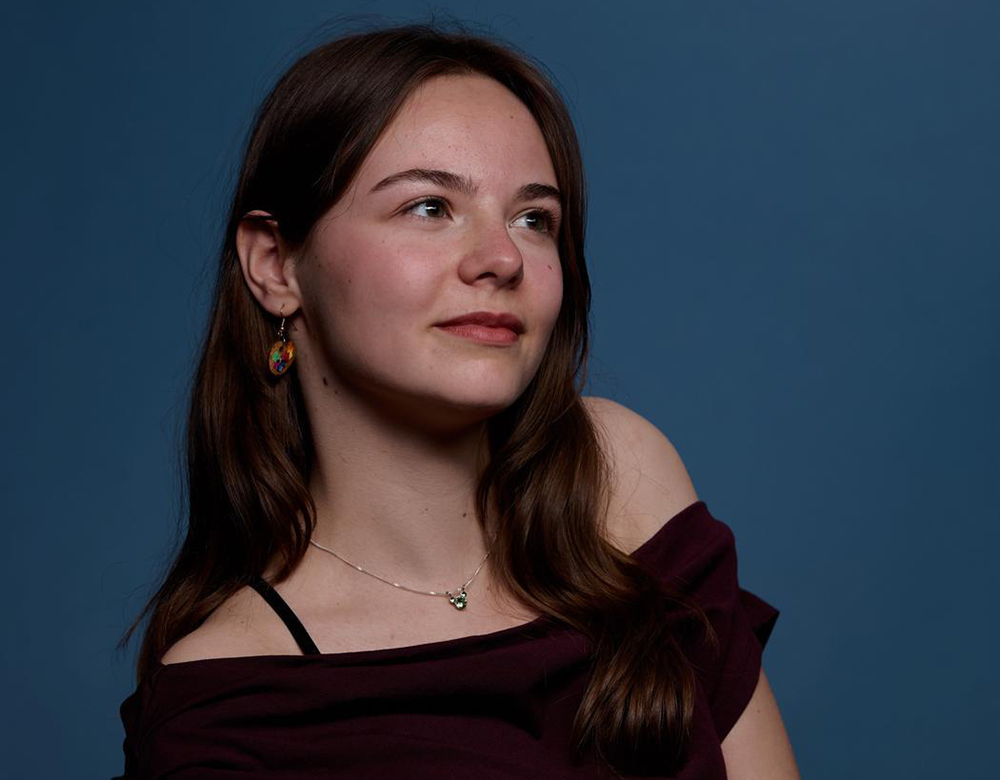
Meijke de Jong
You describe being drawn to inconspicuous, “funny” images that briefly catch your attention. Could you share a recent example and explain what made you want to paint it?
In the weekends I work a part-time job at HEMA in the restaurant section. When we go up to the cafeteria to take our break, we pass through some pretty old and weathered hallways. In the ceiling there are holes where lights used to hang, which look like little faces with crooked smiles. Despite me having worked there for four years already, I only noticed them last summer while randomly looking up. When I showed the ceiling smileys to a colleague of mine who has worked here for over 15 years, she pointed out a crack in the concrete floor that looks like a cartoonish young kid’s face. She noticed it years before I even started working there and almost every time she goes down the stairs she still looks at it, and now I do too. I love that people share these moments they notice themselves after I show them my work or inspiration! Honestly, the HEMA has been a source of inspiration a few times now. Last year, while doing the dishes, I came across a cup that had previously contained a cappuccino. The leftover foam and coffee had formed a very literal smiley face with crooked eyes at the bottom of the cup. By chance, a colleague had her phone with her and was able to take a photo of the cup. Ultimately, this became the ‘transient smile’ series.
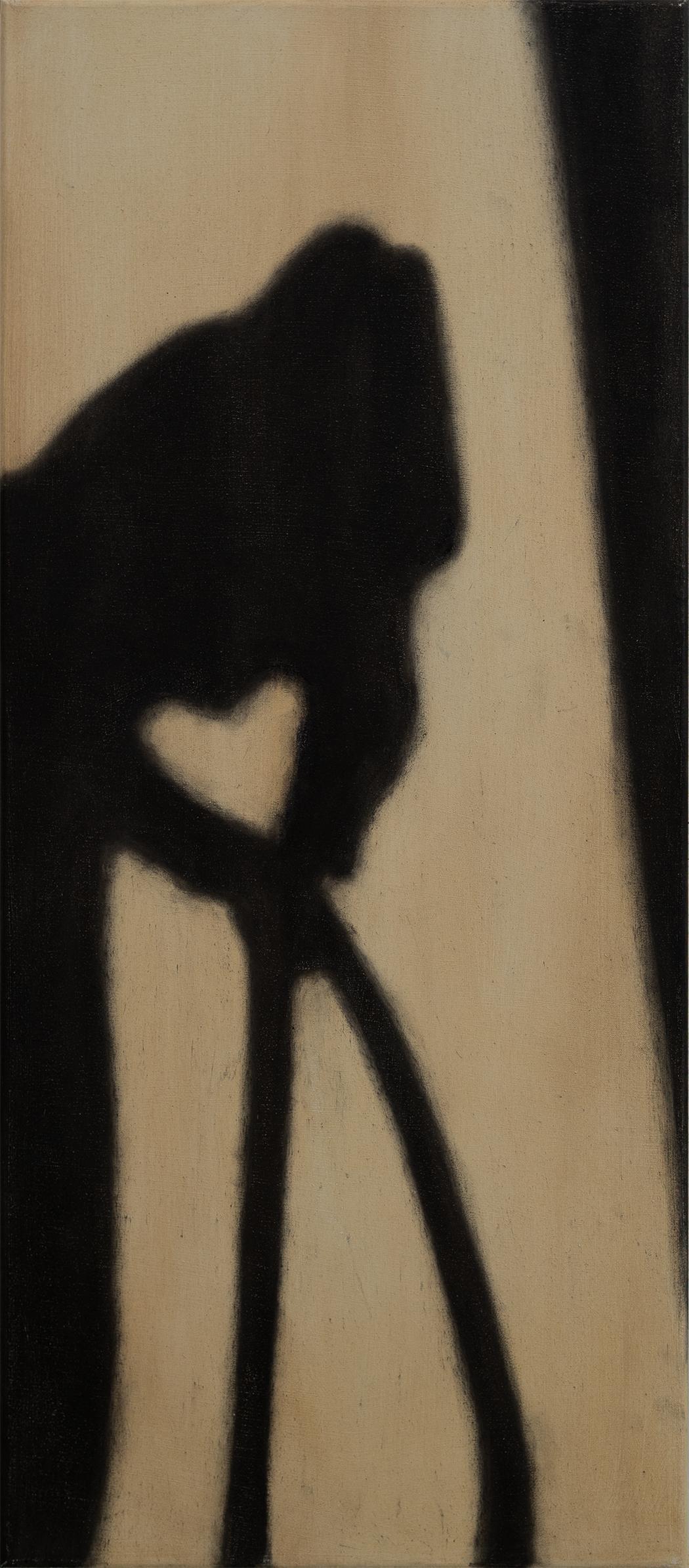 Meijke de Jong | Afternoon Window | 2026
You mention that painting helps you get a grip on your sense of time. How does your experience of time change while you are working on a painting?
Time is of course relative, and we have tried to make sense of it using measurable things like days and months. And that is the main thing I struggle with. The amount of time that has passed, especially when it comes to days or months, does not always make sense to me; often it feels like the days and months pass faster than they should. The paintings make moments in time tangible and so the process of making the paintings becomes a timekeeping tool for me. Rather than using the numbers of the days, weeks or months to keep track, I look at how long I’ve been working on a piece and how I need to plan ahead. It also makes me feel more grounded and present. Like I’ve noticed lately that I’ve been more restless after not having been able to paint for a while due to moving into a new studio. It feels like the days are going by too fast for the things that I want to do.
Your paintings develop over weeks or months. What happens to the original fleeting moment as you spend so much time recreating it?
Well, I wouldn’t say I’m recreating it, but rather capturing how I look at the moments and images. I think it’s more fitting to say that they are interpretations. Mainly the original moment becomes something to share with others. Like I mentioned earlier, when I share images of the moments my paintings are based on or the paintings themselves, it’s not uncommon for people to share something similar with me. It’s such a sincerely human reaction that I adore. Especially with art but in general as well, people are often trying to find something to relate to in order to understand it better. During the graduation exhibition I’ve several people come up to me with stories and images to share with me. An artist who had a leak in his ceiling that took the shape of a sheep. Someone who had tagged along with a friend showed me a picture of a massive field with one bright red poppy in it. One of my philosophy teachers told me how the smell of ‘going anywhere’ reminded her of working in the garden the previous week with her fiancé. All these people are becoming more aware of these little moments in their own lives and are sharing it with others, which is one of the main things I’d hoped my paintings would do. At the same time, the moments also become personal keepsakes. It’s now a personal story and journey that I keep going back to, which is also why some paintings become series. Even if the story behind it doesn’t always make sense to other people, it’s important that it does to me.
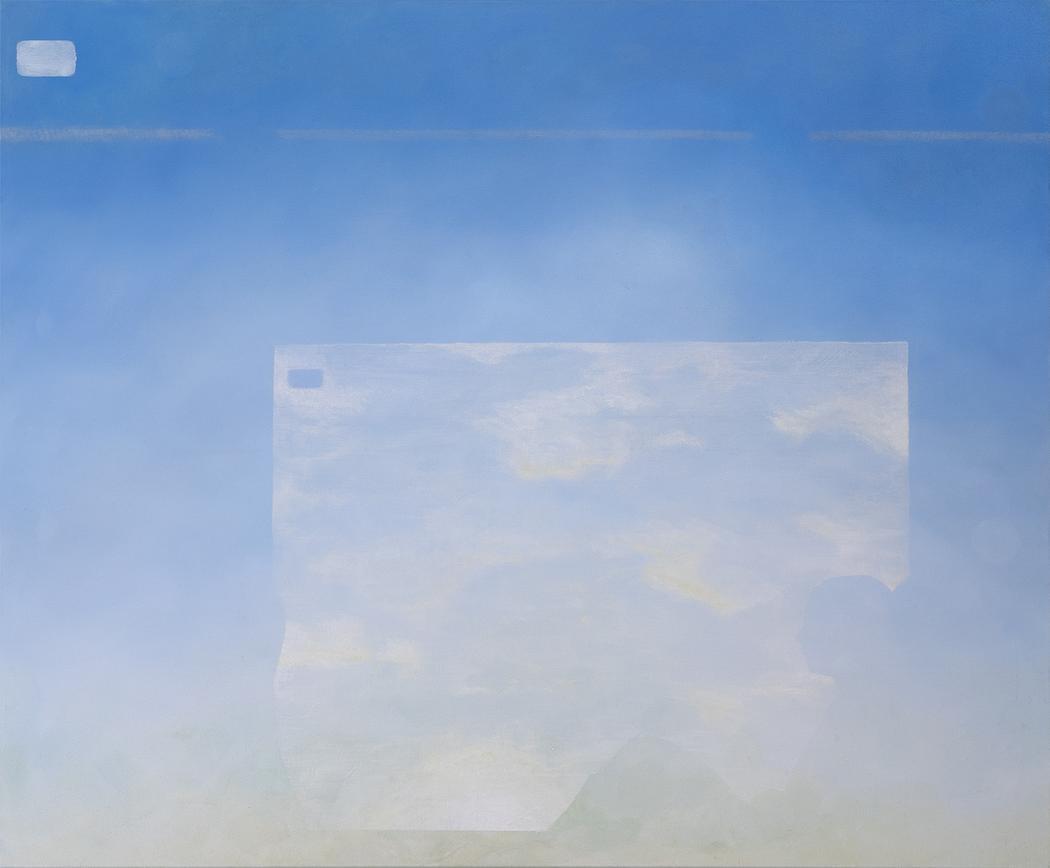 Meijke de Jong | Going Anywhere | 2026
You work with many transparent layers of handmade paint. How do you make your paints, and what does this approach allow you to achieve visually?
Initially I started using pigments after visiting a tiny art story next to the Galleria dell’Accademia in Florence. Inside they had a rack of pigments they mixed themselves, one of which was natural green earth. I decided to give it a try and fell in love with the process of handmaking paint. Most of the pigments I currently use are from Verfmolen de Kat, one of the five windmills on the Zaanse Schans. Since last year, I have started experimenting with making my own pigments or using natural materials as well, such as with finely ground coffee. Using a pallet knife and paint muller I mix the pigment with of (bleached) linseed oil to create oil paint. I vary the amount of linseed oil and painters medium based on how transparent I want the paint to be. This process has given me a better understanding of oil paint, whilst also giving me more control over its transparency and colour. It also, once again, slows down the process of making a painting for me physically. Some days I will spend purely mixing paints without putting a single drop of paint on a canvas.
What first inspired you to bring scent into your paintings, and how do you choose a scent for a particular work?
It started with an irritation at the Uffizi Museum in Florence. There are many great paintings inside this museum, such as Primavera by Botticelli. Most people were stood at a 10 meter distance trying to take a picture of the whole painting. However the crowd seemed quite irritated, and as it turned out there was an elderly couple standing only a few centimetres away from the painting. There are more than 500 unique plants depicted in this painting, which the couple was actively discussing. But that didn’t matter to the crowd, they just wanted their picture. And I thought it was such a shame how for them a picture had become the entire experience of the painting, rather than being physically present. I wanted to deter that as much as possible with my own paintings without having to put up a sign literally saying “don’t be afraid to get close and move around”. The use of smell in art is not uncommon, however when it comes to paintings specifically it is. The sense of smell is also the only one that is directly processed in the brain without filtering; you react to it before you realise it. In the beginning I mixed the fragrance oils with the oil paint directly. However as the painting began to dry and cure, the smell completely vanished. A fellow student actually came up with the idea to pin cotton balls behind the frame. The cotton balls hold on the smell incredibly well, and if wanted can be ‘refreshed’ easily. As for choosing smells, I use the smells that I personally link with the moment. The first painting I worked with smell with was ‘the warmth that remained’, where the smells mirrored my associations with the image of a motherly figure in a brown-orange palette. Other times it’s more literal, like the ‘little world (mikros kosmos)’ series, which uses cis-3-hexanol: the smell of cut grass.
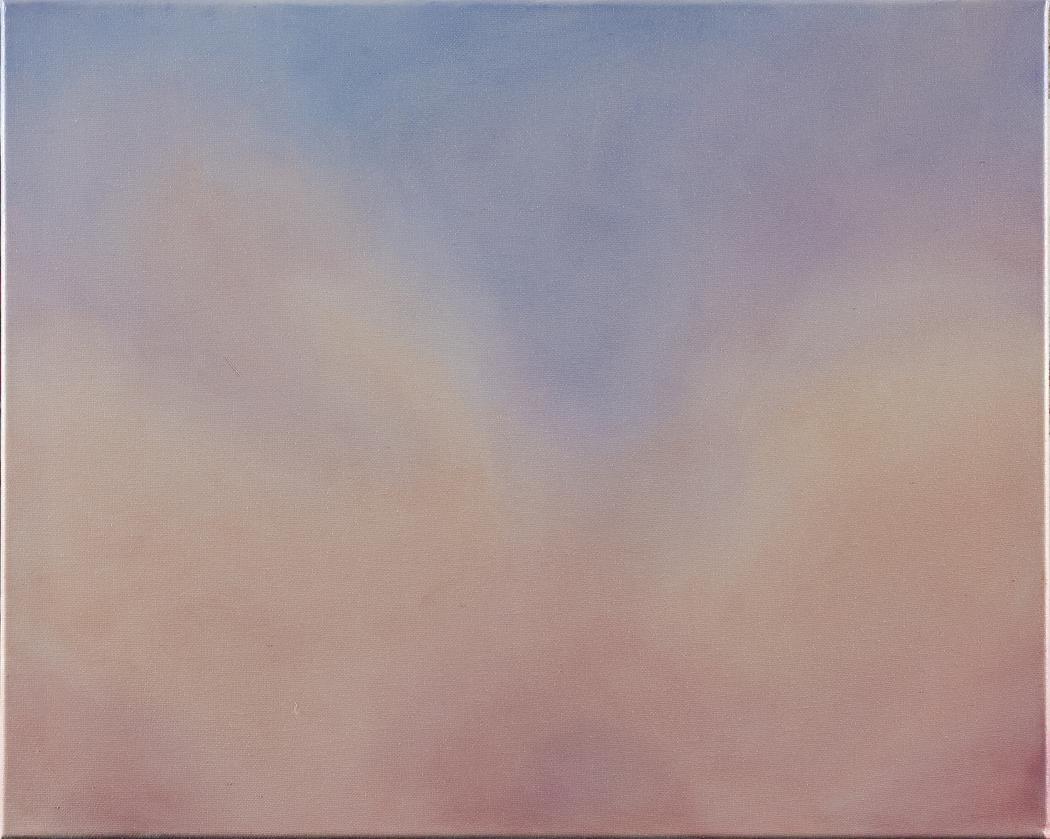 Meijke de Jong | Just Look Up | 2026
Your thesis explored smell as a way to encourage a more embodied encounter with painting in white cube galleries. What did your research reveal about how people behave in these spaces?
The main culprit for how people behave in gallery spaces is ocularcentrism: out of all the senses, everything in our contemporary western society is centred around sight, such as the preferred way of gaining knowledge. The white cube aesthetic is a direct result of this. No distractions, such as colour outside of the painting, are allowed. Only the most ‘neutral’ possible viewing experience. The walls being white gives of the idea of value and worth, that the item on the wall should not be contaminated and that we should keep our distance from it. It has become a subconscious barrier. And since the rise of the white cube aesthetic in the early twentieth century, this kind of experience has become the norm.
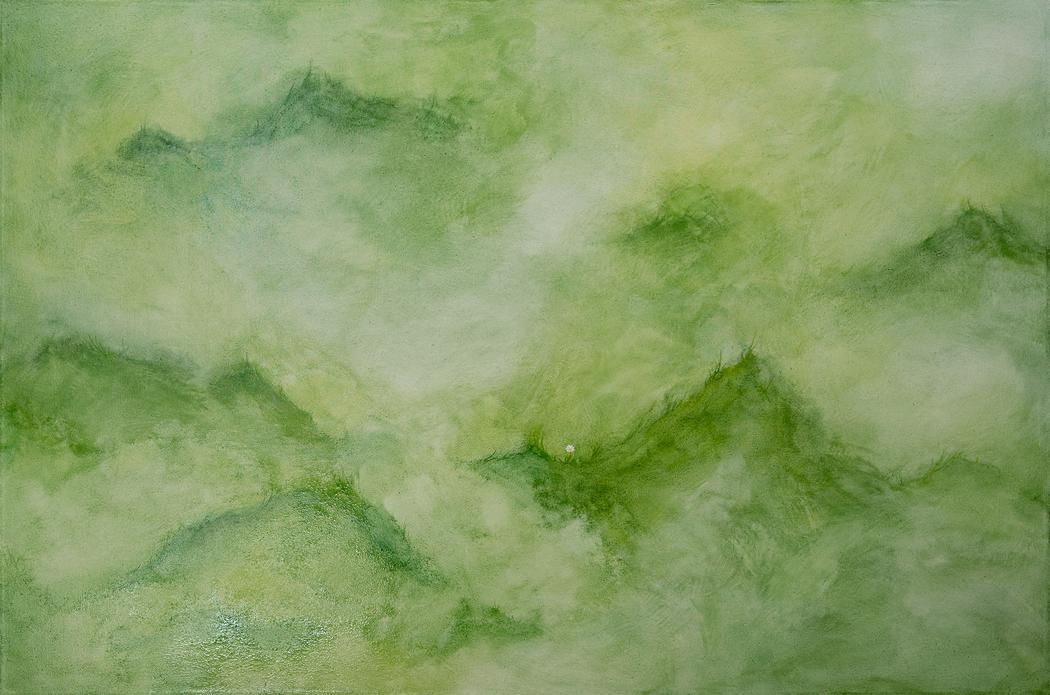 Meijke de Jong | Little World (Mikros Kosmos) | 2026
Have you observed viewers slowing down or moving closer to your paintings because of their scent? Was there a response that surprised you or changed your thinking?
Absolutely. The first time I got to try it out in an actual white cube gallery space was at Concordia, Enschede in April of 2025. Three out of the six paintings had smell and additionally there was a small table with the pure fragrance oils at the entrance. After viewers had been informed of the smells during the opening speech, many people went straight to the paintings and almost touched the paintings trying to smell it. They also kept moving between the paintings rather than only looking at them once. This movement wasn’t only restricted to my paintings, as this was a duo exhibition with another student (Caroline Schot) who had more sculptural work. Some of her work also used earth and people got close to the ground to smell it as well. The same kind of movement happened during the graduation exhibition. Although that was not in a purely white space, several of the walls had a deep blue-green colour as to help break the subconscious barrier. One thing what surprised me was something that happened the week of the final exams. The paintings had been on the wall for a while and the smells had slowly filled the room. A few students came in and asked if they could stay or even meditate for a little right before they had their own exam.