
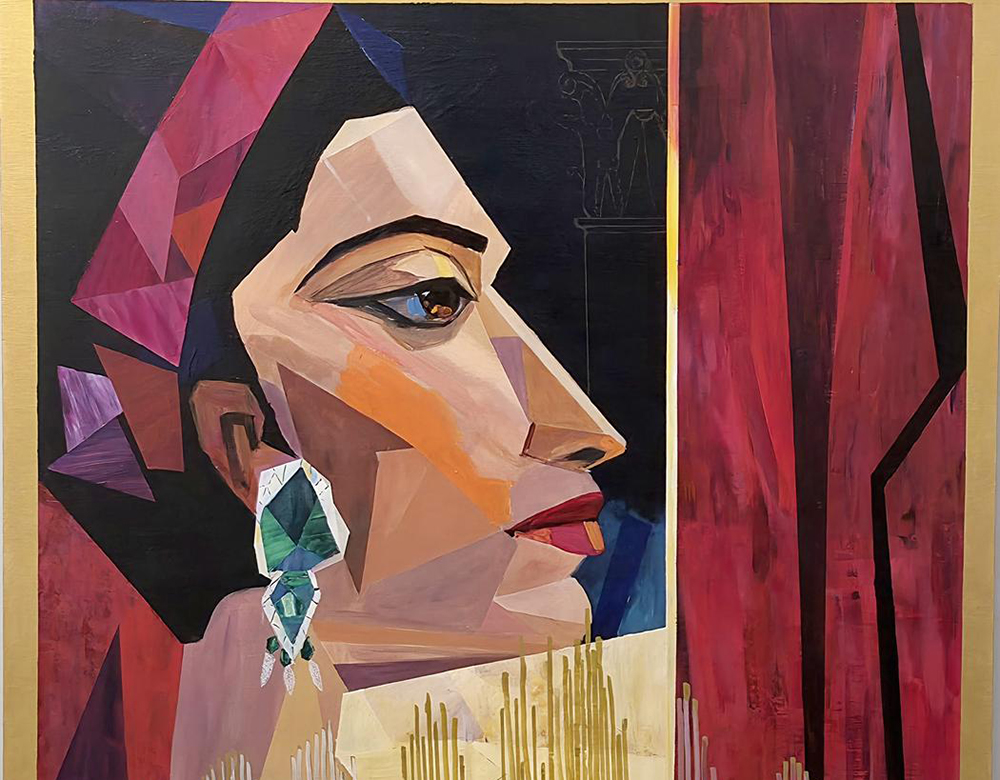
David ErMe
You have built a career in the restaurant industry while also developing your painting practice. What first drew you to painting, and when did it become an important part of your life?
Art and painting have always interested me. When restaurants closed during the COVID-19 pandemic, I felt, for the first time, how much I missed creating. In a restaurant, you create something every day: an atmosphere, impressions, experiences for your guests. When that disappeared, I wanted to find another outlet for that creative energy.
That journey led me to Natalia Pekarskaya’s studio. Since then, painting has become more than a hobby—it is a regular practice and a different way of thinking: seeing composition, establishing balance, and shaping an impression. It is like a parallel path in my career—a different language, but the same need to create. Natalia’s support, along with that of my family and loved ones, has been and continues to be immensely important to me, and I am deeply grateful to them.
You describe your approach as “eclectic romanticism.” What does this term mean to you, and how does it influence the decisions you make while working on a painting?
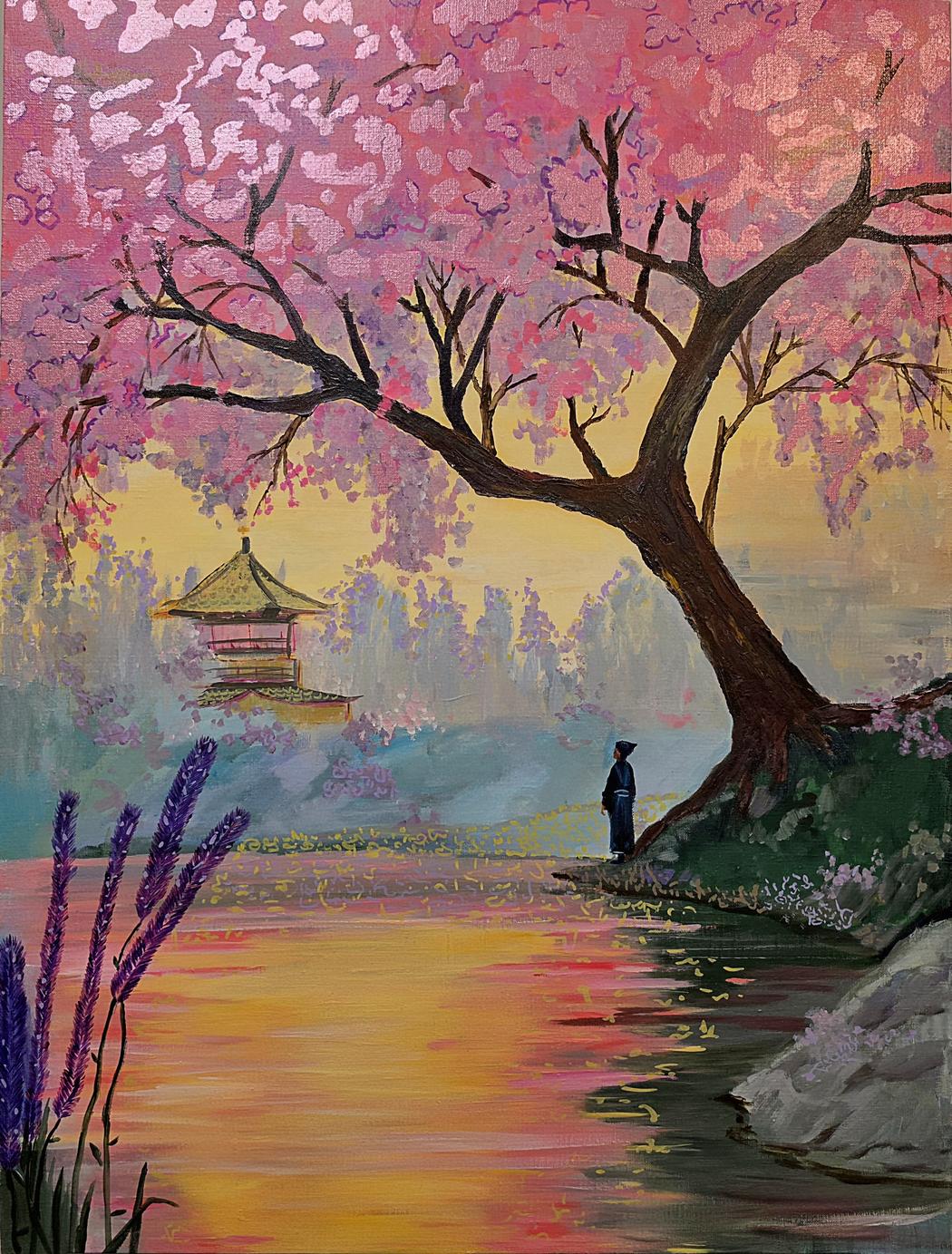
For me, eclectic romanticism is a way of expressing powerful feelings by freely combining motifs from different cultures and eras. Romanticism brings emotional depth and drama, while eclecticism gives me the freedom to move beyond a single style. I draw on expressive techniques from anywhere—from classical and biblical imagery to poetry and music.
In practice, this becomes a deliberate strategy: I construct the subject as an expressive image in which different elements reinforce one another. The colors are often rich, almost theatrical—they sustain the tension and emotion. Details such as birds, trees, or direct quotations are not simply decorative; they are meaningful accents and symbols. They act as anchors and help tell the story. This gives the painting strength, emotional depth, and a clear internal logic.
In your landscapes, richly colored trees often appear alongside luminous skies. How do you choose your palette, and what role does color play in creating an atmosphere?
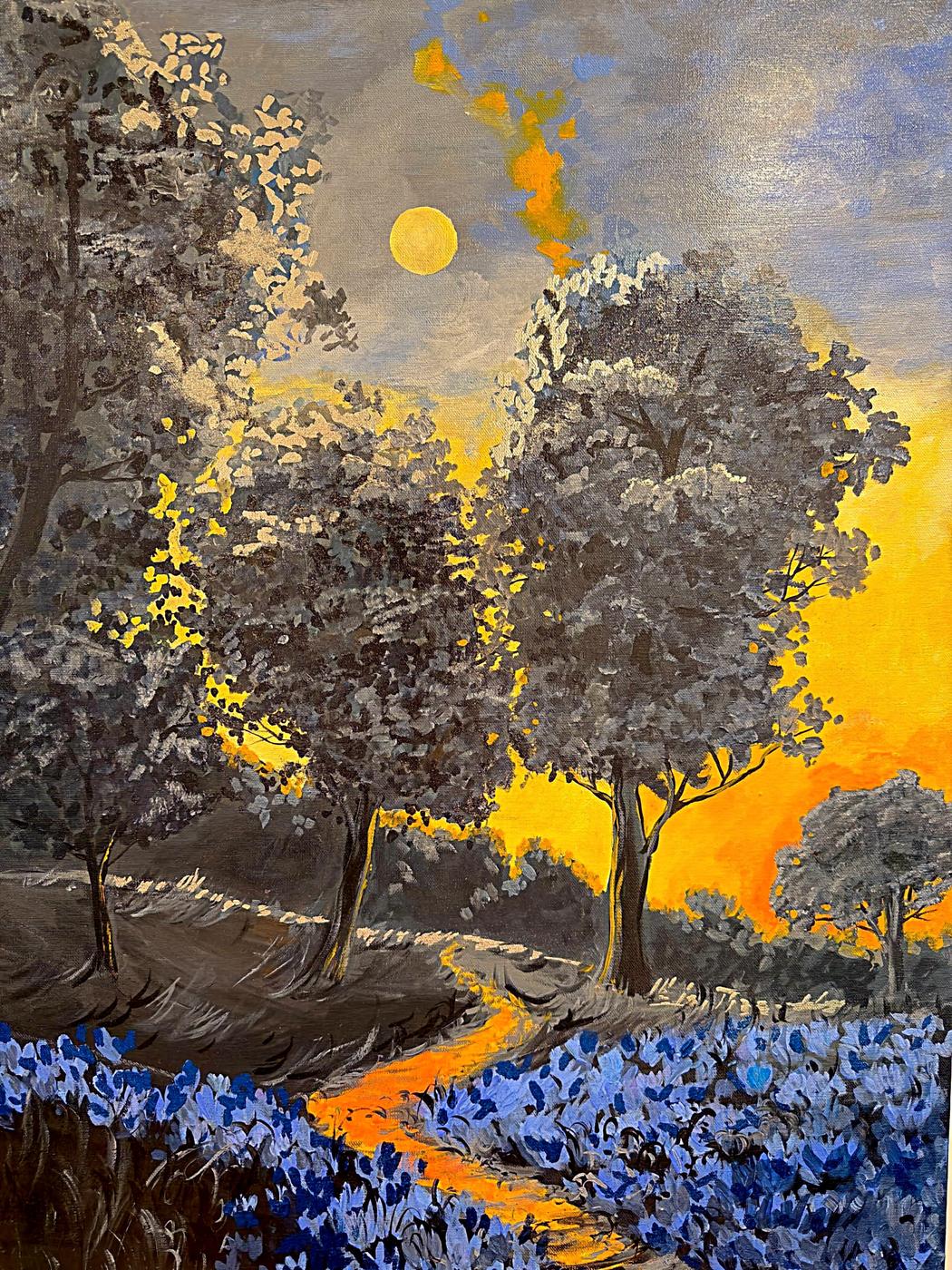
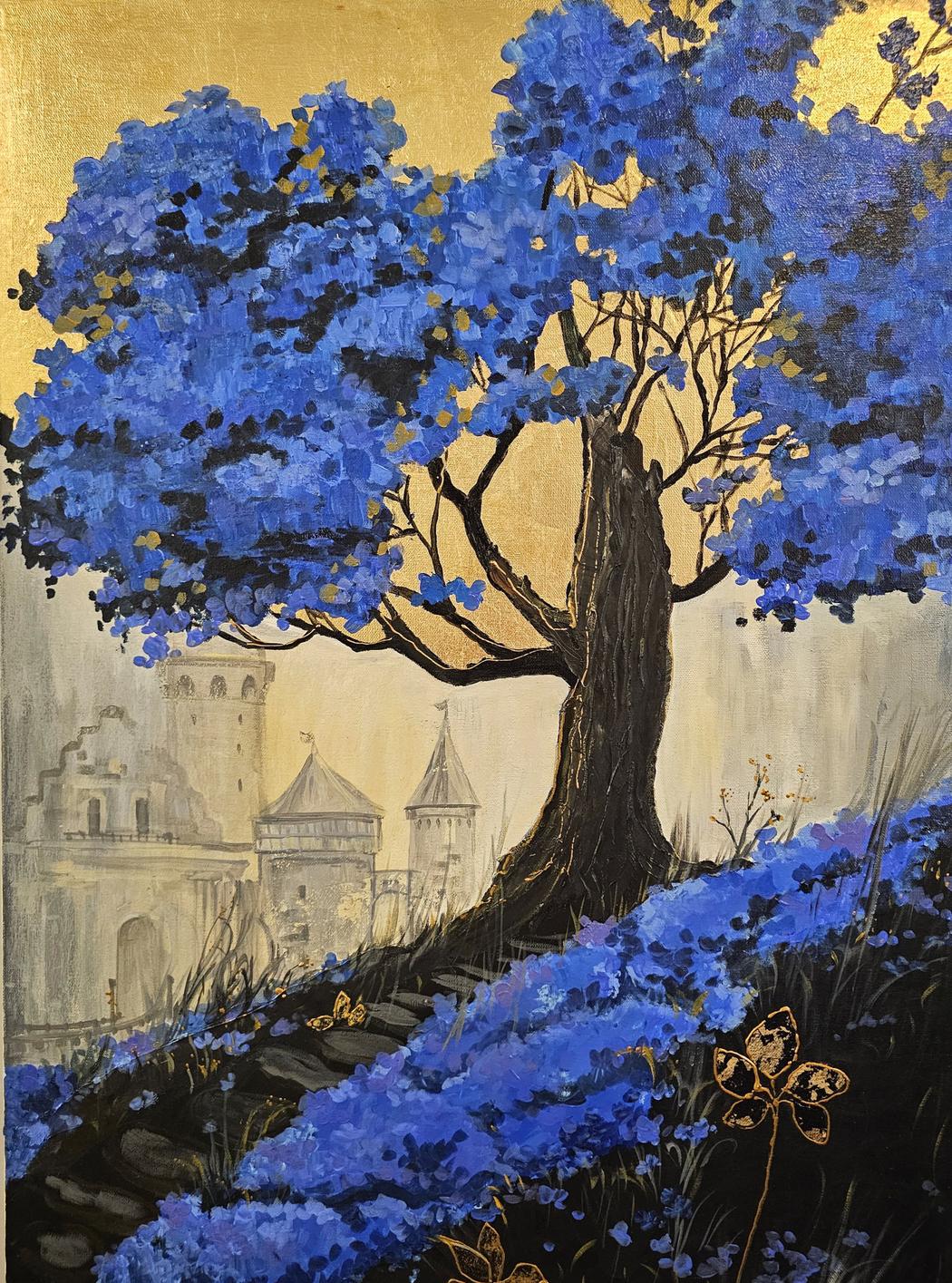
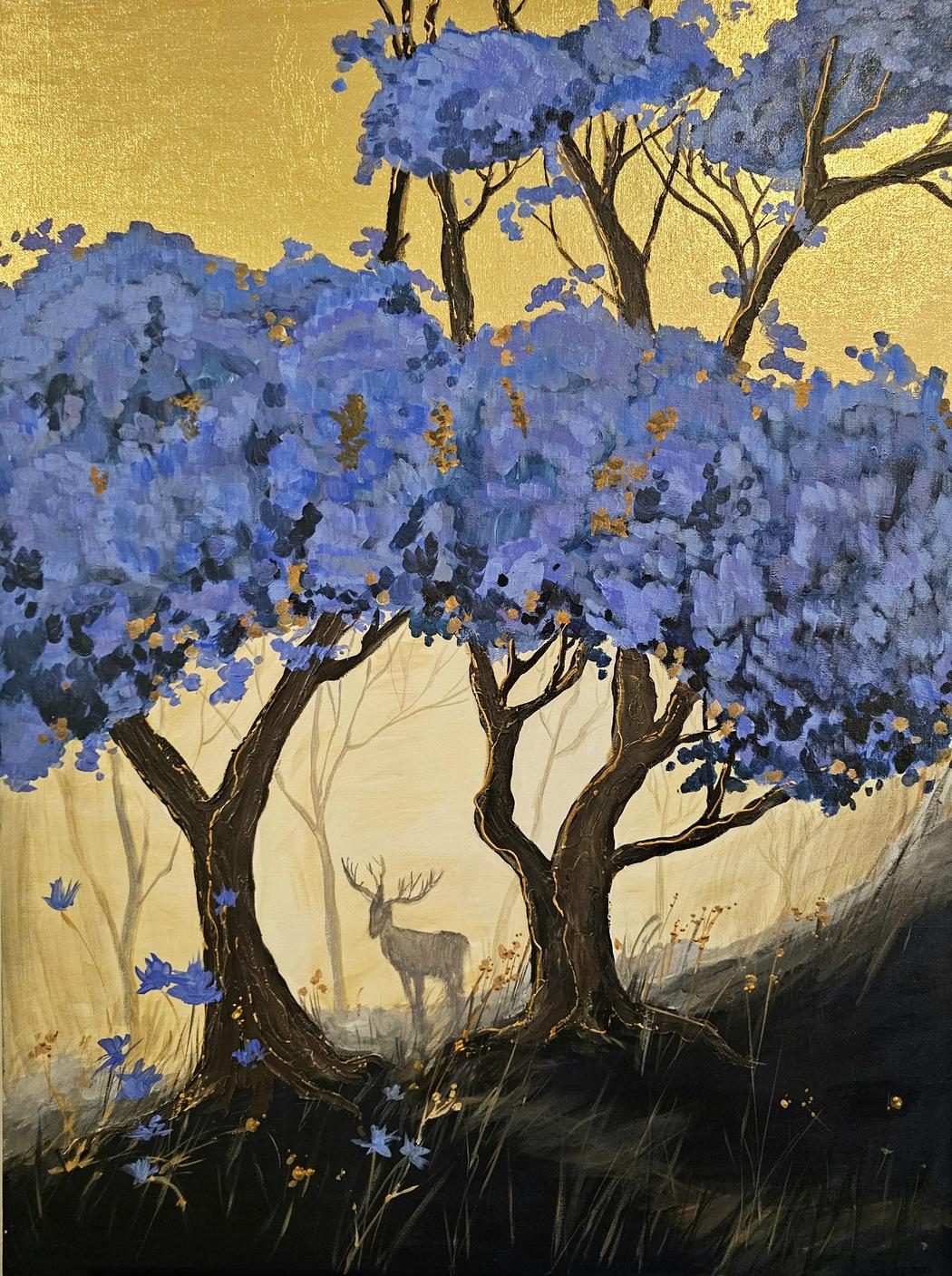
I choose my palette intuitively. The first layer is almost a ritual: subjects begin to emerge from patches of color and brushstrokes, and the painting seems to guide me forward. At the same time, my use of color also involves deliberate symbolism. Gold, for example, is not simply about sunlight: in Christian icon painting, it represents grace, eternity, and the presence of the divine. Blue evokes the heavenly realm and spirituality.
The richly colored trees and luminous skies draw, to a large extent, on images of biblical gardens: Eden, the Garden of Gethsemane, and the garden of Joseph of Arimathea. Color thus becomes more than a painterly technique—it is a way of creating a timeless atmosphere, a space that holds both mystery and light. The mood I seek emerges from this combination of intuition and symbolic language.
Several of your works feature paths, rivers, and distant buildings. Do you imagine a story or destination that lies beyond the painting?
It is important to me that viewers are not given a ready-made meaning, but that the painting encourages reflection. One person might see a simple scene in nature, another a story about life’s journey. Someone might see the rising or setting sun, while someone else sees the moon in the depths of night. A moonlit garden or a garden covered in dew evokes a moment of stillness, as though nature were holding its breath before a miracle. In this way, the painting becomes a space with many layers of meaning.
Small human or animal figures can be seen in some of your landscapes. How does their presence change our perception of the scene?
Small figures in a landscape are subtle accents that establish scale and invite a particular way of seeing the scene. They encourage a dialogue with the painting: viewers notice for themselves how their sense of space changes and how the silence acquires personal meaning. A deer in a blue forest, for example, is a symbol of the soul—its calm embodies stillness and depth. This unhurried quality echoes Japanese aesthetics, where the moment itself matters more than the action. The figures are in no hurry; their postures are calm. From this pause emerges a sense of anticipation, reflection, and contemplation.
You have said that having no formal art education gives you a sense of freedom. What challenges have you encountered while learning to paint this way?
One of the challenges I face without an academic foundation is working with proportions—for example, when I need to paint a convincing human figure. This is a technical barrier that I have to work around through experimentation and by finding my own approaches. My mentor and teacher, Natalia Pekarskaya, whom I mentioned earlier, helps me with this.
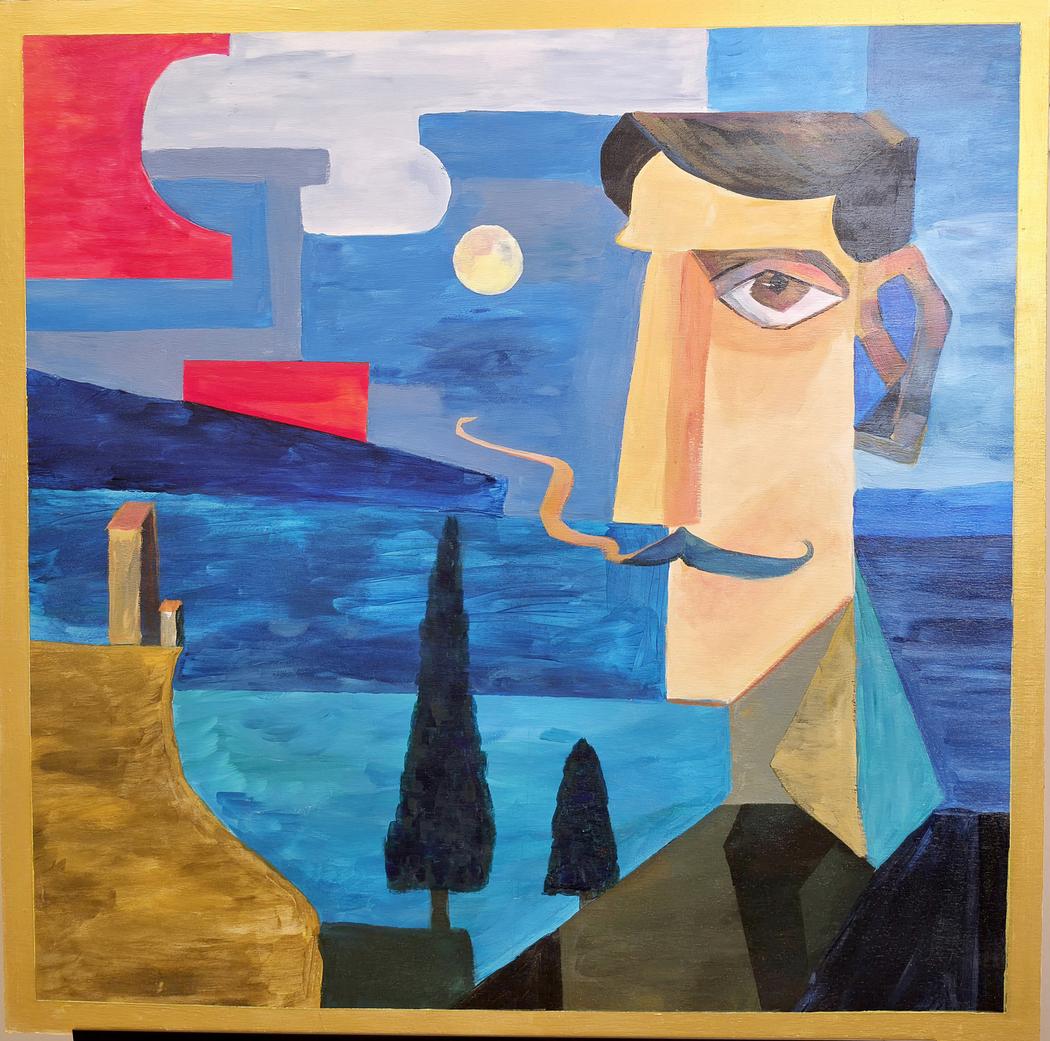
But there is another side to this situation—the very freedom that has become part of my artistic language. The absence of rigid constraints allows me to move beyond a conventional palette: a forest can be blue or pink, and the figures can be fantastical, a little strange. My eclectic romanticism emerges precisely from this shift in the familiar: ordinary things appear in an unexpected light, lose their everyday predictability, and become something more. For me, this freedom is not about disregarding technique, but about being able to place imagery and emotion first.
Has your experience in the restaurant industry influenced the way you think about atmosphere, color, and the impressions you create for other people?
In a restaurant, you create more than food and interiors—you shape a guest’s emotional journey, from their first step inside to their last. You guide their impressions through details: how the music sounds, how the fabric falls, how light plays across glass. This taught me to see atmosphere as a system in which everything contributes to the overall feeling.
Now, when I work on canvas, I shape a similar emotional experience. Color becomes a guide: it can lead gently and soothe, or create a sudden surprise. Composition establishes the rhythm: in some places, viewers should pause; in others, their gaze should move quickly across the painting before returning. My experience in the restaurant industry taught me to pay attention to details, which I give a special role in my paintings.