
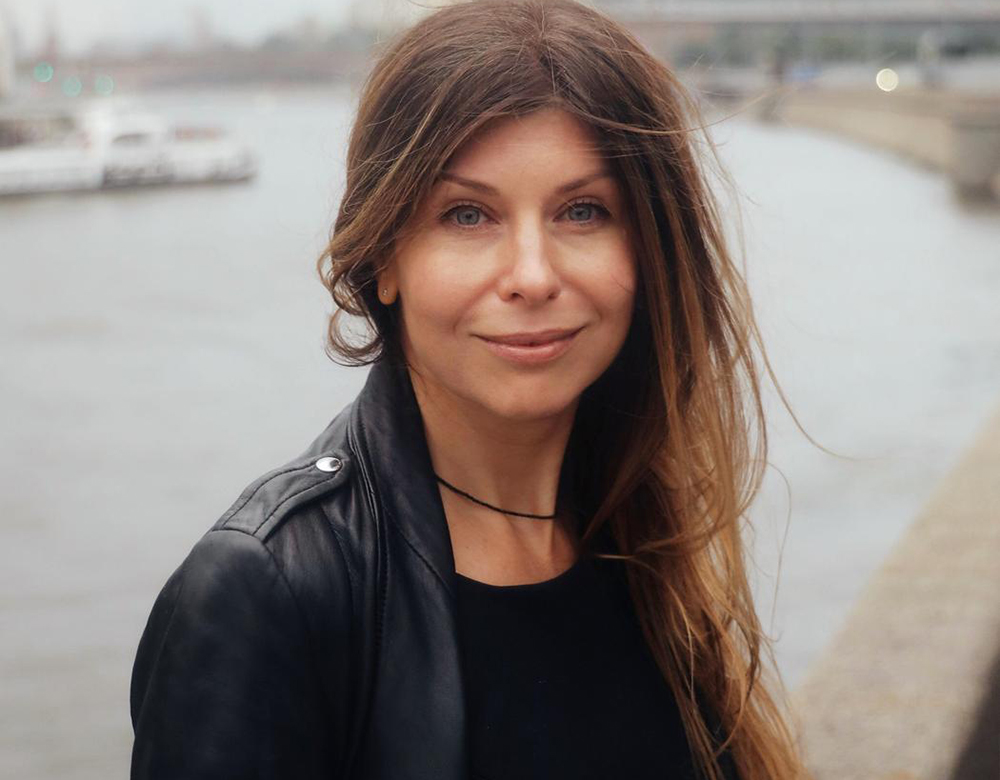
Olga Horne
What first drew you to abstraction, and when did you realise that geometry could express personal experiences and emotions?
I’ve always been drawn to geometry and mathematics. After finishing school, I studied engineering and completed my degree, but art was always where my heart belonged.
What fascinates me most is nature’s creativity. The movement of clouds, the vastness of space, the rhythm of waves, the texture of rocks, the endless patterns and colours around us. There is something magical in all of it. I’ve always been curious and eager to explore, and creating has become part of that lifelong search.
Since childhood, I’ve been drawn to fundamental questions: Who am I? Why am I here? What am I here to do? Those questions eventually led me to an irresistible need to create. Art is my voice, my presence and my purpose.
Over time, I realised that much of life is about bringing opposites together. Joy and sorrow, order and chaos, light and shadow. They define each other and create energy through their relationship. That energy is what drives growth, change and evolution.
Geometry gives me a way to express that. It provides structure and order, while colour carries emotion and reflective surfaces introduce movement and change. I spend a lot of time studying light and perspective, and how they transform both matter and our experience of the world.
For me, the viewer is never just an observer. They become an active participant, bringing their own experiences and interpretations to complete the work.
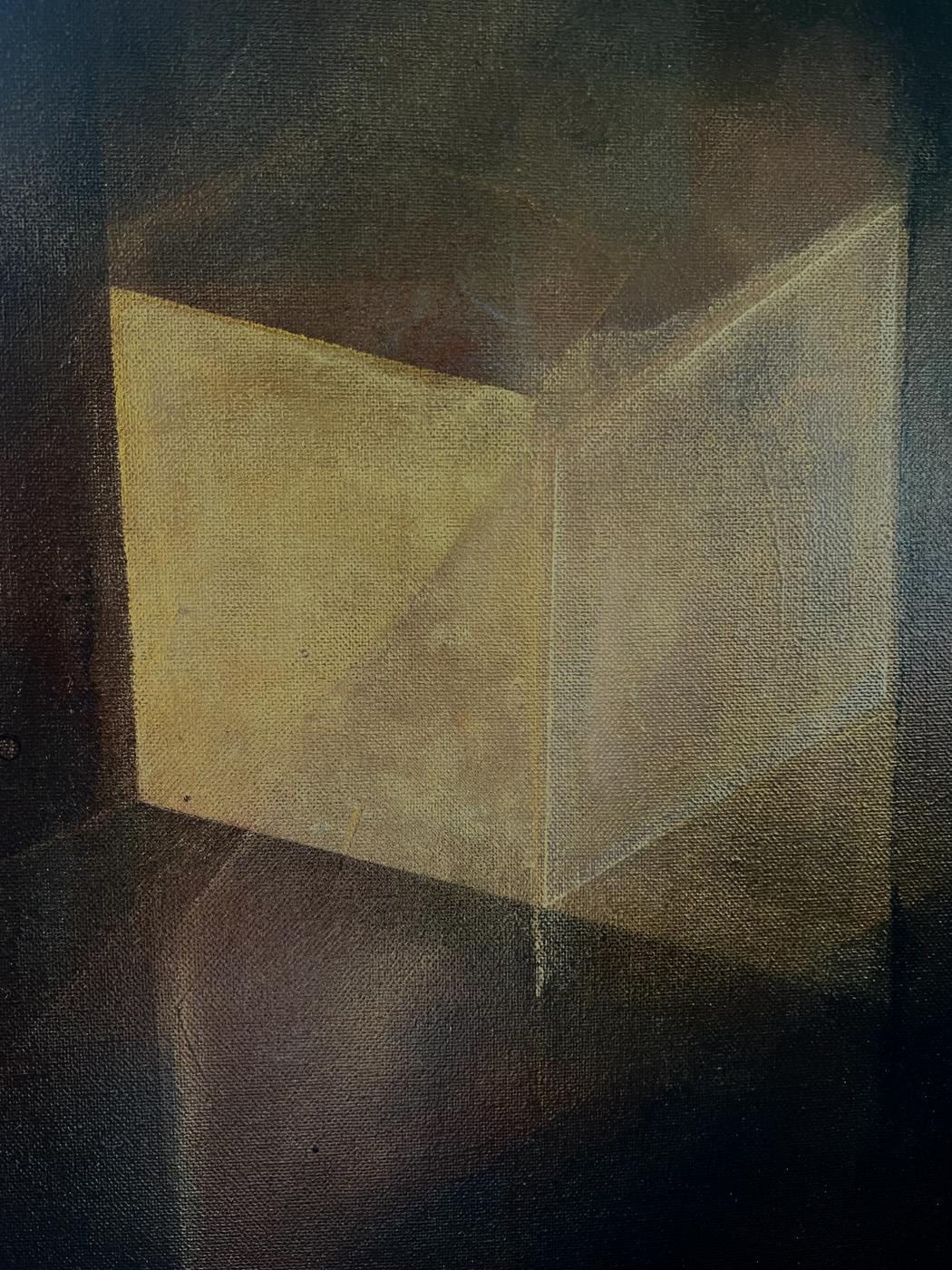 Olga Horne | Cube | 2025
How does a painting begin for you: with a colour, a structure, an emotion, or something else? How much changes as you work?
Most often, a painting begins with a thought. That thought grows into an idea, which leads to research, reflection and emotional connection. In many ways, my work starts with a word. Words evoke emotions, emotions become images, and those images gradually transform into abstraction.
Sometimes it happens the other way around and an emotion comes first. Something sparks a feeling, and the rest unfolds from there. The image changes constantly while I work, but the essence usually remains the same. Change itself is an important theme in my practice.
As layers of pigment interact with light, every viewer experiences the work differently. What they see depends on their perspective, revealing both shadow and light within themselves. I often use darker colours to speak about fear, gold to suggest love, and precious metals to represent enduring truths.
Rather than presenting a fixed image or meaning, I want the work to become a conversation between the painting and the viewer. Their perception is just as important as my intention.
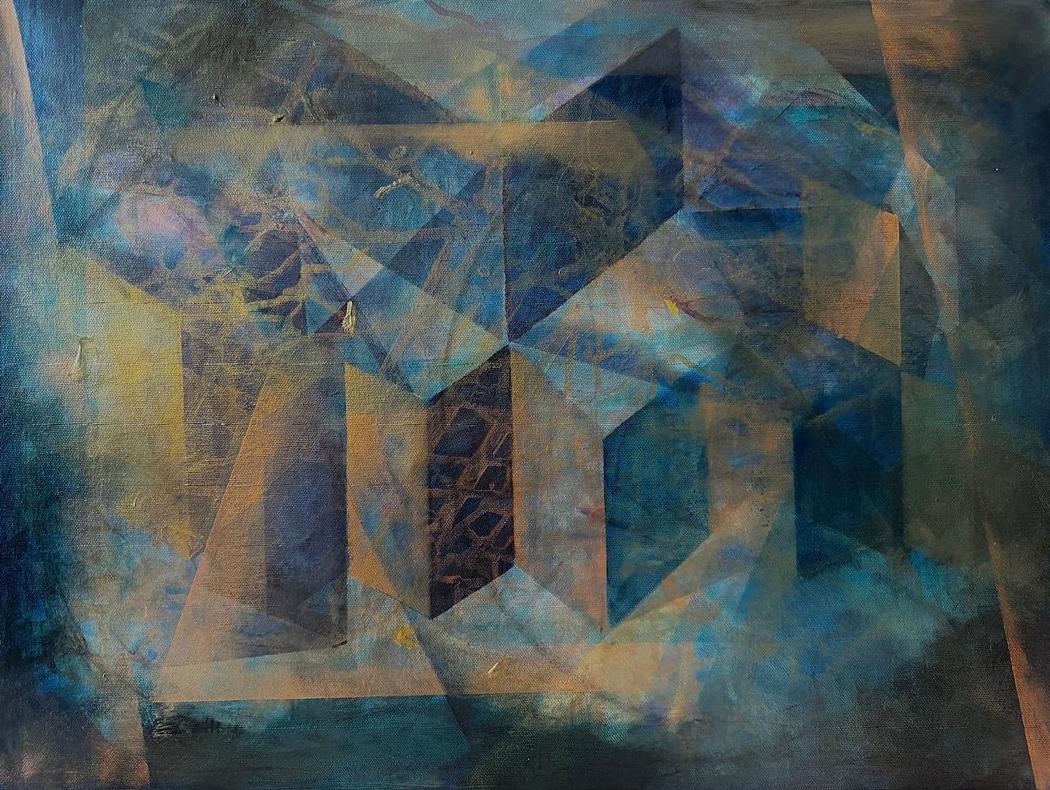 Olga Horne | Philosophies | 2025
Your compositions often combine precise geometric forms with softer, less defined areas. How do you find a balance between structure and uncertainty?
I’m interested in the space where structure and uncertainty meet. Through layered forms and subtle geometry, I explore how ideas emerge, evolve and settle into awareness.
The compositions reflect the balance between chaos and order. To me, thought is both fragile and intentional.
We build meaning from memories, experiences and emotions, and I try to bring those elements together with purpose while still leaving room for surprise and discovery.
Ultimately, my work creates a space where each viewer can connect with their own inner universe and find something personal within the experience.
What role do layers and traces of earlier decisions play in your paintings? Do you ever leave something visible because it changes the meaning of the work?
Layers are essential to my process. I think of my paintings as stories that unfold over time. Each layer holds experiences, thoughts, emotions and questions, gradually building towards understanding.
I often leave traces of earlier decisions visible because they become part of the painting’s history. They reveal the journey rather than just the destination. Just as our experiences shape who we are, those earlier moments give the work depth, character and meaning.
My paintings exist as an ongoing dialogue. Between the painting and the viewer, but also between the conscious and subconscious mind.
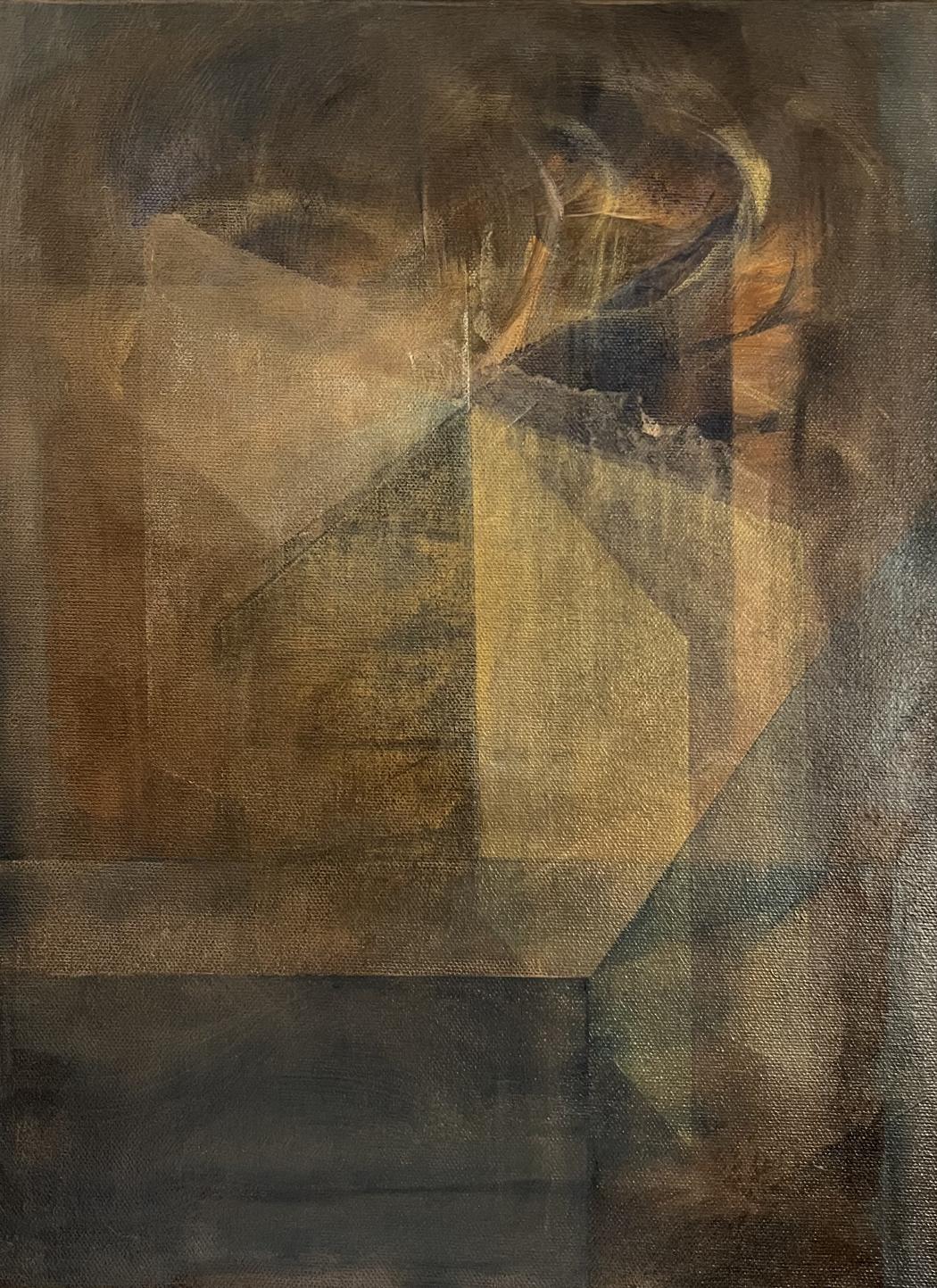 Olga Horne | Phoenix | 2025
You explore vulnerability and resilience through abstraction. How do you approach an emotion without turning it into a literal image?
Our understanding of images comes from our personal experiences of the world. Emotion, however, is both deeply individual and universally understood. We may describe the same feeling differently, but at its core there is often a shared human experience.
Rather than illustrating emotions directly, I try to create a space where viewers can encounter their own feelings and interpretations. In that sense, the experience can be similar to meditation, where attention is gently focused on a feeling or state of being.
Colour, light, materiality and spatial relationships all play important roles in that process. I use them to create experiences that encourage reflection, self-awareness and connection.
Light is especially important in my practice. Shadow transforms into light, and light both illuminates and disrupts darkness. That dialogue between contrasts becomes the language of the painting. Each work represents a stage on a journey, from fragmentation towards wholeness, and from fear towards love.
Has a viewer ever found a meaning in one of your paintings that you had not anticipated? Did it change how you saw the work?
Yes, many times, and I find it fascinating. Sometimes people see things in a painting that I hadn’t consciously considered myself. It doesn’t usually change the way I see the work, but it often expands it. It’s as though another chapter has been added to the story. The painting remains the same, but my understanding of its possibilities becomes richer.
What’s equally fascinating is when someone responds to a painting exactly as I intended. Both experiences remind me that art is a meeting point between the artist and the viewer. One of my favourite experiences is listening to people talk about my work when they don’t realise I’m nearby. It’s fascinating to hear what they discover within it.
My paintings are like open books, or perhaps welcoming dreams. You never know what someone might see, remember or feel when they engage with them. Every person brings their own experiences, beliefs and imagination, so the work can reveal something different to each viewer.
The human mind is a universe in itself, full of possibilities and perspectives. Just as dreams can change each time we revisit them, my paintings continue to evolve through the interpretations of those who view them. I am constantly learning, not only from my own creative process, but also from the way people connect with the work and the meanings they bring to it.
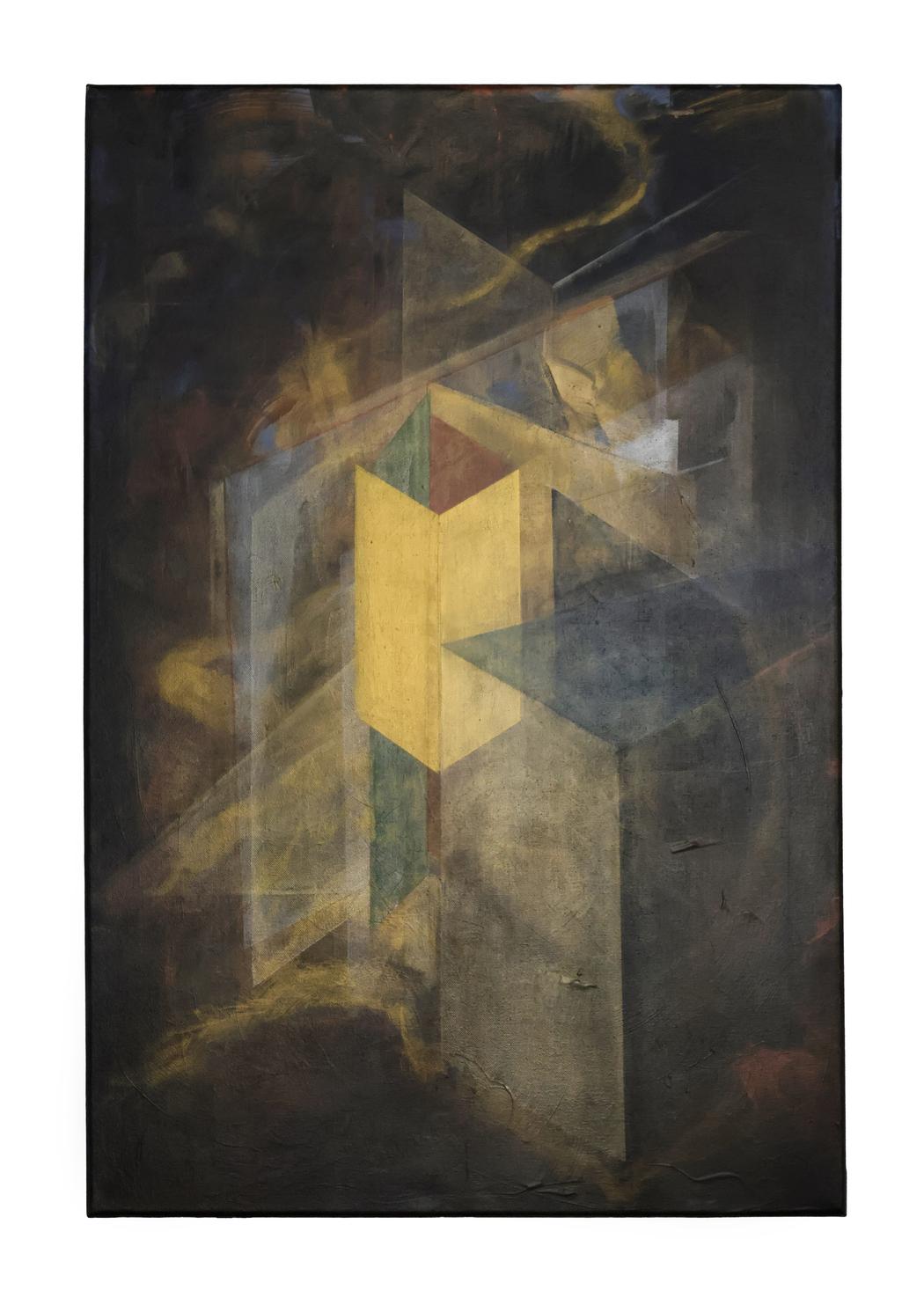 Olga Horne | The Heart | 2025
Your work has recently reached audiences in several countries. Have those encounters influenced how you think about the relationship between the painting and its viewer?
To be honest, not in a fundamental way. My view of the relationship between a painting and its viewer was shaped long before my work began reaching audiences internationally.
I’ve spent much of my life travelling, living in different places and experiencing different cultures, political systems and ways of life. Those experiences taught me that everything is fluid and constantly evolving. Perspective is never fixed. It can shift whenever we choose to see something differently.
That said, I am always learning. Every exhibition, every conversation and every response to my work teaches me something. I learn from the way people interact with a painting, the emotions they bring to it, and the meanings they discover within it. I learn from my own experiences, from others’ experiences, and from the ever-changing world in which we all coexist.
So while international audiences haven’t changed my belief that art is a dialogue between artist and viewer, they have continually enriched that dialogue. They remind me that people from very different backgrounds can connect through shared emotions, questions and experiences. In many ways, my practice has always been global. I see myself as a citizen of the world, connected by our common humanity rather than by borders.
My paintings are a way of exploring and expressing those ideas. They allow me to share my perspective while inviting others to reflect on their own. Through them, I speak my truth and create space for dialogue, connection and discovery.