Barbara BITONDO
You grew up and lived in many different countries. How has this experience shaped your sense of home, and how does that sense emerge in your art?
Living across several continents taught me that home is less a fixed place than a collection of experiences, memories, and relationships. My work often explores this idea through layered surfaces, fragments, and materials that suggest both belonging and movement. Rather than depicting specific locations, I create spaces where memory, landscape, and emotion intersect, inviting viewers to reflect on their own sense of place.
What drew you from photography toward fiber and textiles, and what has working with these materials allowed you to explore?
Photography sharpened my attention to light, composition, and observation, but I gradually wanted a more tactile and immersive way of working. Fiber and textiles introduced physicality, texture, and construction into the creative process. They allow me to build rather than simply record, creating works that explore perception, transformation, and the passage of time.
 Barbara BITONDO | Applique
How do you choose the paper and fabrics you work with? What role do their textures, origins, or previous uses play in the ideas behind a piece?
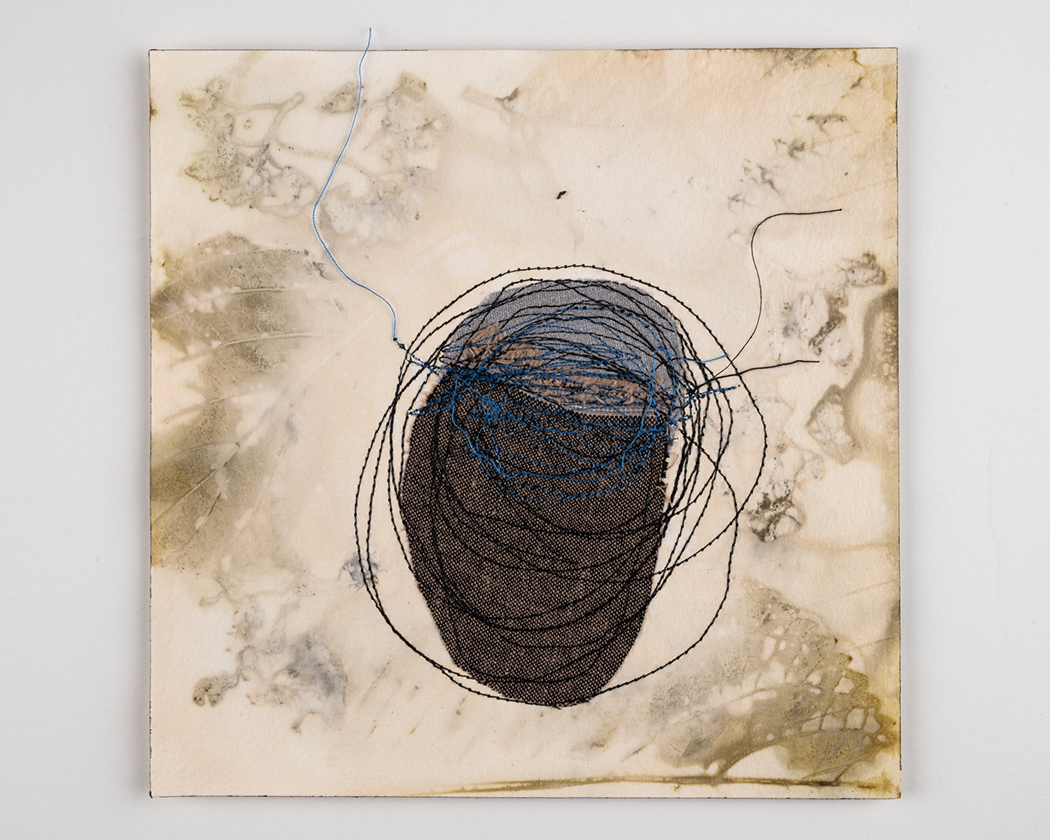
Materials are never neutral for me. I select papers and fabrics for their physical qualities as well as the stories they carry. The weight of handmade paper, the translucency of silk, or the history embedded in a reclaimed textile can shape the direction of a piece. Texture, fragility, resilience, and evidence of previous use all contribute to the work’s emotional and conceptual depth.
 Barbara BITONDO | Applique
You organize your work into Tableaux, Tapestries, and Texts. What distinguishes these categories, and where do they overlap or influence one another?
These categories reflect earlier ways of thinking about and organizing my practice, though the boundaries between them have become increasingly fluid. Tableaux are image-based explorations that begin with observation and composition and often incorporate a three-dimensional element, creating a dialogue between two-dimensional and sculptural forms. Tapestries emphasize materiality, structure, and the physical presence of fiber, ranging from intimate textile constructions to large-scale installations. Recent examples include a monumental textile work exhibited in the IFC Headquarters Lobby in Washington, DC throughout much of 2026, as well as Excavations I and Excavations II, currently on view at Whittemore House in Washington, DC. Texts focus on narrative, memory, and mark-making as forms of communication, often taking the form of scrolls that unfold as visual stories, journeys, or maps. While each category has its own emphasis, all three explore transformation, connection, and discovery through shared materials and processes that continually inform one another.
 Barbara BITONDO | Applique
Stitching seems to function as a form of drawing in your work and often threads extend beyond the surface. What expressive possibilities does working with thread offer you?
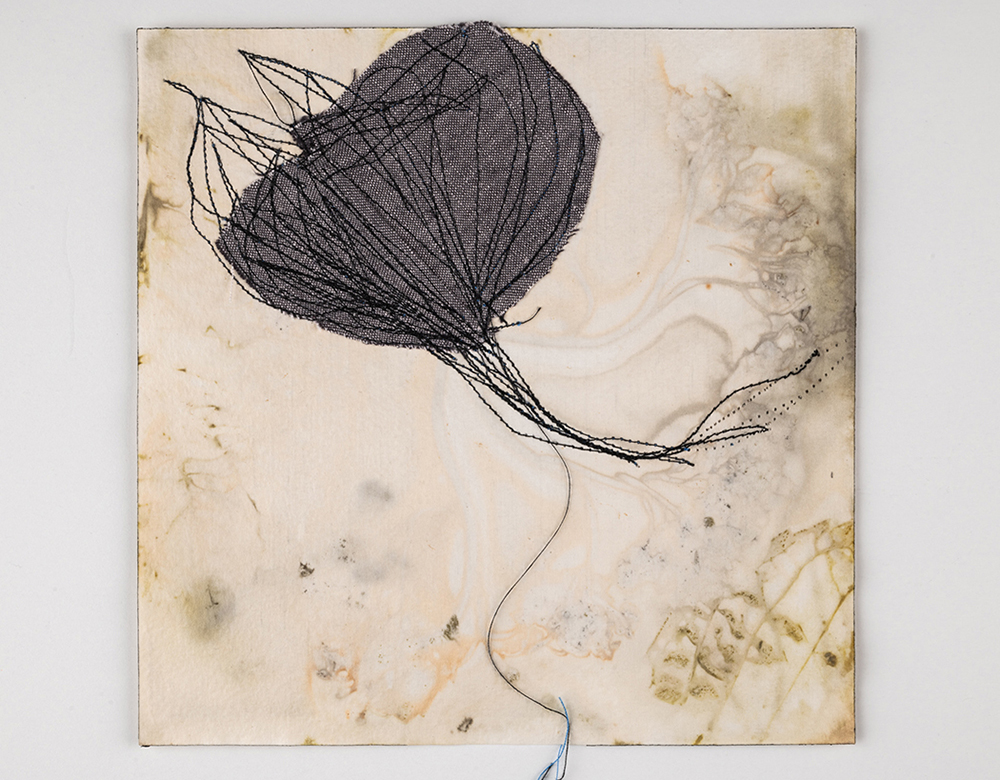
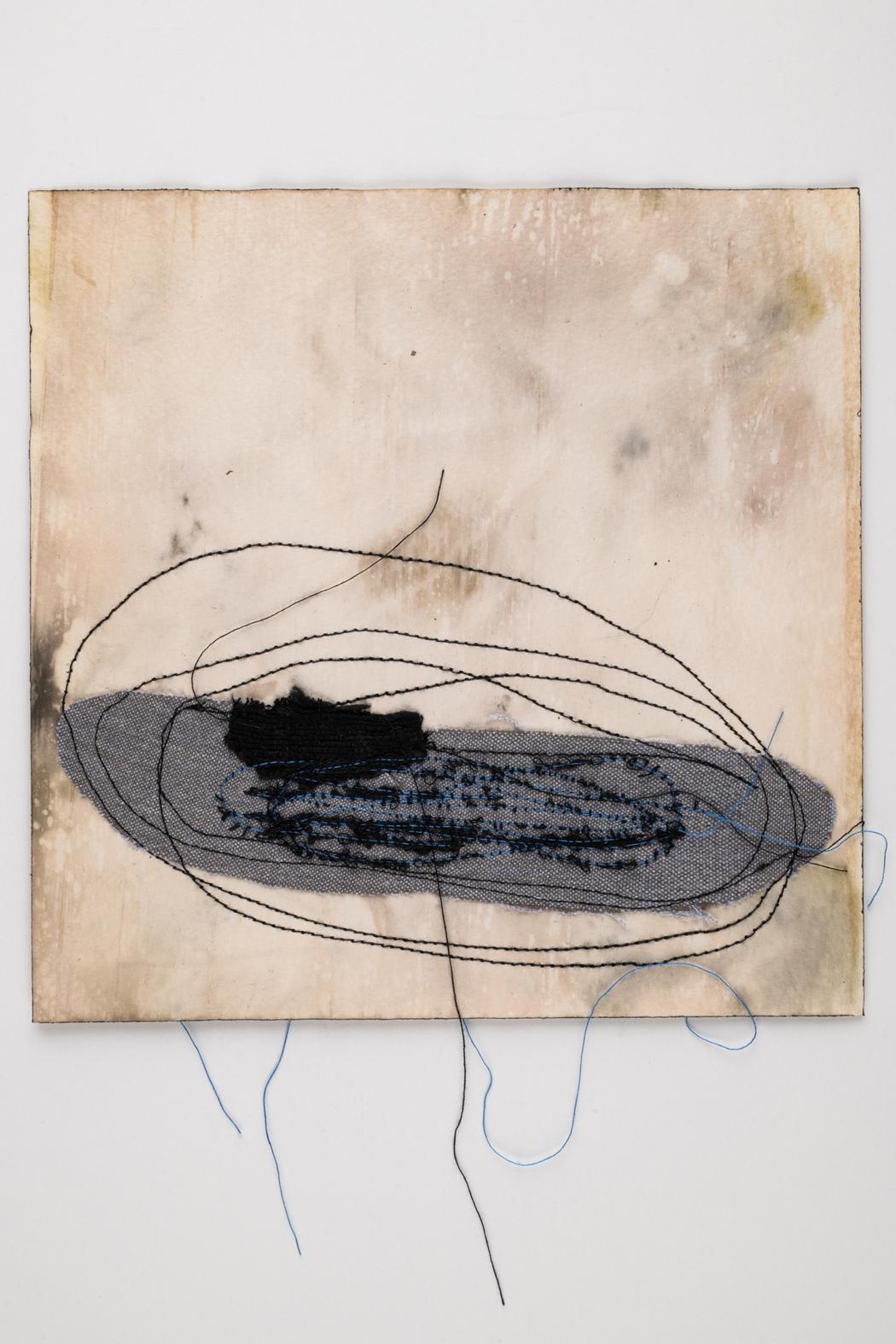
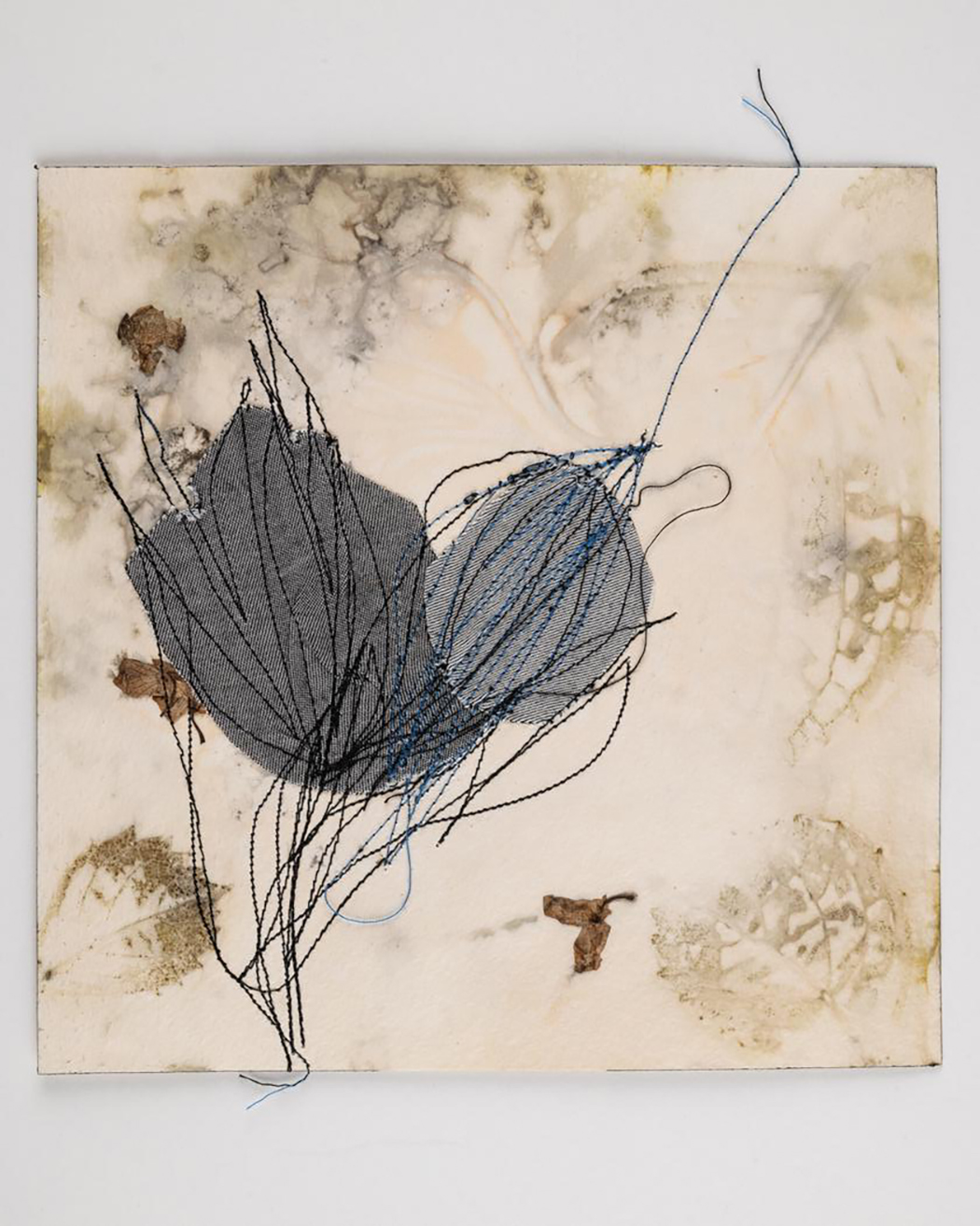
I think of stitching as drawing in space. Thread can define a line, connect disparate elements, or create movement across a surface. Unlike ink or paint, it has both a visual and physical presence. When threads extend beyond the boundaries of a work, they suggest continuity, growth, and the idea that meaning often exists beyond what is immediately visible.
Your pieces can evoke the past, present, and future simultaneously. How do you approach this relationship between time, memory, and imagination?
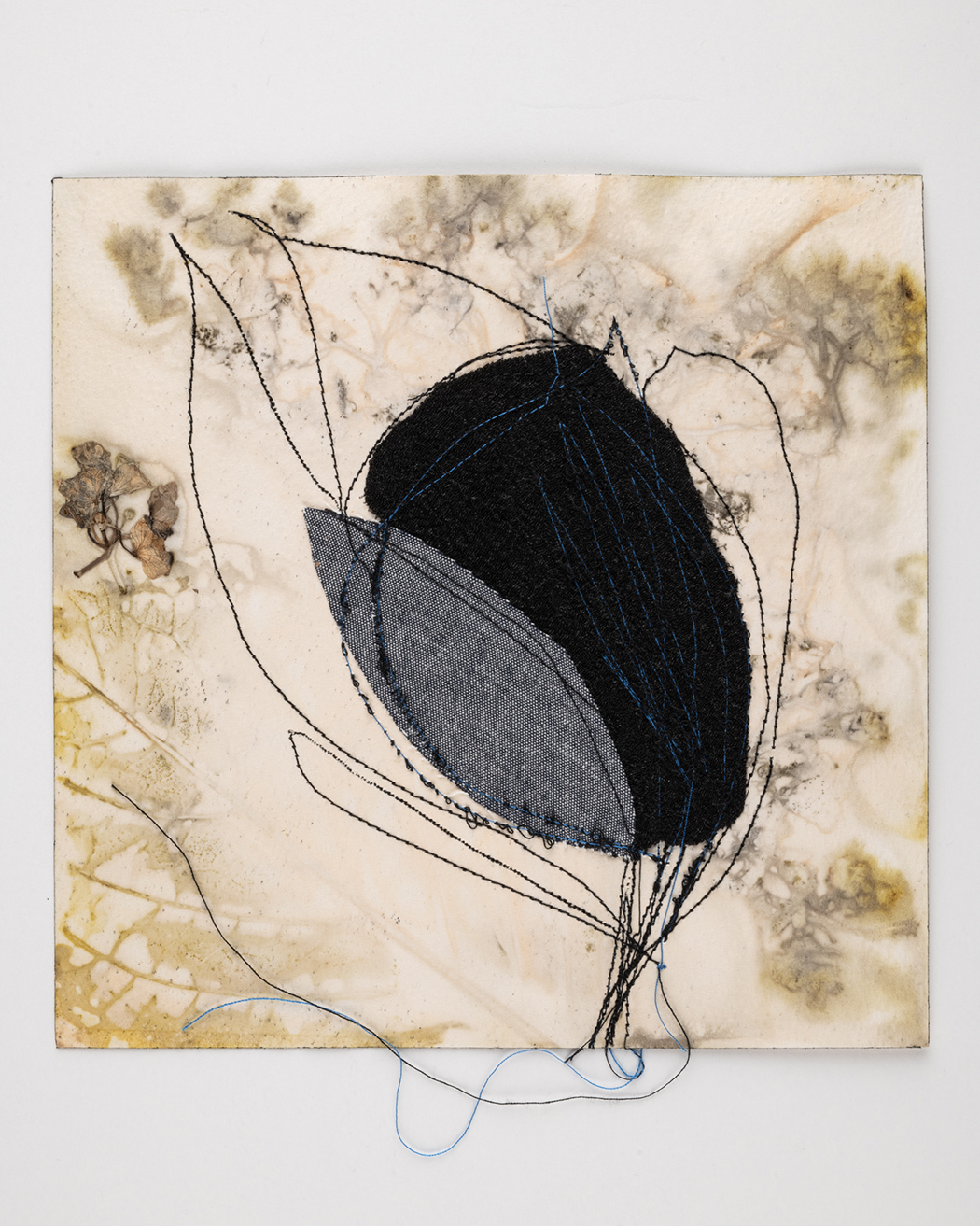
In the preface to my catalogue Horizons 2022–2026, writer Rama George reflects on what remains with us after we leave a landscape: not its exact details, but the impressions, emotions, and fragments that linger in memory. That observation resonates deeply with my practice. I see memory as an active process rather than a fixed archive. The past is constantly reshaped through present experience, while imagination allows us to envision what might come next. By layering materials, marks, and forms, I seek to create spaces where remembrance, observation, and possibility coexist, much as a remembered landscape exists simultaneously in the past, the present moment of reflection, and the future meanings we continue to give it.
 Barbara BITONDO | Applique
You describe making art as an inquiry and the finished work as a record of exploration. Could you share an example of a discovery during the process that changed the direction of a piece?
Many of my botanical monoprints begin with a clear intention, but unexpected discoveries often become the most important part of the work. In the Revelations series, I found that combining botanical monoprints with silk, glass, shells, and other natural materials created a sense of dimensionality and light that transformed the pieces from prints into sculptural forms. That discovery shifted my practice toward exploring how printmaking can extend beyond the wall, becoming sculptural, architectural, and spatial.