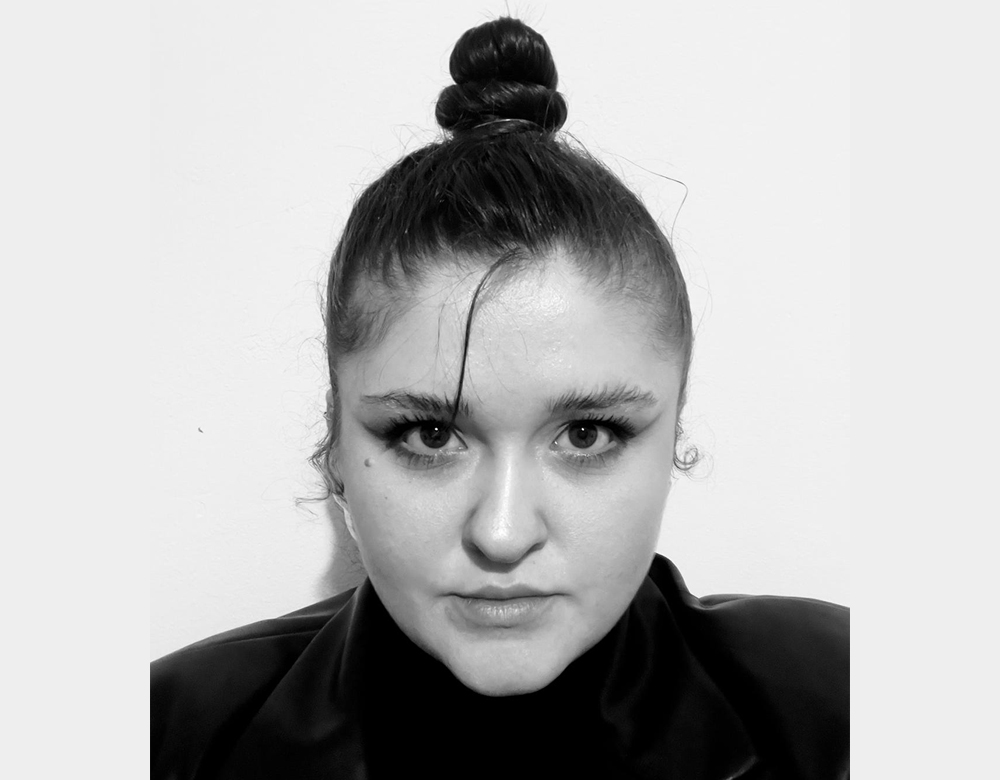
Timeea Ionela Brandas
Your practice moves between painting, textile art, mixed media, and spatial installation. How does your background in textile design influence the way you think about surface, rhythm, and material in your fine art practice?
My background in textile design has strongly influenced the way I approach my art. Working with textiles taught me to pay close attention to materials, surfaces, textures, and the way different materials interact with each other.
It also helped me develop a strong sense of composition and colour — how colours work together, how textures can transform a surface, and how different materials can create particular visual and tactile effects. I think this sensitivity to material has naturally carried over into my fine art practice.
You often describe the body as an “archive of memory”. What does this idea mean to you, and how do you translate something as intangible as memory into physical material and texture?
For me, the body carries traces of everything we experience. I’m fascinated by how the textures of the body can also be found in nature, creating a connection between something intimate and something universal.
That is why texture is so important in my work. It allows me to translate something intangible, such as memory, emotion, or a feeling, into something physical and almost palpable. I want the viewer not only to see the work, but to feel something through its surfaces and textures.
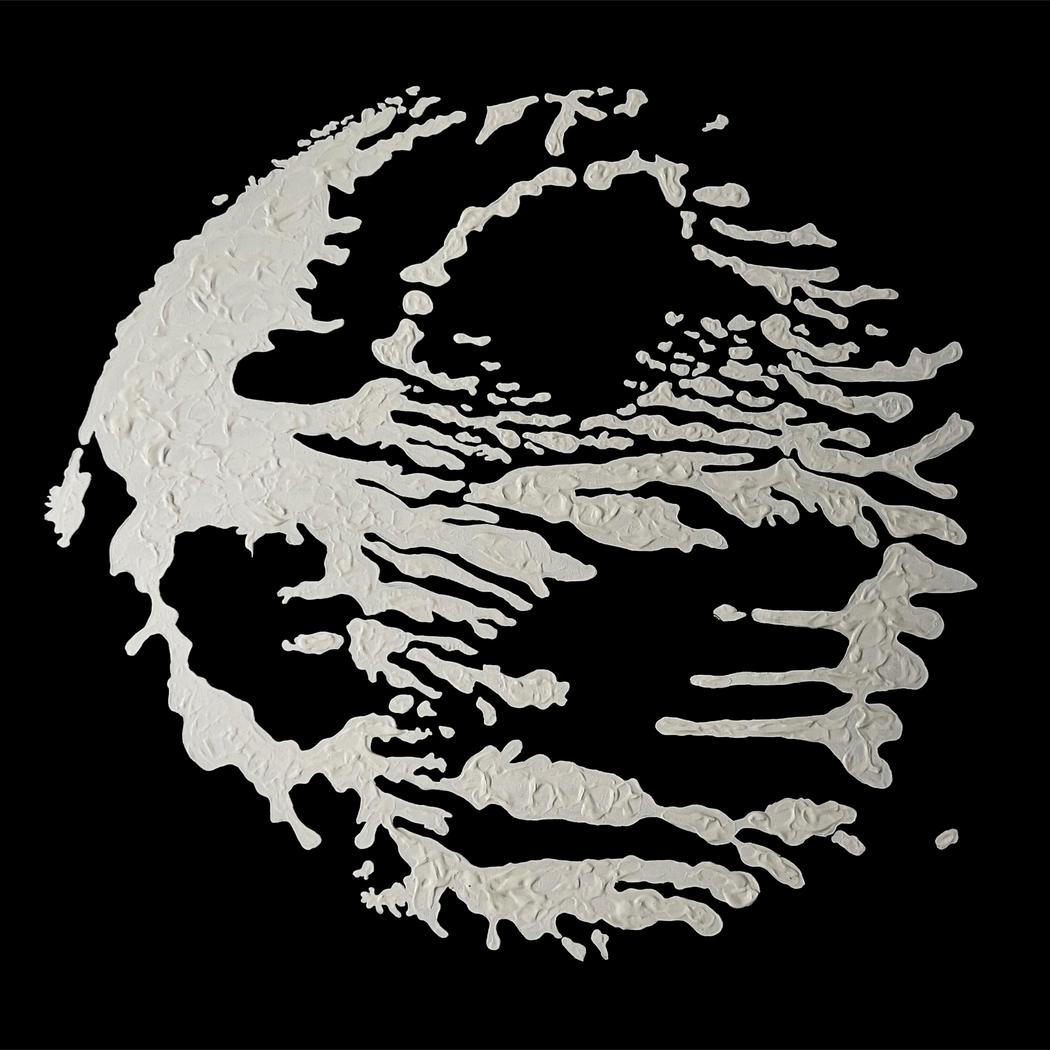 Timeea Ionela Brandas | Texture Archives
In works such as Afterstorm, repeated curved and concentric marks create a sense of movement, erosion, or traces left behind. How did this visual language develop, and what role does repetition play in your process?
Afterstorm developed through a continuous process that lasted around a year. During that time, the work went through several different stages, reflecting different stages in my personal, emotional, and professional life.
There was a constant back-and-forth, almost like waves or vibrations. I went through low moments, then rose again, then went down again, until I eventually reached a point where I decided that it was time to move further and leave certain things behind.
The repetition in my work is not based on a strict pattern. I don’t usually work within a predetermined system. Instead, I let my hand move freely and allow the process to flow, influenced by whatever state or energy I am experiencing at that particular moment.
Looking at Afterstorm as a whole, I see it almost as “the sun after the storm.” You can see the clouds and the colder tones representing the storm, while the warmer colours and the gold suggest the sunlight breaking through afterwards. The painting went through many stages, and all of them became part of its final form.
Magnetic Fields presents intertwined bodies in an intimate, almost inseparable composition. What interested you in exploring physical closeness, attraction, or the boundaries between two bodies in this work?
Magnetic Fields began from a more sexual state and energy. At one point, while having a conversation with my cousin about art and emotions, she suggested that I should start bringing this side of sexuality into my artwork as well.
However, I didn’t want it to become something explicit or pornographic. I wanted to explore it through art as a union between two souls or spirits — through intimacy, connection, and closeness.
I chose to make the two figures slightly different in colour and character because, although we are all different, I believe that when we connect, something new and unified can be created.
Interestingly, I later realised that when the two bodies are viewed from another perspective, their forms create the shape of a heart. For me, this became a beautiful connection between sexuality, emotion, belonging, and intimacy — two different bodies becoming one through connection.
Your work frequently exists between abstraction and recognizable bodily forms. How do you decide how much of the human figure should remain visible and how much should dissolve into texture or gesture?
I don’t have a fixed rule for this. I let the work guide me during the process. Sometimes the figure needs to remain recognisable, while at other times I feel that allowing it to dissolve into texture, colour, or gesture communicates the feeling more honestly.
For me, it is an intuitive balance. I’m interested in that space in between, where the body is still present but begins to become something more abstract — almost a trace, a memory, or an energy rather than simply a physical form.
How has living and working in Vienna, after studying and exhibiting in Romania, affected your artistic perspective or your relationship to ideas of belonging, identity, and place?
The first years in Vienna were challenging. When I moved here, I left behind a community of artists, friends, and colleagues in Romania, and I had to start again from zero — creating new connections and finding my place within a new artistic environment.
I also had fears and doubts about whether my work would be enough for the Vienna art community, or whether people working within and around the art world here would connect with what I create.
Over time, as I moved beyond some of those fears and worries, I came to realise that I am an artist, that I create work that I genuinely believe is interesting and impactful, and that I have a very valuable opportunity to develop my practice in Vienna.
Vienna is a city that appreciates art and actively looks for and creates space for it. Living here has helped me become more confident in my own voice and in the value of what I create.
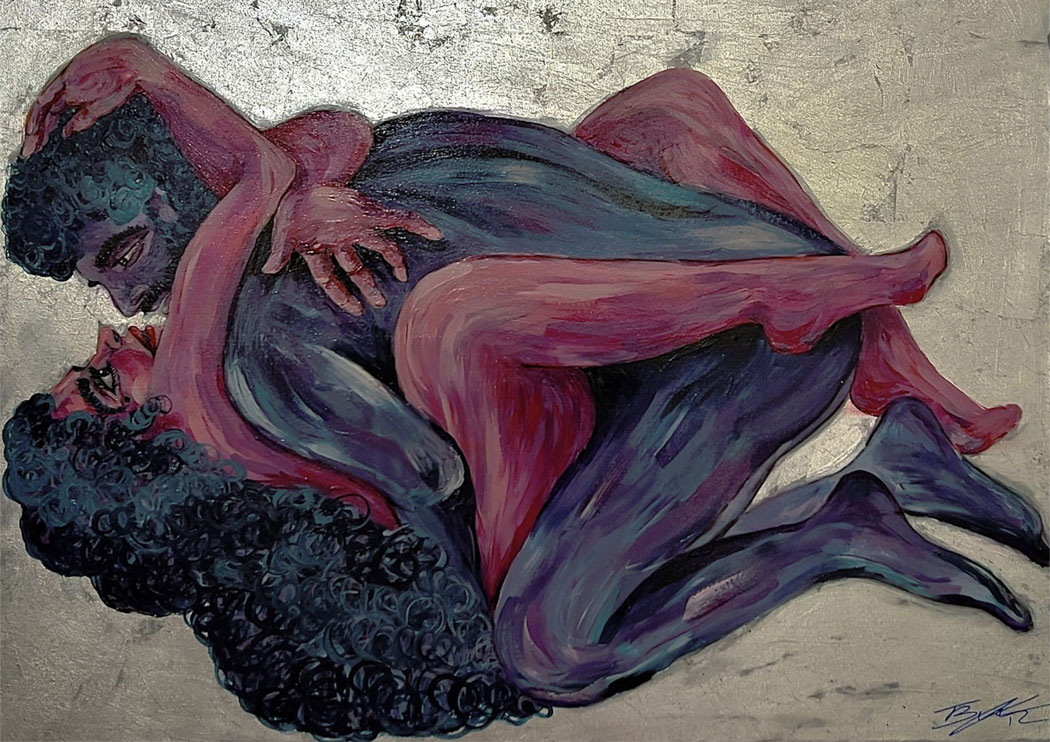
Timeea Ionela Brandas | Magnetic Fields
Your work crosses the boundaries between fine art, textile design, craft, and spatial experience. Do you see these categories as useful distinctions, or are you consciously trying to dissolve them?
For me personally, there are no strict boundaries between these categories. I don’t see textile art, fine art, installation, painting, or design as completely separate worlds.
I like to believe that I can create whatever I imagine in my mind without being limited by a particular category or medium. If combining textiles, painting, mixed media, or spatial elements is the right way to express an idea, then that is what I want to do.
For me, the concept and the feeling come first, and the medium follows.