
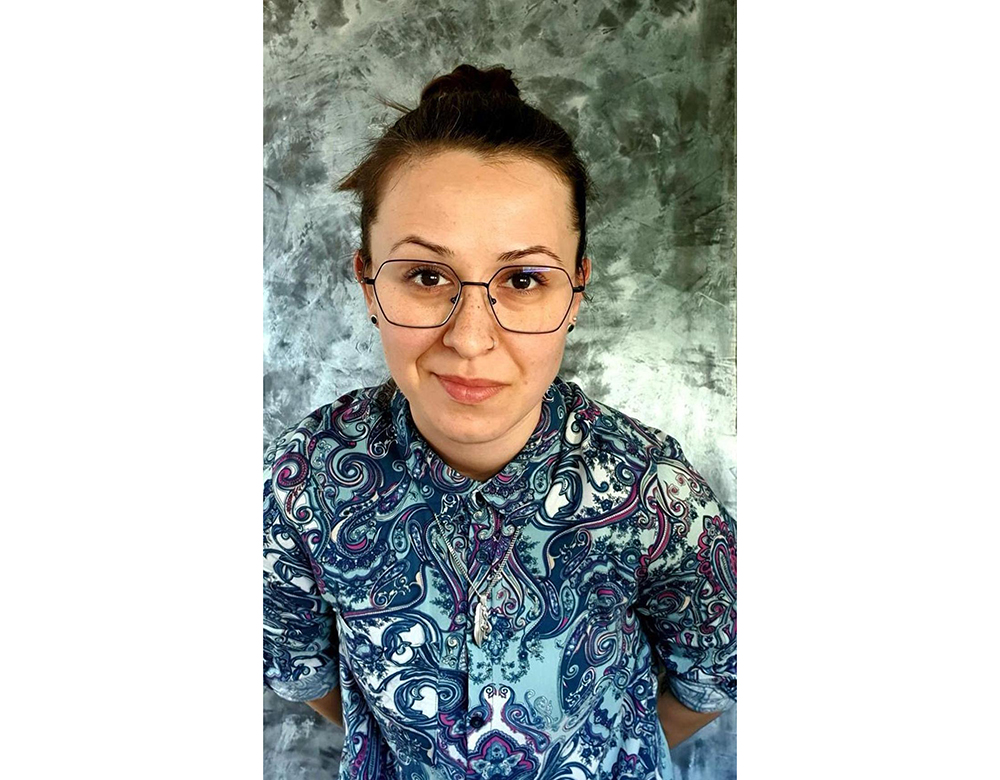
Nela Coralic
You are a self-taught artist and have been painting for more than 15 years. How has your artistic language changed over that time, and what have you learned through developing your practice independently?
So much has changed since I first picked up a brush and a canvas more than 15 years ago. Throughout my journey, I have explored different styles, techniques, and artistic directions, allowing my work to constantly evolve. Yet, one thing has remained a constant: flowers.
Being a self-taught artist has also taught me a great deal about myself. I have learned to trust my intuition, to experiment freely, and to allow my art to develop naturally rather than trying to fit into a particular definition or style.
Most importantly, I have discovered that painting is a form of meditation for me. With every brushstroke, I feel myself leaving the outside world behind and entering different worlds of emotions, thoughts, and imagination. For me, painting is not only about creating an image — it is a way of connecting with myself and expressing something that words sometimes cannot.
Flowers appear repeatedly in your work. What continues to draw you back to botanical subjects, and what can flowers express for you that other subjects cannot?
Flowers have always been a constant presence in my work because I feel that they carry a unique emotional language.
They can be delicate and powerful, fragile and resilient at the same time. I am drawn to that contrast and to the endless variety of shapes, colours, and forms they offer.
For me, flowers are much more than botanical subjects. They can express emotions, memories, beauty, growth, vulnerability, and even the passage of time. I also love that the same flower can evoke something completely different in each person.
Perhaps that is why I always return to flowers. No matter how much my style changes, they continue to give me new ways to explore both the world around me and the worlds within me.
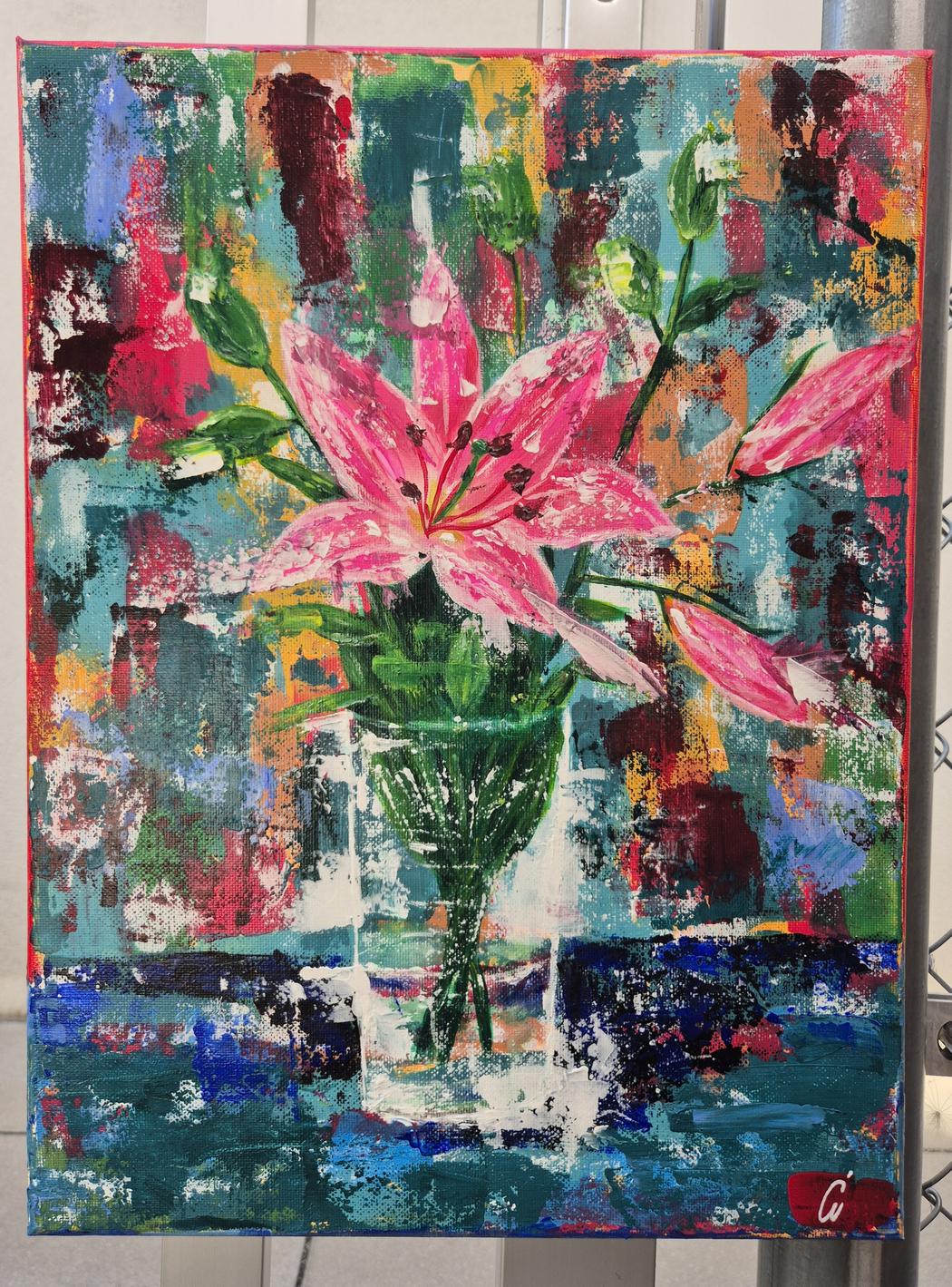 Nela Coralic | Vibrant Bloom | 2026
In works such as Vibrant Bloom, a recognizable flower is surrounded by a highly expressive, almost abstract field of color and texture. How do you balance figurative elements with abstraction in your compositions?
For me, the balance between figurative and abstract elements comes naturally. I like to keep the flower recognizable, giving the viewer something familiar to connect with, while using expressive colours, textures, and brushstrokes to create an emotional atmosphere around it.
I don’t want the background to simply support the flower — I want it to have its own energy and meaning.
The flower offers a point of connection, while the abstract elements leave space for the viewer’s own emotions and interpretation.
Your paintings often use intense contrasts – bright pinks, turquoise, orange, deep greens and darker tones. How intuitive is your use of color, and do particular colors carry specific associations or emotions for you?
My use of colour is mostly intuitive. I rarely begin a painting with a strict colour plan; instead, I let the colours develop naturally as the painting evolves. I am drawn to strong contrasts because they create energy, depth, and emotion.
Certain colours do carry personal associations for me, but I don’t want to give them a fixed meaning. I prefer to leave that open, allowing each viewer to experience the colours in their own way and connect them with their own emotions.
Desert Symphony introduces cacti rather than more delicate flowers, yet the plants are still shown in bloom. What interested you in the contrast between the resilience of the cactus and the fragility of its flowers?
What captivated me about the cactus was its quiet strength. It can endure the harshest conditions, yet it produces something so delicate and beautiful. I see a certain poetry in that contrast — a reminder that beauty can exist even in difficult circumstances.
With Desert Symphony, I wanted to capture that sense of inner strength and vulnerability, and the idea that even when life is challenging, there is always a possibility to grow, transform, and bloom.
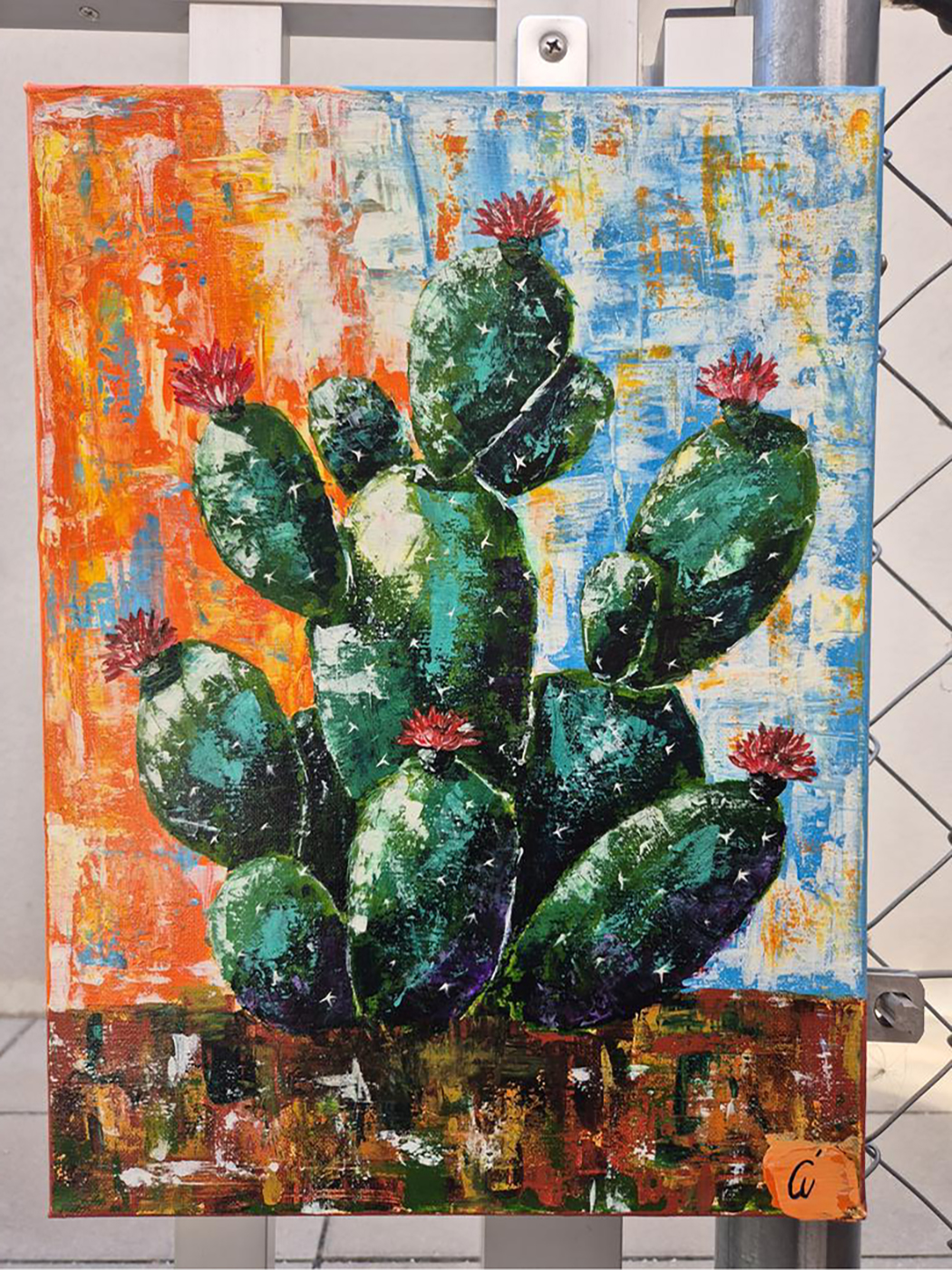 Nela Coralic | Desert Symphony | 2026
You prefer not to impose a fixed emotional meaning on the viewer. How do you create a painting that carries your own feelings while still leaving enough openness for someone else to form a completely different interpretation?
I think every painting begins with something personal — a feeling, a thought, or a moment that I want to translate onto the canvas. But once the painting is finished, I believe it belongs to the viewer as well.
I try to express my emotions through colour, movement, texture, and atmosphere rather than giving the work a specific story or meaning. This allows each person to bring their own memories, emotions, and experiences into it.
For me, the most beautiful part is when someone feels something completely different from what I felt while creating it. That freedom of interpretation is what makes the connection between the artwork and the viewer so special.
Having been born in Bosnia and Herzegovina and now living in Vienna, have different places, landscapes or cultural environments influenced the way you see color, nature or beauty?
Growing up in Bosnia and Herzegovina and later living in Vienna has given me the opportunity to experience two very different environments, and I believe both have quietly shaped the way I see beauty and nature.
Bosnia has a strong connection to nature, with its rich landscapes, changing seasons, and vivid colours. Vienna, on the other hand, has influenced me through its architecture, culture, and more urban atmosphere. I think these experiences have broadened my visual language and made me more attentive to the beauty in both natural and everyday surroundings.
Rather than consciously choosing one influence over the other, I feel that both places have become part of the way I see and create.