
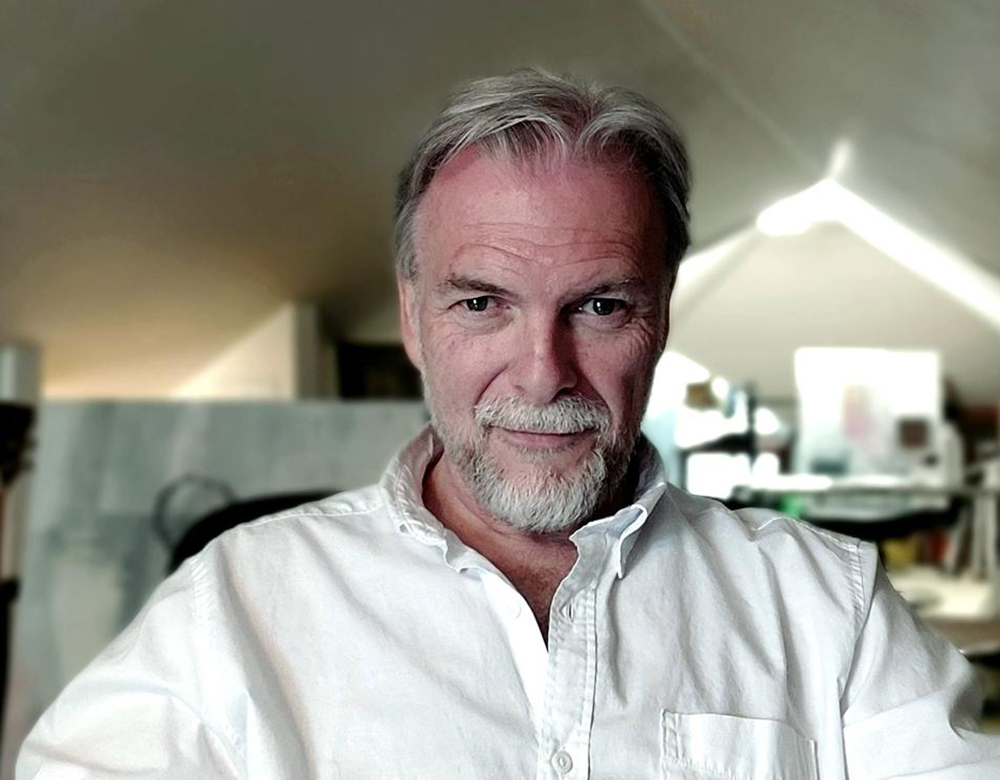
Mark Sajatovich
Your work brings together abstract expressionism, art brut, geometric abstraction, and gothic-inspired elements. How did these different visual languages gradually come together into the style you work with today?
At first, abstract expressionism was the principal component. The discovery that layers and surfaces can serve as the foundation for delivering energy and emotion helped shape my belief that a painting could be interpreted more as a living experience, with memories and a sense of history- not a photograph or a diagram. Geometric abstraction gave it a frame. Instead of letting raw actions spread everywhere, I started organizing content and thinking of composition in terms of hard edges, blocks and spatial decisions. In paintings like “Square 1,” I think it’s apparent how the geometry helps frame an emotional structure which then helps the theme develop while staying coherent. The incorporation of art brut influences is my attempt to keep the work from becoming too precise or too cold because paintings with a more “lived in” look and feel can more easily come to life for a viewer. I find these very effective methods of sharing thoughts or experiences. Their roughness and directness make a painting feel human rather than overly designed. I think the use of gothic elements, particularly the use of shadows, is a valuable tool to help heighten the sense of authenticity and can deepen the emotional connection to the piece, hopefully resulting in a haunting inner life to the work. If I do have a visual style, I suppose it became more recognizable when I stopped treating all these elements as separate languages and started bringing them together to try to interpret a post-covid reality with authenticity and energy. Pieces like “Sanctuary of One” and Ghost in our Machine,” are good illustrations of the challenge of building complex layers of raw surfaces and an unfinished gothic atmosphere on top of more familiar geometric structures.
You mention Kandinsky, Albers, Dubuffet, and Kline as important influences. What did you take from these artists, and at what point did you feel the need to move beyond their influence to establish your own visual language?
I think these four artists have influenced my process of blending geometric forms with layers of weathered surfaces to provide context for abstract images. I was attracted to Kandinsky’s use of form and color as a way to introduce emotion to a piece without the specific depiction of a detailed, literal world. That was an important starting point when it came to exploring ways to decide on any emotional structure for a painting. Chagall said, “color is everything,” and Albers was important because his “Homage to the Square” paintings introduced me to how the placement and transitions of color helped determined how artists might bring paintings to life through their color palette. From Dubuffet, you learn honesty, grit and the value of raw surfaces that resist prettiness. I see an integrity and confidence in the imperfect and Art Brut is like permission to keep the painting human and authentic. Kline’s black brushstrokes are evidence that a single structural gesture can anchor the whole composition through the great tension between light and dark. At some point, I think our influences help us move beyond seeing how to paint and reshape how we think. Personally, I think when I finished “Towards the Sun.” I was aware that I was moving toward something that I could begin to identify as a distinct style. Sometime later, a reviewer of “Lost Soul” said the term “Abstract Brut” might be the best definition for my work. He may have been right.
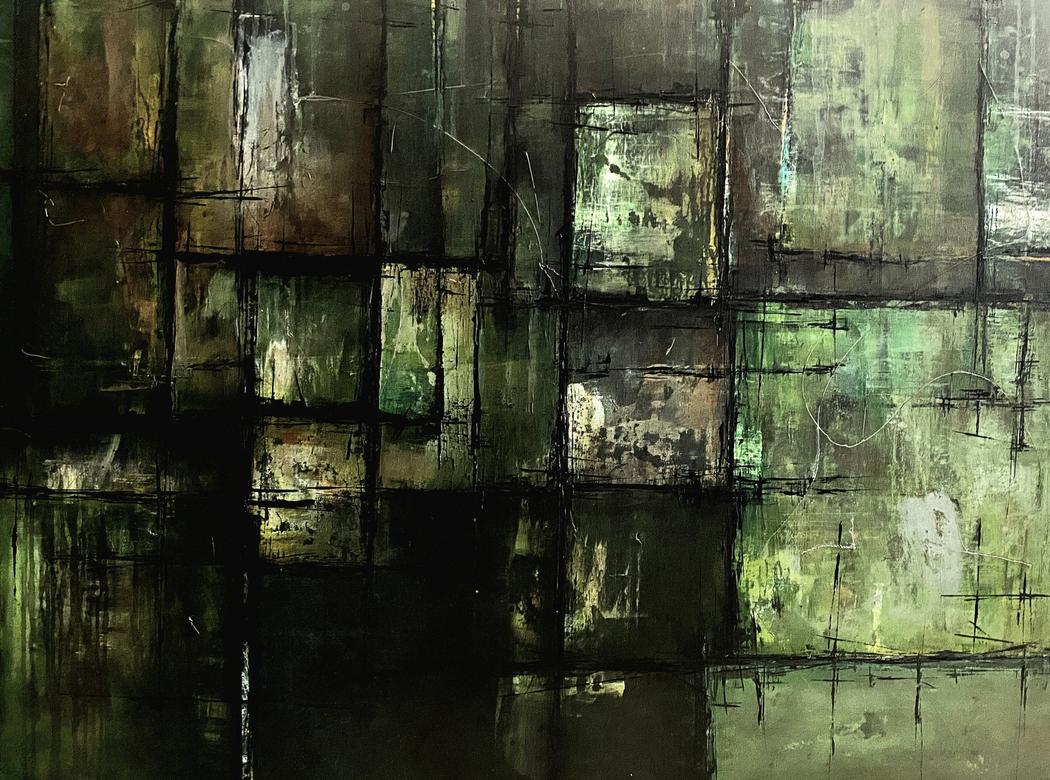 Mark Sajatovich | Descent | 2026
Many of your recent works emerged in the post-Covid period. How did that experience change the subjects, atmosphere, or emotional intensity of your paintings?
Overall, the paintings have become more introspective and the atmosphere has gotten heavier and more contemplative. The themes of uncertainty, isolation, and the fragility have become more common. Before Covid, my direction may have been more about formal approaches to traditional themes. Post-Covid, the subject matter concentrates more on isolation, aftermath of loss and the psychological impact that goes along with it. It’s clear in pieces like “Turn,” where the figure isn’t a character, he’s more like an isolated witness. A lot of my post-Covid paintings carry a sense of memory, or mythic elements combined with distressed textures. They can feel thick and I believe that’s why my recent geometric works don’t feel as clean or formal. It’s been commented my recent paintings have a haunting characteristic or perhaps feel like they’re already lived in. Not outwardly dramatic but there’s a tension under the surface that carries an emotional pressure inside the structure, a sense that something has already happened, or might still be happening. This is the atmosphere that’s resulted after Covid, where the painting has become a reflection of where the unease has settled. I think of “Sanctuary of One” and “Ghost in Our Machine,” they’re both processing conditions rather than just presenting physical images. The paintings didn’t just become moodier, they’re more rooted in contemplation and tension.
Your paintings often contain a tension between structured geometric forms and much more spontaneous, distressed surfaces. What interests you about bringing order and instability together within the same composition?
I think it’s less about bringing order and instability together and more about producing a work that feels more alive than it is resolved. I’ve become more comfortable incorporating hard edged, geometric forms with distressed and textured components that can echo how we experience life. That’s an artistic choice I think is important because it suggests that in our current social and political environment, order is never complete and instability is never just chaos. Tension generally occurs when our lives are interrupted. Visually, a painting which incorporates calm and distressed components together gives a work the friction it needs to be relevant and hopefully, thought-provoking. I’m drawn to art that reflects historical instability and how these pieces serve as valuable reference points. More now than ever, there’s a real value to paintings that convey a sense of awareness, critical thinking and survival. In my case, I think it’s appropriate to convey this through weathered or scarred components that interpret how the painting is balancing the former stability and control of traditional institutions against the threat of their failure or collapse. This approach is interesting because as an artist, it’s in this tension where we can often find meaning.
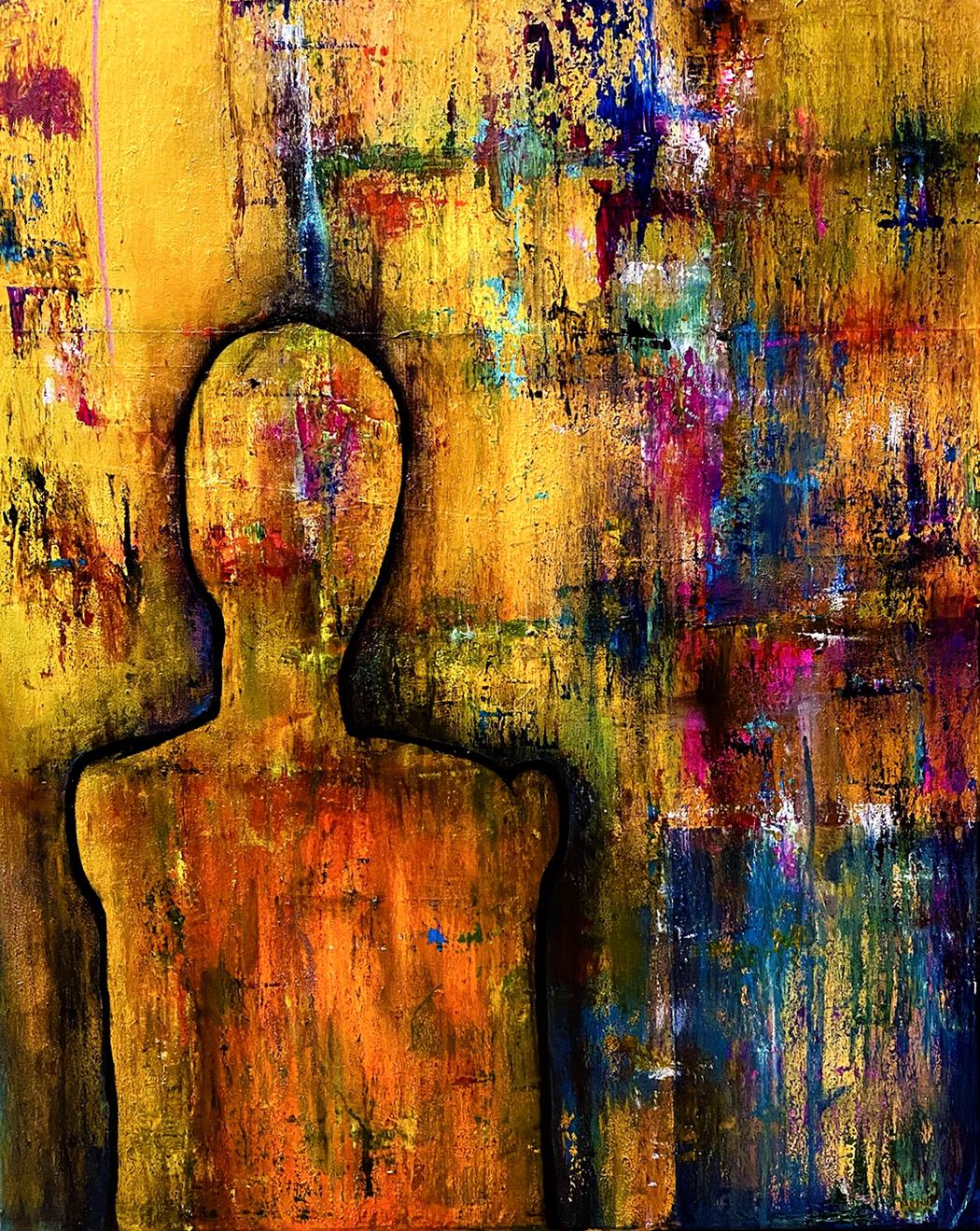 Mark Sajatovich | Lost Soul | 2026
Texture, scratches, drips, and partially concealed layers play an important role in your paintings. How do you decide when to preserve these traces of the process rather than refine or cover them?
It matters to me that the works are based on a sense of history that informs their theme. I think it’s important to recognize that all these techniques aren’t mistakes to be corrected because they reinforce the atmosphere of the piece as well as the same visual language we’ve previously discussed. While it can be a challenge to make a clear distinction between “process” marks that still carry an energy and less impactful marks that no longer need to stay visible, in a sense I’m editing the energy of the painting. That’s why some marks remain exposed while others get covered or softened. The goal is not to preserve everything but to establish a piece that breathes and feels alive. For example, in “Turn,” the blurred edges, residue, and concealed layers help the figure feel unstable and human. If I was to overwork that piece, you’d lose some of its haunted quality. The point is that the imperfect elements are doing expressive work. In both “Cemetery Sunshine” and “Square 1,” the geometry could become too clean if every edge were perfected. The scratches, drips, and interruptions keep the forms from becoming sterile. In most instances, I’ll leave marks that serve as evidence of tension, time, or contribute to the overall theme of the work. I usually try to cover components that feel accidental or that they only serve to be decorative. My preference is not to be repetitive with any technique that comes close to becoming visual clutter, unless it contributes to the balance and the composition of the piece.
Your work reflects contemporary social and environmental concerns without illustrating them literally. How do you translate observations about society into abstract visual forms without making the meaning too explicit?
I think art still functions as a mirror on society and everyone has their own personal reaction to societal change and the resulting challenges. It’s not new for artists to explore their interpretations and opinions of possible solutions. Art is a doorway for anyone to present perspectives in original ways that might serve as catalysts for increasing awareness around these issues. Ultimately, I believe the decision of how an artist chooses to interpret their opinions is a personal choice, but the goal is still the same – increase greater personal consideration of the issues and expand respectful public discourse around society’s critical challenges. I enjoy using abstract expressionism as a vehicle for reflecting issues because it’s a form that lends itself to critical thinking and debate without being didactic. For example, the interpretation of broken geometric forms, distressed layers and scratched surfaces can depict what feels like a world that has been scarred by crises like Covid and climate change or threatened by war without becoming too literal. There is a restraint that invites reflection and consideration and welcomes new perspectives and interpretations from all viewers on what the work implies. In that way, I think the piece becomes more of a catalyst for universal contemplation than a political statement.
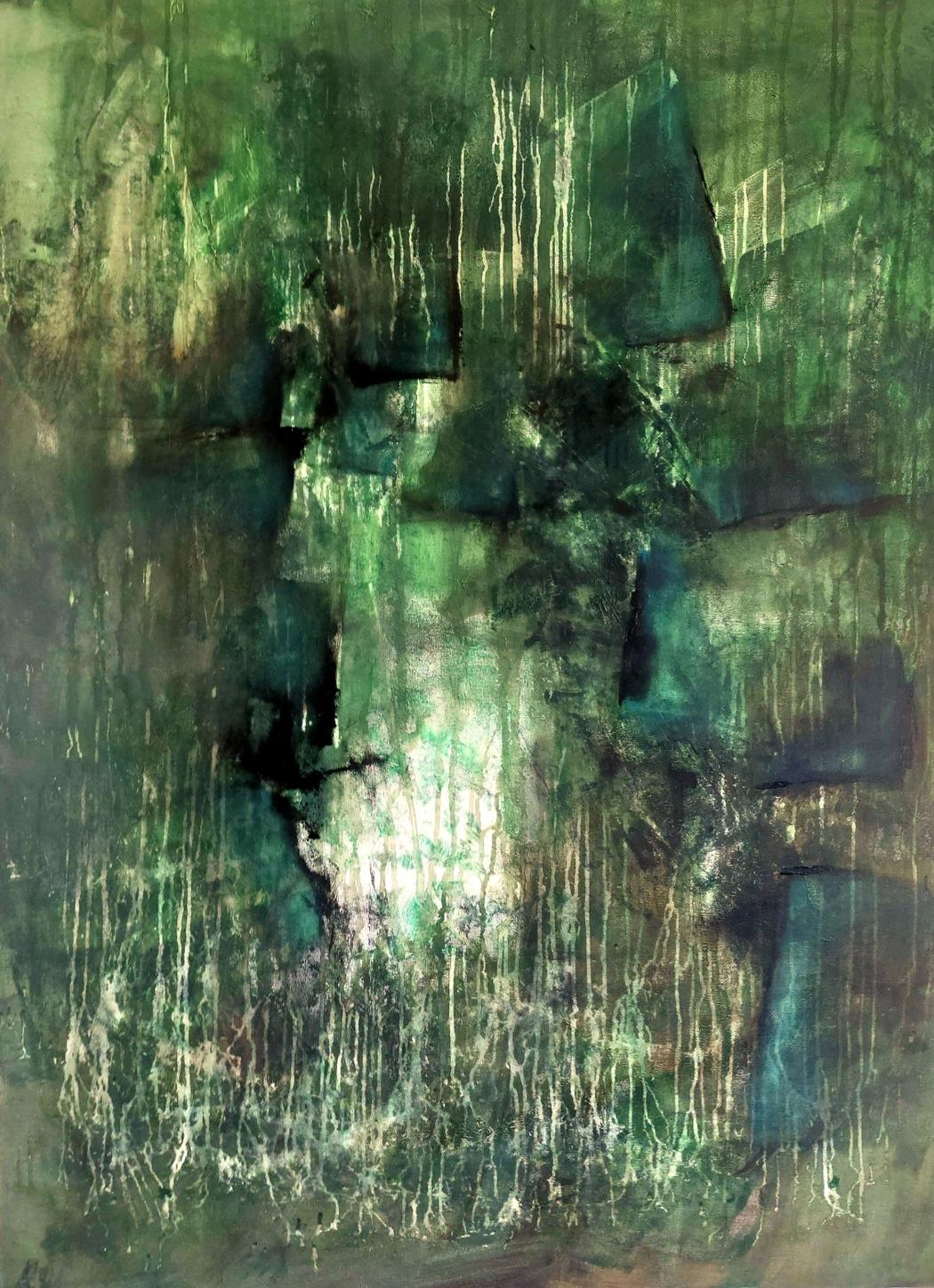 Mark Sajatovich | The Sanctuary Of One | 2026
You invite viewers to approach your paintings as sites of exploration where meanings can continue to change. What kind of response or questioning would you most like your work to provoke in an audience?
In a way, it’s similar to Jackson Pollock’s belief that there is an active energy between the artist and their paintings. I think that a similar energy exists between a painting and the viewer. That relationship, and the energy of the piece, shifts over time and can be re-interpreted. From this perspective, it’s interesting to think that the viewer isn’t searching for a specific, literal meaning or the definitive answer that a painting holds but instead, the piece is a constant reminder and a pathway to re-examine our perspectives and evaluate our current priorities through our art. When I return to my pieces like “Lost Soul,” or “Descent,” I see that the image on the canvas presents the viewer with enough information to anchor their attention in the present but not enough to limit their interpretation in the future. My personal interpretation of both these pieces is very different now than it was when I first considered them complete. It’s a type of active looking that takes a viewer beyond a simple “beautiful” or “bold” description of a painting to an understanding that the meaning of the piece might just keep shifting the longer we look.