
Olga Shipilova
You grew up surrounded by art, with your father as your first teacher. What are your earliest memories of painting, and how do you think those childhood experiences continue to influence your work today?
One of my most vivid childhood memories is connected with painting. There was a picture by my father hanging on the wall of my room—a rural landscape with little hens in it. From a distance, I could clearly see the hens , but the moment I came closer, they disappeared, and in their place there were only a few textured brushstrokes. It felt like magic.
I repeated this little experiment again and again, trying to catch the exact moment when those textured spots of paint suddenly turned into hens. To me, it truly was a kind of magic. That childhood impression was so powerful that even now I still think of painting in much the same way—as something magical. And I try to make sure that this sense of magic is present in every work I create.
At one point, you had to choose between art and medicine and ultimately pursued a medical career. Looking back, how did that decision shape you both as a person and as an artist?
Both have become essential and complete parts of my life. Medicine cannot simply be crossed out of it: my medical knowledge and skills continue to help me, and they are still needed. At the same time, I cannot imagine myself now without painting.
Did medicine influence my art? Absolutely. Medicine taught me to think carefully before I act. And medicine and painting have one important thing in common: in both, mistakes are costly. There is a Russian proverb: “Measure seven times, cut once.” It applies equally well to medicine and to painting.
Do you feel that your background in medicine has influenced the way you observe the world – perhaps your attention to detail, structure, light, or the physical qualities of your subjects?
Yes, exactly. Attention. Medicine taught me to pay close attention to detail. It gave me an understanding that there is no such thing as something “unimportant.” Everything matters. The smallest, seemingly insignificant detail may turn out to be decisive.
That attentiveness—to objects, to nuances, to the little things—is extremely important for an artist.
You returned to painting many years later while living in Cyprus. What was it about that period of your life that encouraged you to pick up the brush again?
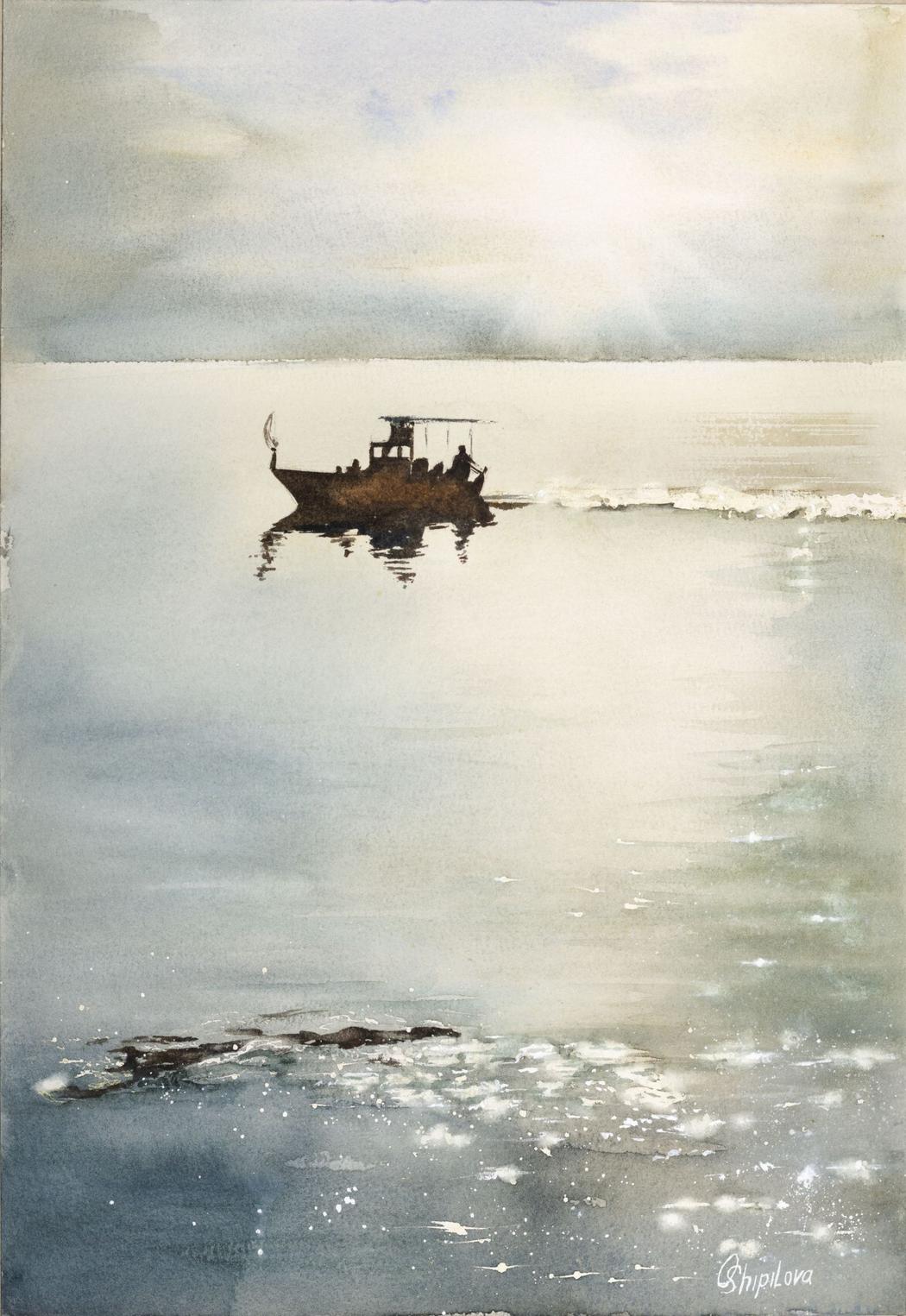
The beauty around me. Everyday beauty—the kind that somehow never becomes ordinary.
I live in an extraordinarily beautiful place, almost a paradise. Everything here is beautiful: the sea, the forests, the rocks, the people. And there is also the spirit of ancient Greek and Roman culture, which seems to permeate everything around you. How could one possibly live here and not paint?
And I am certainly not the only person who has fallen under the spell of this beauty. In fact, it is almost a mass phenomenon here. Many people are seized by a kind of creative ecstasy.
I was fortunate, though. I already had the background that allowed me to channel that creative energy in the right direction and eventually achieve success with it.
You have described your artistic education as “medieval”, referring to learning from many different masters. How did you manage to absorb such varied approaches while gradually developing a visual language of your own?
Well, how else could it be?
If you study under only one master, sooner or later you will end up imitating that person in one way or another—their technique, their methods, their way of thinking. And this is always visible from the outside. No matter how accomplished you become, there will still be something derivative about your work.
But when you have many excellent teachers, you can take from each of them what interests you, what you need, what fills the gaps in your own abilities. You learn from each master something different.
And since I was fortunate enough to study with some of the very best, every one of them had something valuable to teach me.
Watercolor has changed considerably since your childhood, both technically and materially. Which discoveries in contemporary watercolor have had the greatest impact on your own practice?
When I was a child, I had a book that was almost a bible for me. It was called The Technique of Watercolour Painting. Everything was in there. It described essentially the same techniques that are used today—and, of course, many of those techniques had already existed for a very long time.
But that book was talking about a very different kind of watercolour.
At the time, watercolour was considered a branch of graphic art, and that was largely the role it played: a secondary, supporting medium. Even today, many encyclopedias still describe watercolour, out of habit, as a form of graphic art.
Today, however, that is simply no longer true.
Watercolour has become an independent, fully developed and major art form—a distinct form of painting in its own right. It is far more dynamic now. It has strength and presence.
It is no longer merely a subdivision of graphic art. It has become an extraordinary medium that combines delicacy with boldness, colour with fluidity, spontaneity with unpredictability.
And much of this transformation has been made possible by new materials that simply did not exist before.
When I was a child, nobody had even heard of special cotton watercolour paper. Of course, there was “watercolour paper,” but it was a completely different material. I am not even sure what it was made from—probably something close to what we would now call cellulose paper. And the technique had to be entirely different, because artists could only do what that paper allowed them to do.
And the brushes! In my childhood, there were essentially only two choices: squirrel or kolinsky sable.
Every artist dreamed of owning a good set of kolinsky brushes. That was it. There was nothing else.
Synthetic brushes simply did not exist for watercolour, at least not in any serious sense. Today I do not own a single kolinsky brush. Modern high-quality synthetic brushes have taken over that role beautifully, and they allow us to do things that would once have been almost unimaginable.
And then there are the paints. We do not even have to look very far back. In just the last ten years, the range of watercolour paints available has expanded enormously. Even a decade ago, many of the paints we have today simply did not exist.
Yes, the pigments themselves may be the same, but the whole concept of watercolour paint has changed.
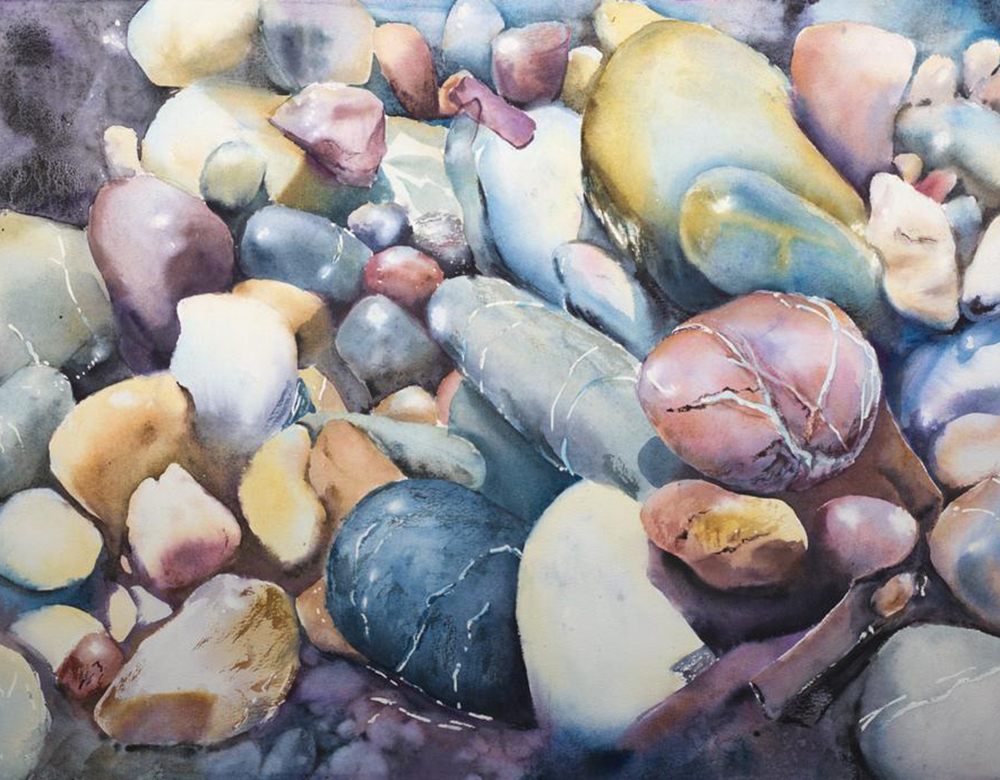
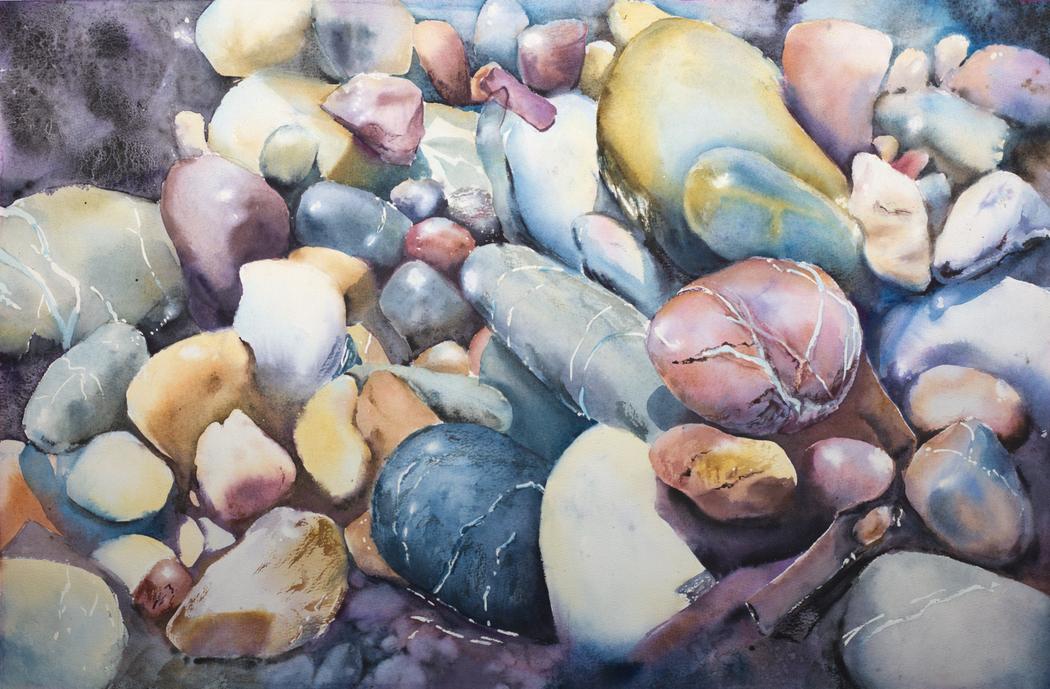
When I was a teenager, manufacturers did everything they could to eliminate granulation. Granulation was regarded as a defect. Today, manufacturers are almost competing to see whose paints granulate most beautifully.
What used to be considered a flaw has become a striking artistic effect.
Watercolor often involves a balance between control and unpredictability. How important are accidents, spontaneous washes, and unexpected effects in your creative process?
Well, what can I say? They happen. And what can you do about it?
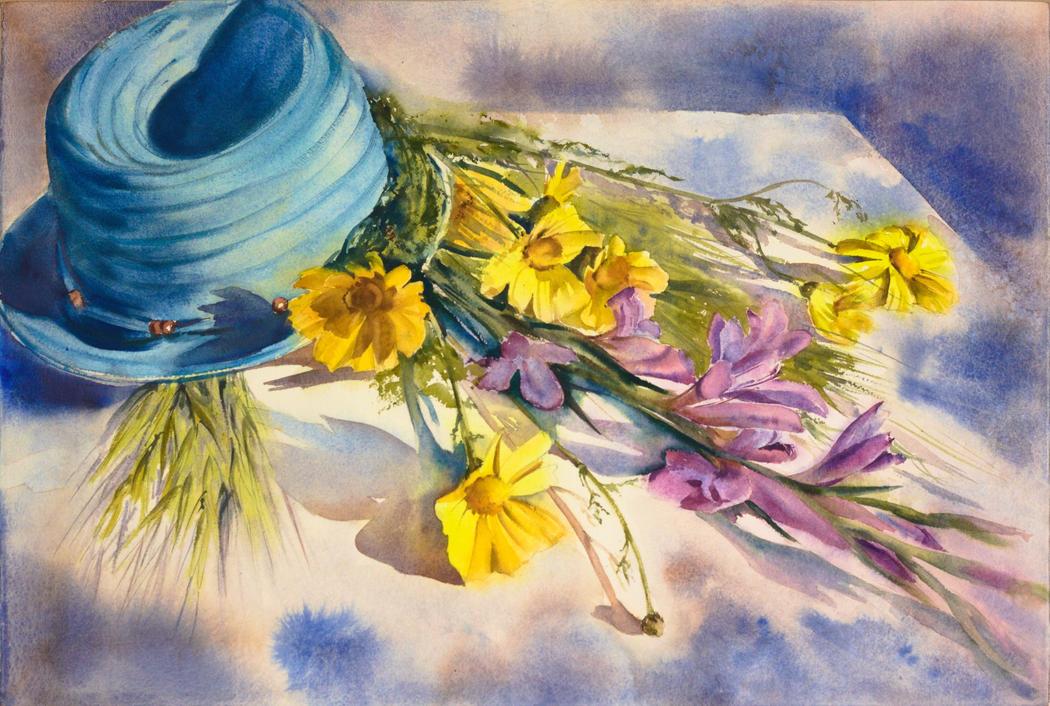
This is watercolour. It flows unpredictably. The paper absorbs it unpredictably. You plan one thing, and suddenly the paint produces a run or a bloom in a place where you never intended one to appear.
The real question is how you respond to it.
Do you see it as an annoying accident that has ruined the painting? Or do you see it as an opportunity that watercolour has offered you—something you can use?
We sometimes call such things “a gift from watercolour.”
But seriously, moments like these are precisely where professionalism reveals itself. When something unexpected happens, you can become frustrated and throw the painting away. Or you can find a way to use what has happened—to integrate it into the work, absorb it into the composition, and transform it from a flaw into a genuine strength.
That is what gives watercolour its unique unpredictability—something that cannot truly be manufactured or imitated.