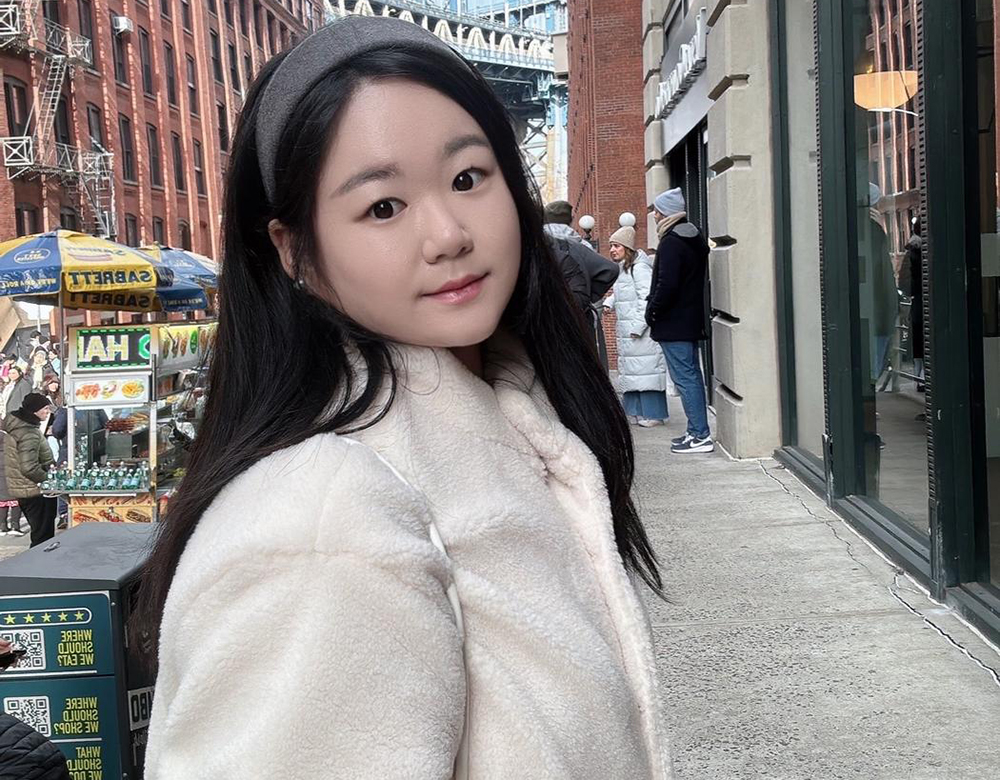
Hyebin Jeon
Your paintings explore the unconscious and emotional perception rather than recognizable subjects. How do you begin translating something as intangible as a memory or feeling into paint?
I usually begin with a feeling rather than a specific image or subject. Sometimes it comes from a memory, a moment that stayed with me, or even a feeling that I cannot clearly explain. I try not to translate that experience literally. Instead, I think about its movement, temperature, weight, and rhythm. I let those sensations guide my choices of color, gesture, and space. The painting becomes a way of giving a physical form to something that originally existed only inside me.
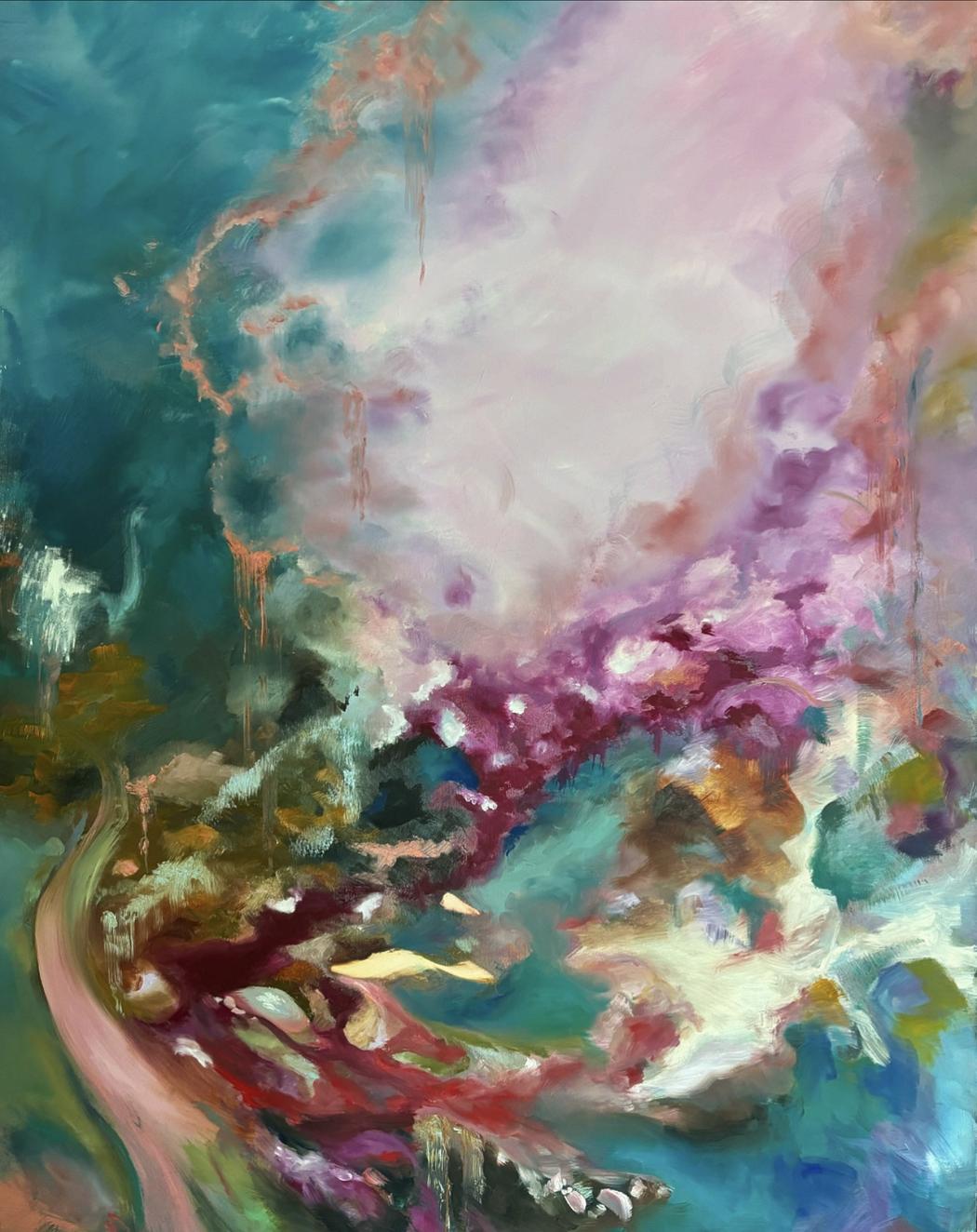 Hyebin Jeon | The Unconscious
Intuition seems to play an important role in your process. At what point do you feel that a painting begins to develop its own direction beyond your original intention?
I think that happens when I stop trying to control the painting completely. I usually begin with an emotional intention, but as I layer paint and respond to what is already on the canvas, unexpected forms and relationships begin to appear. At some point, I start reacting to the painting rather than simply executing my original idea. That is when I feel the painting develops its own direction. I want to listen to that process instead of forcing the work to become exactly what I imagined at the beginning.
Your works move between atmospheric, almost weightless passages and areas of intense color and physical gesture. How do you approach the balance between softness and visual intensity?
For me, softness and intensity are not opposites. They are both necessary to express how emotions actually move. A feeling can be quiet and overwhelming at the same time. I use softer, more atmospheric passages to create space and allow the eye to breathe, while stronger colors and physical gestures create moments of emotional pressure. I often move between these two states instinctively until the painting feels emotionally balanced.
Color appears to carry a strong emotional function in your paintings. Do particular colors begin with specific emotions or memories for you, or does their meaning emerge during the painting process?
Sometimes I begin with a certain color because it already carries an emotional association for me. But most of the time, its meaning changes as I paint. A color that initially feels peaceful can become tense when it is placed next to another color, or a strong color can suddenly feel vulnerable within a softer space. I am interested in that transformation. Rather than assigning one fixed emotion to each color, I allow the emotional meaning of color to develop through its relationships on the canvas.
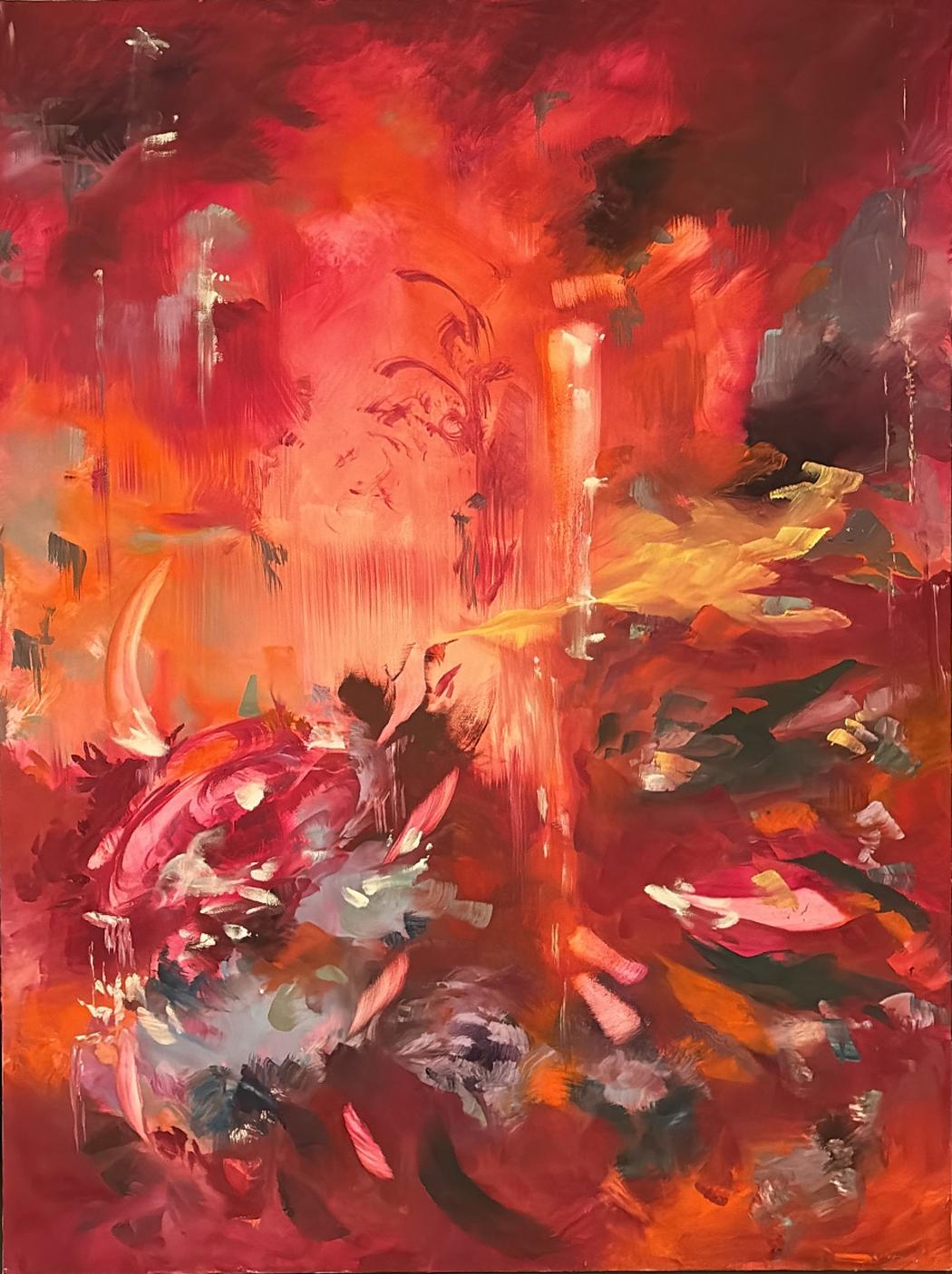 Hyebin Jeon | Passion
One of the striking qualities of your work is the tension between forms that seem to emerge and forms that appear to dissolve. What interests you about this boundary between presence and disappearance?
I am interested in the uncertainty of things that are present but never completely fixed. Memories work that way for me. We remember something, but the image is never exactly the same each time we return to it. Parts become clearer while others disappear or change. I think my paintings reflect that experience. I want forms to feel as though they are emerging and disappearing at the same time, existing somewhere between recognition and uncertainty.
Some of your paintings feel calm and expansive, while others are much more intense and almost visceral. Do these different emotional temperatures reflect your state while painting, or are they consciously constructed?
They can come from both. My emotional state naturally affects the way I paint—the pressure of a gesture, the amount of color, or the openness of a space. But I do not simply document my mood. As the painting develops, I make conscious decisions about where to intensify or quiet the image. Sometimes I may begin from a very personal emotion and gradually transform it into something that feels less autobiographical and more open to the viewer.
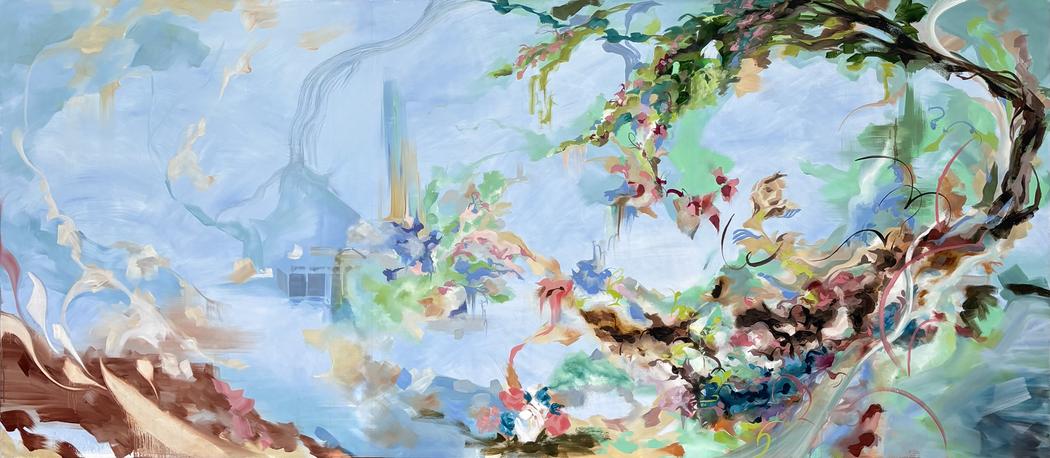 Hyebin Jeon | Landscape
You invite viewers to find their own emotional connections rather than follow a fixed narrative. Has a viewer ever interpreted one of your paintings in a way that significantly changed how you saw the work yourself?
Yes. One of the reasons I value sharing my paintings with other people is that viewers sometimes notice emotional possibilities that I was not consciously aware of. I may think of a painting through a particular memory or feeling, but someone else can see loneliness, comfort, desire, tension, or even hope in the same work. Those interpretations remind me that a painting does not belong entirely to the person who made it once it enters someone else’s experience. I find that very meaningful because my goal is not to tell viewers exactly what to feel, but to create a space where their own memories and emotions can meet mine.