
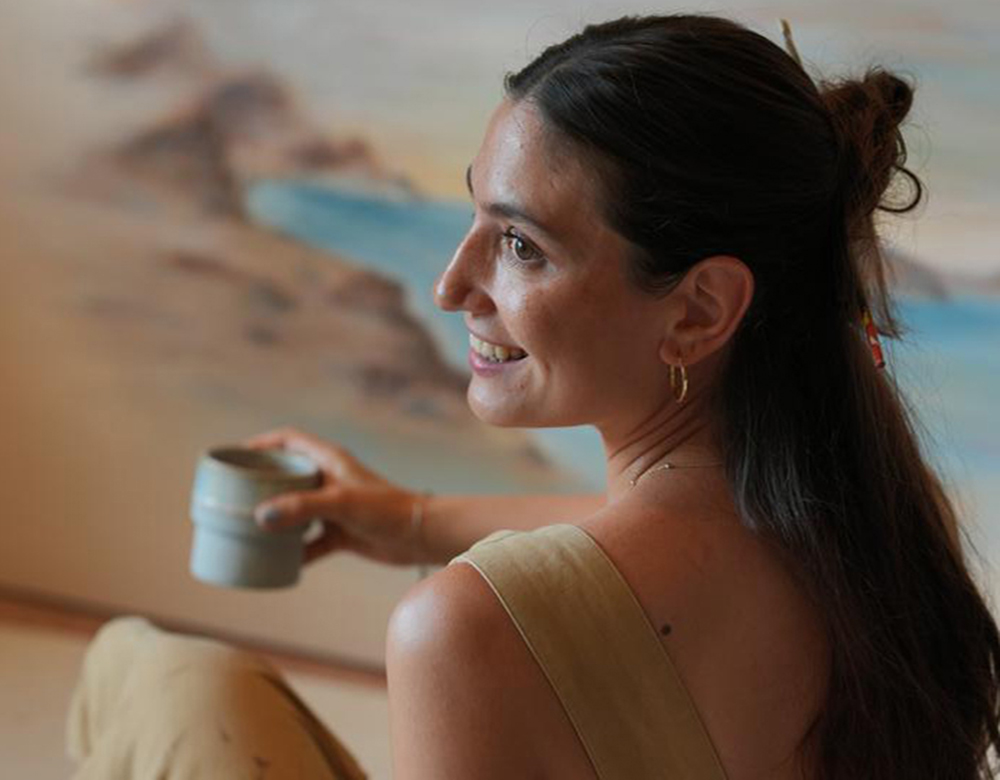
Şeyma Tozkoparan
Your background combines decorative arts, conservation, restoration, and architecture. How have these disciplines shaped the way you approach painting and composition?
My artistic journey has been shaped by the combination of different disciplines. During high school, I studied Decorative Arts, where I received training in light and shadow, color theory, technical drawing, and various artistic techniques. My university education in Conservation and Restoration taught me to respect both history and materials, and to recognize the traces that time leaves on surfaces. Later, while working in interior architecture, I realized how important artworks are in creating a meaningful dialogue with a space and in influencing the emotions of the people who experience it. Today, I bring all of these experiences together in my paintings, creating layered works that emphasize texture and aim to evoke emotions.
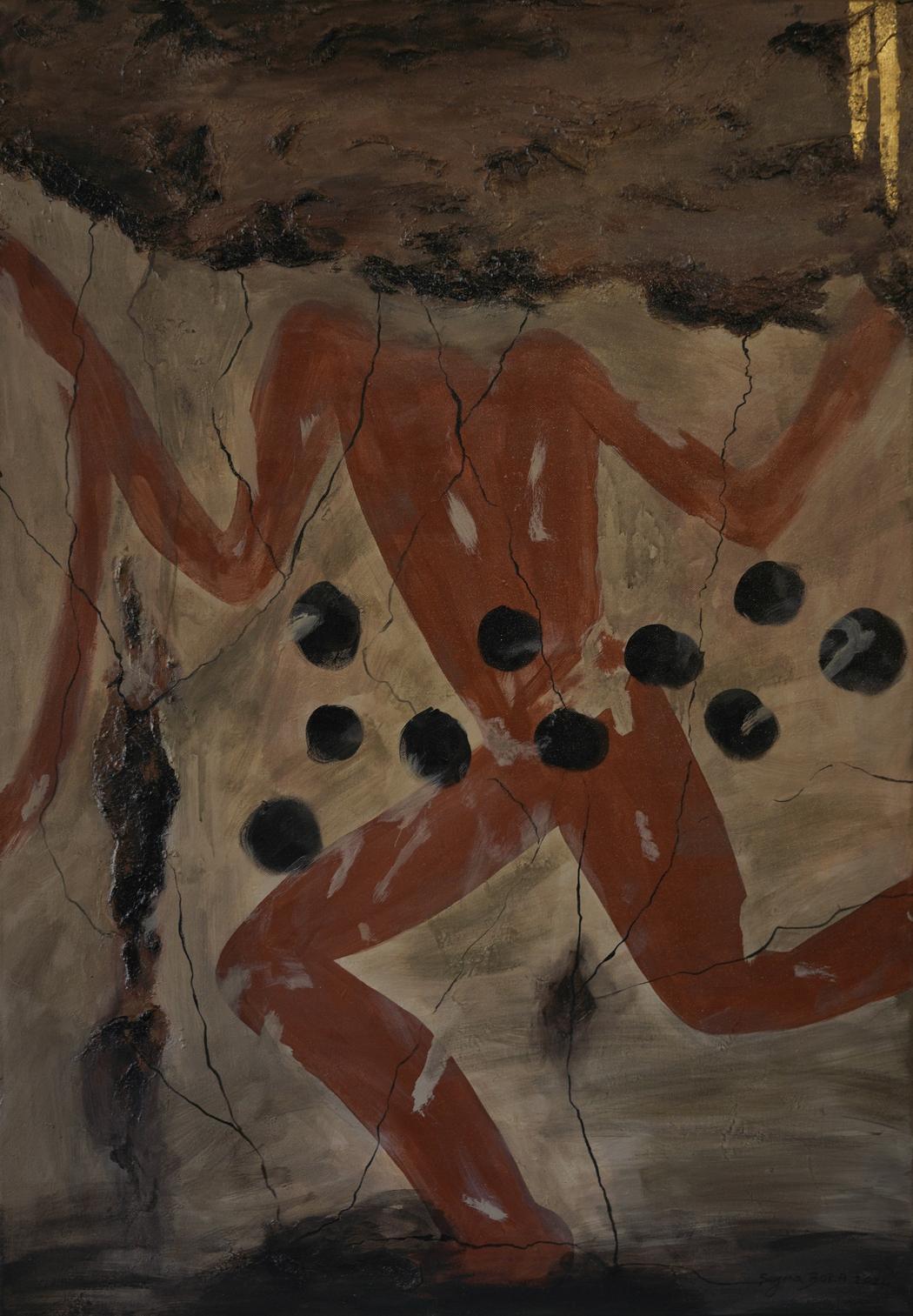 Şeyma Tozkoparan | Duvarların Fısıltıları | 2024
You mention that spatial thinking plays an important role in your artistic practice. How does your architectural experience influence the structure of your abstract works?
Architecture taught me not only how to design structures, but also that empty space can be just as important as form. Whenever I am commissioned to create a painting for a specific interior, I prefer to visit the space first, experience its atmosphere, observe its colors and character, and then create a work that naturally belongs there. I aim to create paintings that establish harmony with their surroundings. In my compositions, I enjoy leaving breathing spaces that allow the viewer to feel calm rather than overwhelmed. Sometimes I achieve balance with a single brushstroke, and sometimes through the areas I intentionally leave untouched. This gives my paintings a quiet yet powerful presence.
Many of your paintings seem to balance emotional intensity with a strong sense of material texture. How important is texture in expressing inner states or memories?
For me, texture is the silent language of a painting. Sometimes emotions are expressed more through the surface than through color itself. That is why I incorporate nature directly into my work. I use soil, sand, and other natural materials to build textured reliefs, bringing traces of nature onto the canvas. Layer by layer, these surfaces carry memories, lived experiences, and the marks of time. I want viewers not only to look at my paintings but also to feel the movement of the surface and the presence of nature as they come closer.
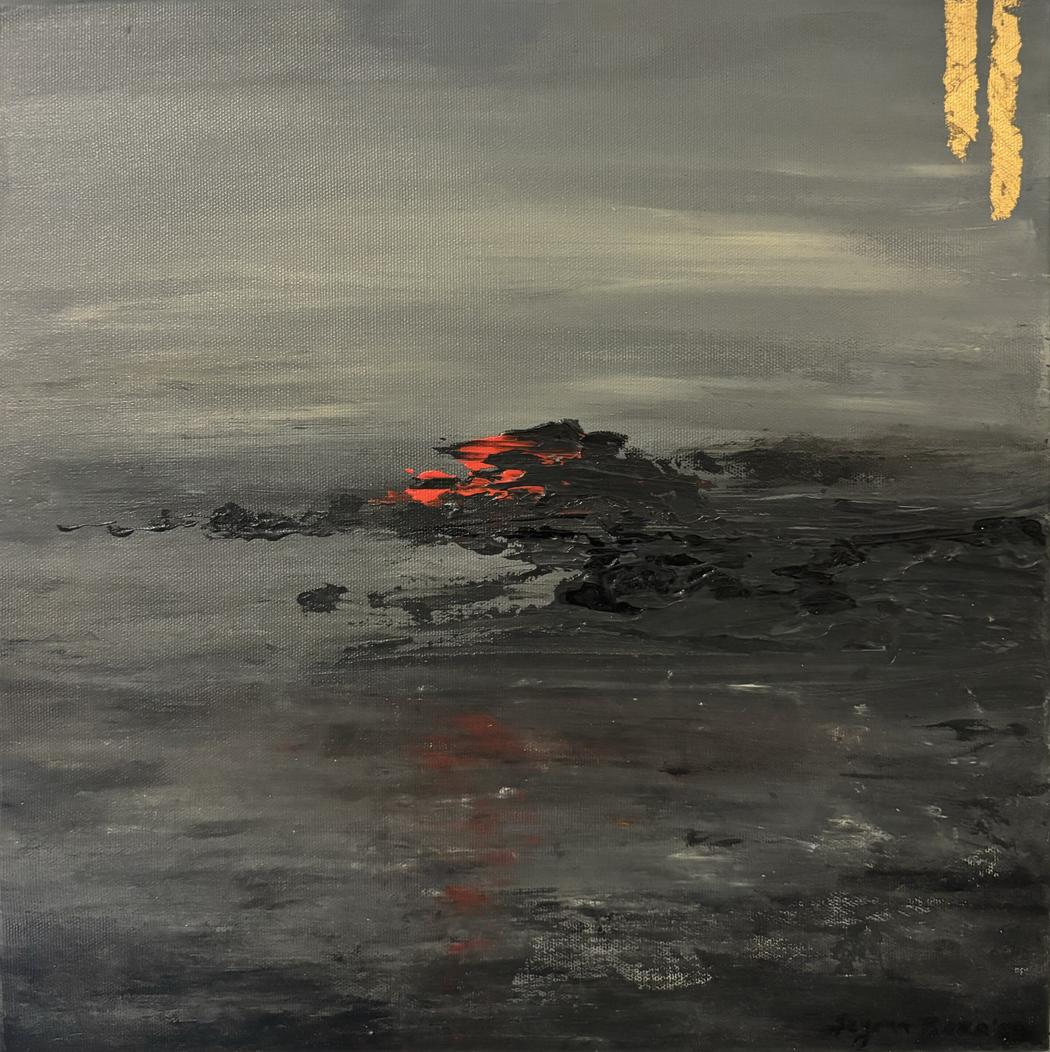 Şeyma Tozkoparan | Metalik DüNya | 2024
Your works often move between abstraction and recognizable forms, such as landscapes, bodies, or faces. How do you decide how much of the image should remain visible or hidden?
I never want my paintings to tell only one story. Ambiguity creates space for the viewer’s imagination. Sometimes I leave the feeling of a landscape, sometimes the suggestion of a figure, and sometimes only an emotion. I value the fact that each person can discover something different within the same painting. I complete the artwork, but the viewer completes its meaning. Isn’t nature like that as well? A sunset can evoke one emotion on one day, and an entirely different feeling the next, even though it is the same sun setting.
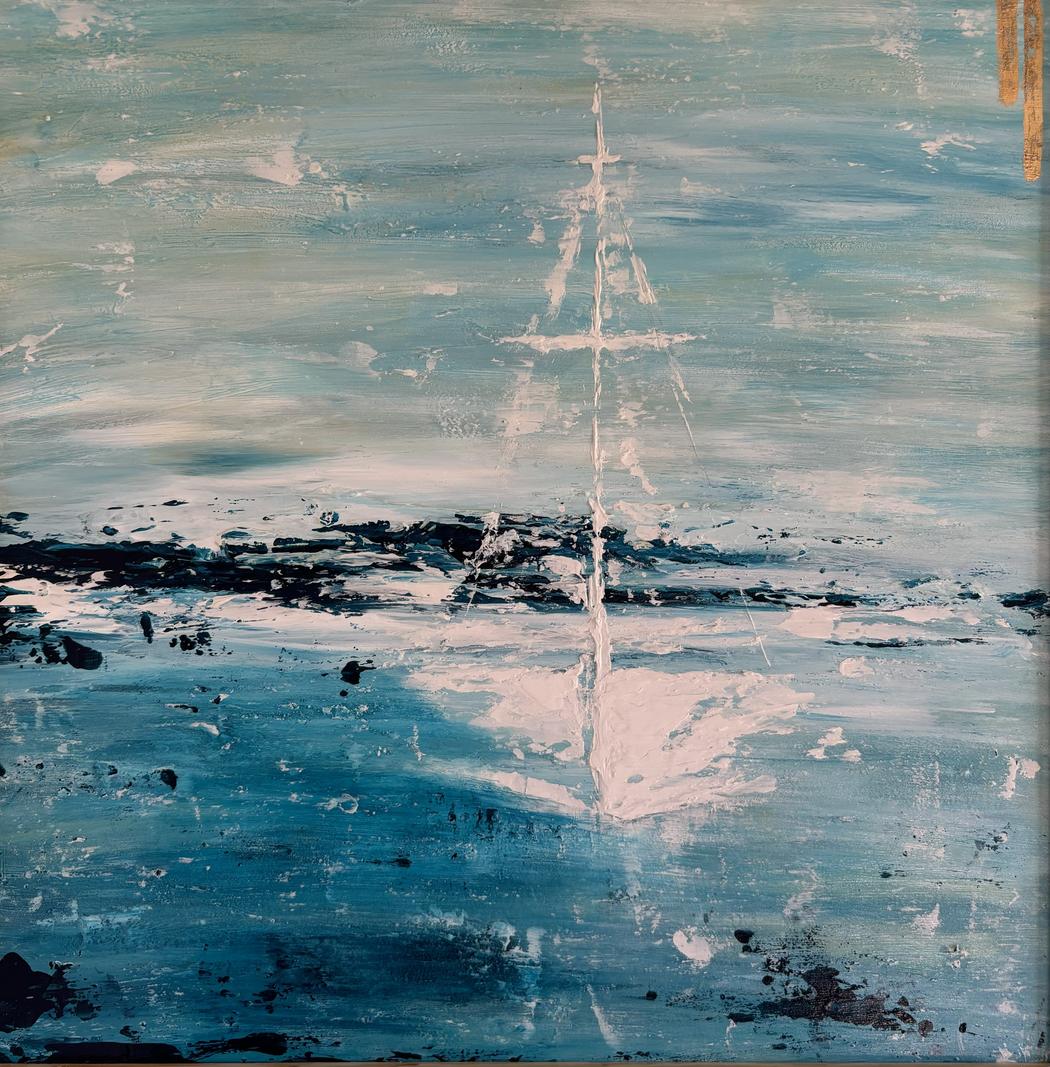 Şeyma Tozkoparan | Derin | 2025
In several works, gold details appear as a recurring visual element. What does this golden mark represent for you?
My connection with gold leaf began while I was working in the gilding workshops at Dolmabahçe Palace and Yıldız Palace, where I was involved in the conservation and restoration of traditional decorative artworks. During that time, I became deeply fascinated by the elegance, delicacy, and craftsmanship of the gold leaf technique. Over time, it became an essential part of my artistic practice. Today, I use gold leaf not simply as a decorative element, but as a personal signature—a mark that carries a part of my identity within each painting.I am also attaching a photograph of myself taken while working at Dolmabahçe Palace in 2009, as it represents the beginning of my connection with this technique.
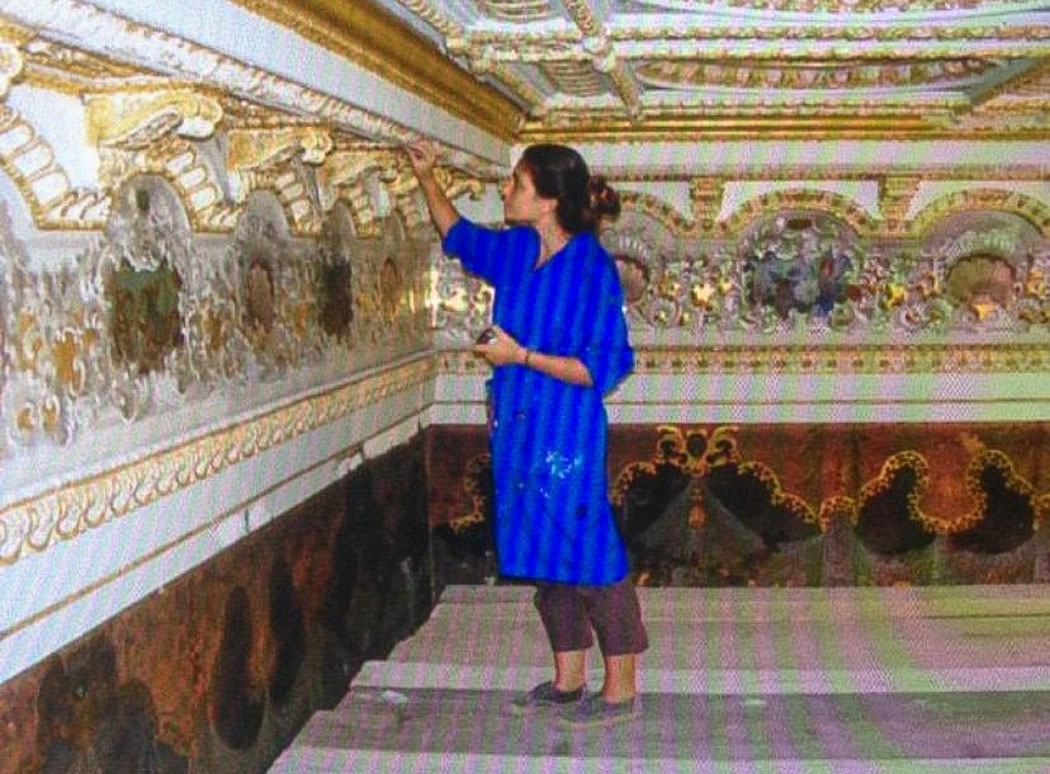 Working at Dolmabahçe Palace, Istanbul, Türkiye | 2009
You work with oil, acrylic, watercolor, ceramics, and natural candles. How does moving between different materials affect your creative process?
Each material teaches me a different way of thinking. Oil painting teaches patience and depth, acrylic offers freedom and spontaneity, while watercolor reminds me to embrace the unexpected. Working with ceramics and creating natural candles strengthens my connection to touch, craftsmanship, and materiality. Although the materials change, texture and emotion always remain at the heart of my creative process. I also find great joy in lighting the candles I make and drinking coffee from the ceramic cups I create while painting. These small rituals help me slow down, connect with the moment, and make the creative process even more meaningful.
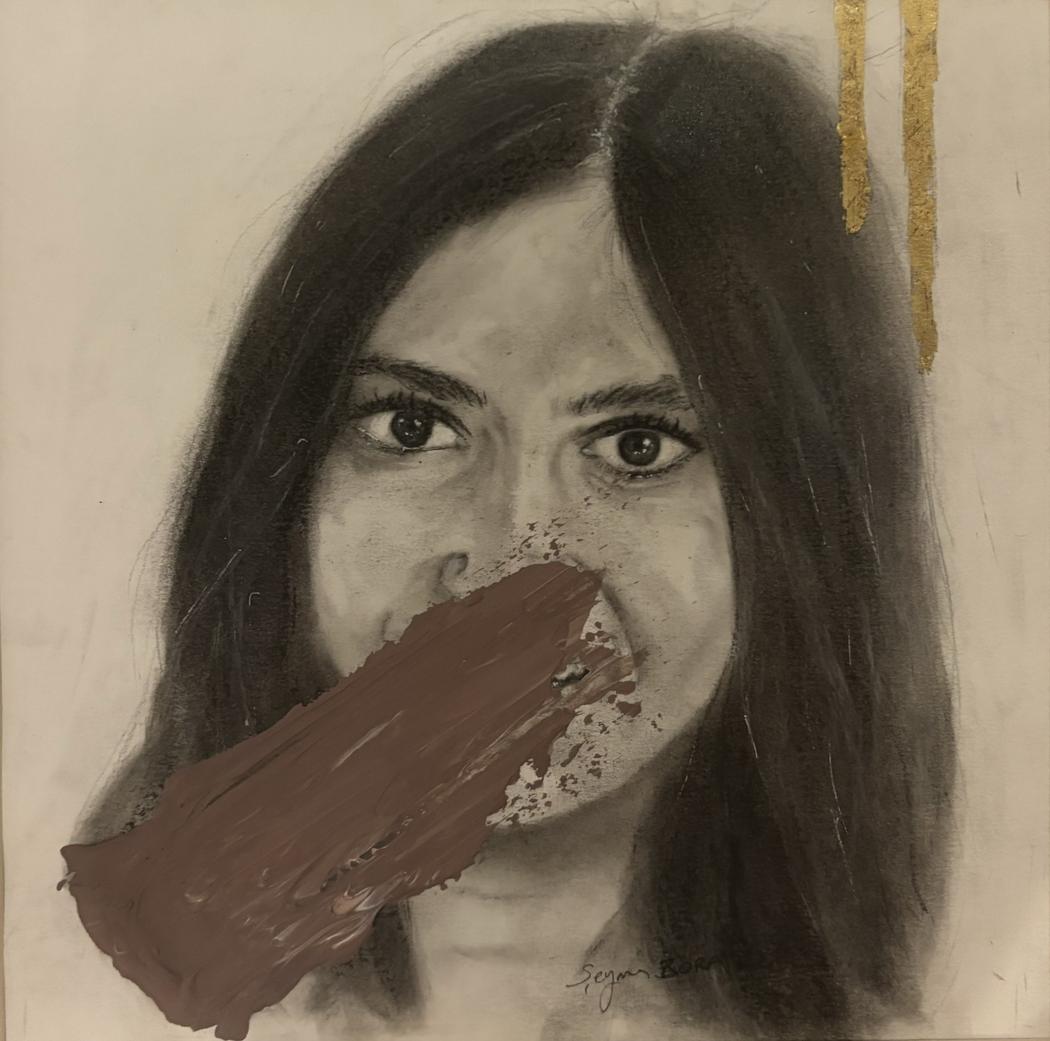 Şeyma Tozkoparan | Otoportre | 2024
You describe your work as a way to express emotional layers and human relationships. Are your paintings more connected to personal experience, observation, or imagination?
My paintings emerge from a combination of personal experiences, observations of nature, and imagination. Most of the time, I am not painting a specific landscape, but rather the feeling that landscape leaves within me. My goal is not simply to create a surface for people to look at, but to offer a space where they can pause, breathe, and reconnect with their own emotions.