Ella Leynard
You are a poet, artist, and teacher. How do these three roles influence one another in your creative life?
Being a poet, a teacher, and an artist means creation. In order to bring out the human being in the baby, the toddler and the child, you must strictly connect his life to education. The education received at home continues with the one received from the teacher, at school. This is one of the great masterpieces of humanity, – The Man. Using the word as a tool, the poet creates poems. The artist uses colour to create the painting.
Your background is deeply connected with literature. How did your experience as a writer shape the way you approach painting?
For me poetry means colour and music created with the help of the word which leads the way to the meaning. Each poem can be considered a painting, while reading it, inside the words you feel the rhythm and almost always, the poem has colour in it. For me the word means colour. I think each word and name has its own colour. The word is a force carrying within the greatest form of energy. If you read a poem you can turn it into a painting. Poetry means imagery. The painting is an image.
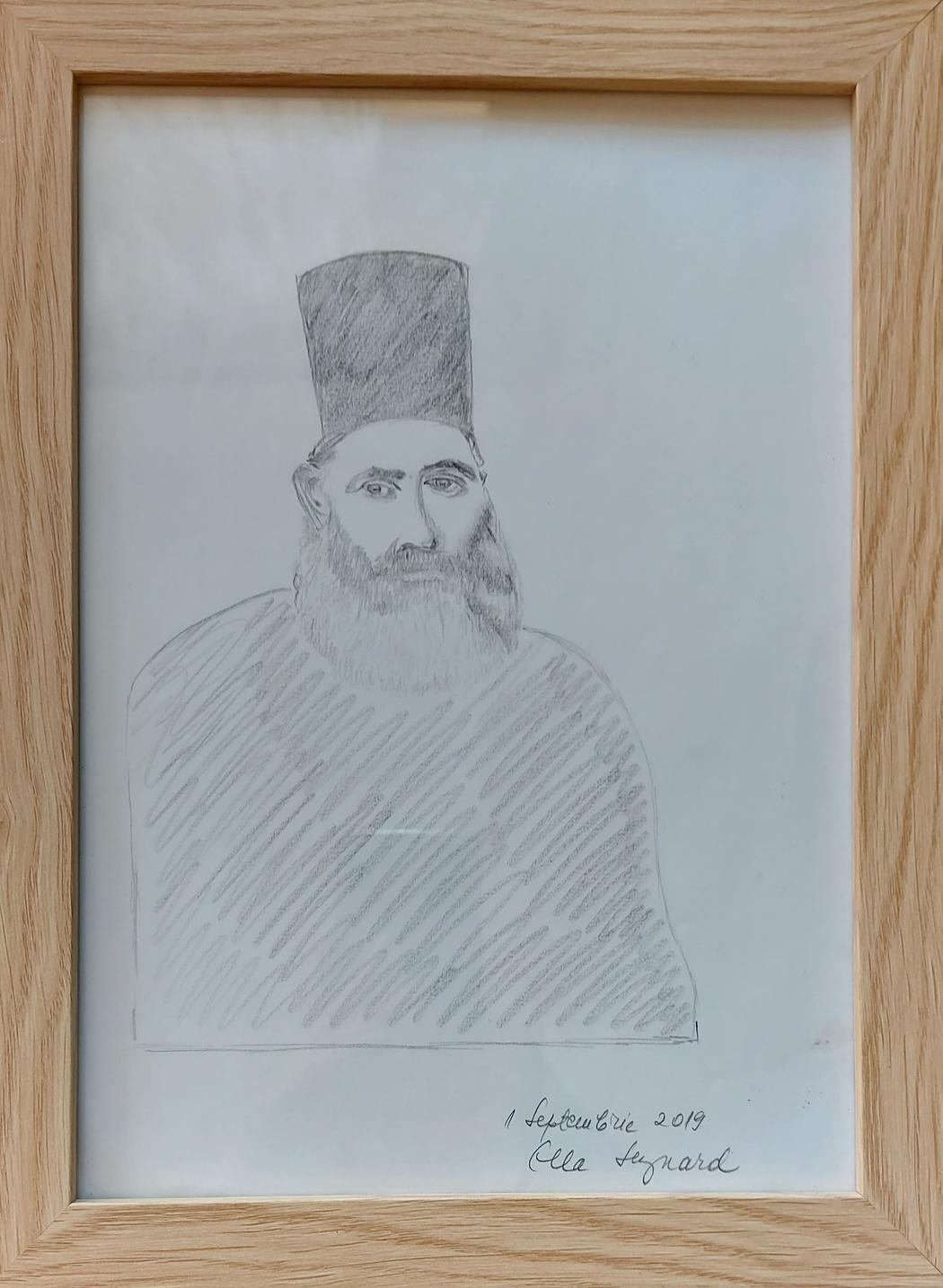
You recently graduated from the School of Arts in Bucharest. What was the most important discovery you made during your studies?
There is a constant search to understand, to find out, to learn, to apply it yourself. I have always felt that any kind of learning from someone else has its limitations and it is not something to settle for. I have felt it as terribly displeasing. Maybe nobody is to blame, at a point in your evolution no teacher can help much because only you know what you need for your art. With this thought acutely bothering me, I found a book recently published, “BRÂNCUȘI, Art is the absolute truth” edited by Doina Lemny, Polirom Publishing, 2026. I started reading it with thirst, I was sure Constantin Brâncuși would help me. And he did: “With art we will always find ourselves at the beginning; you can only learn it through yourself, and you really learn it, while if you learn it from others, you will do things learnt which will not represent you, a sterile form cannot bear children.”
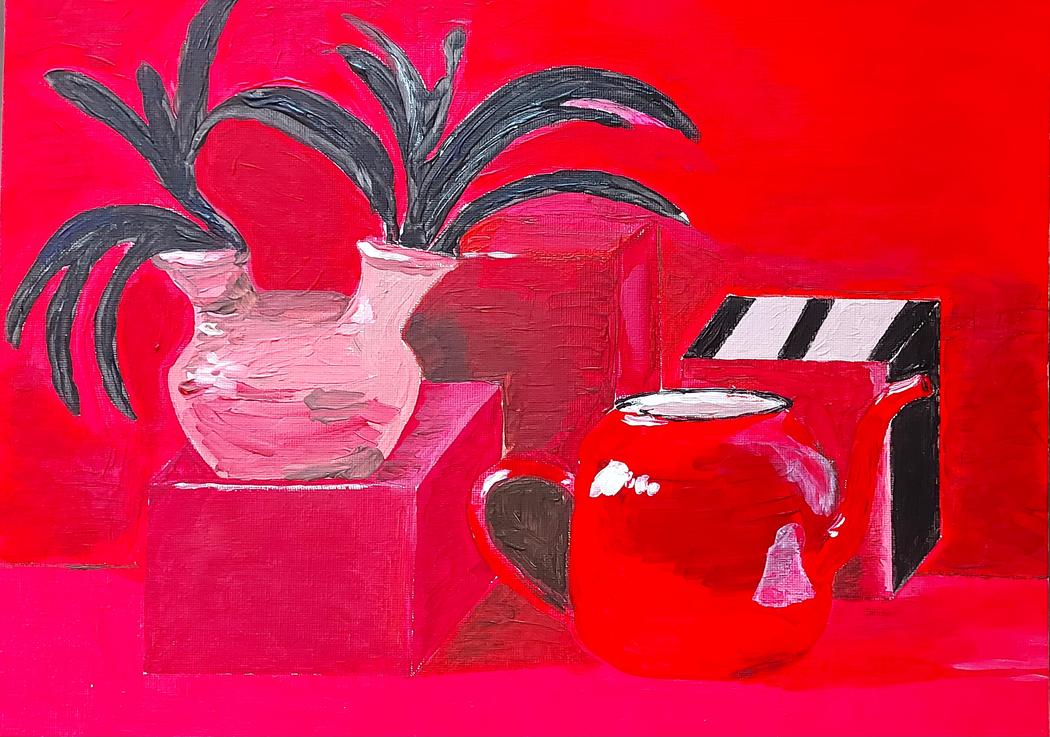
Your still lifes often focus on flowers, vases, and everyday objects. What attracts you to these subjects?
Still lifes means for me a frozen instance of time, capturing the impossible, because while you catch it turning it into a painting, it has already passed. It is the victory over the impossible, time did pass, but it remains in the painting. I would love to paint all the flowers in the world. They are a great example of elegance and love. They offer themselves to us, they are perfection itself. They are generous and good. Flowers are nature’s supreme form of art. And the human eye sees them as such.
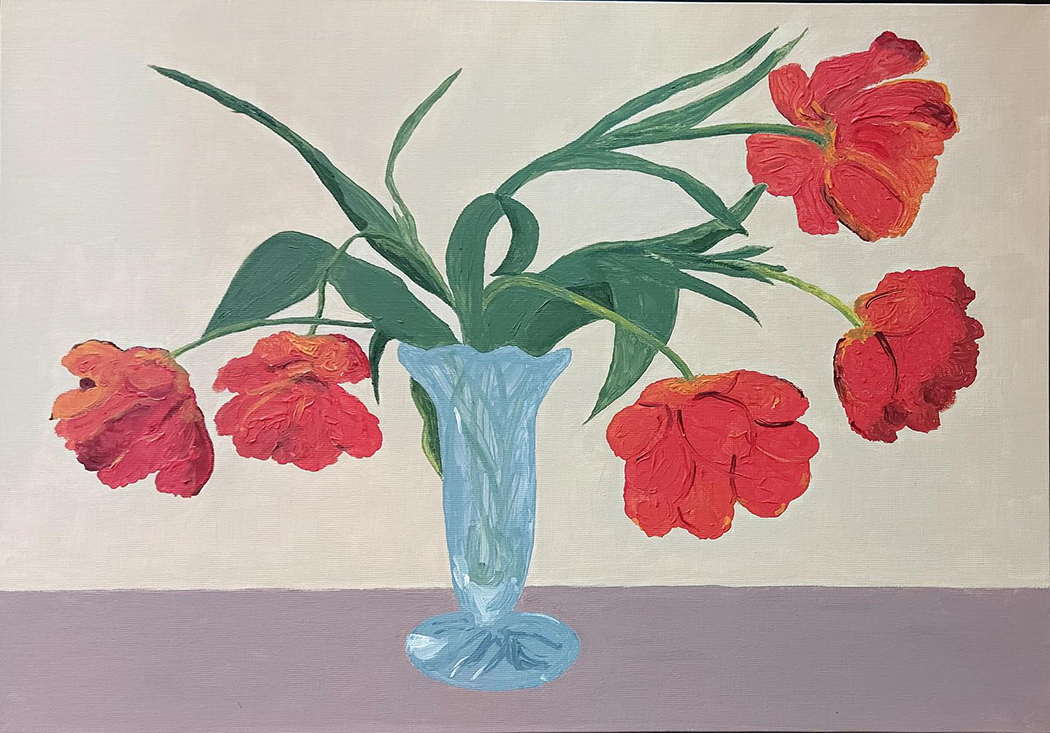
The painting Tulips has a calm and delicate atmosphere, while Vitality is much more intense and expressive. How do you choose the emotional tone of each work?
The feeling comes from inside. Art is re-creating what is inside the mind of the artist with the help of the representations of the world. Towards the end of winter, this thought came to my mind, more of a need. I longed to paint tulips, so, as soon as spring came, I went to the flower market to look for tulips. I carefully chose some and they have become my paintings. Then I started wondering why this thought had been so strong. The feeling connected to it was revival, hope, serenity. When the paintings were ready, I searched for the meaning of the flower. Tulips mean rebirth and deep love, and since the Victorian era, they have also been a symbol of charity. Their upright posture reflects open-heartedness. I have understood the tulips are a representation of the love in my heart by means of colour. And my gratitude for everything I receive in my heart. Poetry is always with me. Art means offering, giving the feeling from inside you, while always looking for the ideal form. I came to understand that the feeling inside my mind and heart was so strong that it had to go on the canvas.
Do you see a connection between the rhythm of poetry and the rhythm of brushstrokes in painting?
The rhythm common to poetry and painting is absolute freedom. You start writing, but the poem finds its own ending. You start a painting and the painting finds its own ending. Literature and art grow their own spiritual force.
As a teacher of English, you work with language every day. Does teaching influence your sensitivity to images, symbols, and meaning?
Teaching is mainly generosity. It means having the constant concern to get the information across to the students and determine them to make the move towards you, hear you and understand what you want to say. Teacher-student is a meeting halfway. At the root of this concern is love. The thought for the other, the means you found to reach his mind. The constant care for the welfare of the students’ minds and souls, means being a teacher. And constant joy and never feeling tired. The results come when you least expect them. But they do. Teaching is a process with the help of the language. Poems are written with words. If you want to describe the painting you see, you must use words. “In the beginning was the Word, and the Word was with God, and the Word was God.” The Gospel According to St. John