
Charles Chao Wang
In your photographs, the human figure often appears silent, turned away, or partially hidden. What does this sense of anonymity allow you to express?
This sense of anonymity is a way for me to transform personal experience into something more universal.
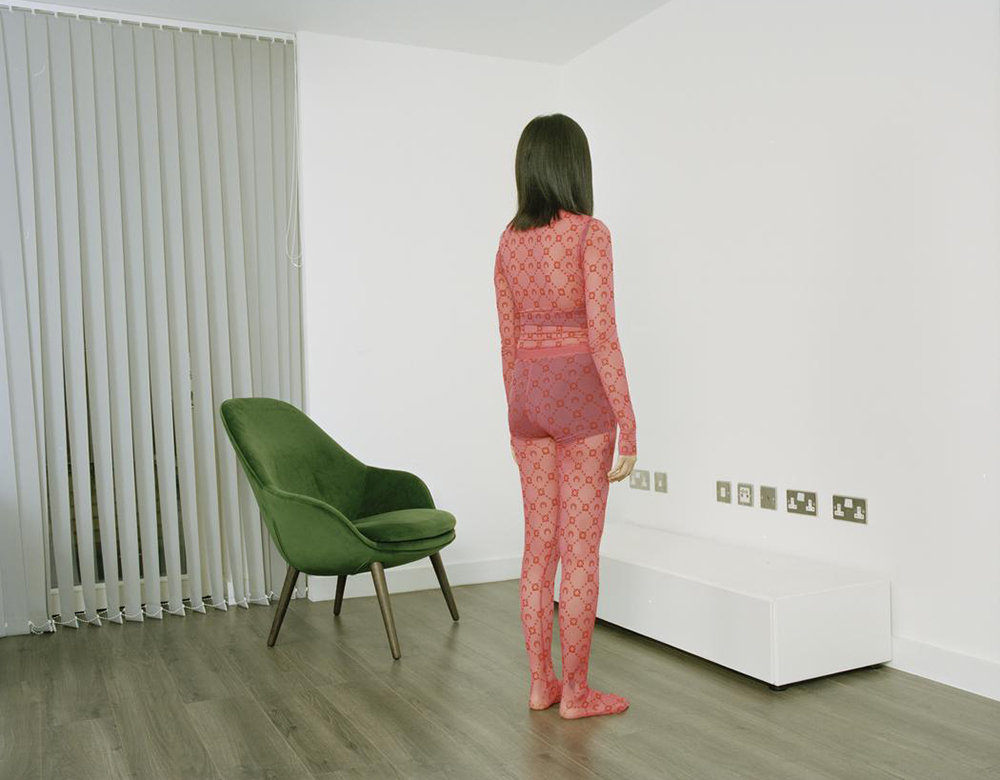
When I conceal a face, turn a figure away from the camera, or allow parts of the body to disappear, I am attempting to suspend their specific social identity. A recognisable face often prompts the question, “Who is this person?” whereas I am more interested in the emotional and existential conditions that the figure embodies.
At certain moments in life, we all experience a kind of namelessness—states of loneliness, uncertainty, powerlessness, or the feeling of confronting circumstances beyond our control. Anonymity allows the figure to move beyond individual identity and become an open condition of being, onto which viewers may project their own memories and experiences.
This approach is also informed by Zen thought. Zen seeks to loosen our attachment to the self and re-establish our relationship with the world around us. For me, anonymity does not erase individuality; rather, it allows the individual to transcend labels and return to a more fundamental human experience.
Your images often feel staged, yet they still preserve a quiet documentary quality. How do you approach the boundary between reality and constructed image?
For me, reality and construction are not opposites.
Photography is already an act of selection, arrangement, and reconstruction. I carefully compose spaces, colours, and objects, not to fabricate an alternative world, but to approach experiences that cannot be directly documented.
Many profound emotions—loneliness, oppression, calmness, hope—have no visible form. Constructed images become a way of giving shape to these intangible states.
At the same time, I always want to preserve the texture of reality. Existing spaces, natural light, and the physical presence of the body allow these constructed scenes to retain a sense of lived experience.
I am particularly interested in this threshold between reality and fiction because memory itself functions in a similar way. What we remember is rarely objective fact; it is reality continuously reshaped by emotion, time, and imagination.
Some of your works create a strong contrast between the body and its surroundings – nature, domestic interiors, empty rooms. What kind of relationship do you want to build between figure and space?
The relationship between the figure and space is one of the central concerns of my practice.
I often place people within vast landscapes or empty architectural environments because I am continually thinking about the relationship between the individual and forces that exceed them.
In my work, figures frequently appear small, but this smallness does not signify weakness. Instead, it suggests a condition of acceptance, humility, and connection. Through Zen and Taoist thought, I have gradually come to understand that human beings do not stand apart from the world but exist as part of a larger continuum.
At the same time, space becomes a psychological landscape. A room, a body of water, or a piece of land can become a projection of an inner condition. External environments begin to carry memory, emotion, and spiritual transformation.
I hope to create a relationship between the figure and space that moves from separation, to awareness, and finally towards a sense of interconnectedness.
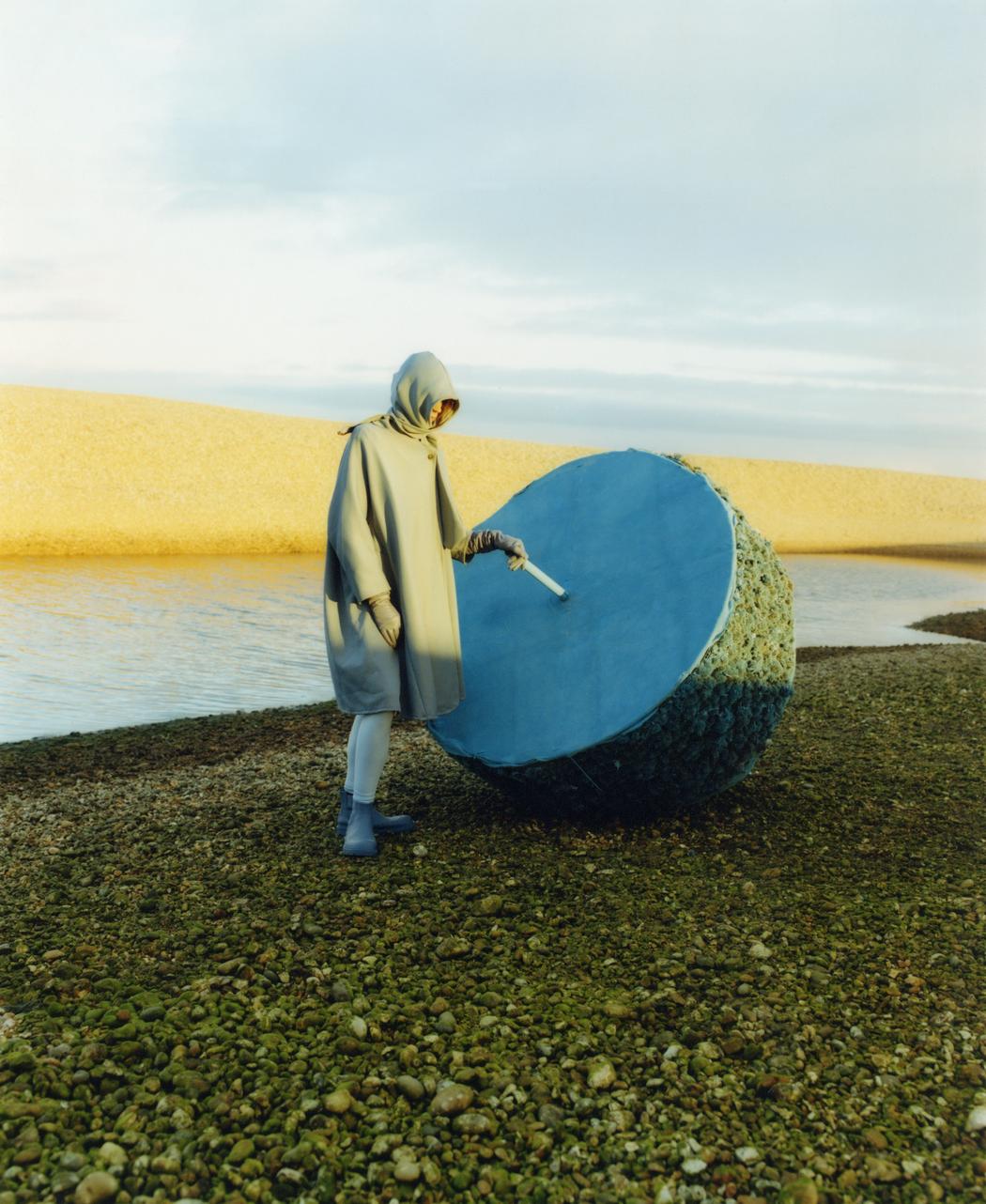 Charles Chao Wang | Away Way | 2022
There is a quiet emotional distance in your photographs, as if the viewer is observing a private moment from the outside. How important is this distance to you?
This sense of distance is essential because it creates space for contemplation.
I have experienced prolonged periods of loneliness, depression, and powerlessness, and I have also witnessed people around me undergoing moments of emotional and spiritual crisis. If these experiences were presented in an overly expressive or sentimental manner, they would risk becoming acts of emotional release rather than invitations to reflect.
I therefore prefer a restrained and contemplative language. Distance allows intimate and painful experiences to become something that can be quietly observed and held in thought.
This distance is not a form of indifference. It is a respectful form of detachment that protects the dignity of the subject while leaving room for viewers to form their own emotional and psychological connections with the work.
Many of your photographs seem to exist in a suspended moment – neither before nor after an event. Are you interested in ambiguity as a way of keeping the image open?
Yes, I am deeply drawn to forms of ambiguity that inhabit a liminal state.
I am interested in images that remain suspended in a moment that is neither fully unfolding nor entirely resolved. Often, the most charged moments are not the events themselves, but the quiet intervals that exist between them.
Rather than offering a definitive narrative, I prefer the image to remain open and indeterminate, allowing viewers to imagine what has happened and what is yet to come.
Life itself is permeated by uncertainty, and many meaningful experiences emerge within states of transition and suspension. I try to embed something untouchable and unseen beneath the surface of the image—something that resists representation yet can still be intuitively felt.
Living and working between London and Shanghai, how has your sense of place, belonging, or displacement influenced the way you construct images?
Living between Shanghai and London has profoundly shaped my visual language.
Shanghai—and the ancient town where I grew up—remains an emotional anchor and the place where I first became aware of the relationship between society and the individual. London, by contrast, offered me an environment that embraced openness, plurality, and freedom of expression.
The tension between these two experiences has left me with a persistent sense of displacement. I no longer feel that I entirely belong to any single place, and this condition of in-betweenness has given me the perspective of an outsider.
Perhaps because of this, I have become increasingly interested in universal human conditions rather than fixed cultural identities. I think about how people, regardless of where they come from, confront power, loneliness, and uncertainty, and how they search for a sense of inner belonging.
Looking at your recent works, do you feel your artistic language is moving toward greater silence, abstraction, narrative, or something else entirely?
If I had to describe the current direction of my practice with a single phrase, I would call it “spiritual abstraction.”
My earlier works were more directly concerned with social issues and external conflicts. Over time, through making work and reflecting on my own experiences, my attention has gradually shifted from confrontation towards healing.
I am increasingly interested in creating images that retain narrative tension while remaining open and indeterminate. They may appear quiet, abstract, or solitary, yet they continue to carry traces of memory, social transformation, and individual destiny.
For me, photography is gradually becoming a space for contemplation and healing. I hope that viewers might remain with the image for a moment and, within that pause, encounter a sense of stillness, resonance, or even strength within themselves.