
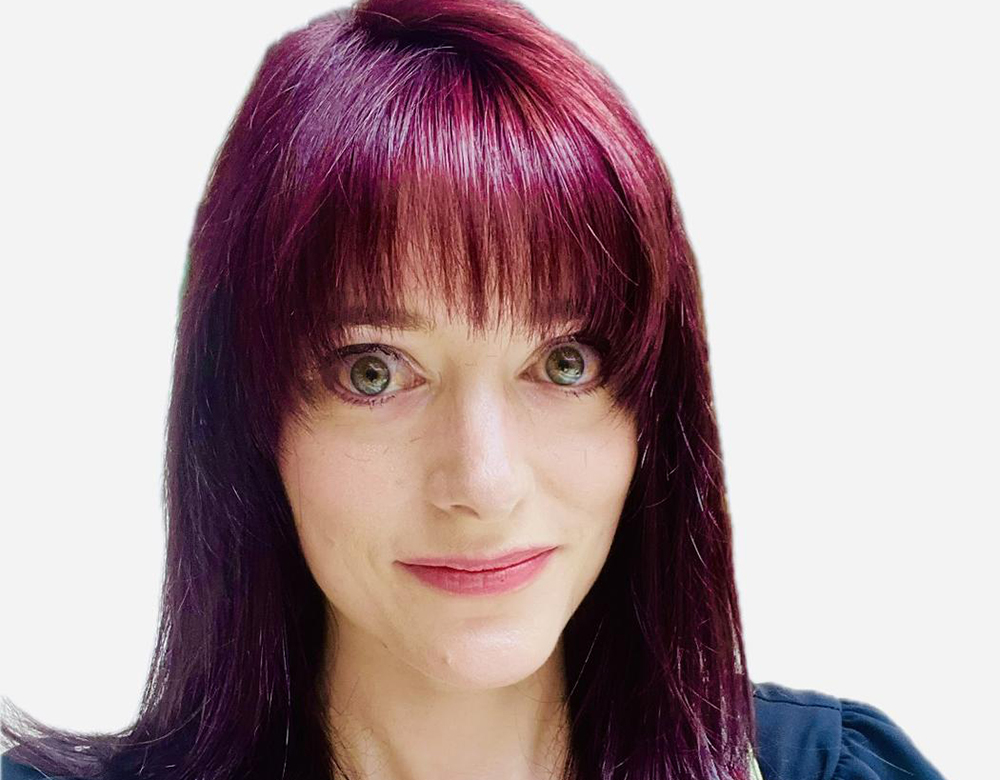
Tori Zirul
How did your background in molecular biology influence the way you look at art and visual storytelling?
I have never felt that science and art are mutually exclusive. To me, they are both ways of observing, understanding, and reaching for meaning in a life that often feels impossible to understand.
Molecular biology shaped the way I look at structure, pattern, and process. In biology, form and function are deeply connected; a structure usually tells you something about how a system works. I think that comes through in my art. I am drawn to details, repeated forms, and the feeling that something unseen is happening beneath the surface.
Science also taught me patience. So much of scientific work involves failure, revision, and proving things wrong. That has helped me with perfectionism. The artist in me wants immediacy, while the scientist in me asks: What else is present? What am I missing? What can’t I see clearly yet?
Both science and art begin with observation. Both are ways of trying to get closer to truth. I love visual art because it allows me to express something fully without having to say it directly.
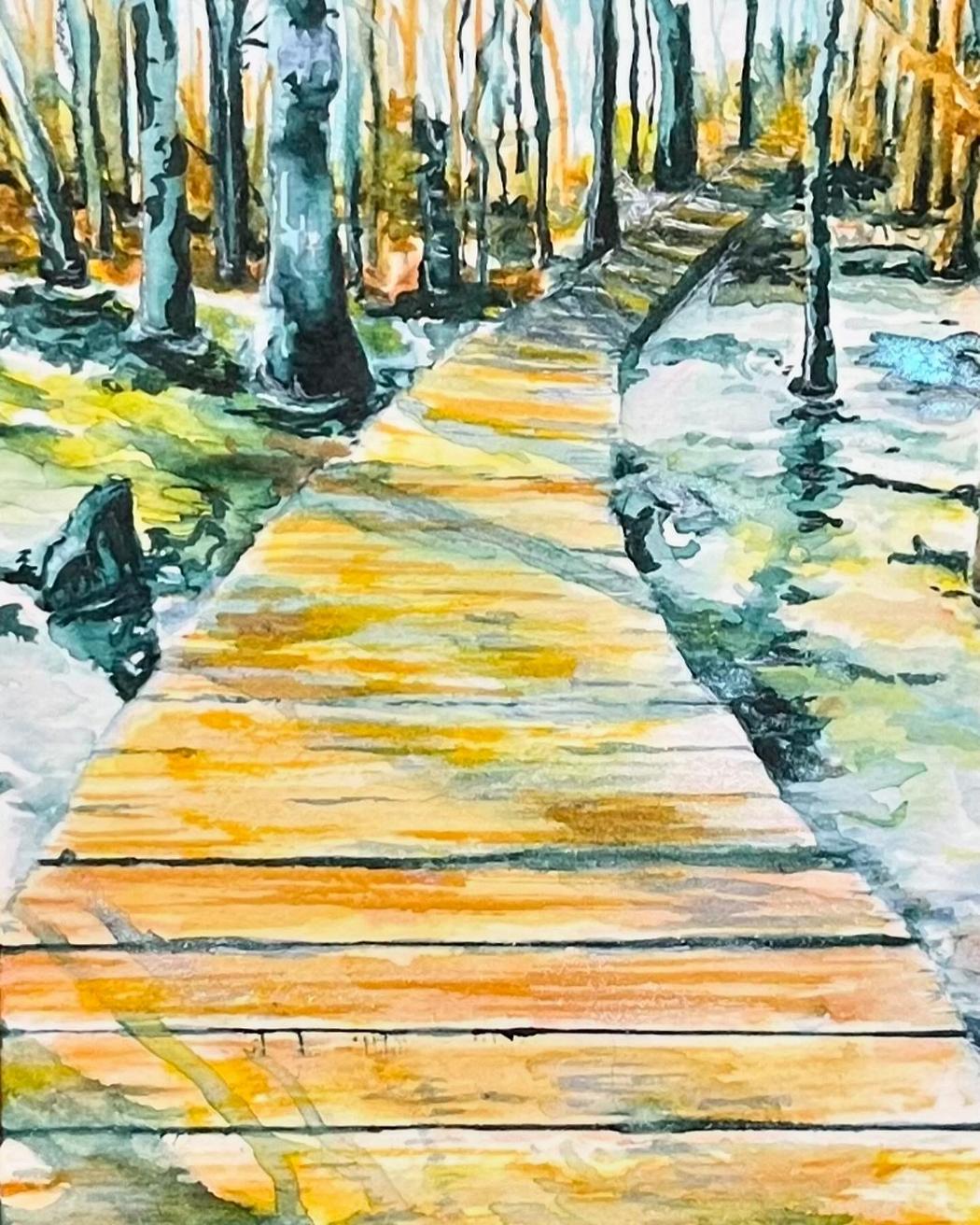 Tori Zirul | The Great Swamp
You describe your work as existing between observation and emotion. How do you balance these two sides in your creative process?
I am learning that I cannot force emotion into a piece. When I try too hard to make something express grief, anger, tenderness, or any other feeling, the work often becomes too direct or self-conscious.
Instead, I try to begin with observation: a line, an object, a structure, a shape, a place. I trust that the emotion will enter through the attention I give it. Even when I am trying to observe something objectively, I am still seeing it through my own experience and perception. For me, observation is not cold, and emotion is not separate. The two are always connected. The details become a way of holding feeling without having to explain it too directly.
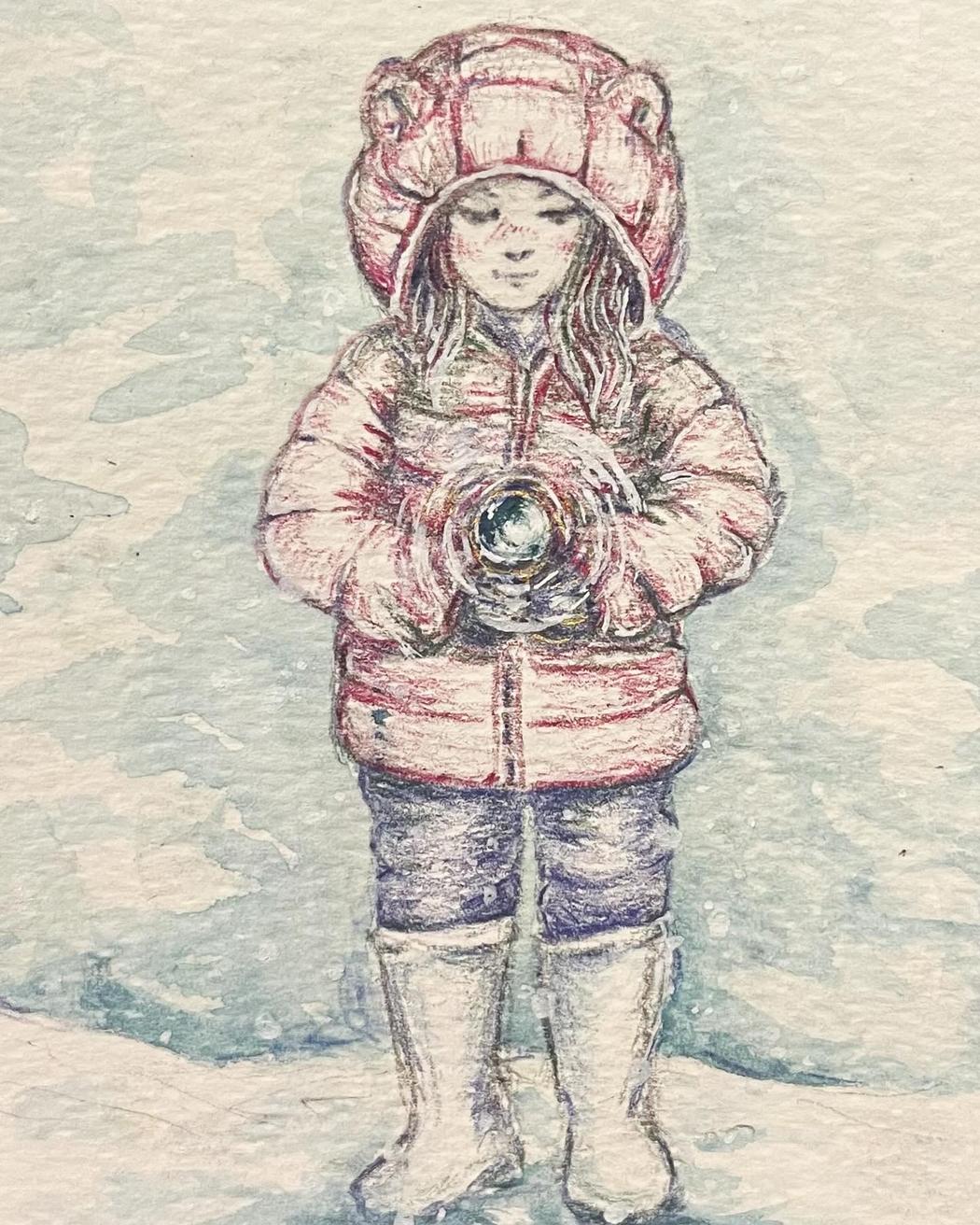 Tori Zirul | Magic
What first led you to ink and watercolor as your main artistic mediums?
Ink came first. In college, I began visual journaling and became drawn to detailed line work. I liked the clarity of ink and the way one line could change the feeling of an entire drawing.
Watercolor is newer for me. I started using it more seriously within the last year or two. After a surgery changed the steadiness and comfort of my hand, and an associated pain condition made it difficult to sit for extended periods of time, watercolor gave me a more fluid way to keep making work.
I never planned for watercolor to become so important to me, but I love the atmosphere it creates. Ink gives me the structure I am drawn to, and watercolor brings in something less predictable – moodier, with a life of its own.
Your works often combine delicate line work with expressive color. Which usually comes first for you — the structure or the atmosphere?
Structure almost always comes first. I am deeply invested in line work, and my initial drafts can become very detailed and time-consuming. The structure gives me a controlled foundation to build from.
But once I move from pencil into fine liner and color, something often shifts. My hand begins to move more intuitively. I may start by following the draft, but then I begin changing the weight of the line, adding texture, reaching for watercolor or marker, and allowing the piece to move away from the original plan.
That tension is important to me. I begin with control, but I believe the piece needs to evolve without force. For example, I originally imagined Fractured Time as a kind of technical schematic for a time machine. But as the piece developed, it became something more emotional and unstable. It had other plans.
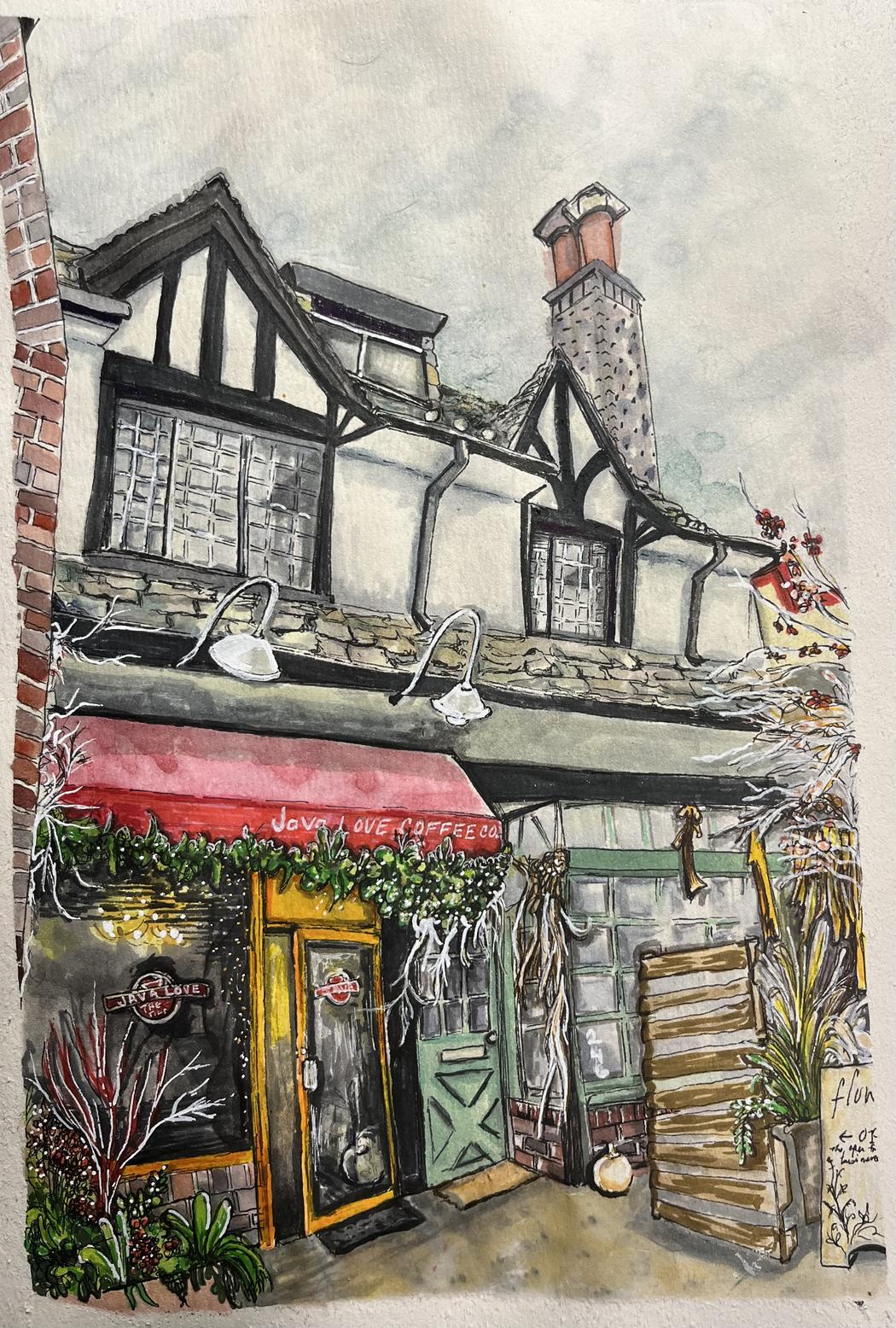 Tori Zirul | Local Coffee
In Fractured Time, the broken clock becomes more than a machine. What does this image symbolize for you?
The clock in Fractured Time was not originally meant to be broken. As the piece evolved, it needed to shatter.
For me, the broken clock symbolizes the moment when an internal state shifts into overdrive — when time stops feeling measured and begins to feel fractured, urgent, or unstable. It is a machine, but it also becomes a psychological object.
My first instinct when looking at it is: pay attention.
The clock represents more than time passing. It holds pressure, memory, anxiety, and the feeling that something beneath the surface has reached a breaking point. In that way, the fracture is not only damage, but a signal.
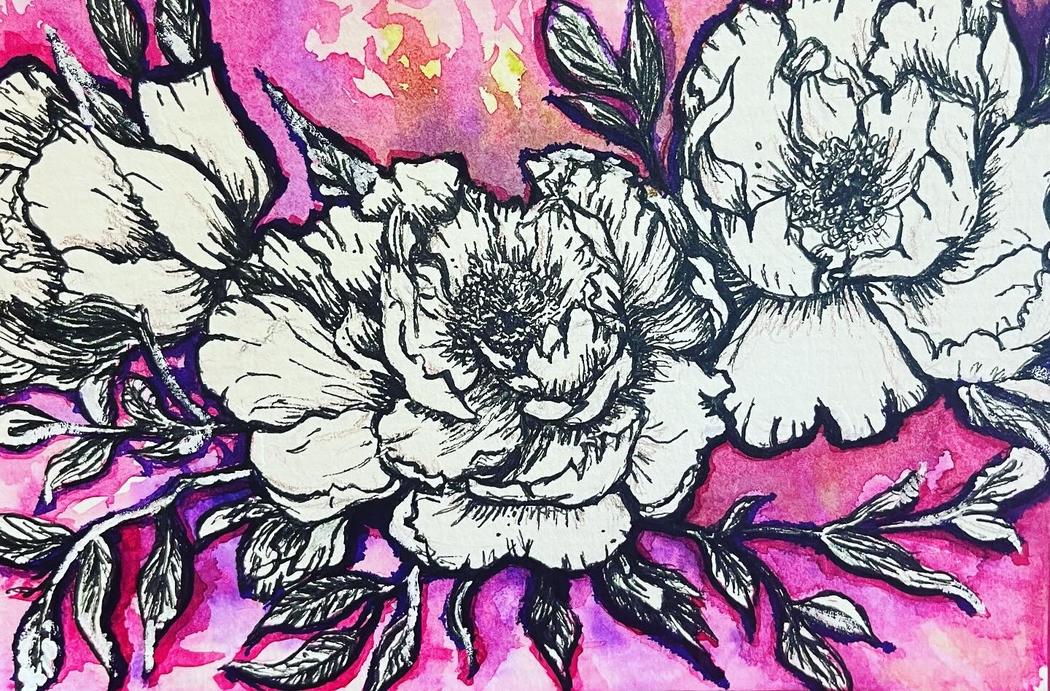 Tori Zirul | In Bloom
Why are themes of time, decay, and renewal important in your work?
I have always had a sensitivity to time, even as a child. I am interested in the way things continuously change, deteriorate, repair, and transform.
In a chemistry class, one of my professors described entropy — the tendency of things to move toward disorder and chaos — using the image of a car rusting over time. That image stayed with me. But what amazes me is that living systems are always working against that and resisting that disorder. Our bodies are constantly repairing, regulating, rebuilding, and trying to find balance.
That tension feels central to my work: breaking apart and coming back together, decay and repair, loss and renewal. I do not see decay only as an ending, something to grieve, but also as an essential part of becoming.
I am interested in time not only as something measured, but as something felt and lived – in the body, in memory, grief, healing, and change. It is my intention (and dream) to create a book of poetic essays alongside artwork exploring these themes.
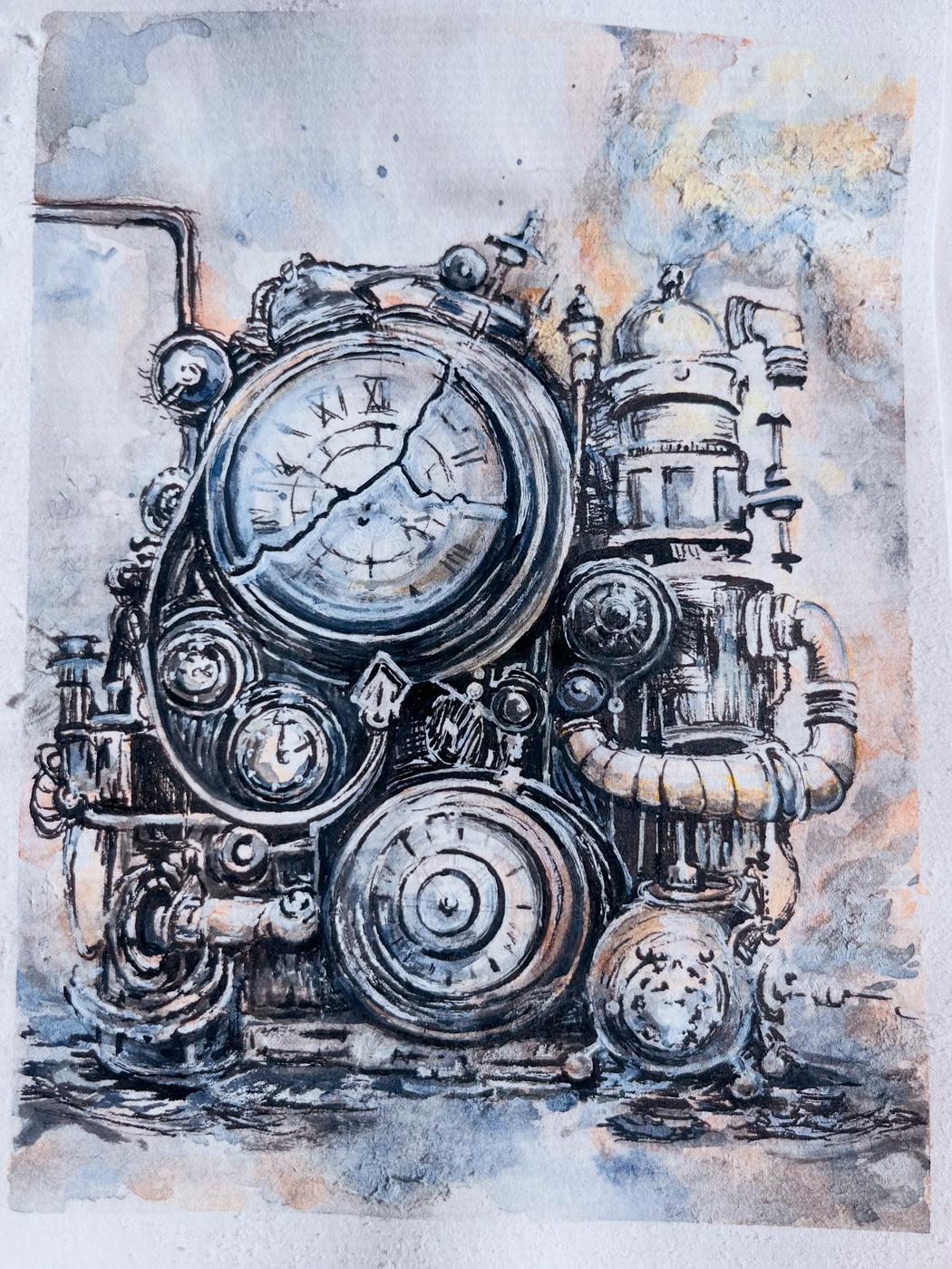 Tori Zirul | Fractured Time | 2026
Your work touches on memory and grief. How do you approach emotional subjects without making them too direct or literal?
I often approach emotion through objects, atmosphere, and symbolism rather than direct narrative. A clock, a flower, a room, a machine, or a line can hold feeling without needing to explain it.
Generally, I find grief and memory are often difficult to face directly. They arrive in fragments, through details, repetition, ordinary things that suddenly feel charged. I try to let the work reflect that.
Rather than illustrating an emotion literally, I try to create a space where the feeling can appear on its own. I trust that whatever needs to come through will come through in the work — sometimes subtly, sometimes unexpectedly.