
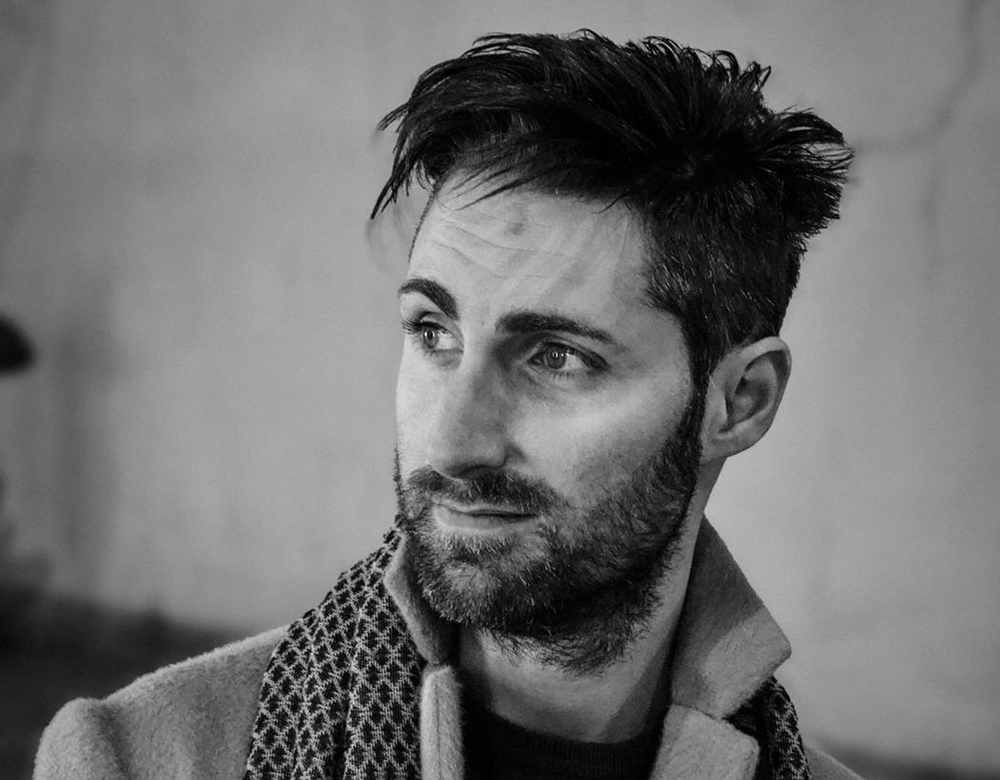
Claudio Paglia
Your connection with photography began through your father and his black-and-white images from the army. How did his visual legacy shape the way you see the world today?
What struck me most about my father’s photographs wasn’t really the subject matter — it was the restraint. He wasn’t trying to make a statement or capture anything heroic, just documenting what was around him, day to day. That quiet deep way of looking at things is something I’ve carried into my own work without even realising it for a long time. I didn’t set out to imitate it, but tried to adapt the way I approach the street — patient, a little detached, paying attention to things that don’t ask to be photographed — that comes straight from him.
You mention that photography became more mature after you moved to the Netherlands in 2019. What changed in your approach during that period?
Moving to Rotterdam was a turning point. My vision shifted in two directions at the same time — it became narrower in the sense that I started paying much more attention to details and emotion, small gestures, subtle light, things I would have overlooked before. But it also became wider in terms of understanding the context around me, the social environment, the rhythms of a city and its people.
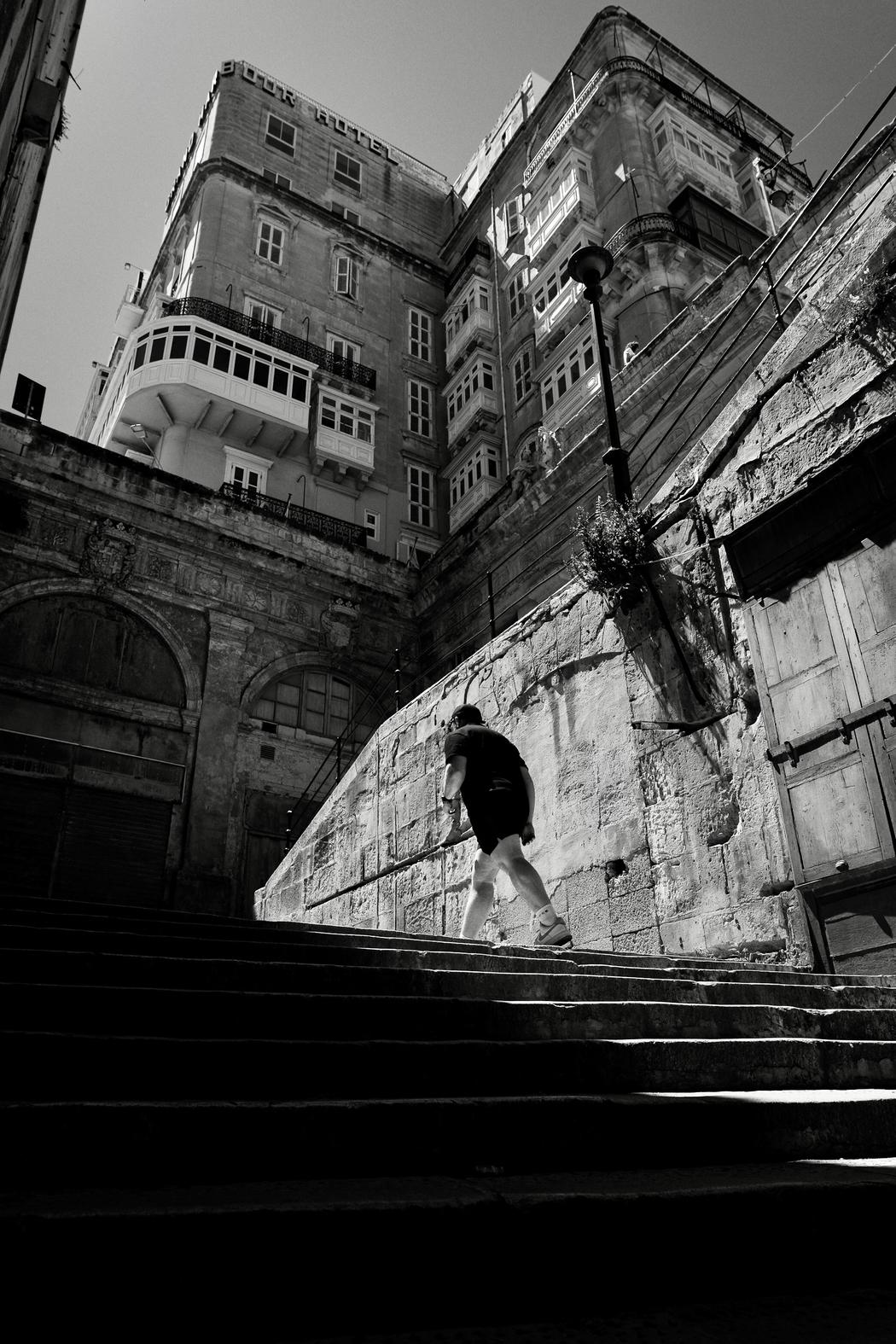
The street appears to be your main creative environment. What attracts you most to ordinary urban scenes and everyday moments?
What I love about the street is that people drop their guard without realizing it. When someone thinks no one’s watching, you get something real — a moment of sadness, a small private smile, a bit of stillness in the middle of all that movement and noise. Those feelings are genuine because they’re not meant for anyone, definitely not for a camera. That’s really what I’m after — catching someone just being themselves, nothing performed, nothing held back. You can’t ask for it and you can’t set it up. You just have to be there, ready, when it happens.
Your photographs often capture people from behind, in movement, or partially hidden. Are you interested more in identity, anonymity, or the emotional trace of a passing moment?
It’s really about that same purity I was talking about before. When someone is walking away from you, or caught mid-movement, they have no idea they’re being seen, so there’s nothing adjusted or held back. You get them exactly as they are in that second — a posture, a way of carrying themselves, completely unguarded. I’m less interested in who that person is specifically. I just want that one honest moment, untouched by the fact that a camera exists.
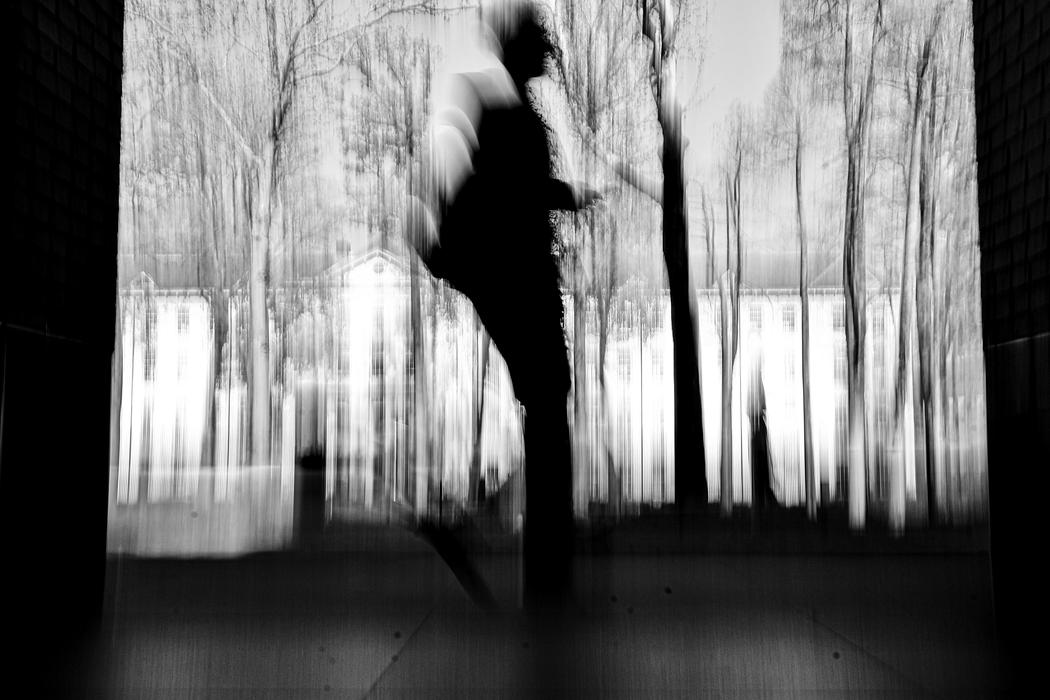
Black and white plays a central role in your work. What does monochrome allow you to express that color cannot?
What the absence of color gives you is space — space for contrast, texture, and shape to actually carry the image. Without color pulling focus, you start noticing things you’d otherwise miss: the grain of a wall, the way light falls across a face, the weight of a shadow. It also leaves more open to interpretation, because color tends to tell you exactly what mood a scene has, while black and white leaves that for the viewer to feel out themselves. So really, it’s not about what color takes away — it’s about what its absence makes room for.
Your work seems to balance observation and emotion. Do you usually wait for a decisive moment, or do you photograph more instinctively?
It’s both, but at different stages, and honestly the gear I use depends on which mode I’m in. For decisive moments, I shoot with my Olympus. It naturally slows me down — there’s no instant feedback, no rapid fire, so I have to actually plan what I want to capture and wait for it properly. For the more instinctive moments, I switch to my Fujifilm. That’s when something spontaneous is happening fast and I can’t afford to lose the momentum, so I need something quicker and more responsive in my hands. The cameras end up matching the two different mindsets I work in.
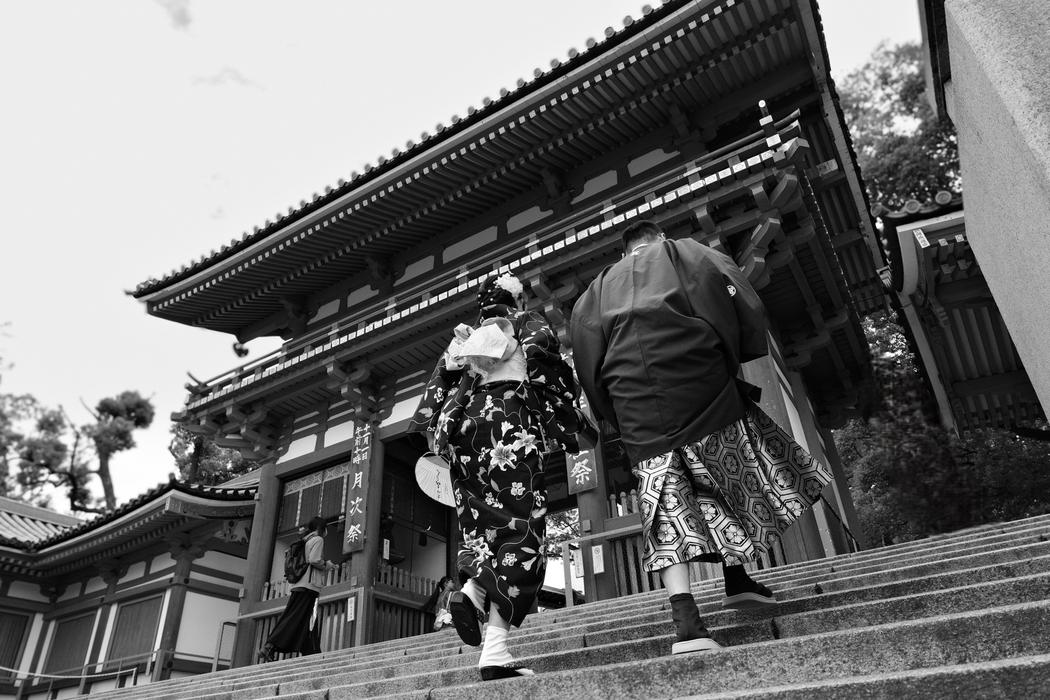
How do you choose which moments are worth keeping after a day of shooting on the street?
What I’m looking for is something that still holds my attention — something that doesn’t give everything away immediately. But there’s something deeper underneath that too. We’re made of emotions, and that’s really at the core of what I’m doing when I shoot — connecting my own feelings with the feelings of someone else. So when I go through the photos, I’m not just checking if the composition works. I’m checking if that connection is there, that’s usually the one worth keeping.