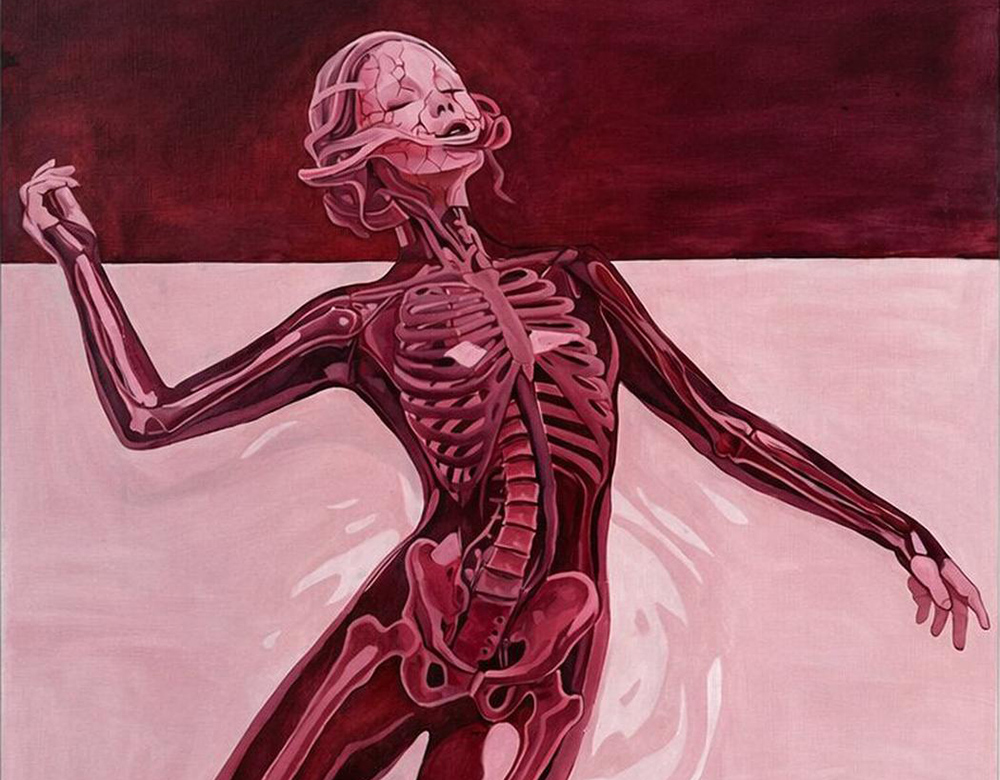
Bradley W Giles
Your work often connects historical memory, landscape, and preservation. How did this focus first become central to your artistic practice?
From an early age, if was first exposed to the vast wonders of nature through the many camping trips I would go on with my family and I was drawn to places that carried a sense of history. Whether exploring old homesteads, archaeological & historic sites, Native American cultural landscapes, or wilderness areas, I became fascinated by the stories embedded within the land itself. Over time, I realized that many of these places were disappearing through the ever present specter of development, environmental degradation, neglect, or simply the passage of time.
As an artist, I saw an opportunity to do more than create beautiful landscapes. I could use painting as a form of preservation…reconstructing places, documenting cultural memory, and bringing attention to landscapes and stories that might otherwise be forgotten. Today, much of my work exists at the intersection of art, history, science and conservation. Each painting becomes a visual record that seeks to reconnect viewers with the people, extinct animals, events, and environments that shaped our world long before our own time.
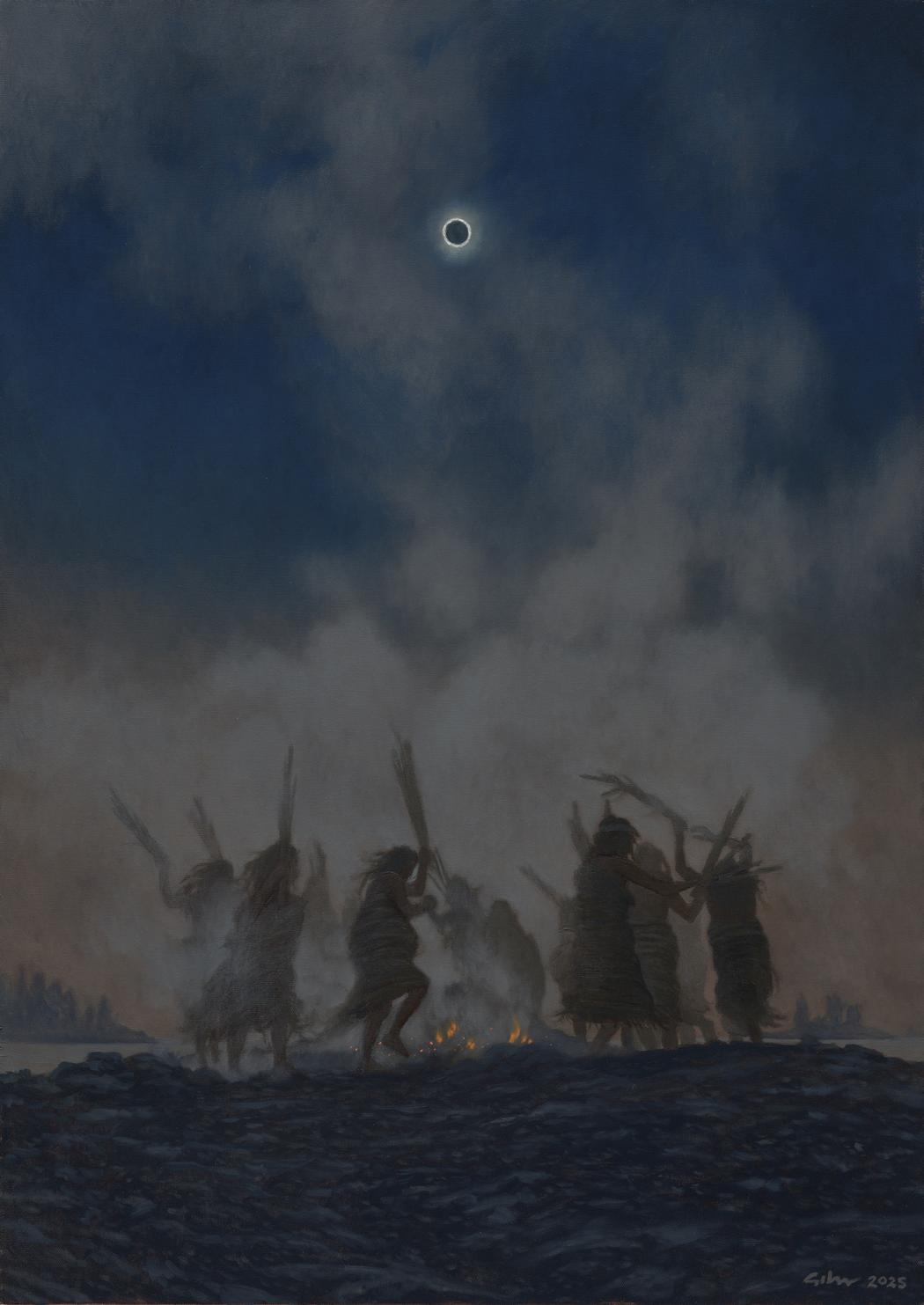 Bradley W Giles | Dancing To Restore The Eclipsed Sun | 2025
You describe your paintings as a form of advocacy. What do you hope viewers understand or feel when they encounter your historical and environmental scenes?
I hope viewers can experience for a fleeting moment, with all of their senses, the awe inspiring energy to the land, to history of a long ago age… sites that have unfortunately become casualties of humans relentless quest to conquer and reshape the land in their perceived image.
This is one of the very reasons why myself, as well as many other artists of the past and present, paint these type of historical landscape scenes of the natural world…to document them for future generations, before those vistas are but only a fleeting memory to those living now on this Earth.
Many of the places I paint have endured thousands of years of human activity and natural change, yet they remain vulnerable. Through my work, I want people to recognize that landscapes are not simply scenery; they are monuments of memory, culture, ecology, identity and spirituality.
If my paintings encourage someone to learn more about a Native American culture, support a conservation effort, protect a historic site, or simply look more carefully at the world around them, then my paintings have served their purpose. Art has the power to inspire stewardship, and I believe artists have an important role in helping people see what is worth preserving before it is gone forever.
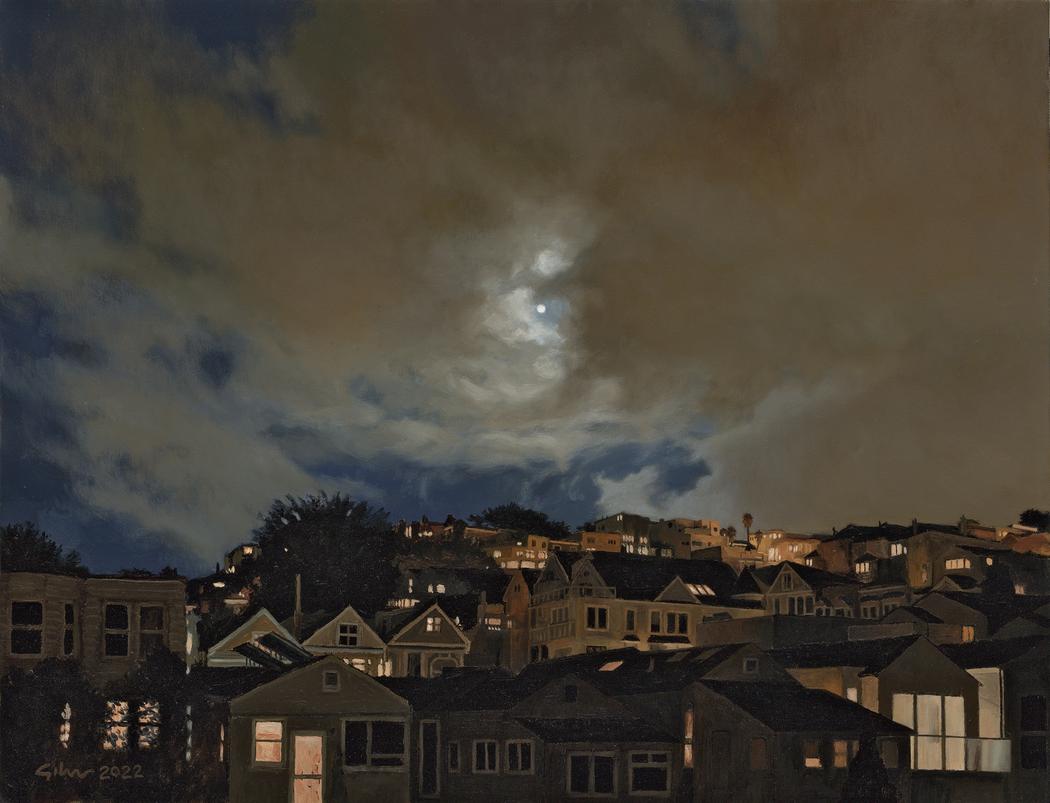 Bradley W Giles | Fog Bank Over Castro Heights | 2022
Many of your works seem to recreate moments that are no longer physically accessible or have been altered by time and development. How do you approach bringing a lost or endangered landscape back to life on canvas?
The process begins with research. I often spend months gathering information from historical photographs, maps, archaeological reports, scientific studies, museum archives, oral histories, and firsthand field observations. I work closely with historians, archaeologists, geologists, biologists, and Native American cultural advisors whenever possible.
Once I compile and understand the historical and environmental context, I begin constructing the scene much like a visual historian. Every element…from vegetation and wildlife to weather conditions, architecture, and topography…is carefully considered. Yet the goal is not simply historical accuracy. I also want viewers to feel what it may have been like to stand in that very place in my painting…to step into a landscape from the past. The painting must convey both factual truth and emotional truth. In that sense, each work becomes part research document and part act of imagination.
You have collaborated with historians, archaeologists, scientists, and Native American tribal leaders. How does this research process influence the emotional and visual direction of a painting?
Research provides the foundation, but it also provides the soul of the work. Every conversation with a tribal elder, historian, archeologist or scientist adds another layer of understanding that goes far beyond visual reference material. These collaborations often reveal stories, traditions, ecological relationships, and cultural meanings that would otherwise remain invisible.
As a result, the emotional direction of a painting frequently evolves during the research process. What may begin as a landscape painting can become a story about cultural resilience, environmental change, ancestral memory, or humanity’s relationship with the natural world. The deeper the research becomes, the more meaningful the final painting becomes.
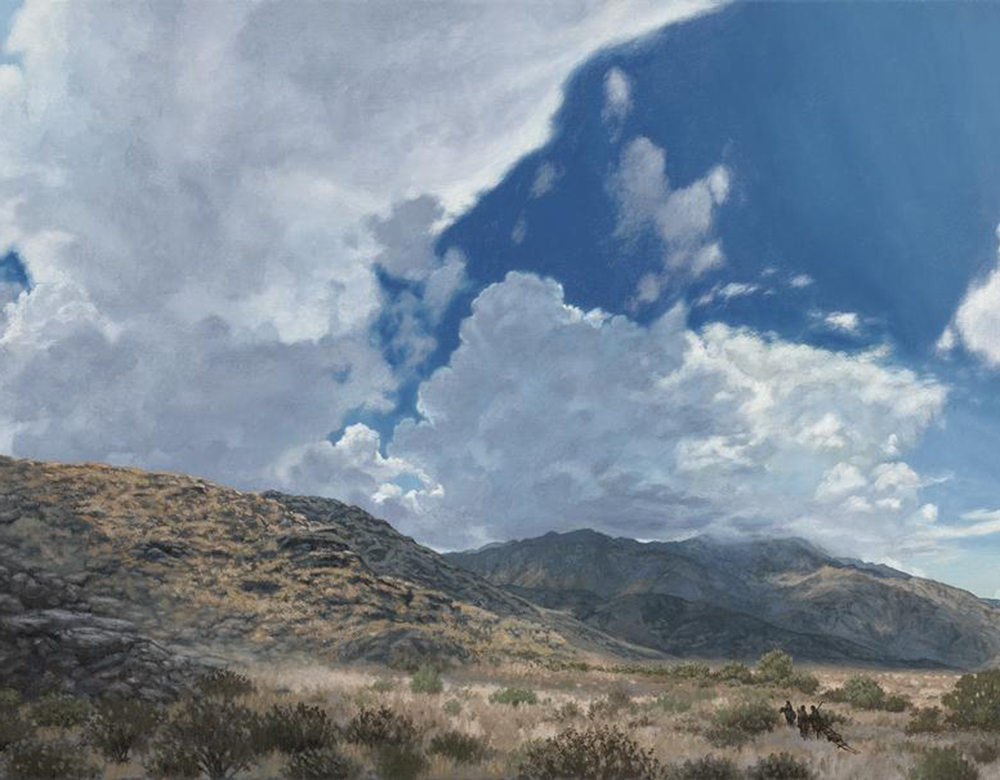
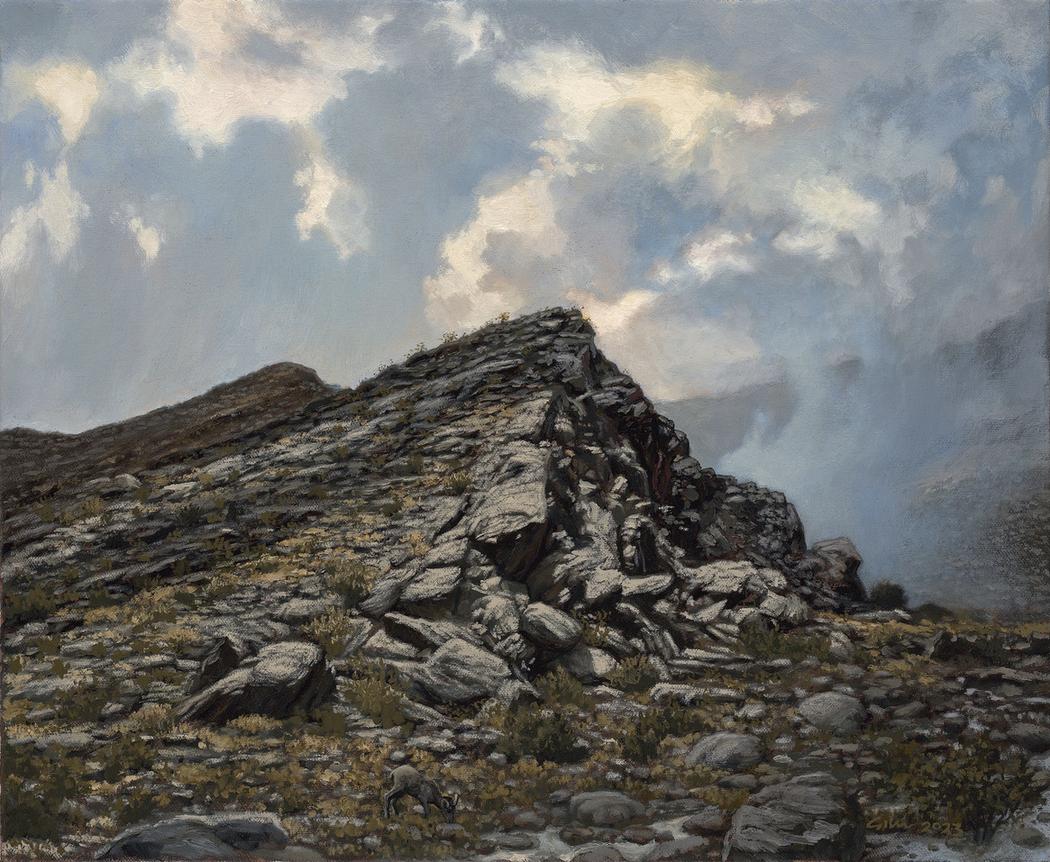 Bradley W Giles | Spring Storm In Tahquitz Canyon | 2023
Light, clouds, smoke, and atmosphere play a major role in your paintings. How important is mood and weather in shaping the narrative of your work?
Atmosphere is often one of the primary storytellers in my paintings. Light, weather, clouds, mist, fog, and moonlight help establish not only a sense of place but also a sense of emotion and time. A passing storm, a shaft of sunlight, or a veil of mist can transform a landscape into something ethereal and deeply symbolic.
Nature is constantly changing, and those changes often mirror the themes I explore…creation and destruction, permanence and impermanence, memory and renewal. Atmospheric conditions allow me to create visual drama while also expressing ideas that words alone cannot convey. In many ways, the weather becomes another character within the painting, which takes on a life of it’s own.
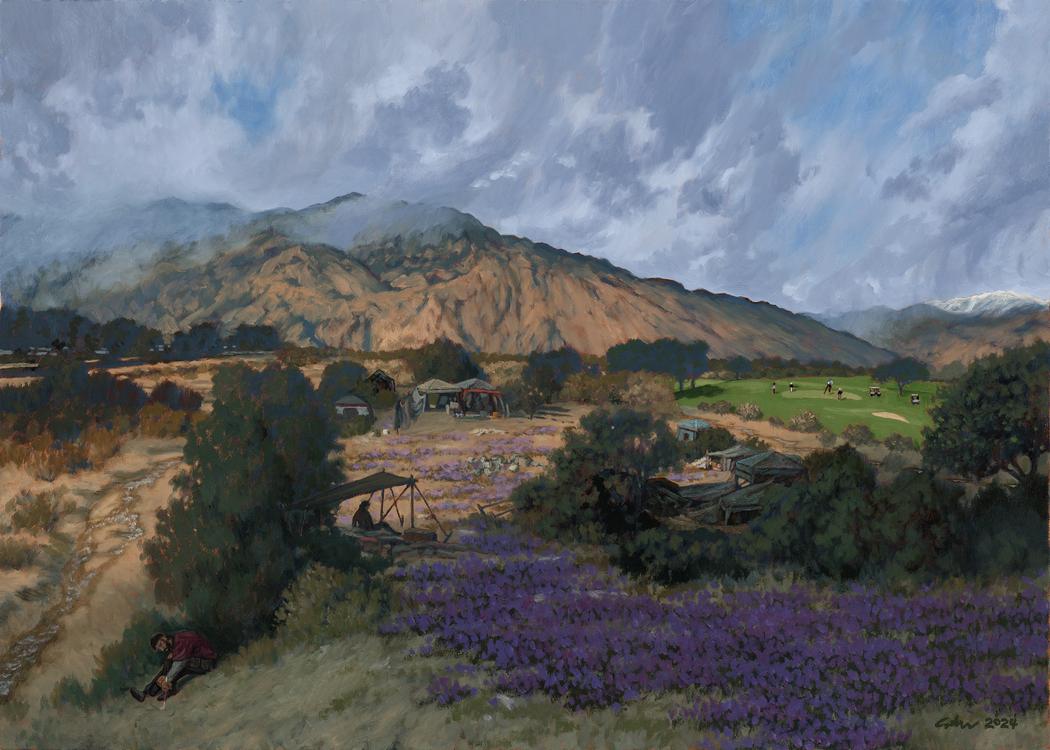 Bradley W Giles | What Price Paradise | 2024
How do you decide which historical sites, landscapes, or stories deserve to become the subject of a painting?
I am often drawn to subjects that exist at a crossroads of history, culture, and environmental significance. Many of the places I paint have stories that are underrepresented, misunderstood, endangered, or at risk of being forgotten. I look for locations that can teach us something about who we are, where we came from, and how we relate to the natural world.
Sometimes the subject chooses me. A landscape may possess a powerful sense of presence, a compelling history, or a story that simply refuses to let go in my thoughts. When I find a place that resonates on both an intellectual, emotional and spiritual level, I know it has the potential to become a painting.
When you think about future generations looking at your work, what kind of record or message do you hope your paintings will leave behind?
I hope my paintings serve as both a historical record and a reminder of our responsibility to the world we inherit and leave behind. Long after I am gone, I would like future generations to look at my paintings and understand that these landscape and cultural scenes mattered in the evolution of humanity and that these stories are a documentation of our past, present and future world.
My goal is not merely to document the past but to encourage a deeper appreciation for the interconnectedness of history, culture, science, and nature. If my paintings inspire future generations to preserve what remains, restore what has been damaged, and respect the wisdom of those who came before us, then I believe they will have achieved their greatest purpose.
Ultimately, I hope my legacy is one of stewardship…a body of artwork that helped people see the land not simply as territory, but as a living archive of memory, meaning, and shared human experience.