
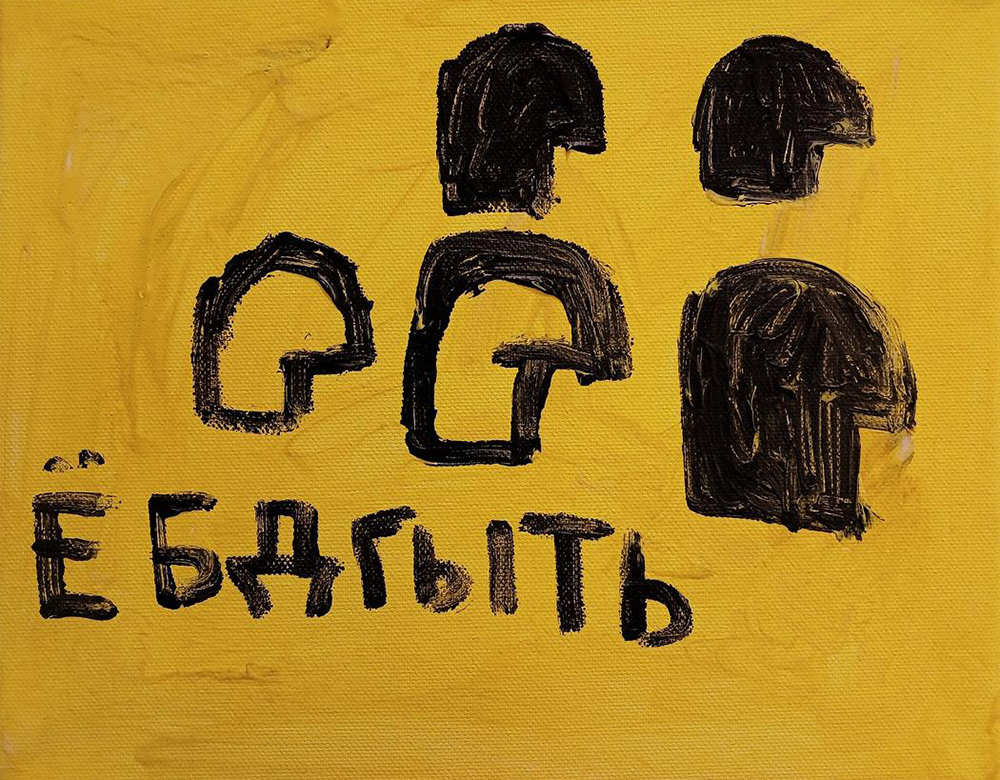
Andrey Marin
Your encounter with the parallel program of Manifesta 10 in 2014 became a turning point in your life. What did you see or experience there that made contemporary art feel like your true path?
Before Manifesta in 2014, my life felt like it was shrinking around predictability – knowing exactly what to do and what would happen next. It was a trade-off: I gave up my inner freedom for security and a shot at success. Everything was clear, stable, and ‘good,’ but I paid for it with my uniqueness, my right to be imperfect, and my honesty. The scariest part is that this choice usually happens so early in life that we don’t even realize it.
But at Manifesta, I saw a completely different reality. I saw artists – people who stepped out into this world ‘without spacesuits,’ totally naked and vulnerable in their work. And the most shocking thing was that nobody killed them for it. Seeing their courage completely shattered my old worldview. I realized that you could actually live and create in a totally different way.
That is exactly why dictatorial regimes fight contemporary art so fiercely, and why the state causes such heavy damage by banning it. They are deathly afraid of this raw honesty and vulnerability. The authorities know perfectly well: once a person takes off their spacesuit and gasps for fresh air, they will never willingly climb back into that suffocating, yet ‘safe’ world.
Before becoming an artist, you studied and worked as an engineer. Does this technical background still influence the way you construct images, organize space, or approach artistic problems?
I was a terrible engineer – zero enthusiasm, dead eyes. I tried to find something in it, even enrolled in three different tech universities, but I dropped out every year and just applied again the next. So I doubt my engineering background had any influence on my art.
If anything, it was the other way around – art gave me confidence. It brought me to life, I believed in myself, and I quit engineering. And during Covid, when all the galleries were closing, I learned a programming language and got a job as a programmer.
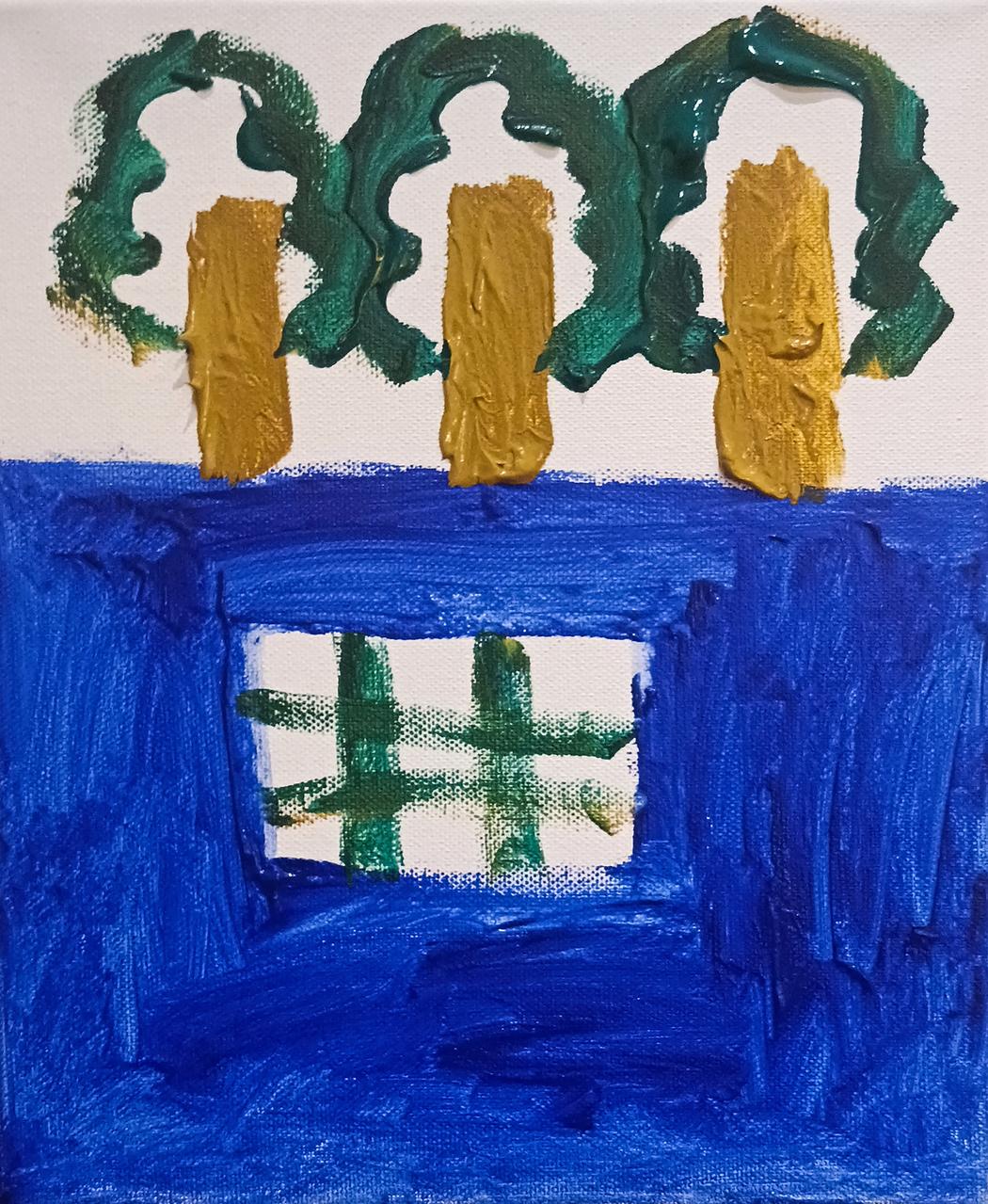 Andrey Marin | An Eternal Spring Inside A Solitary Cell
You grew up on the Barents Sea coast of the Kola Peninsula. How have the landscape, climate, isolation, and atmosphere of that region shaped your visual imagination?
I was surrounded by dwarf plants, military men, and food shortages, because getting supplies out there was very difficult. All around were abandoned apartments that families just left behind as they moved to the mainland. The Soviet Union was falling apart, and it clearly felt like something was coming to an end.
Almost every week, the radio would report that a soldier had deserted his unit. On those days, my mom wouldn’t let me go outside, because they were often armed. Grown-ups there were losing their minds, especially the ones who didn’t have families. They deserted, drank themselves to death, froze in the tundra… The rest of the time, my friends and I loved exploring the abandoned apartments, finding left-behind children’s toys. Once, we found an old school bag with notebooks inside a manhole – I remember it made me so excited.
It’s hard to say how much a childhood like that influenced my art. Maybe it’s because of the sharp lack of color, light, and the feeling of isolation that I started painting such bright pictures.
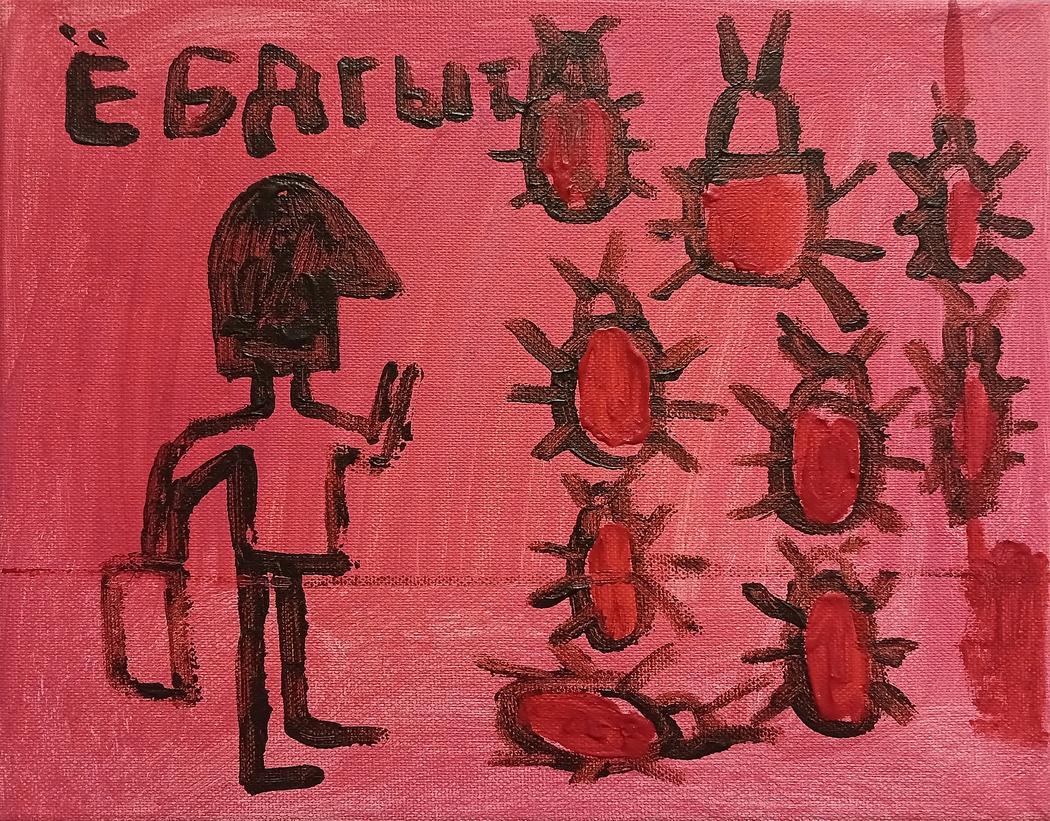 Andrey Marin | Cockroaches
You describe your process as spontaneous and intuitive. What usually initiates a painting – a feeling, a color, a gesture, a memory, or something you cannot immediately name?
It depends. But it’s always a pure impulse: an image starts brewing inside me, and I can’t wait to see it myself – it’s like I’m the very first viewer. Absolutely any event or signal from the outside world can spark this process, transforming into something completely new.
Since you rarely plan a work in advance, how do you recognize the moment when a painting is complete?
To quote Jackson Pollock when he was asked the exact same thing, he answered: ‘How do you know when you’ve reached an orgasm?’ It’s pure physiology and an internal feeling – you just know and feel that moment.
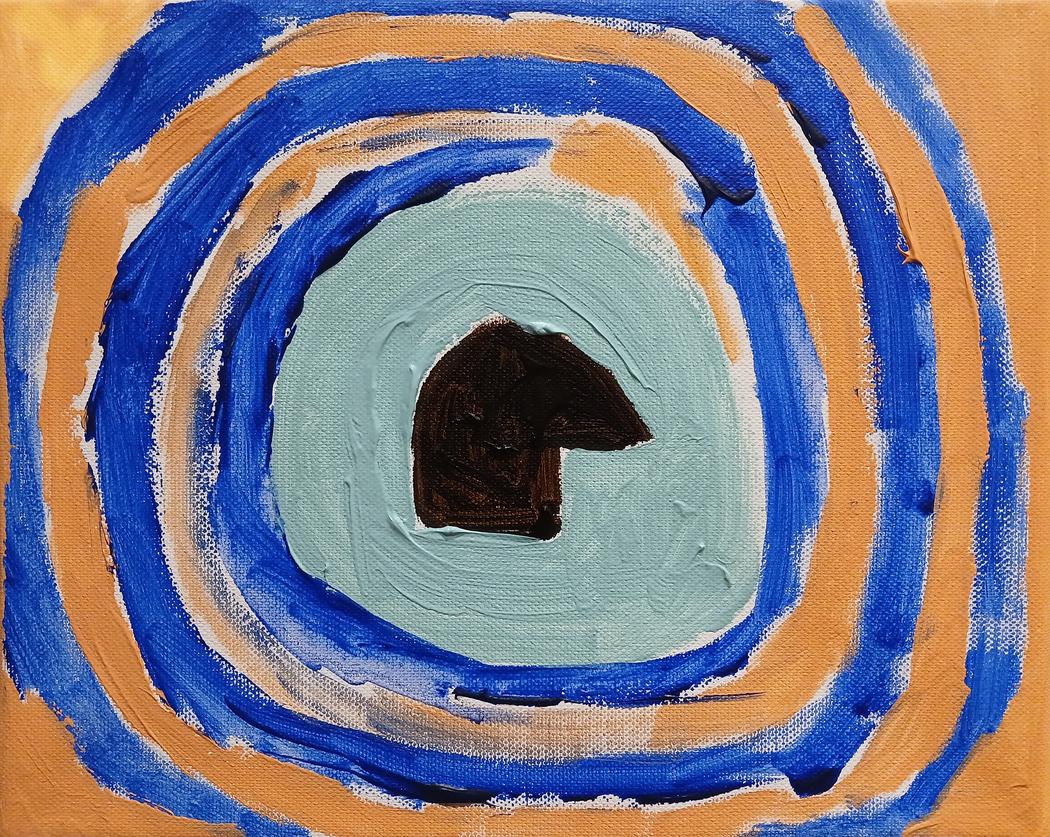 Andrey Marin | Delusion
There is a tension in your work between humor, childlike directness, absurdity, and a sense of unease. Is this contrast intentional, and what does it allow you to express?
This contrast isn’t intentional. Childhood innocence, humor, absurdity, anxiety – this is just how I see life, and I simply want to convey that.
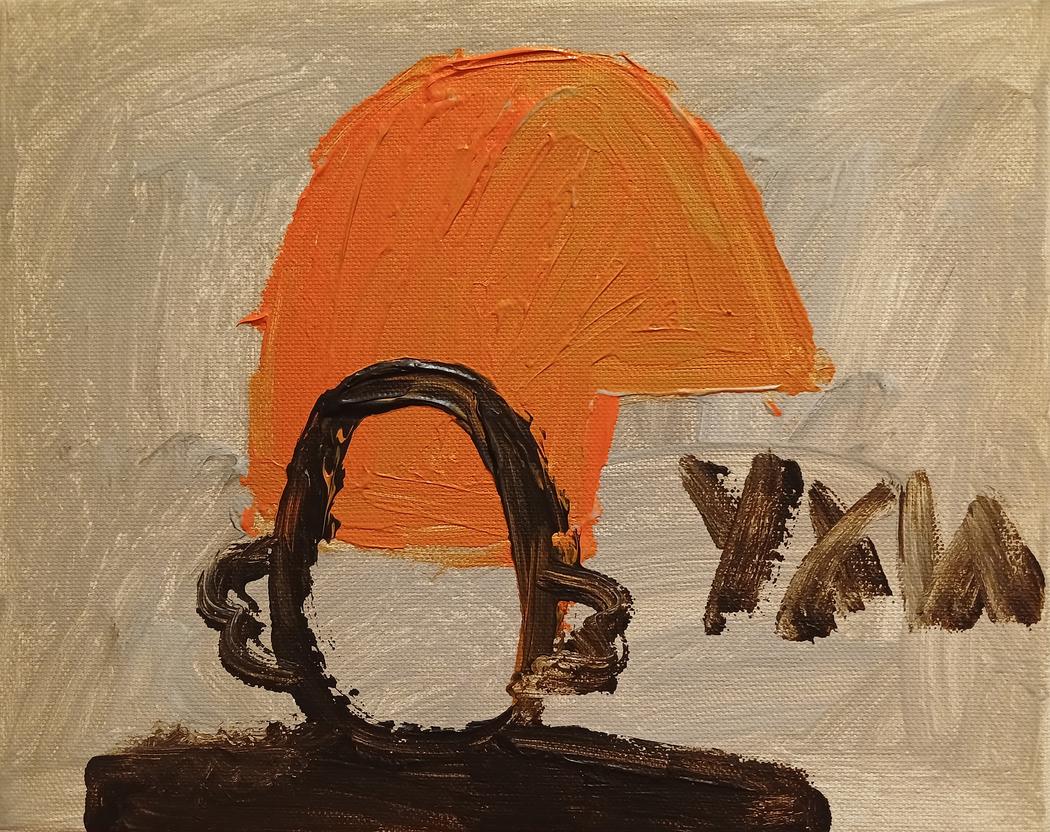 Andrey Marin | Ears
Titles such as An Eternal Spring Inside a Solitary Cell, How to Become a Bird (Instruction Manual), and Cockroaches suggest hidden narratives. Do titles come before or after the paintings, and how much should they guide the viewer?
The title usually comes last, like the headline of a story or a whole book. But I don’t want to force my meaning onto the viewer; I’m not looking for people who will just blindly agree with me.
It’s a dialogue between equals. Call it what you want, think what you want – your perspective carries just as much weight. My title isn’t law; it’s just my personal take on a moment in time.