
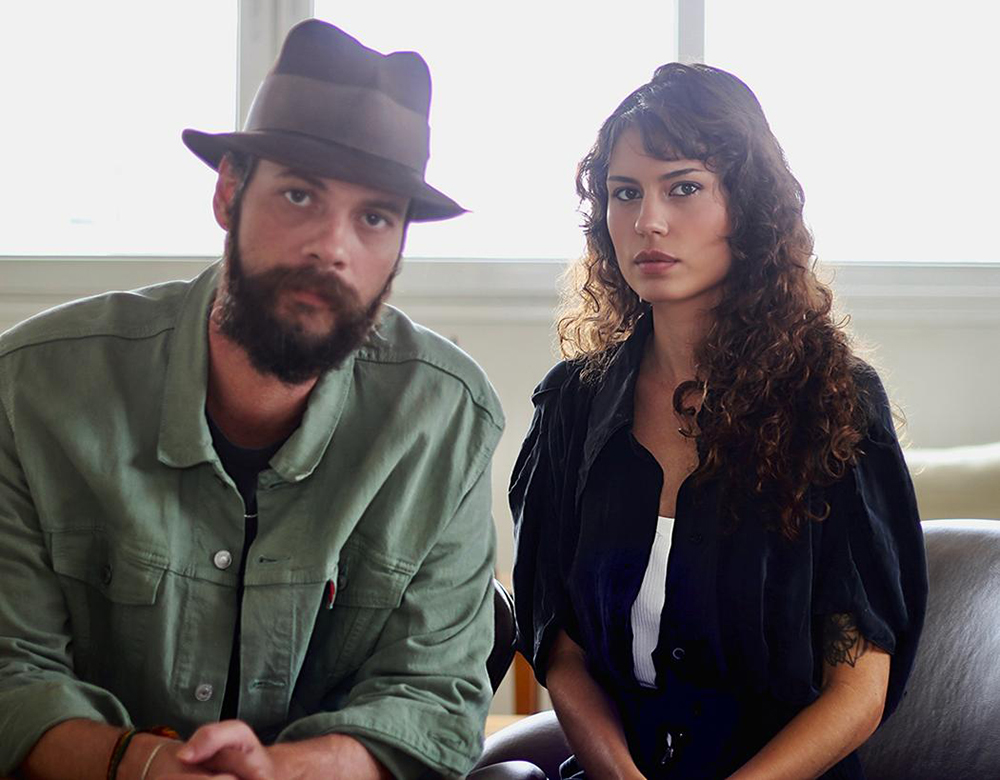
Kálamo
Your practice is rooted in ancient rituals and meditation. What first drew you to candle holders as a central object in your ceramic work?
As urban life became more chaotic and stressful, we felt the urge to create moments of connection to our inner self. We thought that the routine around city centers may lead you to lose the ability to reflect on your own life and actions.
The more you get used to faster technologies and automatic mechanisms, the more you go blank to sensitive and meaningful moments throughout the day.
Therefore, we wanted to create a moment of pause and rest through candles. The warmth combined with low light creates a unique atmosphere of comfort, where you feel free to be yourself and remember who you really are.
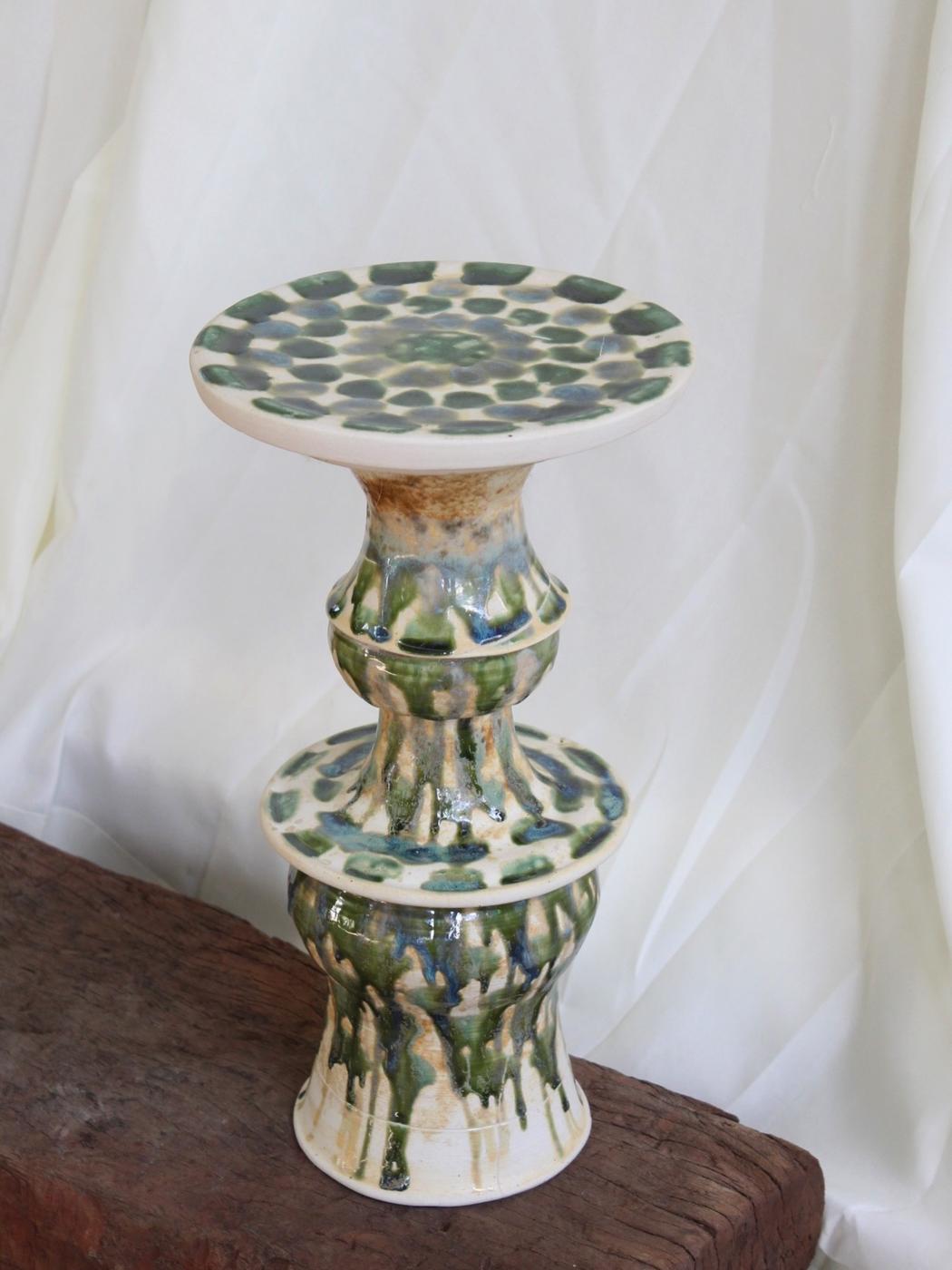
How do you understand the relationship between fire, clay, and time in your pieces?
The ceramic practice needs its own timing; you can’t rush it. We learned to respect that through many cracked pieces. The work needs to be done in stages; if you skip or disrespect one of them, the whole piece is affected. We compare our practice to a cosmogonic creation; one can’t exist without the other.
In that way, we feel the paradoxical meaning of time every day. We understand time as an abstract concept, measured by living life. The clock is a human invention, and we avoid looking at it as much as possible. We don’t believe in a linear technological evolution; some analog gear still operates and matches human needs as a living body on this planet in a better way. We learned through clay to listen to our bodies instead of an outside demand, so we keep this reflection as a central purpose in our work.
The fire sums everything up. Heraclitus is our teacher on that matter; he conceives fire as the arché — from the Greek arkhé, the fundamental principle of all. He believes in the ambiguous trace as a constructive form: fire can destroy and build. That tension, in his eyes, provides the right amount of harmony needed. Without the cathartic role played by the fire, our work wouldn’t exist.
You describe your works as having an ephemeral character because of the melted candle wax left on the surface. How important is this transformation after the piece begins to be used?
This is also an important aspect of Kálamo. We like to think that our pieces have a living inner form, like everything on this earth. We see our process much more as accessing knowledge than forming it. Ceramics have been made for over 15,000 years; why not work together with those who came before us? In that way, we trace a line of permanent transformation. We don’t see ourselves as a starting point; it hasn’t begun with us, and it won’t end with us either. When working with matter, we need to have that consciousness: material things stay here longer than we do. We like to think of human culture as an extensive open encyclopedia asking to be read; to use that knowledge in favor of all is a must.
So, after they complete the cycle inside the studio and go to other places, we suggest that the transformation continues through the person who will acquire that piece. By lighting candles, the body surface will undergo an unpredictable modification, turning the person into an active creator too. Wax is a very interesting ephemeral material; you can assemble forms, and they will stay there as long as you want, until you remake the process by recycling it.
Our pieces are not entirely ours; they are made to be used and to exist in the world around us.
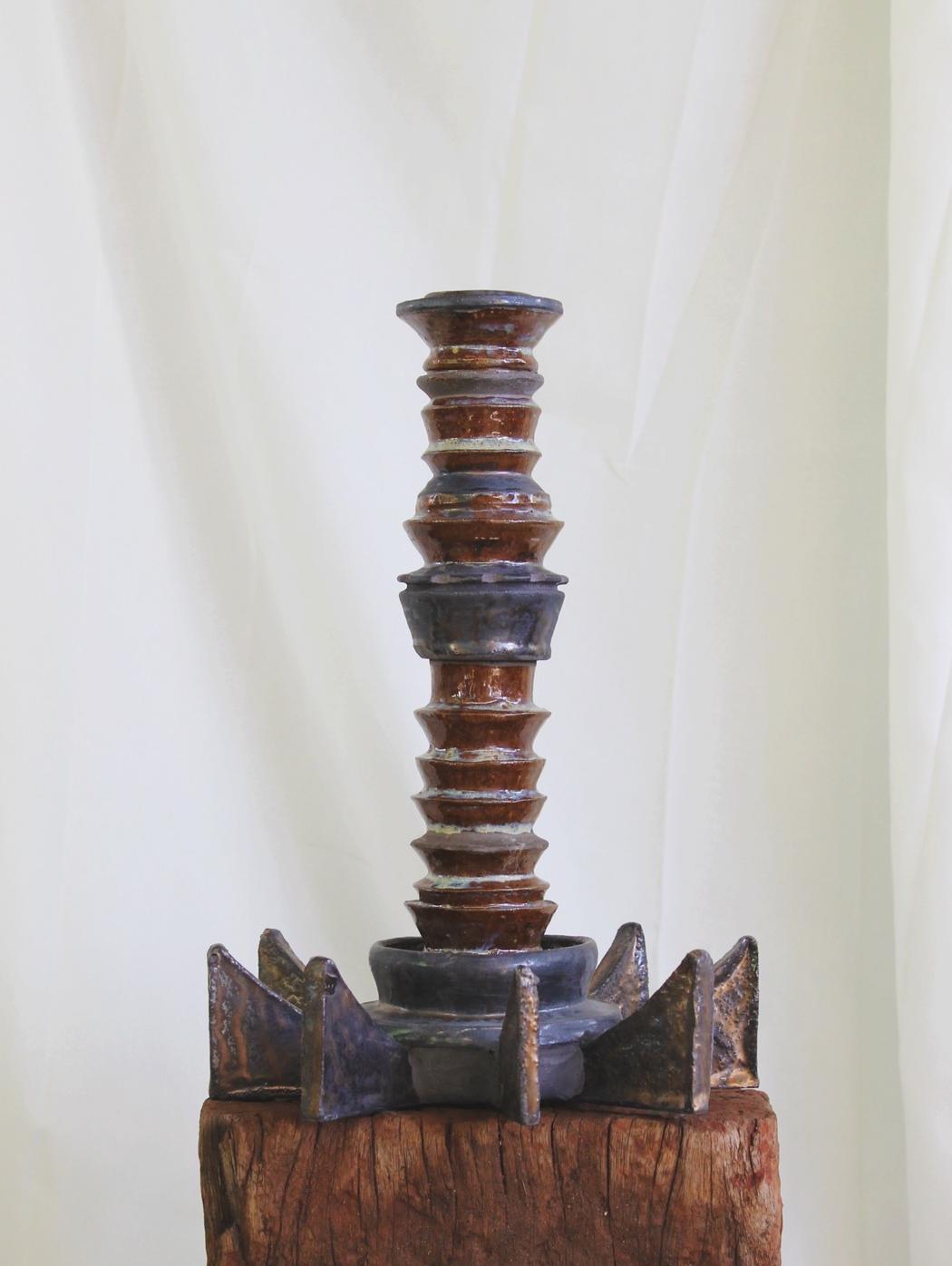
How does working as a duo influence the creative process? Do you divide roles, or is each piece created through shared intuition?
We haven’t actually decided to work together. Our partnership came before the studio and naturally gained the work space. We have a lot in common, and that was a turning point in bringing our perspectives together into a business.
Understanding the world better has always been part of our conversations. Heraclitus says that by putting individuality aside, you might be ready to comprehend reality in a more reliable way, being able to slowly walk towards the truth. Thus, creating a space where we could practice our thoughts seemed perfect.
Kálamo is way more than a brand. It is a shared space where we can talk, reveal, try, suggest, learn, and express our thoughts without judgment. We like to think of Kálamo as a wide, large room with infinite making potential, where there is no me or you, just a fierce desire to create.
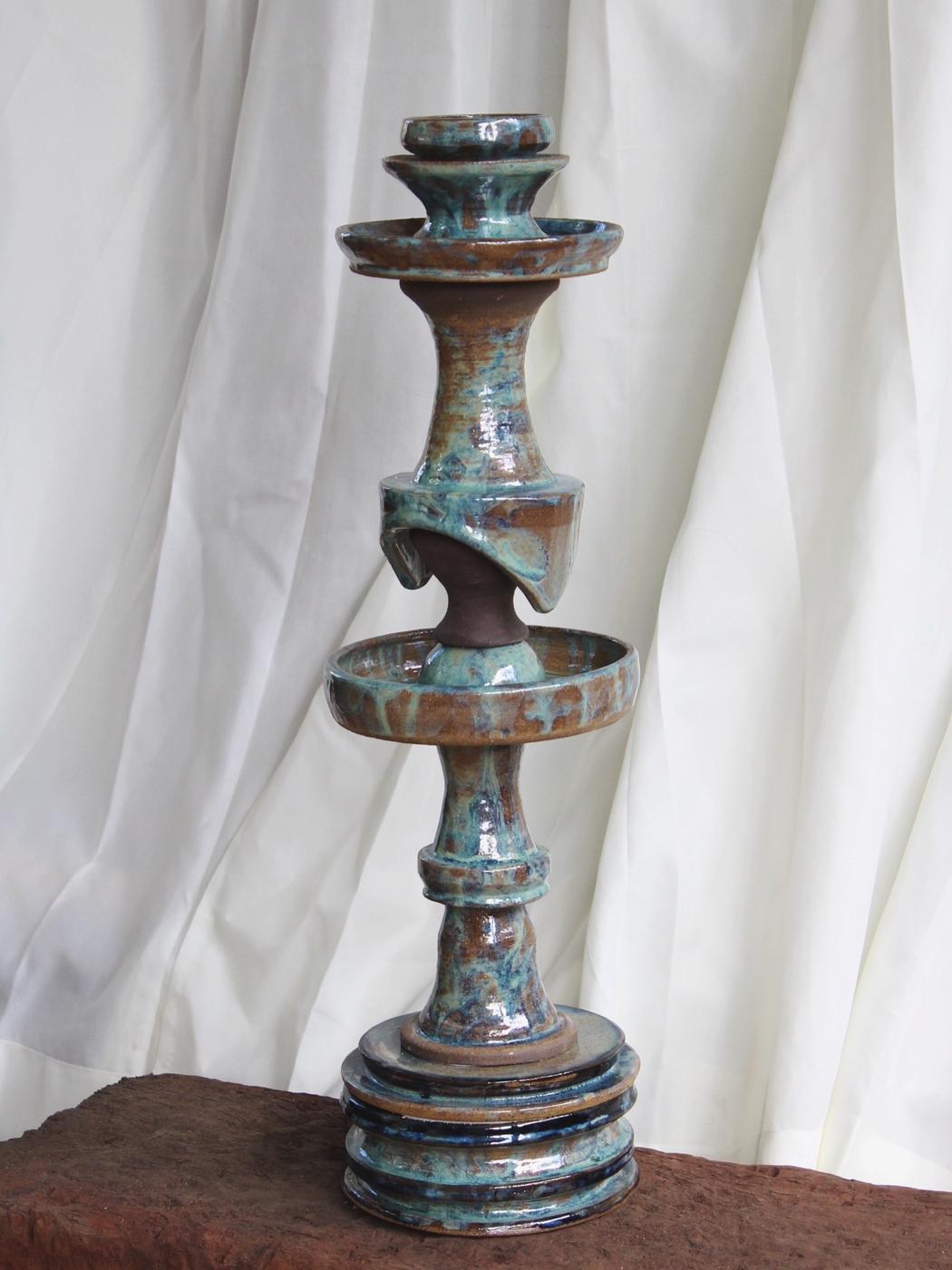
How do you want people to interact with your pieces — visually, physically, spiritually, or through daily ritual?
We would like to present our pieces not just as decorative, but interactive. So, all the options are welcome. We are seeing people losing what humanity spent thousands of years building: the ability to read tender sensibilities. An openness to the natural state of being. Our work faces that problem directly; somehow, we’re trying to fight a certain “involution” established nowadays. We see the ancient world as a gold mine force to help us; the ceramic process is basically the same as it was in the beginning. Heraclitus’ thoughts are more current than ever.
In what way does Brazilian culture, landscape, or local craft tradition influence your work?
Ceramics are known to be a heritage craft. For me, it was the same: my mother worked as a ceramic teacher in a non-profit institution. I grew up there; all my equipment is from that time, and it carries a special mark from everyone who touched those tools. All those handprints are now on Kálamo’s works, for sure.
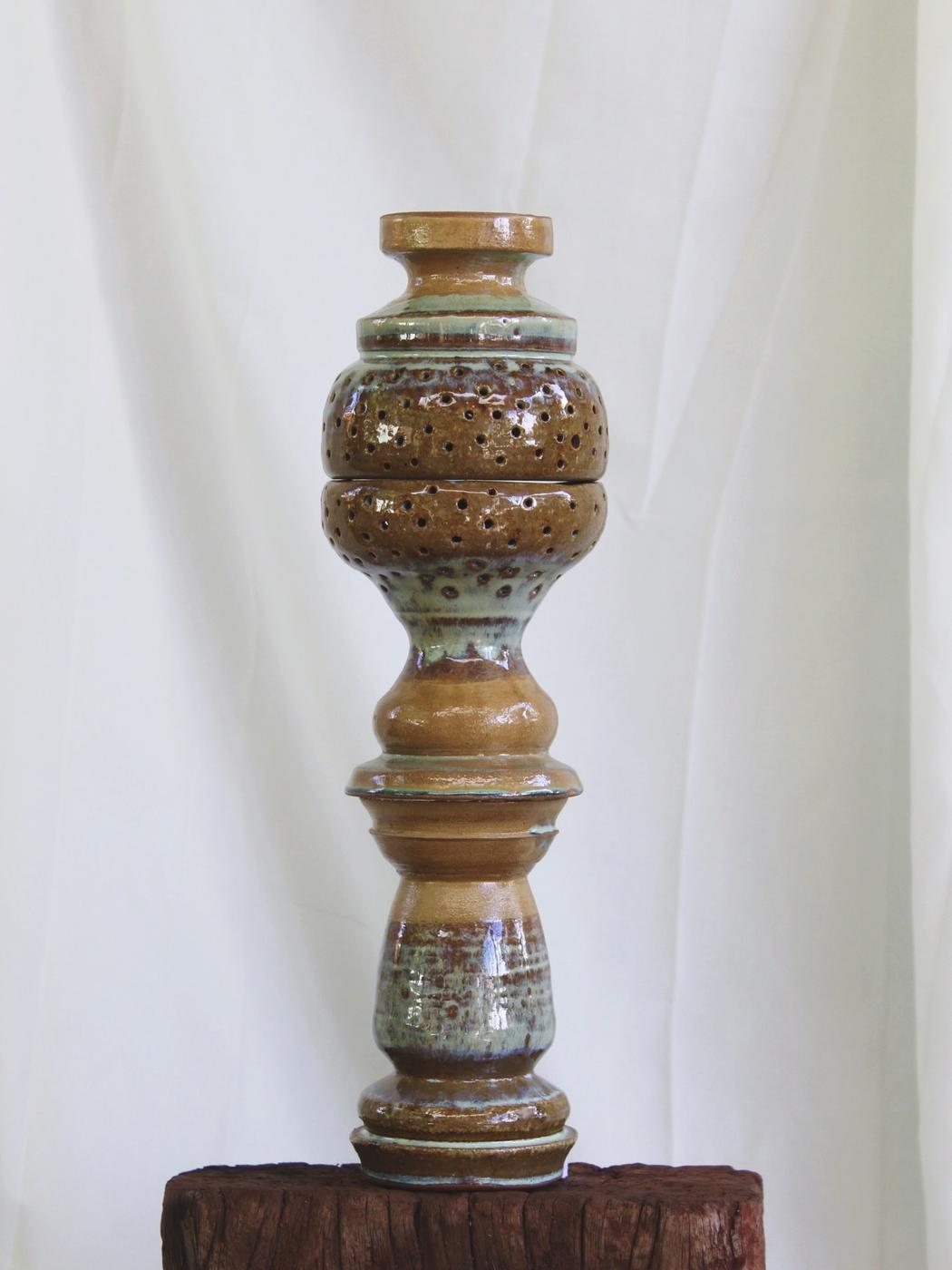
What does the name “Kálamo” mean to you, and how does it reflect the identity of your artistic duo?
Kálamo represents, above all, trust. Without trust in each other’s thinking and way of being, those pieces would never be able to become real.
Literally, Kálamo means reed, stem. The main structure used to handwrite, to make an arrow, and to carry objects like candles.
We interpret that as a strong single column, capable of sustaining our beliefs, maintaining our lives in an eternal dynamic movement, like flames.