
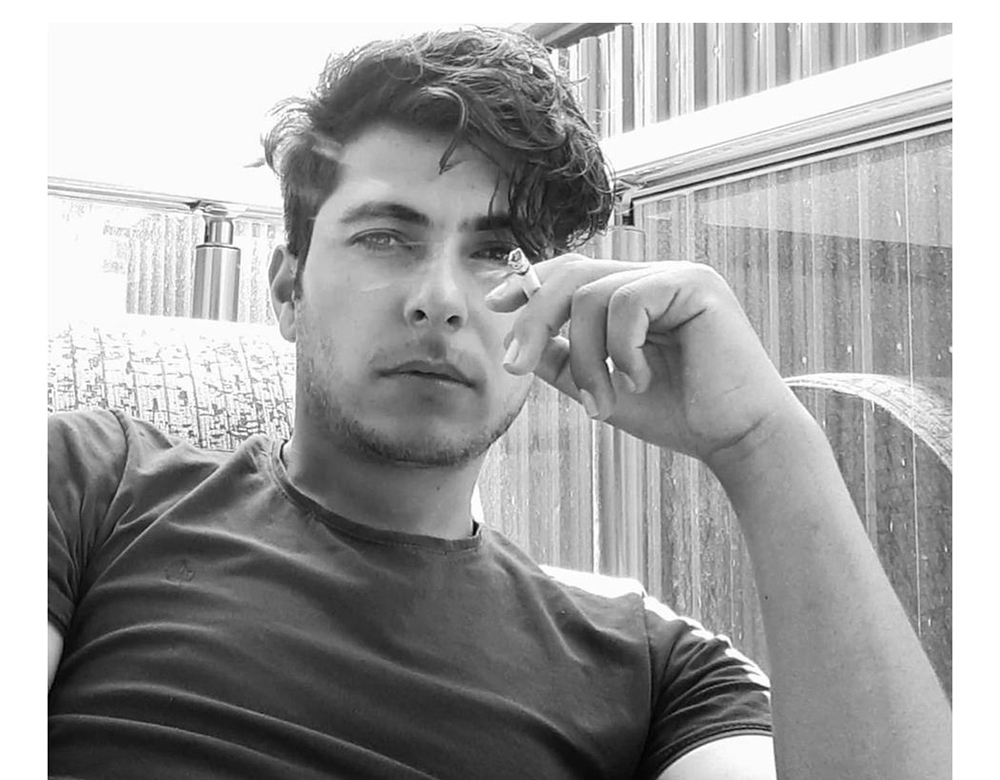
Nihat Fırat
You were born in Çekören, a village in the Hilvan district of Şanlıurfa. How did the place where you grew up shape your way of seeing people, nature, and everyday life?
Being born on bloody soil brought me an early maturity, allowing me to perceive life with greater depth. Growing up in the very cradle of Mesopotamia and roaming through the remnants of ancient civilizations led me to learn the sheer magnitude of history during my youth. Beholding Mesopotamia as a child and feeding on the myths born of that regional oral tradition radically molded my mindset. Indeed, discovering that the fables whispered to us by our grandmothers were, in essence, remnants of the Epic of Gilgamesh further profounded my awakening to my ancestry.
This profound heritage anchored my artistic stance, turning my gaze away from the sophisticated cultural and artistic paradigms produced by Euro-American centers, and directing it toward a perspective uniquely rooted in the East and its own soil. Rather than embracing Western aesthetics, I chose to adopt the mystical and primordial philosophy of my native geography as my refining filter.
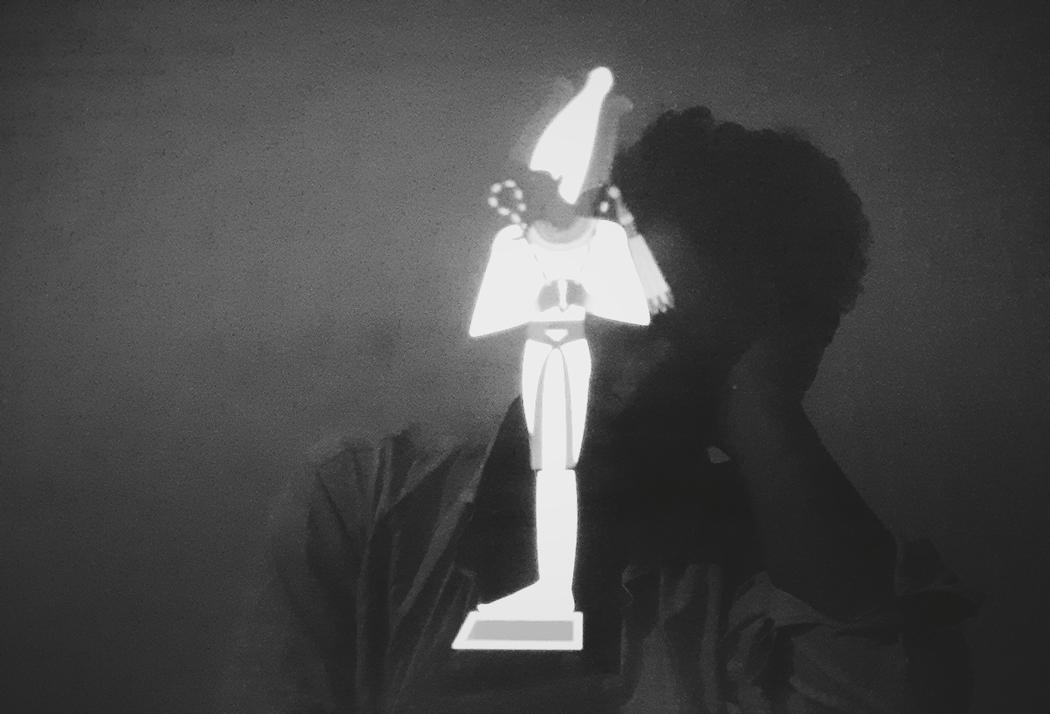 Nihat Fırat | Osiris | 2020
Your background is in civil engineering, and you currently work in the construction sector. Does this technical profession influence your artistic eye, composition, or sense of structure?
It absolutely has a major impact. First and foremost, it forces me into a more rational mechanism of thinking. To be honest, I don’t always like this; science and art are opposite poles, and spiritually, I stand on the side of art. However, this rationality does have its advantages in my creative practice; it has taught me a profound sense of ‘structure.’ A building requires a strong load-bearing system and accurately calculated balances to stand. I look for that exact same balance when writing a text, structuring a screenplay, or creating a visual composition.
Professions also directly shape how people view living beings and nature. For instance, when examining historical structures, you look at them through a completely different lens; you grasp with technical depth just how aesthetic, functional, majestic, and solid they were built. It is precisely through this technical eye that you clearly see how contemporary architecture traps people inside soulless, colorless, tasteless, and weak rectangular boxes. And catastrophically, you realize during earthquakes just how cheap human life is in the eyes of systems and governments. This reality that engineering forces me to see is a deeply bitter picture, yet it is one that profoundly fuels my art.
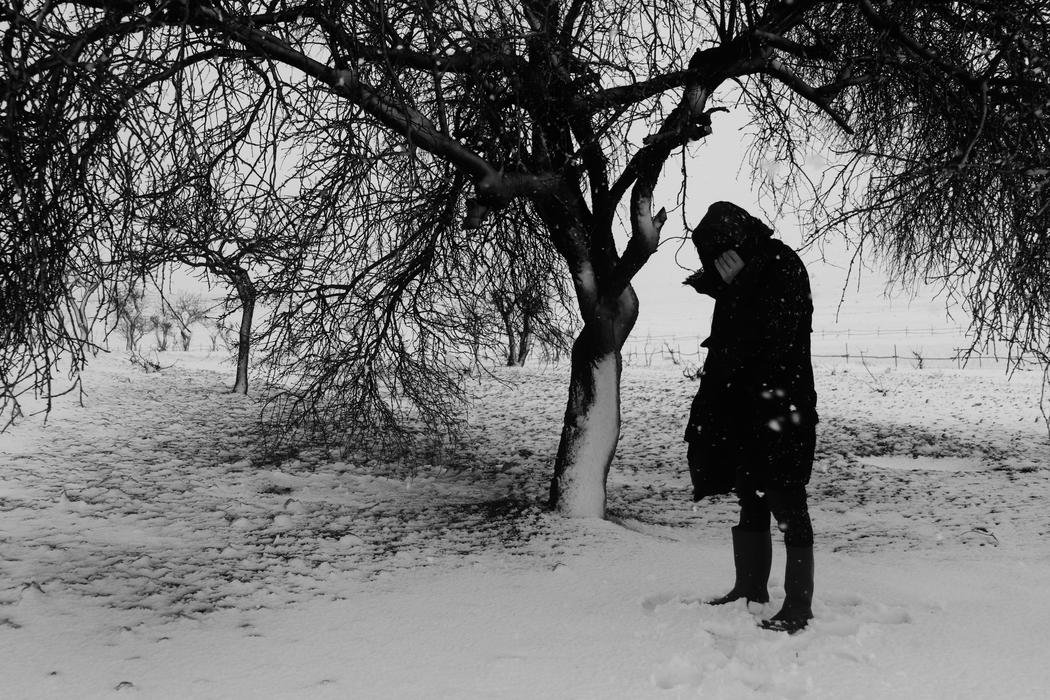 Nihat Fırat | Kafka YalnızlığI | 2022
You have also written articles about art for web blogs. What role does writing play in your creative practice?
A writer once said: ‘I would rather be understood than loved.’ Writing, drawing, or producing works in various forms… For me, all of these serve a single purpose, and that is ‘meaning.’
Writing is the sharpest and most concise form of expression; yet sometimes, it falls short. For instance, depicting abstract concepts like the ‘soul’ with words is one thing, but painting its picture or capturing its photograph is quite another—much like Modigliani painting those famous eyes, which he left blank until he could truly see the subject’s soul. However, this difference is not a separation but a way of bringing one another into being; for art forms, in the end, constitute a monolithic unity. The Gospel of John states, ‘In the beginning was the Word,’ implying that the universe began with meaning and intention; whereas John Berger reminds us of the pure and naked priority of the image by saying, ‘Seeing comes before words.’ Writing, drawing, capturing, thinking… In truth, they are all different rivers flowing into the exact same sea. In short; I believe that only when the word and the sight, the writing and the image, come together to form a whole, can they reach a state of true maturation.
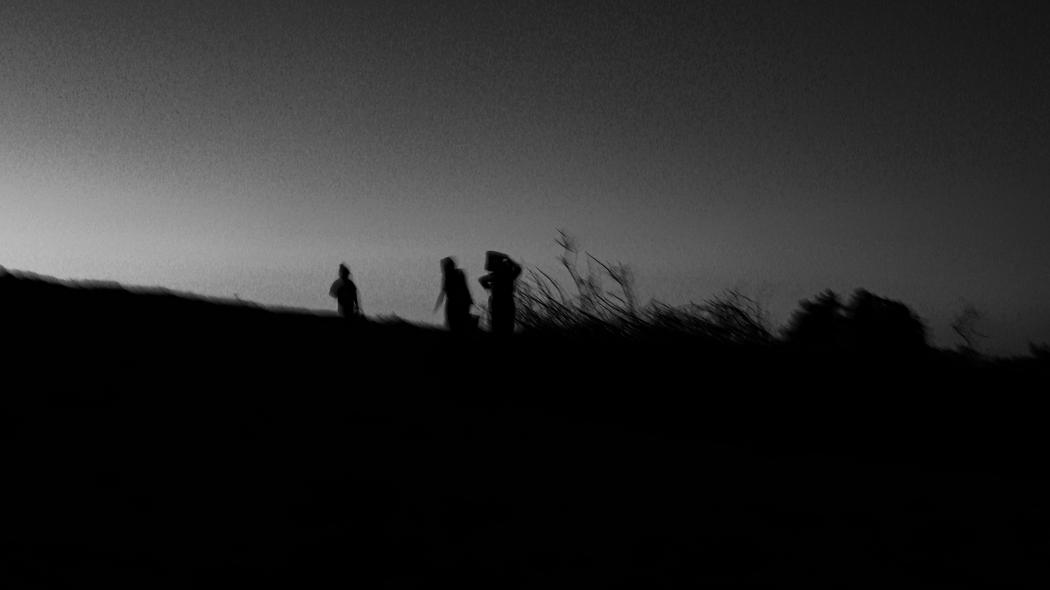 Nihat Fırat | Tabiat Ve Kadınlar | 2020
Your works move between photography, drawing, portraiture, nature, and still life. How would you describe the main themes that connect your artistic practice?
The transition of my work between portraiture, nature, and still life stems from the fact that I view them all as different pieces of the same whole. To me, a human face, a leaf of a tree, or a silent object resting on a table are all entities that feed on the same source and are connected by invisible bonds.
The main theme uniting my artistic practice is the search for that common and singular essence lying behind this apparent diversity. Through photography, I capture the reflection of the moment, while through drawing, I reshape it within my inner world. For me, genres and techniques are merely tools; my true endeavor is to touch that silent, deep, and shared truth hidden within every object and every face.
Many of your photographs use black and white. What does monochrome allow you to express that color sometimes cannot?
For me, black and white possess a far more colorful, profound, and ontological resonance than any other colors. Just like perceiving the truth in darkness, we can only discern the primordial light of the stars against a black canvas. Truth is much the same; it requires a spectrum to manifest and be made visible. Another cornerstone of constructing my works upon these two poles is faith. I believe that every stage of existence and the initial creation initially consisted of absolute darkness, and upon God’s command ‘Be,’ it assumed multiplicity—transmuted into diverse forms and colors. In this regard, black and white are a divine passion that purifies me from the transient noise of the world and brings me closer to the pure truth of that first moment of existence.
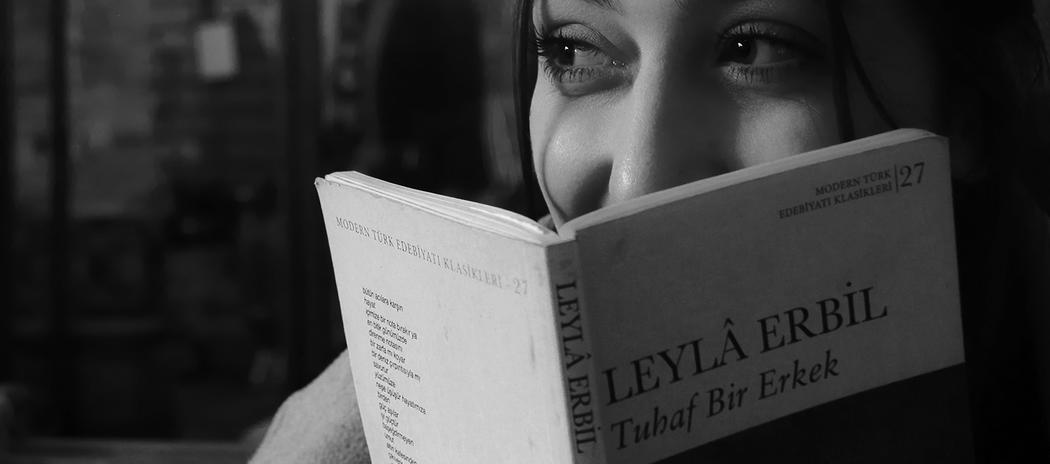 Nihat Fırat | Tuhaf Bir Kadın | 2023
Your artworks often balance beauty and unease – blossoms, children, storms, books, shadows. Are you interested in showing the tension between life’s tenderness and its darker side?
Yes, it is precisely this tension and balance that I am pursuing. All these images you have mentioned—flowers, children, storms, and shadows—are not mutually exclusive contrasts to me; on the contrary, they are intertwining elements that weave the very fabric of life. Just as in the ancient cycle of Eastern thought, darkness and light, compassion and the uncanny do not destroy one another; they nurture each other. Just like that white dot at the heart of the deepest black; a storm of succumbing to time is hidden in the bosom of the most fragile flower, while an unshakable serenity rests within the fiercest tempest. While we perceive all the vulnerability of life in a child’s innocence, we feel the inevitable, dark side of the earth in the shadow right behind them.
Throughout human history, art has been a silent fortress, a gateway of consolation where humans take refuge against their own weakness and that ongoing conflict between good and evil since Cain and Abel. In my work, I bring these contrasts together not to pit them against each other in a war, but to make visible that fragile balance where these two poles meet—a balance that is both painful and deeply comforting.
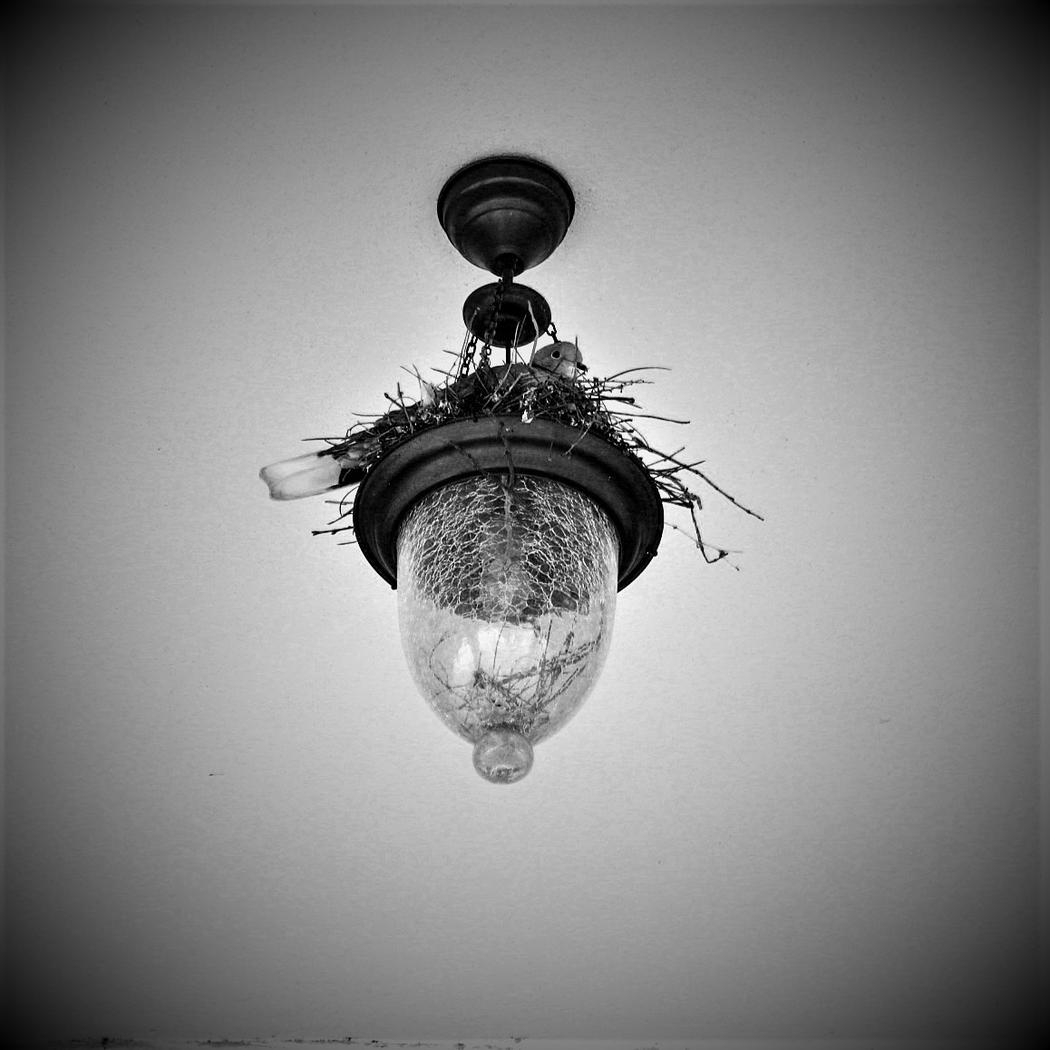 Nihat Fırat | Daye | 2020
What direction would you like your artistic practice to take in the future? Are there new themes, techniques, or projects you want to explore?
Looking ahead, I desire to extend my artistic practice toward cinema and theater, carrying my exploration into these realms. To this end, I have already developed several concepts and projects that are currently maturing in my mind.
Cinema, above all, is a domain worth consuming a lifetime for—a space where I wish to lose myself entirely. Tarkovsky’s poetic metaphysics, the profound equilibrium in Kurosawa’s portrayal of human nature, Kiarostami’s minimalism, and Yılmaz Güney’s raw realism are actually distinct cinematic manifestations of the very ‘singular essence’ I am constantly seeking. To be able to convey life’s fragile tenderness alongside its stark reality through moving light and shadow, just as they mastered, is my ultimate ambition.
Of course, I hold a deep affection for photography, drawing, and other artistic genres; immersing myself in them yields a sublime pleasure. However, through my lens, all these disciplines are merely separate streams feeding into the same river. My goal is to eventually dissolve the secret truth I pursue in photography and drawing into the greater, breathing, and animate totality of cinema and theater.