
Akshita Srivastava
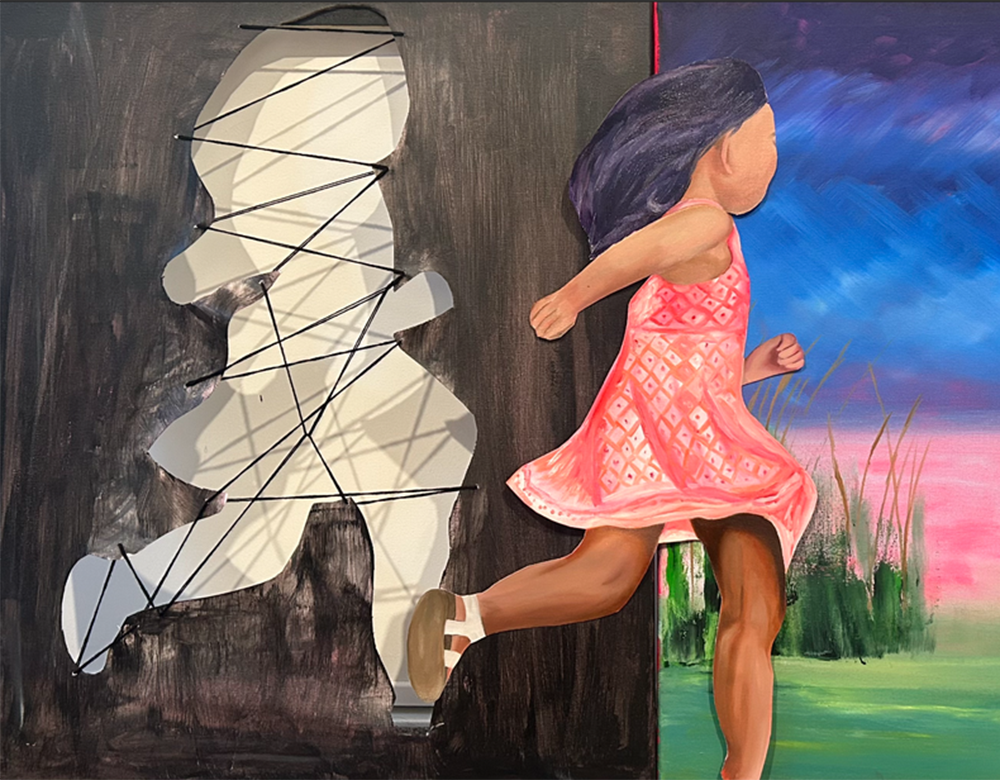
Your project statement for Escape speaks about the space between confinement and release. What kind of emotional or personal “escape” were you exploring in this work?
This work of mine explores emotional ‘escape’ through the personal experience of confinement, reflecting a tension of where we are and where we aspire to be. At its very core the idea is that change can begin with a single step, taking the decision that limitations are not permitted to define us. The contrast between the dark, enclosed space and the vibrant world beyond showcases a journey towards freedom, self discovery, and possibility. The unity of colour on my figure and landscape represents a sense of belonging and authenticity, while the strings are a metaphor for the subtle forces that always seek to hold us back. I always believed that rather than breaking those restraints, we have to navigate ourselves around them, the figure in my work suggests that growth often comes not from force, but from finding the courage that carries us forward. In many ways, this piece became a reflection of my own journey towards trusting myself to pursue the things I truly want.
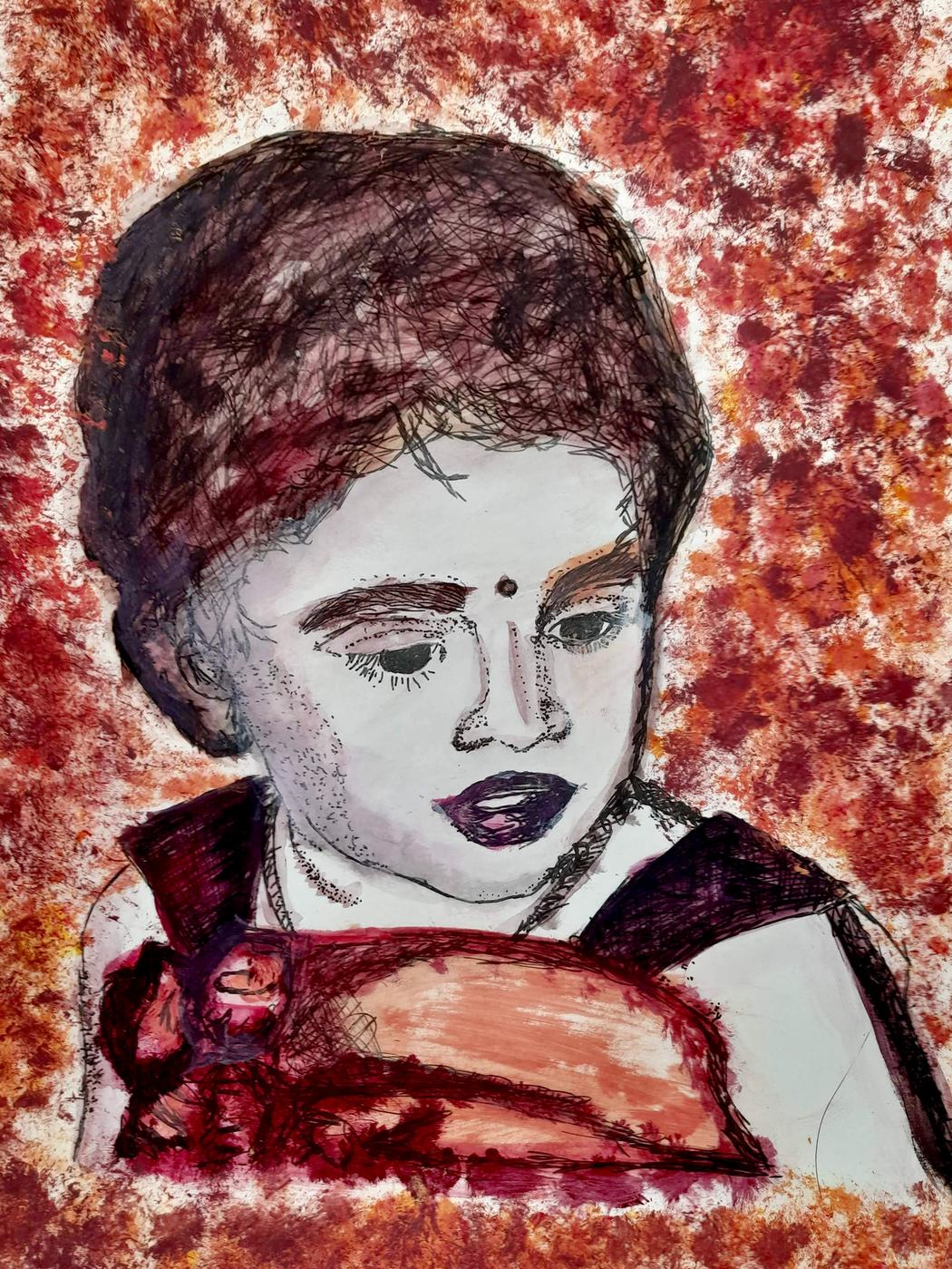
Identity and displacement appear to be central themes in your practice. How has growing up in New Zealand while carrying another cultural origin shaped your visual language?
Growing up in New Zealand while carrying an Indian cultural background often left me feeling I was caught between two worlds. As a child, I was consistently navigating through different expectations. Fitting into the culture around me while remaining connected to the one I came from created a sense of displacement. I felt as though I never fully belonged to a space. Over time, I came to understand that my identity exists within the intersection of both, and this experience became the central to my visual language. The themes of multiple worlds, self discovery, and belonging appear throughout most of my work. Art became my way to express myself beyond the cultural labels, allowing me to communicate the ideas of my experience that felt authentic through bold imagery. While I may move between two different worlds, I explore the idea that I belong within the one I have created for myself, and I think growing up in a different culture origin while belonging to another has ultimately given me this advantage as a creative.
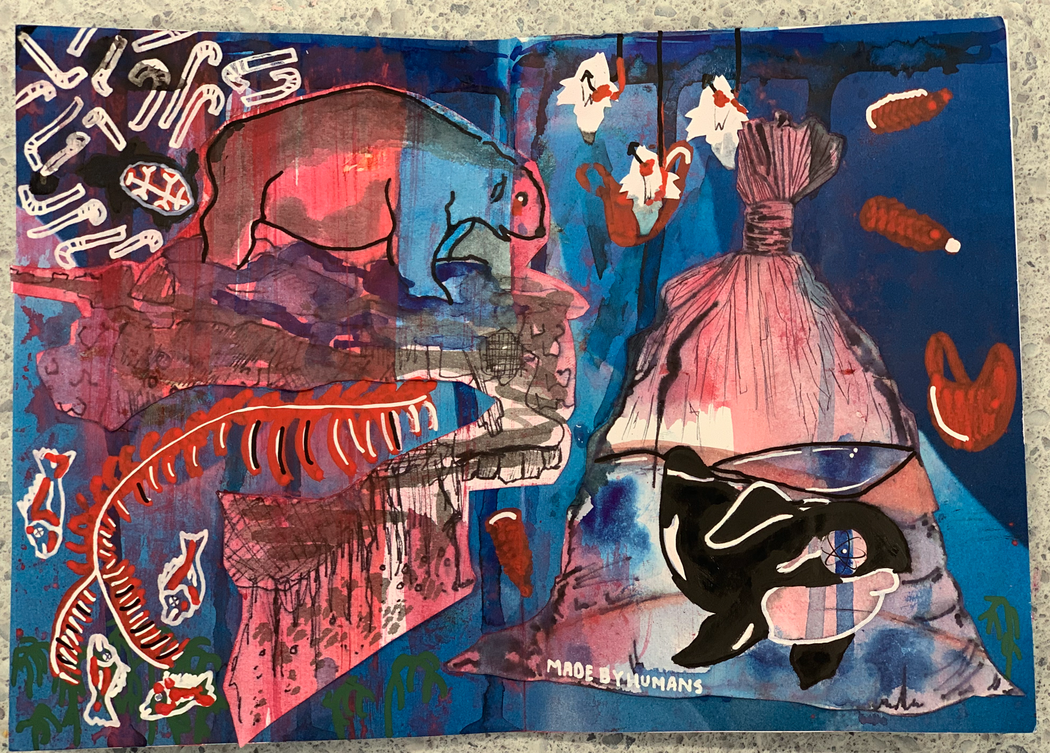
In your works, figures often seem caught between movement and stillness. What does the body represent for you as a form of storytelling?
For me, the body is nature’s sculpture. A powerful form I explore that is filled with visual language that reflects both creation and destruction. It became a shared point of connection as we all inhabit a body that regardless of our differences, carries both physical presence and inner consciousness. In my work, I use the movements to represent what we express outwardly, such as impulses, reactions, and moments of openness that can lead to negative or positive outcomes. Stillness reflects the inner world of thoughts, fears, and emotions that remain unspoken but constantly exist within us. The contrasting states of both allow me to present the body as a vessel of external and internal expression revealing the human condition in its most true form. Leaving the viewers to reflect on what is shown, what is hidden, and everything in between.
The contrast between dark, restrained spaces and bright, dream-like horizons is very present in your work. How do you use colour to express emotional transition?
For me, colour is a powerful tool that sets an emotional tone, with each shade carrying their own expressive weight that I approach with intention and respect. I like to think carefully about the mood I want to create, using contrast as a way to build tension between more restrained areas and brighter, dream-like spaces. I try to create compositions that allow each layer of opposing forces to coexist rather than one emotion to replace another. By creating an environment where emotional shifts feel simultaneous and unresolved, the viewer’s eye moves through these transitions. As intensity rises and fades, the echoing moments of clarity emerge from uncertainty before dissolving again, and through my process colour becomes a way for my pieces to hold memory, identity, and emotional conflict all at once.
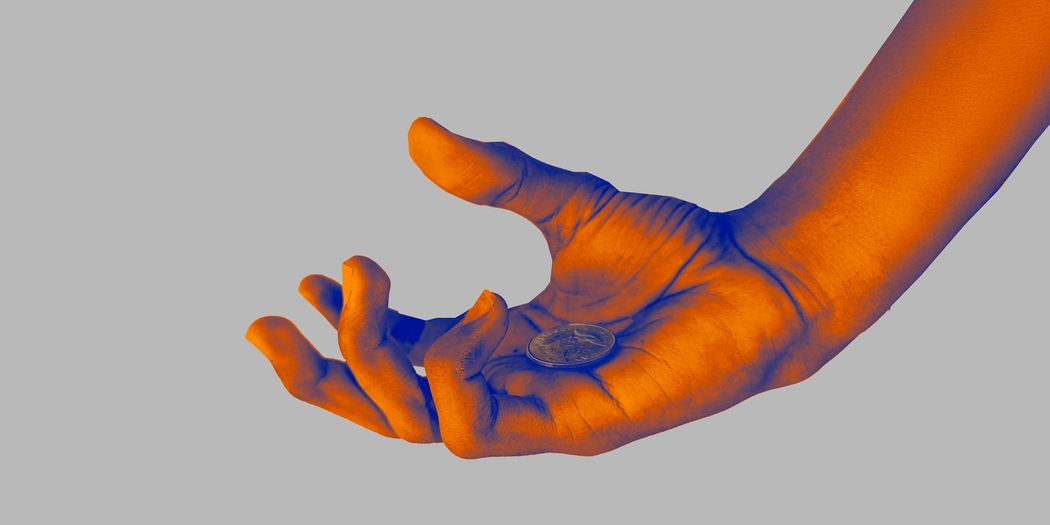
You mention cinematic realism and filmmakers such as Martin Scorsese and Satyajit Ray as influences. What aspects of cinema do you bring into your painting process?
The aspects I bring from cinema into my work often relate to internal states, much like Martin Scorsese who uses framing, colour, and aspects of symbolism to externalise the inner world of his characters. By using a similar approach, my subjects and objects function less as their literal forms and more as emotional symbols that build visual motifs and subtle contrasts. The tension between beauty and unease, echoing through the emotional complexity is found in many of Martin Scorsese’s films, applying a similar approach to my colours. Satyajit Ray has also deeply influenced my visual language through his openness and restraint that allows emotions to coexist. My work, similar to his, invites interpretation rather than a fixed meaning. The themes of self-awareness, escape, and identity remain intentionally unresolved, reflecting the cinematic sense where some moments are captured in transition. They both act as something that is being remembered, felt, or realised rather than reaching one conclusion.
Your works feel intimate, but also unresolved. Why is it important for you not to give the viewer a complete or immediate answer?
In works of mine such as “Escape”, the colours feel intentionally unresolved, with selective tones emerging through others as though emotions are being processed rather than arriving at an emotional endpoint. The viewer may get a sense of change actively unfolding. I find that this opens allows for a deeper engagement experience as it invites the viewer to participate in completing the meaning rather than being given a singular answer. My symbolic elements and layered colour relationships aim to create an open space for interpretation and emotional response. It is within that vagueness where I reveal just enough, but never everything so that a sense of intimacy is formed between the work and the viewer.
What do you hope viewers will feel or question when they spend time with your work?
I hope that viewers will experience my work as a sequence rather than a single fixed feeling. I want the experience to begin with curiosity towards the imagery and colour, gradually moving them into a space of reflection and questioning. Over time, they can begin to project their own experiences onto my work allowing the shift and surfacing of personal meaning and identity. The work then invites a return visit, sometimes allowing for something unnoticed to become something significant. The symbols that I use are intended to feel emotionally familiar without a clear explanation, I want the paintings to feel like confessions that paused midway leaving the viewer with a lingering sense that something within this body of work remains open and is worth exploring.
Leave a Reply
You must be logged in to post a comment.