
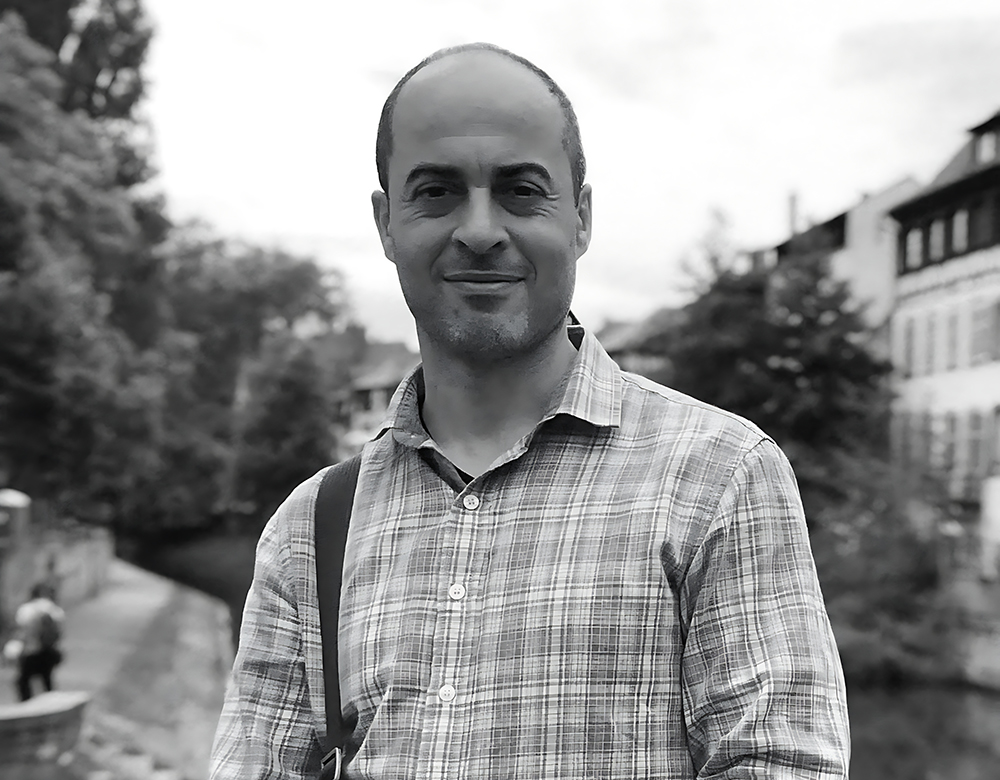
Jonathan Muyal
Your artistic practice is rooted in photomicroscopy. How did you first begin to see the microscope not only as a scientific instrument, but also as an artistic tool?
My photos were once considered mere documentation, a collection of data. At best, they appeared—as small vignettes—in scientific publications. Yet, unconsciously, I took pleasure in photographing the microstructures of gemstones, until those around me began to express their enthusiasm and appreciation for my work. Then, in 2017, I won the “Photographer of the Year” competition hosted by the Gemmological Association of Great Britain (Gem-A).
I began to realize that not only did I thrive in this practice, but that I possessed real potential. I saw that it was much more than a scientific tool-it had become my artistic medium.
By definition, an artist-photographer has their own vision and interpretation, which is reflected in their work. I adopt this same approach, in contrast to the gemologist’s documentary work and photomicrography created for purely scientific purposes.
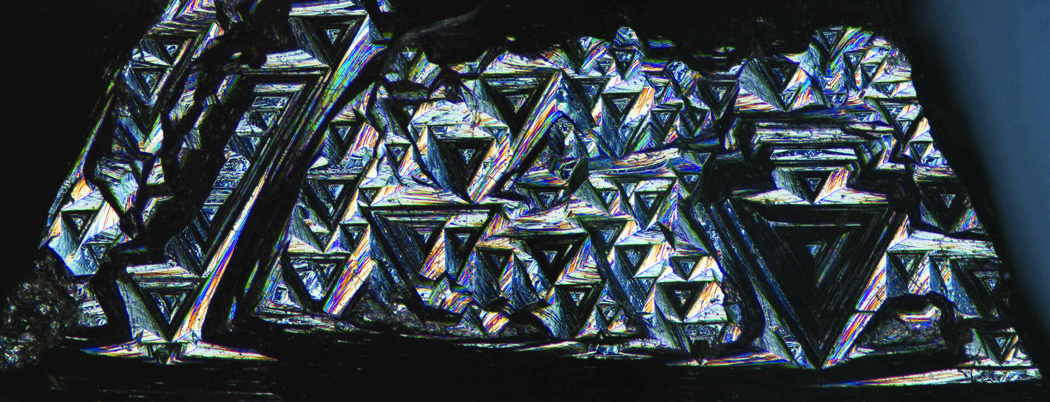 Jonathan Muyal | Victims | 2025
Your images reveal entire visual universes hidden inside gemstones. What fascinates you most about these invisible microcosms?
What constantly fascinates me is the infinite universe waiting to be explored, as well as the messages and emotions contained within these gems.
These microcosms prompt us to reflect on our own perception and understanding of the world and the cosmos. As I delve into the microscopic realm, I open the doors to an infinite universe.
This creates a parallel and a reflection on the concept of scale-a realization that our world, and indeed we ourselves, are microscopic and insignificant in the grand scheme of the universe.
A sense of humility arises when faced with landscapes millions of years old, serving as a testament to our planet’s deep history.
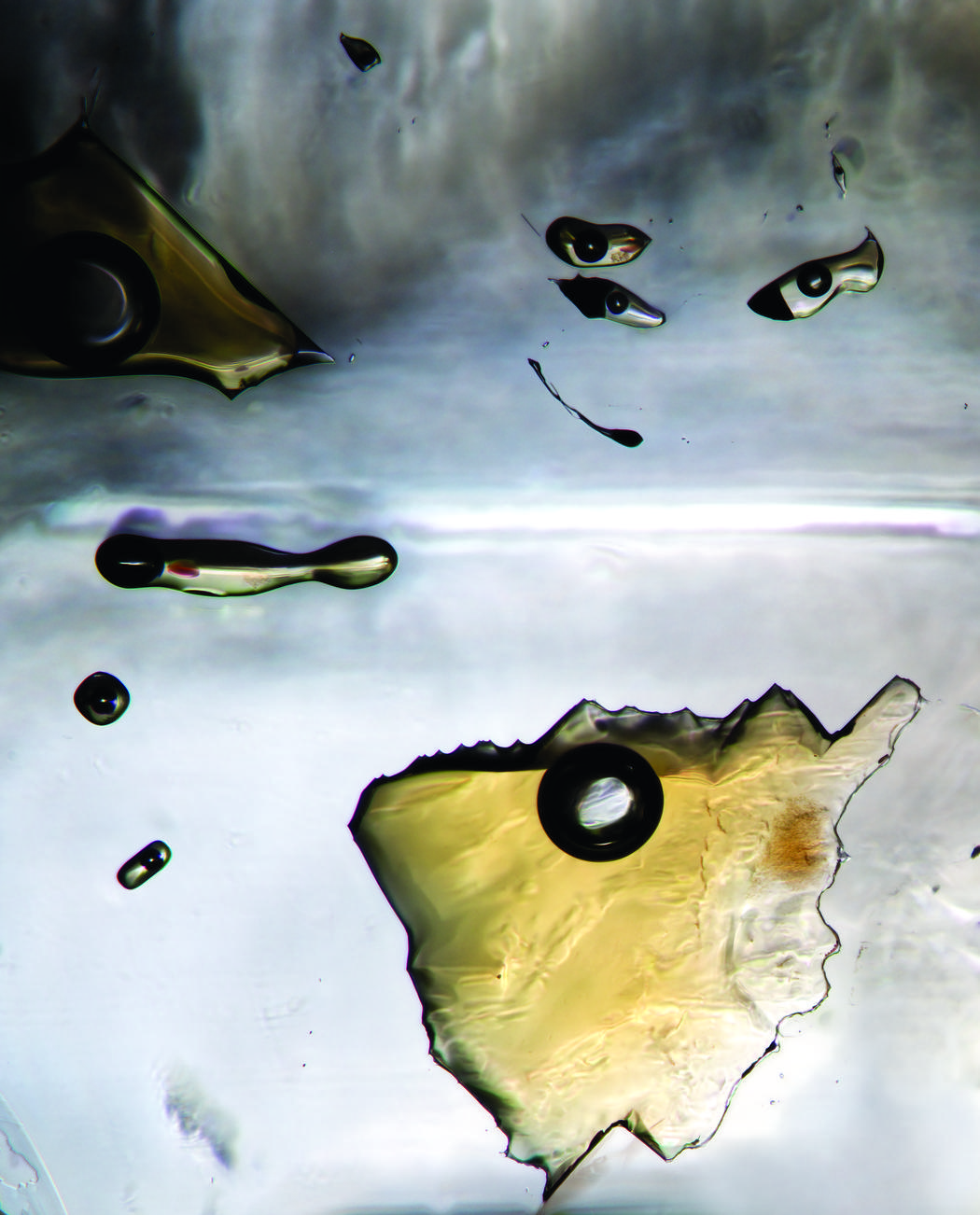 Jonathan Muyal | Unconscious Perspective | 2025
As a gemologist and visual artist, how do you balance scientific accuracy with poetic or conceptual interpretation?
There is always a duality in my work, which I strive to transform into complementarity, for one does not preclude the other. The pragmatism of science and documentation can also convey a poetic, emotional message inherent in the nature of gemstones.
Depending on the project, I aim to share work that, beyond gemological information, evokes the notion of the sublime found in nature. I examine my work from both scientific and artistic perspectives to convey a message rooted in questions specific to contemporary art. To this end, I constantly study numerous disciplines related to science and the arts to stimulate intellectual inquiry within my photomicrography.
In terms of form, I continuously reflect on the presentation of my photographic subjects, experimenting extensively with composition, lighting, and color. This often allows me to create a balance between scientific accuracy and poetic or conceptual interpretation.
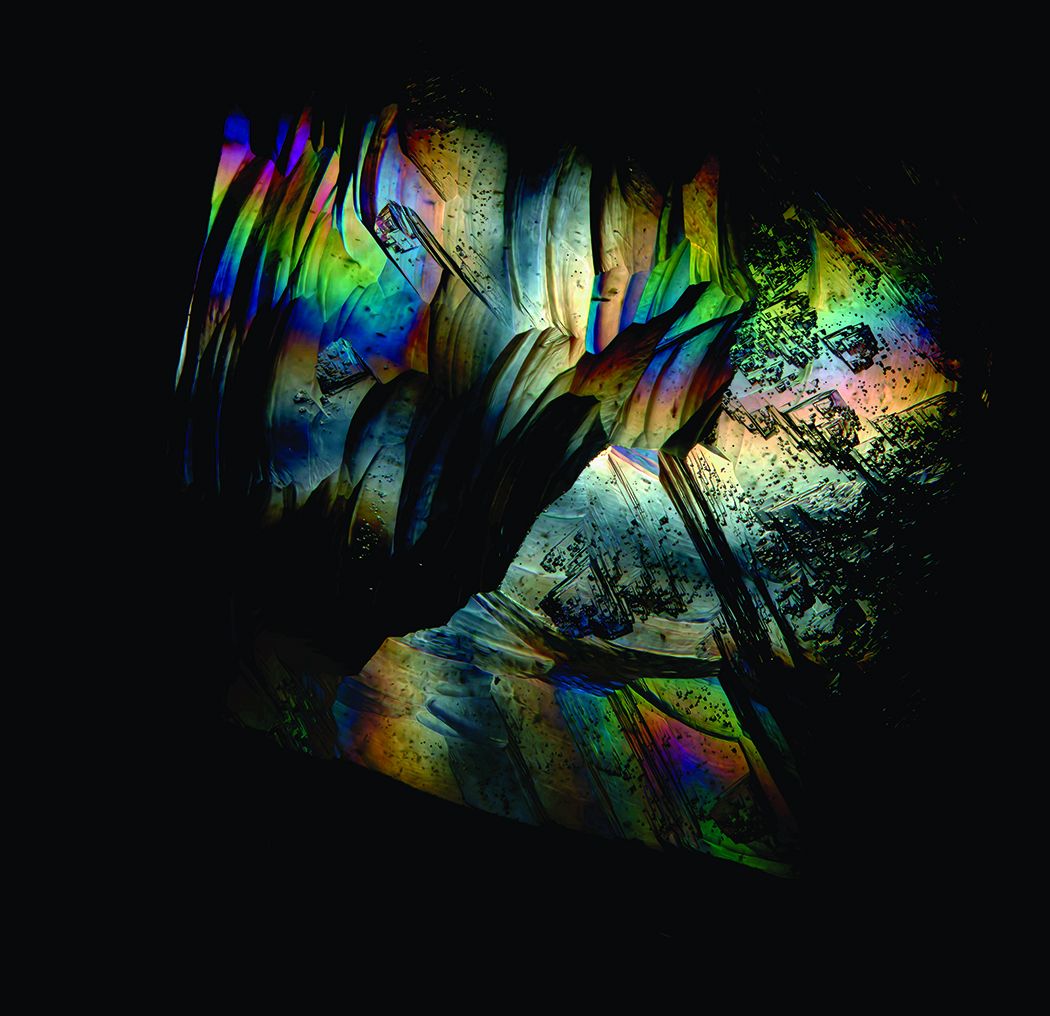 Jonathan Muyal | Trigons | 2025
Inclusions in gems are usually studied as geological evidence. How do they become visual narratives in your work?
The internal characteristics of stones are a subject of study for scientists, but as we explore these microcosms, our imagination is unconsciously stimulated. One of the first reactions is, of course, pareidolia. The shapes we encounter begin to be interpreted, imagined, or dreamed about, causing us to naturally drift away from pragmatic documentation. The very act of diving into the microcosm can become an introspective experience. Thus, each image or photomicrograph reflects not only the imagination but also deeper and more intimate thoughts. The microscopic universe could be, like Surrealism, an image of the unconscious.
By seeking references to numerous artistic movements influenced by stones—such as Surrealism—as well as philosophical concepts like the sublime, and historical and sociological contexts, a coherence and substance emerge. This translates into a visual narrative.
Many of your images seem to resemble landscapes, cities, ruins, or cosmic spaces. Do you intentionally search for these associations, or do they emerge unexpectedly?
Absolutely. These images are part of a series exploring the textures and topography—literally—that stones naturally possess, reflecting the landscapes we observe in our daily lives or on a cosmic scale. These works also reference the ancient Greek philosophical concept of the microcosm.
The landscapes observed are merely a miniature version of the universe, or a metaphor for our world. In ancient Greece, the “microcosm” did not refer to what one observes under a microscope, but rather to our planet—a fundamental building block—multiplied within the macrocosm, which is the universe.
However, this is not the only theme I explore through gemstones. There are countless other fascinating and infinite aspects to investigate and experiment with, particularly regarding light, color, and abstract compositions.
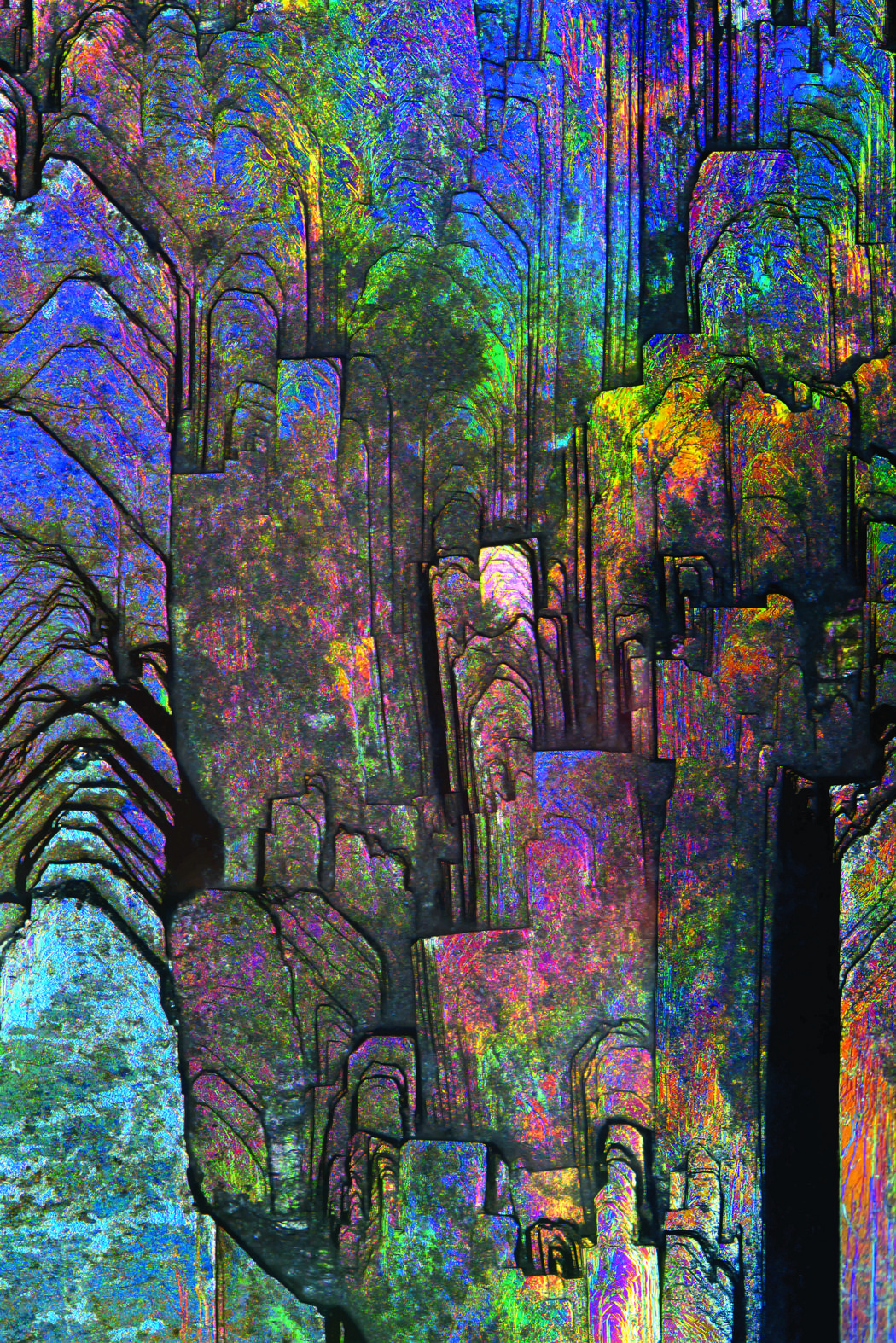 Jonathan Muyal | Oxidized Town | 2025
Gemstones carry a history that reaches back millions of years. How does this deep geological time influence the emotional or philosophical dimension of your work?
It is certainly a unique, moving, and deeply spiritual experience. When I realize that I am observing a universe invisible to the naked eye, and then witness landscapes millions or billions of years old that reflect a part of our planet’s genesis and history, I feel like I am receiving a profound lesson in humility. It reminds us just how fragile and insignificant we are.
If we reflect on the history of humanity, Homo sapiens—our species—has existed for only about 200,000 years. Gems were here before us and will remain here after us; they represent resilience and humility, and they embody color, light, energy, and eternity. These are concepts that refer to the philosophical notion of the sublime and exert a profound influence on my work.
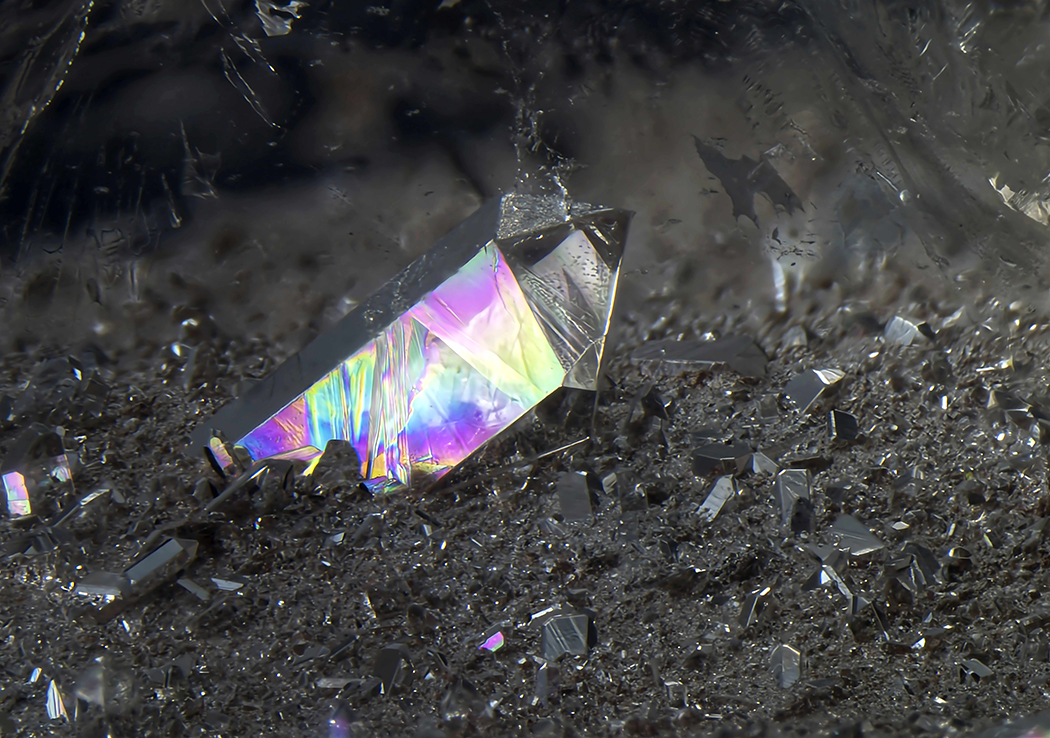 Jonathan Muyal | Interferences | 2021
How have your experiences in Southeast Asia, the United States, Europe, and mining regions around the world shaped your visual language?
My family background is multicultural in itself, and my experiences living abroad have only confirmed and reinforced this. These experiences have made me more open-minded toward others, allowing me to discover the world and embrace different cultures. I am also multilingual; I have studied more than a dozen languages, many of which I speak fluently. I consider myself a citizen of the world.
My travels around the globe and in mining regions have made me realize that our world is very small compared to the microcosms I explore. This realization underscores the importance of including one another, breaking down barriers, combating injustice and poverty. We are all part of the same microcosm: our planet Earth. We must cherish and protect it together, as there is an urgent need to do so if we wish to leave a better future for our children.
Therefore, this multicultural background, life experiences, and concerns about our world strongly influence my research and the visual language of my work.
Leave a Reply
You must be logged in to post a comment.