
André Nature
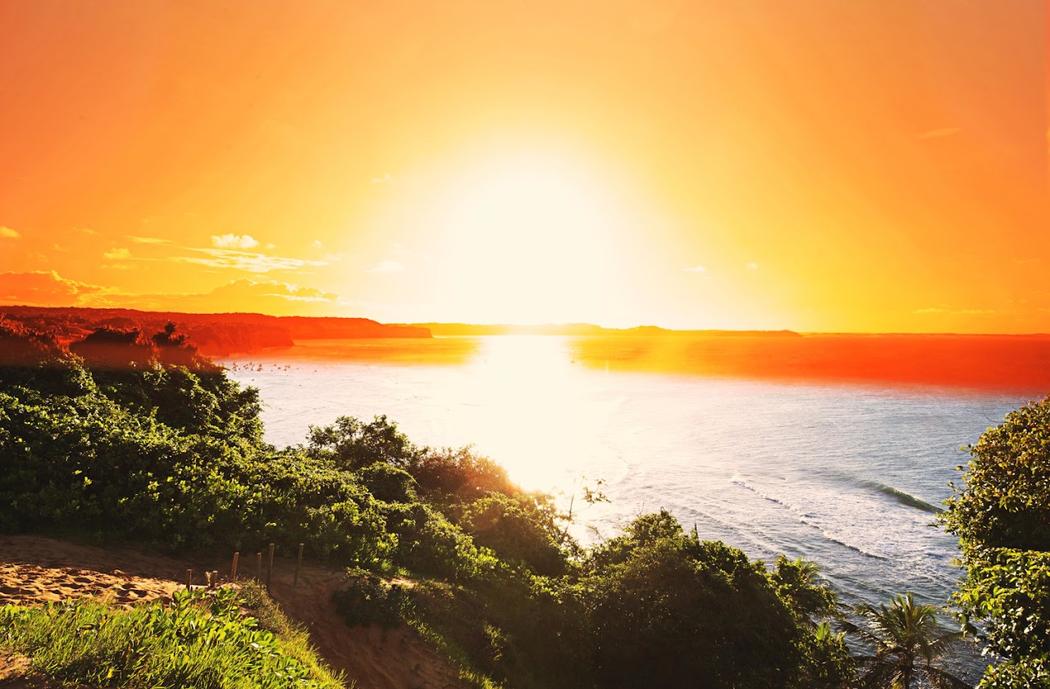 André Nature | Colorful Experiences
Your background is in International Relations. How did studying cultures, history, politics, and society influence the way you see photography today?
My background in international relations was the beginning of everything. First of all it has broadened my knowledge in several fields, than it connected the stuff of different fields, and then it turned on my ability for critical thinking.
I’ve met some authors I had studied in international relations years later, when I was reading photography theory, so things intersect a bit. But at the time I was studying international relations and in the beginning of my study and practice of photography, I understood photography mostly in a documental way, my photography took some more years to develop into art.
My first photo series, which is still a work in progress, Belvedere XXI, is a documental series in black and white, about the radical transformation of a neighborhood in Belo Horizonte, Brazil, from a partially empty natural space into a very developed area, becoming the richest neighbourhood in Belo Horizonte. When I began it I was using Henri Lefebvre’s The Production of Space for my international relations monograph.
Last time I’ve been there, in 2024, I’ve noticed there are dozens of luxury milionaries’s cars over one of it’s main streets every weekend, I’ve photographed several of them. I had never seen this kind of thing in Belo Horizonte before.
You mentioned that you eventually had to choose between music and photography. What made photography become your main creative language?
I didn’t feel that pull for a music career as much as for photography. Besides I’ve been interested in travelling, and travelling and photo is a best match for me. Musicians travel very fast, from one place to another. I travel slowly, on my own pace.
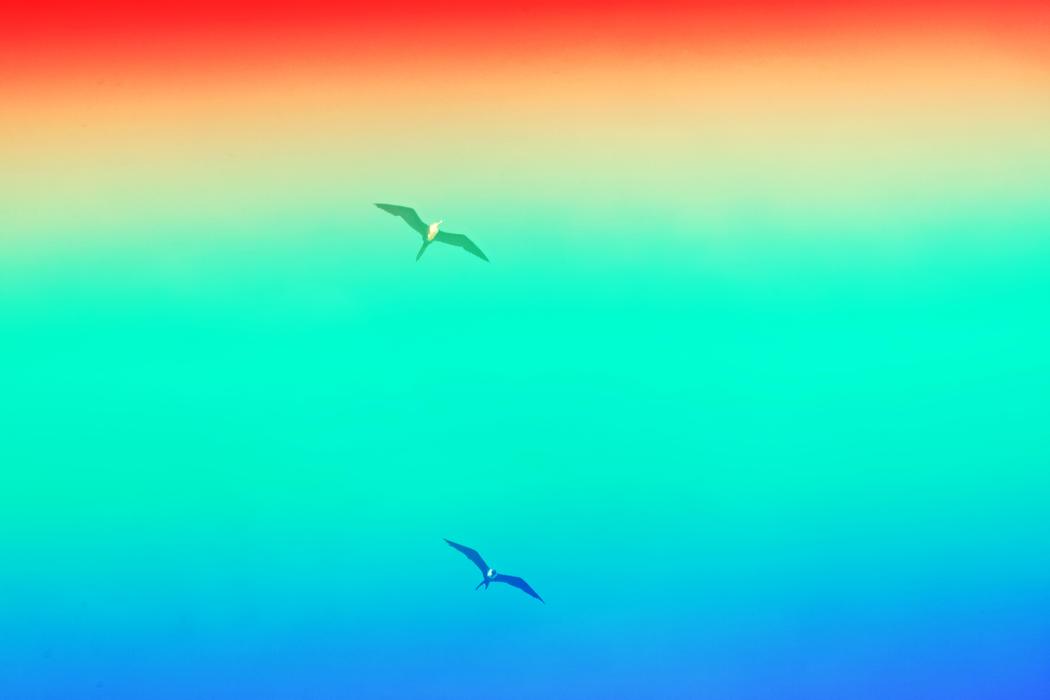 André Nature | Color Experiences Birds Garopaba | 2026
Your practice includes nature, music, travel, surf, and fine art photography. What connects these different directions in your work?
Nature, music, surf and travel are my main themes. I just work around them, and use my creativity and art the best possible way for each one, and it’s a different thing for each one, of course.
My fine art work (fine art photography in portuguese translates to “fotografia autoral”, which means author photography) is produced in nature to a great extent, but I do not limit myself to this: as long as it is appealing to my creativity and to my sense that as a photographer I am shooting something meaningful, it’s enough.
For example, I’ve spent the carnival of 2024 in Salvador, Bahia, and I figured I had a great opportunity to shoot this popular celebration in one of the best places in the world, it is culture at it’s best, so I carried my camera to Pelourinho and shot some percussion and folklore groups and the people dressed up, and it was great. As long as it is appealing to my creativity and to my sense that as a photographer I am shooting something meaningful, it will do.
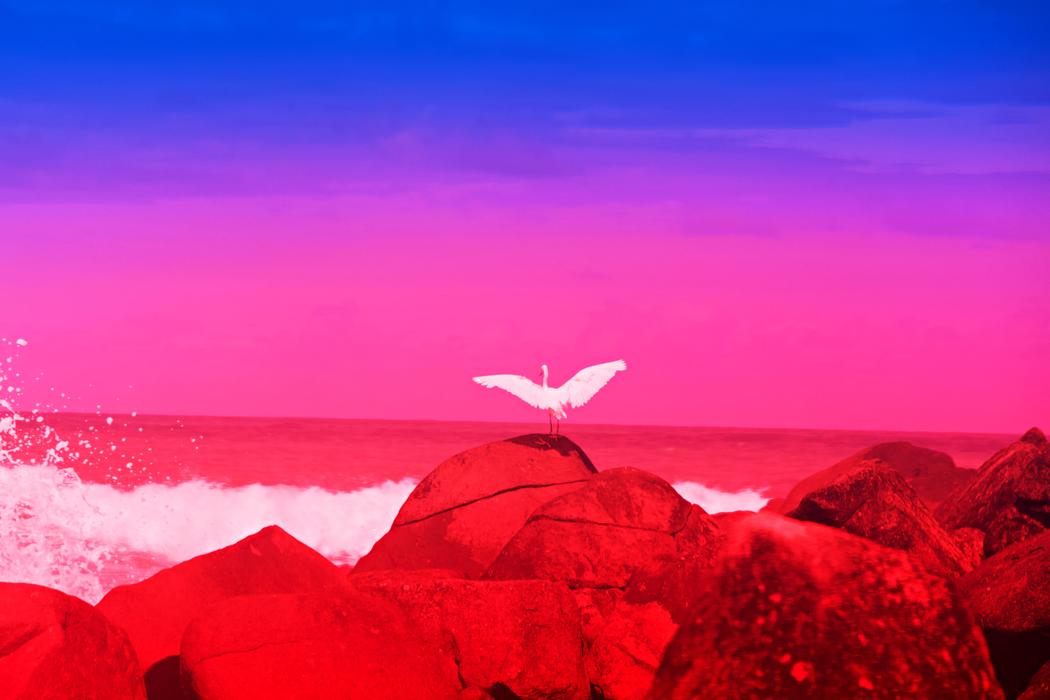 André Nature | Color Experiences Bird Garopaba | 2026
In some of your recent works, color plays a strong expressive role and seems to transform the image into something almost dreamlike or spiritual. How do you approach color as an emotional or symbolic tool?
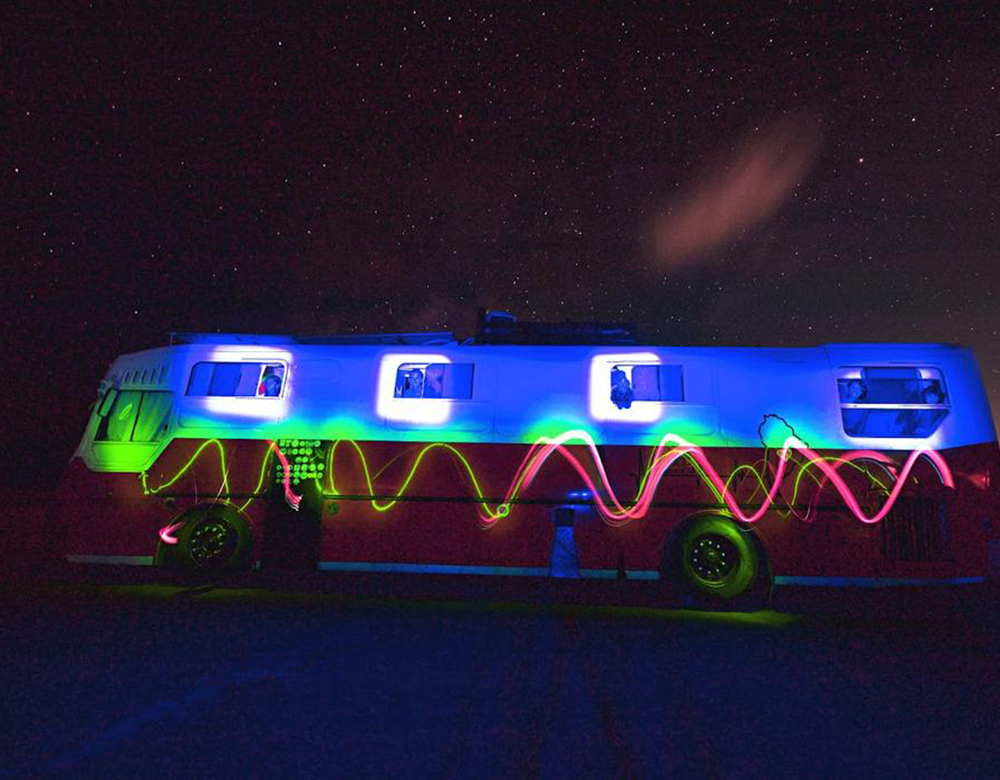
I started focusing more on the development of works using colors in a creative way recently, and I’ve produced three series of work of this kind so far: Salvador Bahia Dressed in Reds, Colorful Experiences, and some Light Painting works.
Color can be approached in several different ways, there are many possibilities to be explored when working with colors.
If you photograph something in it’s natural colors it’s as if it’s telling you something, and if you use colors creatively on your photograph it modifies what it’s telling you, so color changes the language photography speaks.
Colors can be used as a symbolic tool, so when somebody looks at Salvador Bahia Dressed in Reds and all the photos are pretty much reds, with an exception of a small part of it in each picture, that maintains natural colors, many people will relate it symbolically to the meanings of red. It can be interpreted this way, but it was not what I meant. To me color is mostly sensory material, so when you write that in my works “color often transforms the landscape into something almost dreamlike or spiritual”, I think that’s a good description of what I’m doing.
I started producing light painting photography last year, most of it in natural landscapes, and some of it related to traveling. During the second semester of 2026 I’ll be producing a lot more on the landscapes of the northeast region of Brazil. I’ll be posting on Instagram.
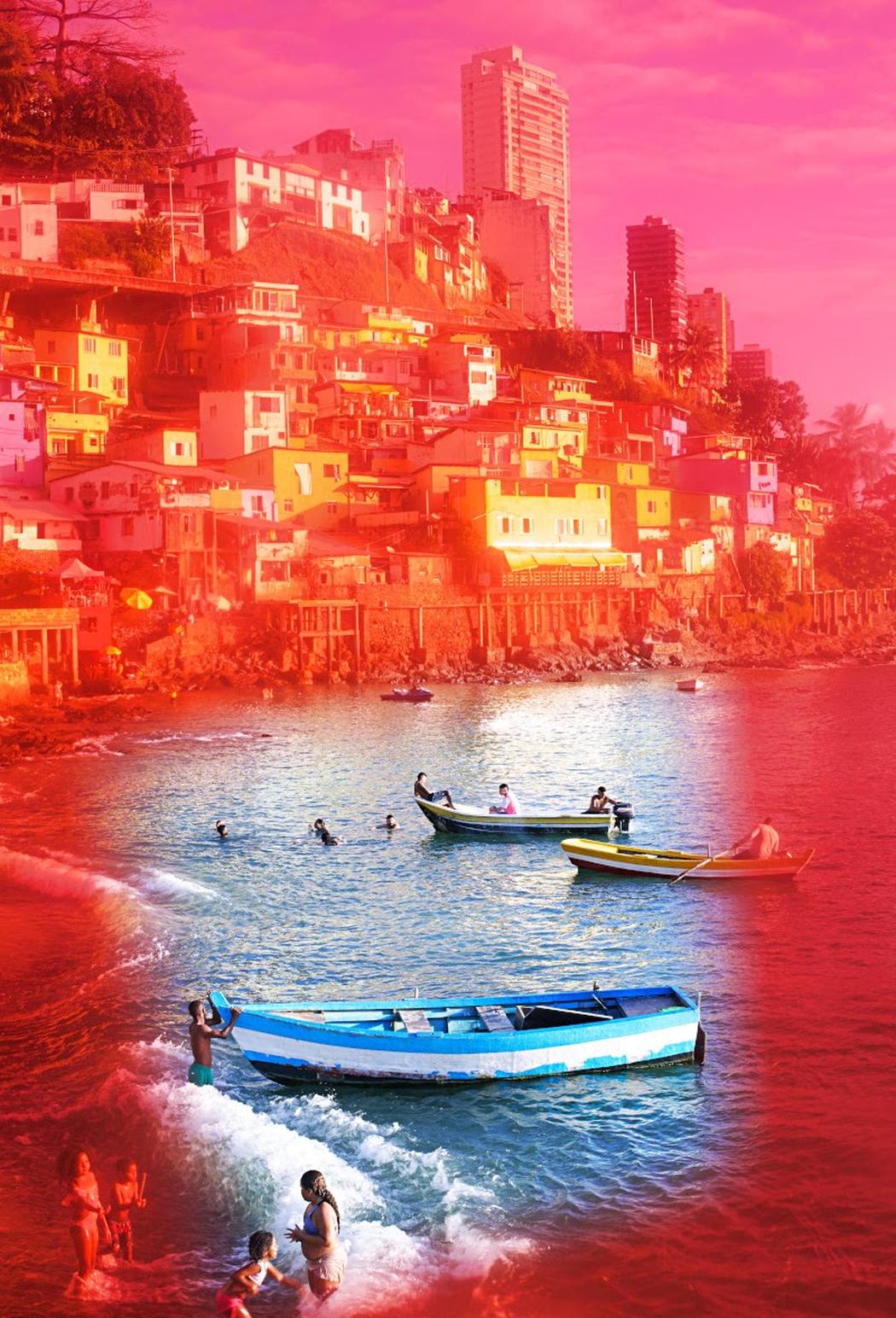 André Nature | Salvador Bahia Re Dressed In Reds
Your surf photographs carry a strong sense of adventure and positive energy. What attracts you most to surfing as a visual subject?
Surfing is nature, surfing is energy, surfing is challenge, surfing is traveling, and more. I’m not really interested in surfing as a competition, but as a practice and as a culture relating to nature and lifestyle.
I like to capture surf’s visuality, the moments of action, and whatever I can imprint about this sport and it’s energy on my photos. But what I like the most in surf photography is to be in action in the sea, using a waterhouse.
Surf photography is very challenging. I was born and lived most of my life in Minas Gerais, a state that’s got no beaches. So when I got into surf photography I already had a pretty well developed fine art and music photography work, surfing photos was a very new thing. First of all I was very afraid of the sea, and tried to be as careful as I could, so I’ve built my confidence gradually and I’m still building it.
First I bought an Outex plastic waterhouse, cause some surf and water photographers I admire are Outex’s ambassadors, but soon water got in it and I lost a Canon 5D MarkII camera and a 24-70 2.8 lens. I had no insurance at the time.
I’ve waited a while to gather more experience and decided to invest in a real waterhouse, so I bought the latest and best version of Pedra do Mar, the main waterhouse sold and used in Brazil, it costs about US$1000.
I had a terrible experience with it, and soon lost a brand new Canon EOS 6D Mark II camera and a 50mm 1.4 lens. I had no insurance because the marketing and research made me consider it pretty safe.
I’ve been photographing outside water since them and missing the best times I intend to have. From now on I’ll be using insurance. And I need a sponsor to get me an Aquatech waterhouse… Anyone there?
The investment in surf photography is very high, the action is risky, and the return is too low. I sell my photos to surfers through a surf photos website, I’m often disappointed with the lack of financial return and avoid working. This market needs serious adjustments.
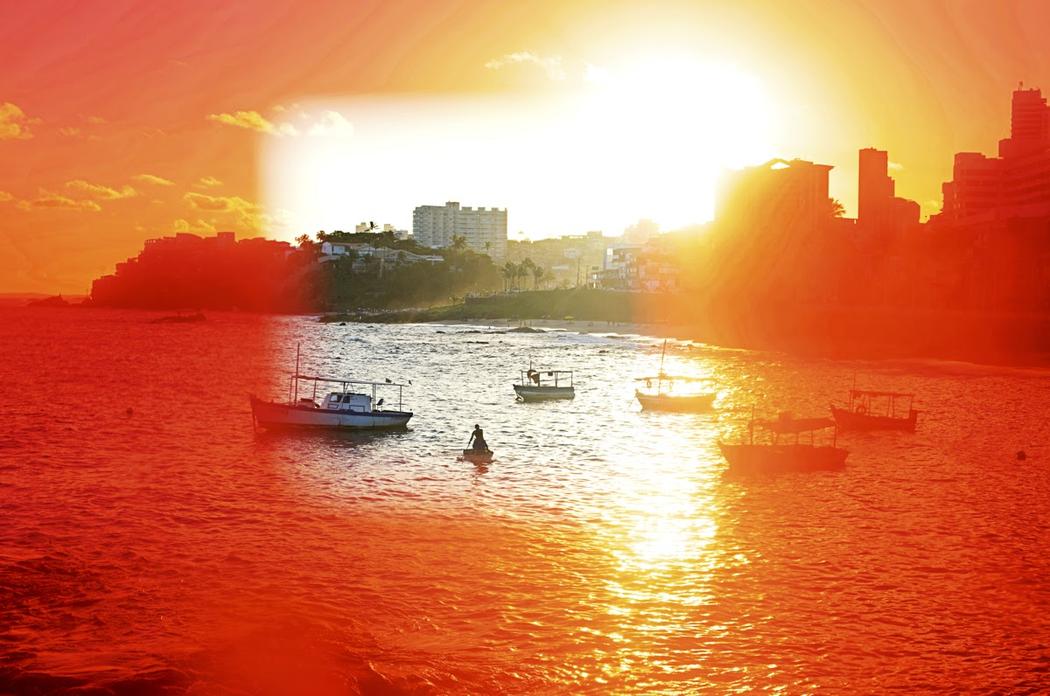 André Nature | Salvador Bahia Re Dressed In Reds
How does photographing the sea differ from photographing concerts, where the energy comes from people, music, and performance?
Music is a totally different thing. Concerts are about artistic performance and expression.
I’m truly into music, I’ve collected vinyls and CDs, listened to a lot of music, and been to several concerts just as a spectator and attentive listener.
My music photography work is a curated work, that is, I select the musicians I am going to photograph according to my appreciation of their music, and to some extent their relevance in the music scene and history.
So it’s about my relation with the musician too, the way I’m into his/her work and his/her performance. Their performance, movements, expressions, stimulates my creations. I also like to use the stage lights creatively, and this is another element that’s not present in sea and surf photos.
Besides when I shoot surf I shoot common people, and when I shoot music I shoot accomplished musicians.
So far I’ve build a collection of about 300 great musicians in international jazz, brazilian instrumental music, brazilian singers, and a little bit of reggae, blues, and others. Some of the musicians I’ve shot are Wayne Shorter, Ron Carter, Mike Stern, Ahmad Jamal, Stanley Clarke, Stanley Jordan, Richard Bona, Joss Stone, and brazilians Hermeto Pascoal, Naná Vasconcelos, João Donato, Lobão, Tom Zé, Milton Nascimento, Pepeu Gomes.
When viewers encounter your photographs, what kind of emotional or sensory experience would you like them to have?
I would just like them to get into it, for real. How they’re gonna engage to the experience doesn’t matter to me, as long as they do. It could be emotionally, sensory, intelectually, creatively.
And it’s a different thing for each kind of work.
Music, for example, is emotional in it’s nature. Maybe someone is really into music and admires the musicians I’ve photographed and will be emotionally engaged with my work. Or maybe someone will see my complete music photo collection and be emotionally involved because it’s as if it’s a chapter on the music scene and history, and find it meaningful and beautiful.
The spectators will get into my work Carta de Voo (Flight Chart) for example once they realize the pole, the airplane and the spiritual temple are the same thing. That could be a sensory and spiritual experience.
In Enigmaticweb the involvment will probably happen once the spectators realize there’s a visual plot going on, and read the series this way. But the individual photos of this series could speak by themselves sensorially.
In Observing Observers of Sunset there’s a sensory experience, but it’s also about understanding the play I’ve created in order to make that work. That’s why there’s a text on the bottom of the page.
In fact I’ve made bilingual texts english and portuguese for each work on my website www.andrenature.com.
Leave a Reply
You must be logged in to post a comment.