
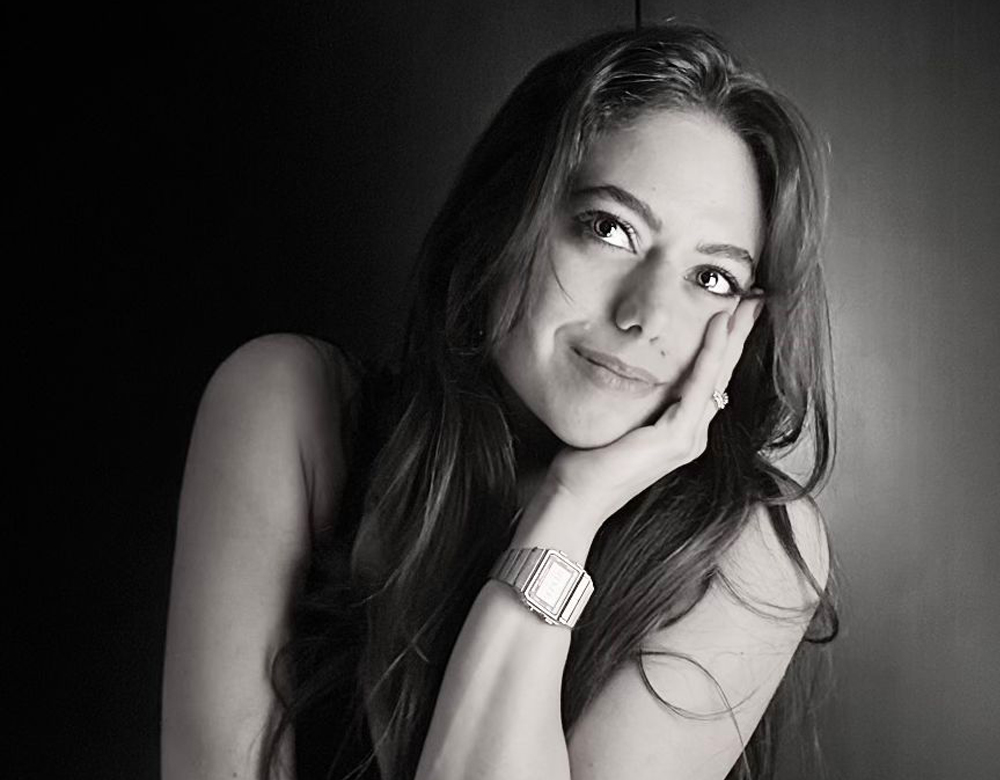
Amanda Atallah
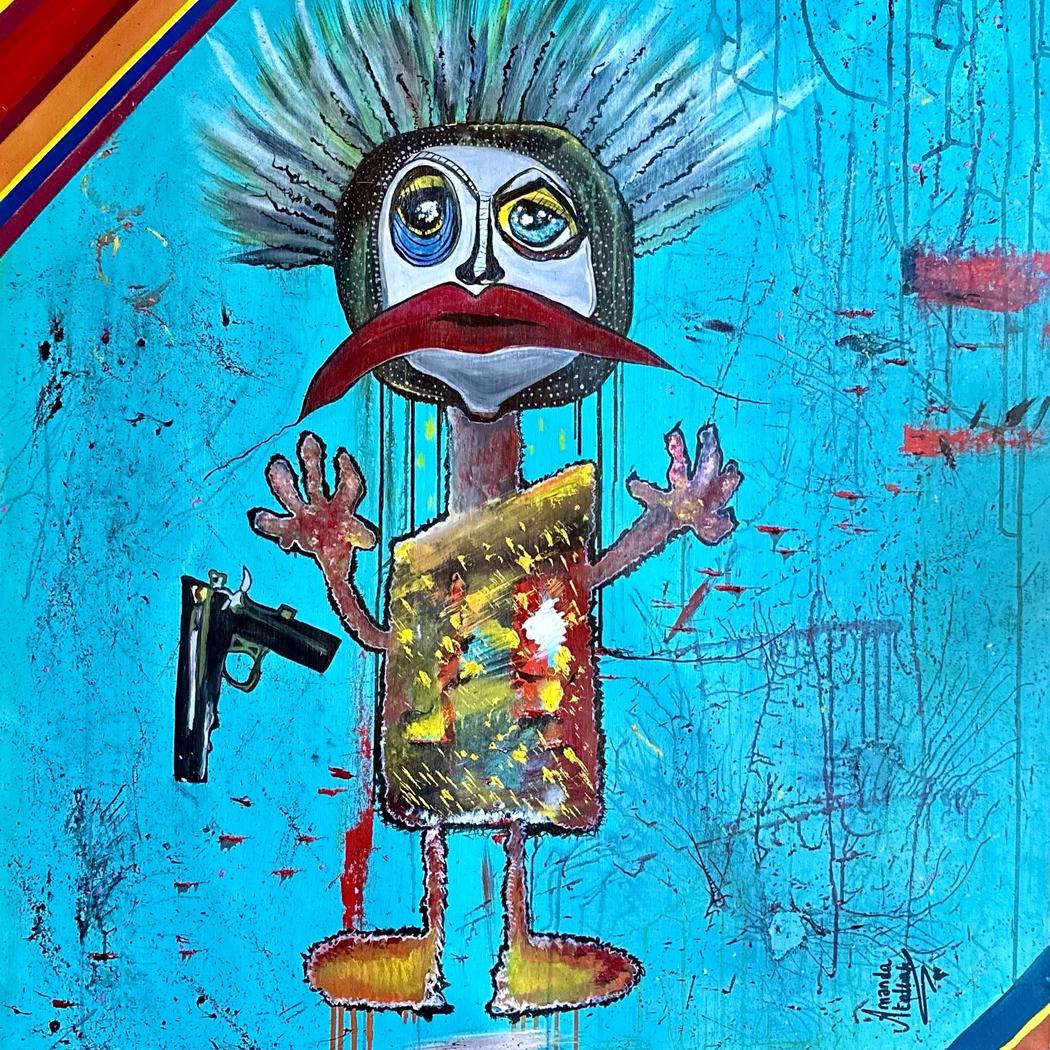 Amanda Atallah | Le Fou
Your artistic name, @AlmondVanGone, feels playful and memorable. What story or idea stands behind this name?
My name is Amanda, and in French, Amande means almond. I’ve always loved that connection, which is why my personal profile has long been associated with “The Almond.”
When I decided to create a separate space dedicated to my art, I wanted a name that combined these identities into one. I wanted something that felt personal, creative, and true to who I am. That’s how @AlmondVanGone was born, a playful variation that merges Amanda, amande, and almond into a world of its own.
The name represents the artistic side of me: the place where my paintings, thoughts, emotions, and imagination come together. If someone wants to dig a little deeper and get to know me through my work, they will probably find a part of that story inside AlmondVanGone.
Your paintings often feature expressive, symbolic characters. Are these figures fictional, autobiographical, or emotional reflections of human experience?
People, emotions, and lived experiences inspire my work the most. I am fascinated by what people carry internally like fear, survival, love, memory, vulnerability, and emotional tension.
My figures are rarely portraits of specific individuals. Instead, they become emotional reflections of human experience. They can be me, they can be you, or they can be anyone willing to look honestly at themselves. Through symbolic forms and colors, I translate invisible emotional states into something visible.
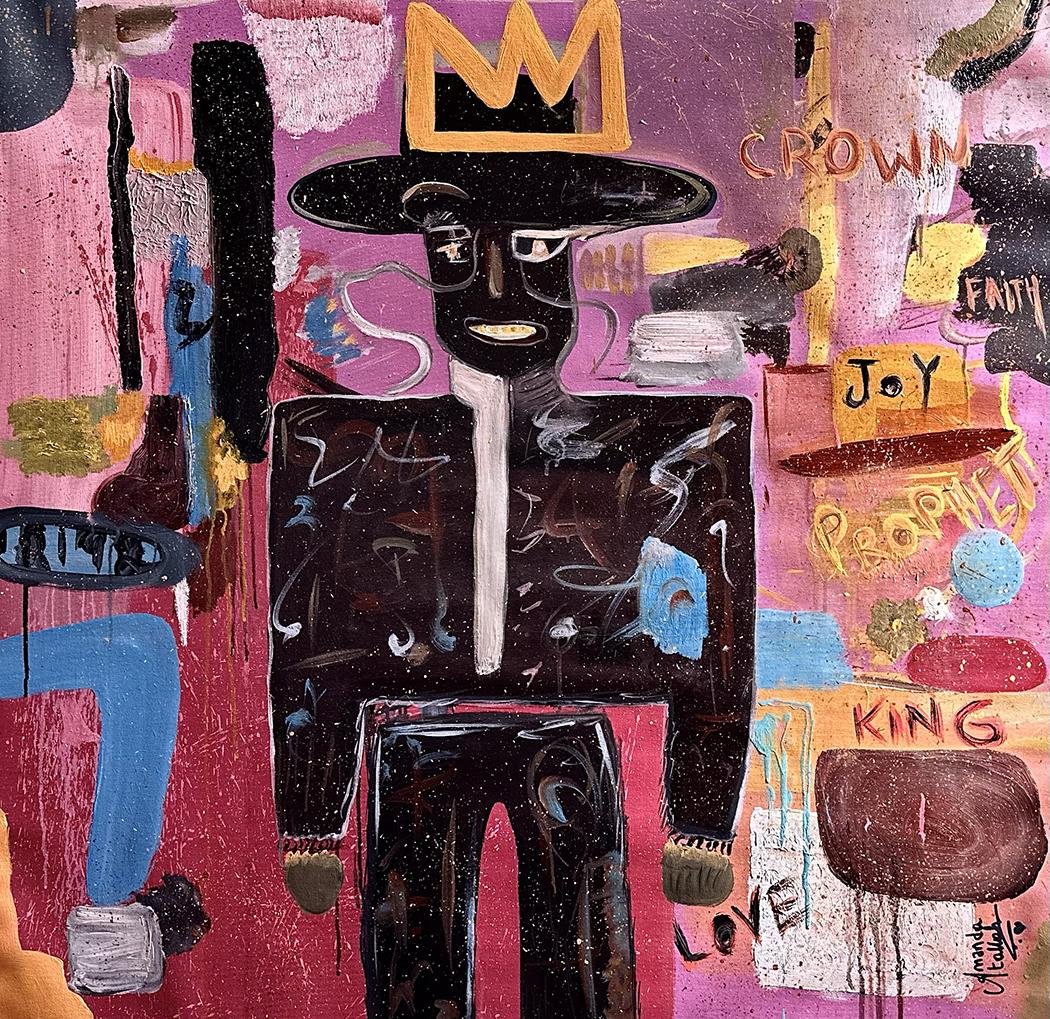 Amanda Atallah | Love Is King
How does your Lebanese background influence your visual language, choice of colors, or emotional themes?
Living in Lebanon means emotions rarely stay in one shape. Everything coexists: beauty, chaos, tenderness, pressure, and resilience.
It changes quickly, almost like emotional weather.
That constant movement naturally enters my work.
I often transform intensity into color, and instability into form. My paintings don’t describe Lebanon directly, but they carry its rhythm, fragmented, layered, sometimes loud, sometimes silent, but always alive.
It is less about representation and more about translation.
Your work combines Neo-Expressionist energy with a futuristic atmosphere. How do you balance raw emotion with ideas of technology and artificial intelligence?
Emotion always comes first. Everything else follows.
Technology appears as a mirror more than a subject. I use robotic and artificial forms to question what remains human inside a digital future.
In Echo of Us, a 3 meters canvas; I bring together humans, nature, the sun, pyramids, and robots within the same space, creating a controlled sense of chaos between them.
Flowers represent emotion, while robots reflect a constructed, digital reality almost like a dream shaped by us. We have always lived alongside these elements, and we continue to do so in different forms.
Machines respond to how we interact with them. We build them, we focus our attention on them, and they evolve through that engagement.
When they are neglected, they lose their presence in our daily life, like anything that depends on care and use.
The mechanical flowers act as a bridge between these worlds, grounding the artificial in the human. They suggest that machines are not separate from us, but extensions and reflections of our presence.
In this space, what we see is not just technology but a reassembled image of ourselves.
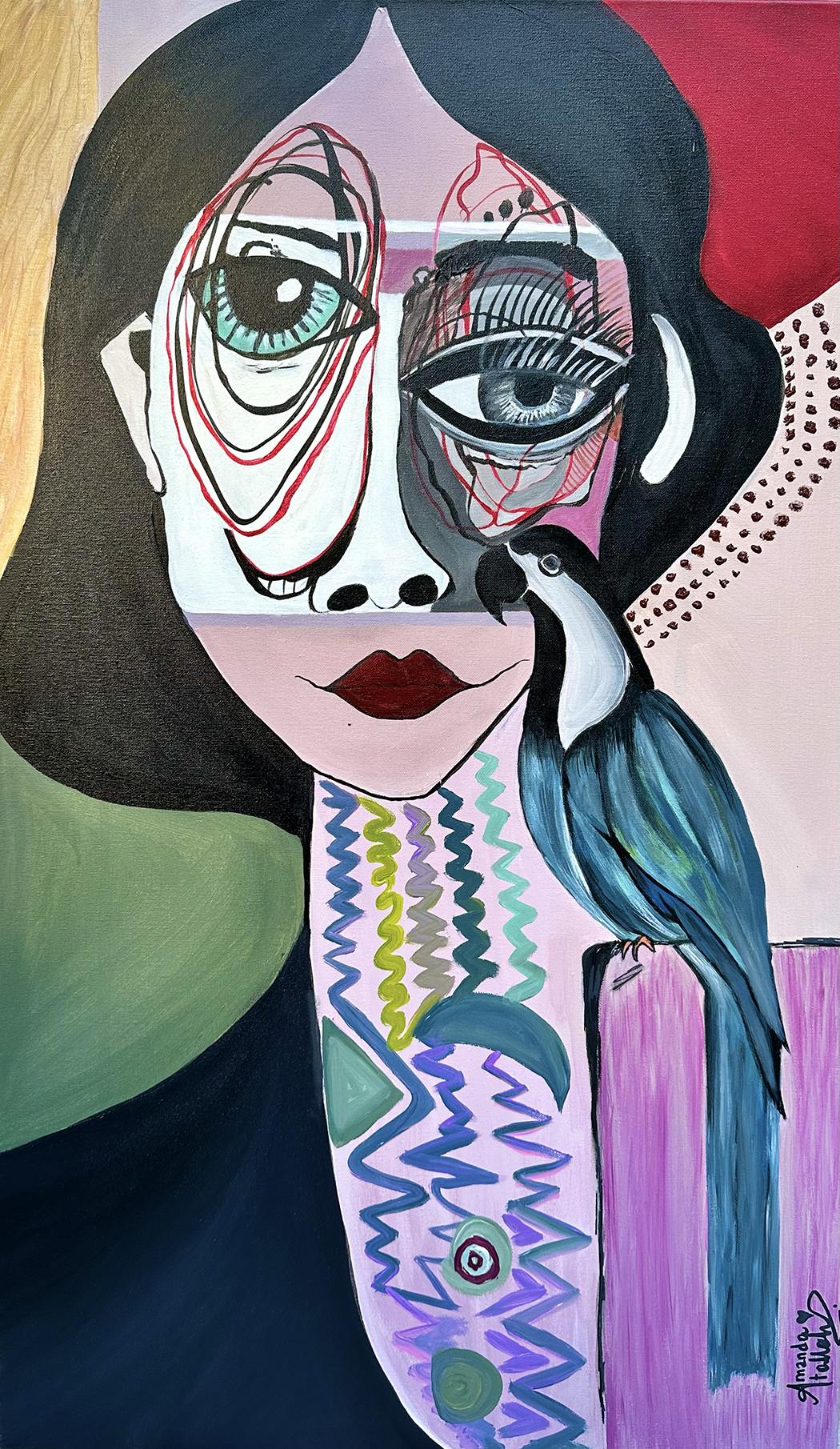 Amanda Atallah | Bird Of Paradise
Many of your compositions feel cinematic, almost like scenes from an inner film. How has filmmaking shaped the way you build visual narratives?
Filmmaking taught me how to think in sequences, emotions, and visual storytelling. Even when I paint a single image, I often imagine that there is a story before and after that moment.
Many of my paintings feel like frozen scenes from an unseen film. I think about atmosphere, emotional tension, symbolism, and character presence in much the same way a filmmaker thinks about a frame. The canvas becomes a stage where emotions perform.
In works such as these, eyes appear as a strong recurring element. What role does the gaze play in your paintings?
The gaze is important in my work because it brings the painting to life. But sometimes I want to ask viewers, in a playful way: people always notice the eyes first. The mouth is probably wondering what it did wrong.
Each gaze carries a different emotional state depending on the painting. Sometimes the eyes express love, exhaustion, curiosity, fear, hope, or resilience. I believe the eyes reflect what exists beneath the surface.
Often, viewers feel as if the painting is looking back at them. That silent exchange creates a conversation that does not require language.
It is only one part of the story. My work is bold, raw, and beautiful because life itself is often all three at the same time.
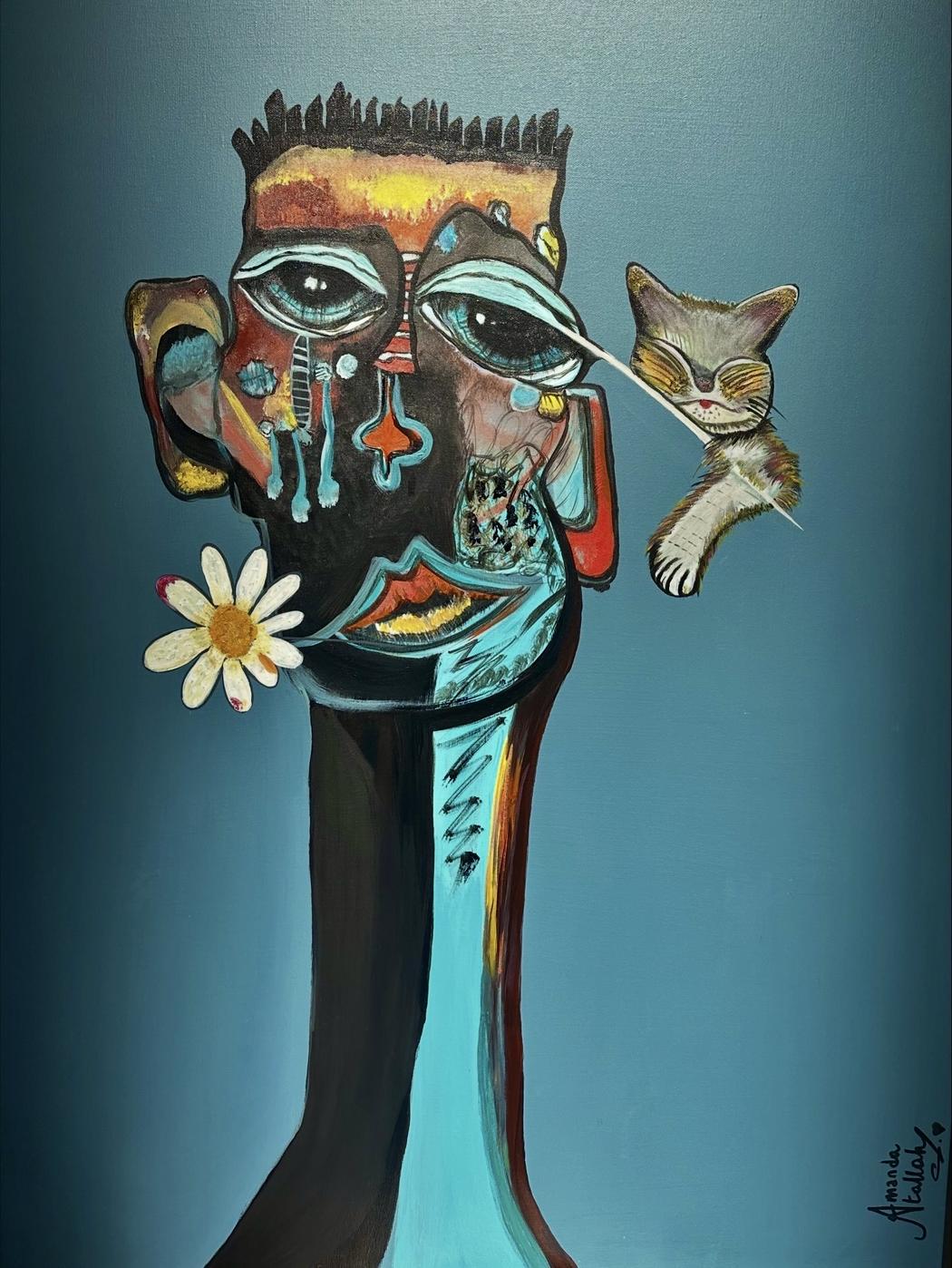 Amanda Atallah | Basic Instinct
If your paintings could speak directly to the viewer, what kind of message or feeling would you want them to leave behind?
I don’t want a single emotion to remain.
People often reduce what they feel into only two categories, sad or happy. But most emotional life exists far beyond that language.
My paintings are not about sadness. They are about emotional range, intensity, and being fully alive.
They hold contradictions instead of resolving them.
As artificial intelligence becomes more present in our lives, I believe we are being reminded to stay human to protect emotional depth, imagination, and complexity.
Maybe the role of art now is not to explain everything, but to keep emotional space open.
To remember that feeling is still a form of intelligence.
Leave a Reply
You must be logged in to post a comment.