
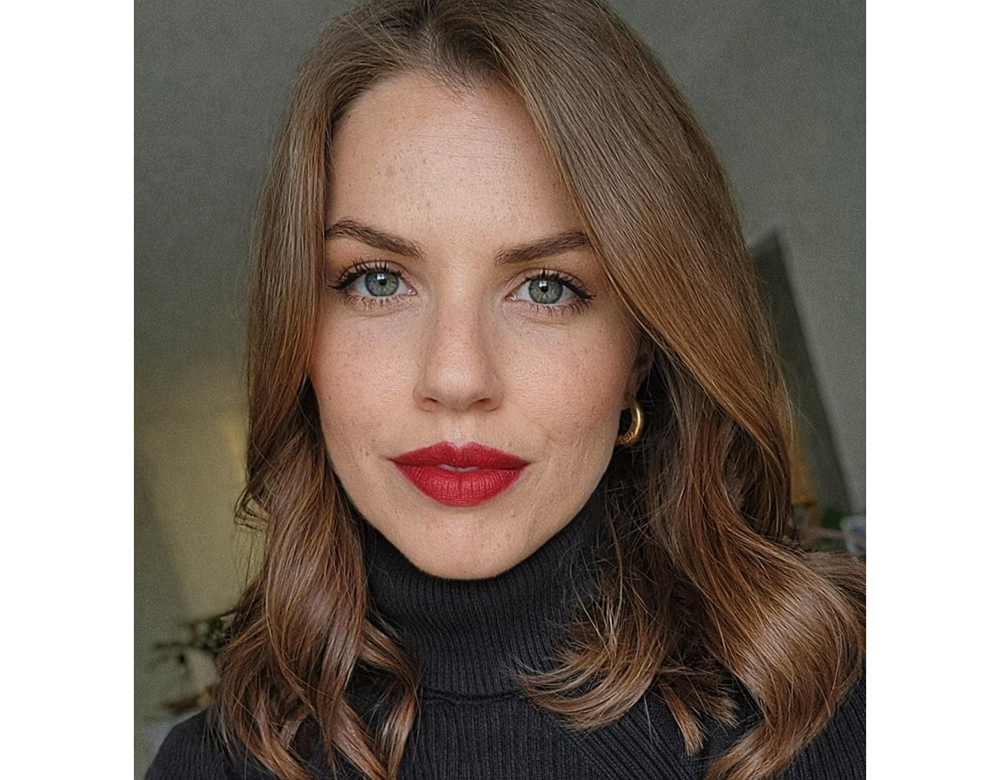
Kasia Dudura
Your practice moves between painting and photography. How do these two mediums influence each other in your work?
Painting and photography are closely connected in the way I observe the world. Photography has taught me to notice fleeting light, atmosphere and quiet emotional moments, while painting allows me to reinterpret those moments more intuitively through colour and texture. Both mediums are ultimately about mood and emotional presence for me. My photography works ‘Innsbruck Old Town’ and ‘Autumn Garden’ reflect this same interest in atmosphere and connection to place.
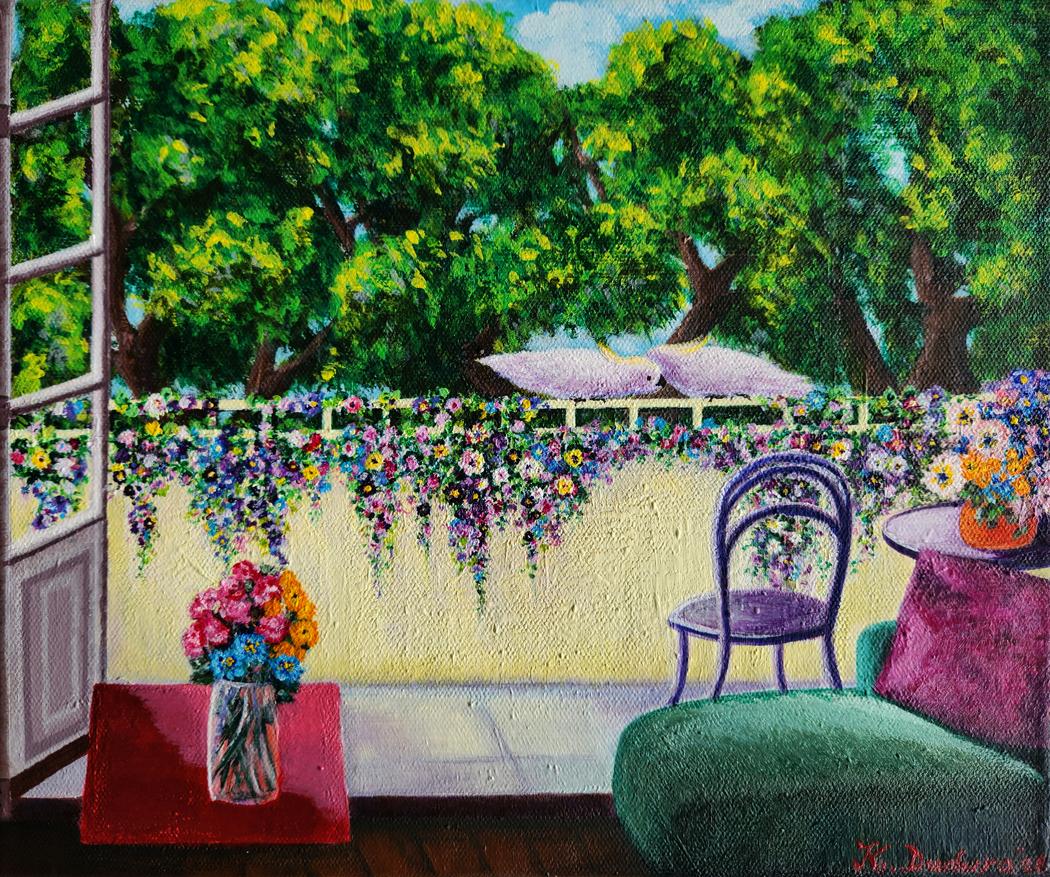 Kasia Dudura | Balcony Garden
You often focus on atmosphere and fleeting moments. What draws you to these subtle, ephemeral qualities?
I’m drawn to the emotional feeling certain moments can hold – a particular light or the atmosphere of a place at a certain time of day. I’m interested in preserving not only what something looked like, but what it felt like emotionally. I think this also comes from childhood memories of becoming immersed in storytelling and gardens. One of my earliest inspirations was Shirley Barber. I grew up getting lost in her whimsical books filled with enchanted gardens and hidden worlds, and that sense of wonder still exists in my work today. I’m also inspired by my travels throughout Europe. Walking through old courtyards, laneways and historic gardens left a lasting impression on me, and that romantic atmosphere often appears in my paintings, particularly ‘Spring Cottage Garden’.
Can you tell us more about your return to painting and how this shift has affected your artistic voice?
I painted throughout high school but stepped away from it for many years while life became more career-focused. Returning to painting in my thirties felt emotional and instinctive, and reconnected me with a part of myself that had been dormant for a long time. Since returning, my work has become more intuitive and emotionally honest. I’m less interested in realism and more interested in atmosphere, colour and feeling. I’ve also realised I’m quite an intuitive painter. How I feel often determines whether I paint and how I paint. I’ve also undertaken some art classes, but I discovered structured timeframes and rushed environments don’t suit my process. Painting has to happen naturally and in my own time. Painting also places me into a state of flow where time disappears. I can paint for hours effortlessly without noticing time passing, and often the hardest part is knowing when to stop.
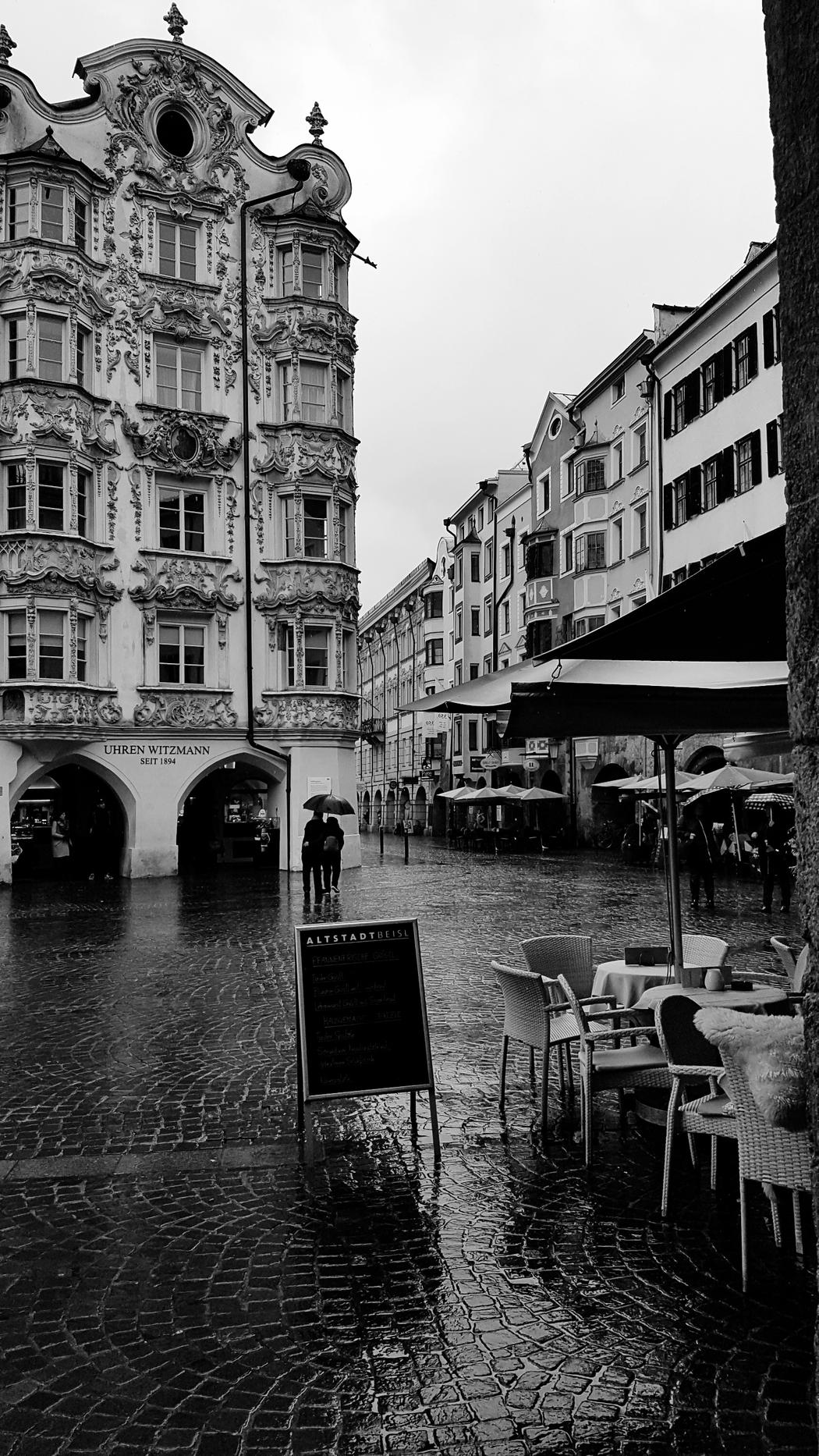 Kasia Dudura | Innsbruck Old Town
Your painting Balcony Garden feels both intimate and dreamlike. How do you balance real observation with imagination in your work?
My work often begins with observation or memory, but I allow emotion and imagination to reshape the scene. I’m less interested in documenting a place exactly as it appeared and more interested in translating the emotional experience of being there. In ‘Balcony Garden’ and ‘Spring Cottage Garden’, colour, atmosphere and softened space create a dreamlike quality that sits somewhere between memory and imagination.
You mention influences such as Matisse, Bonnard, and Vuillard. In what ways do these artists shape your approach to color and composition?
I’m inspired by the emotional and atmospheric use of colour in the work of these artists. Their paintings feel immersive and emotionally alive. They’ve influenced my interest in expressive colour, intimate spaces, decorative rhythm and allowing atmosphere to carry emotional meaning rather than relying on strict realism.
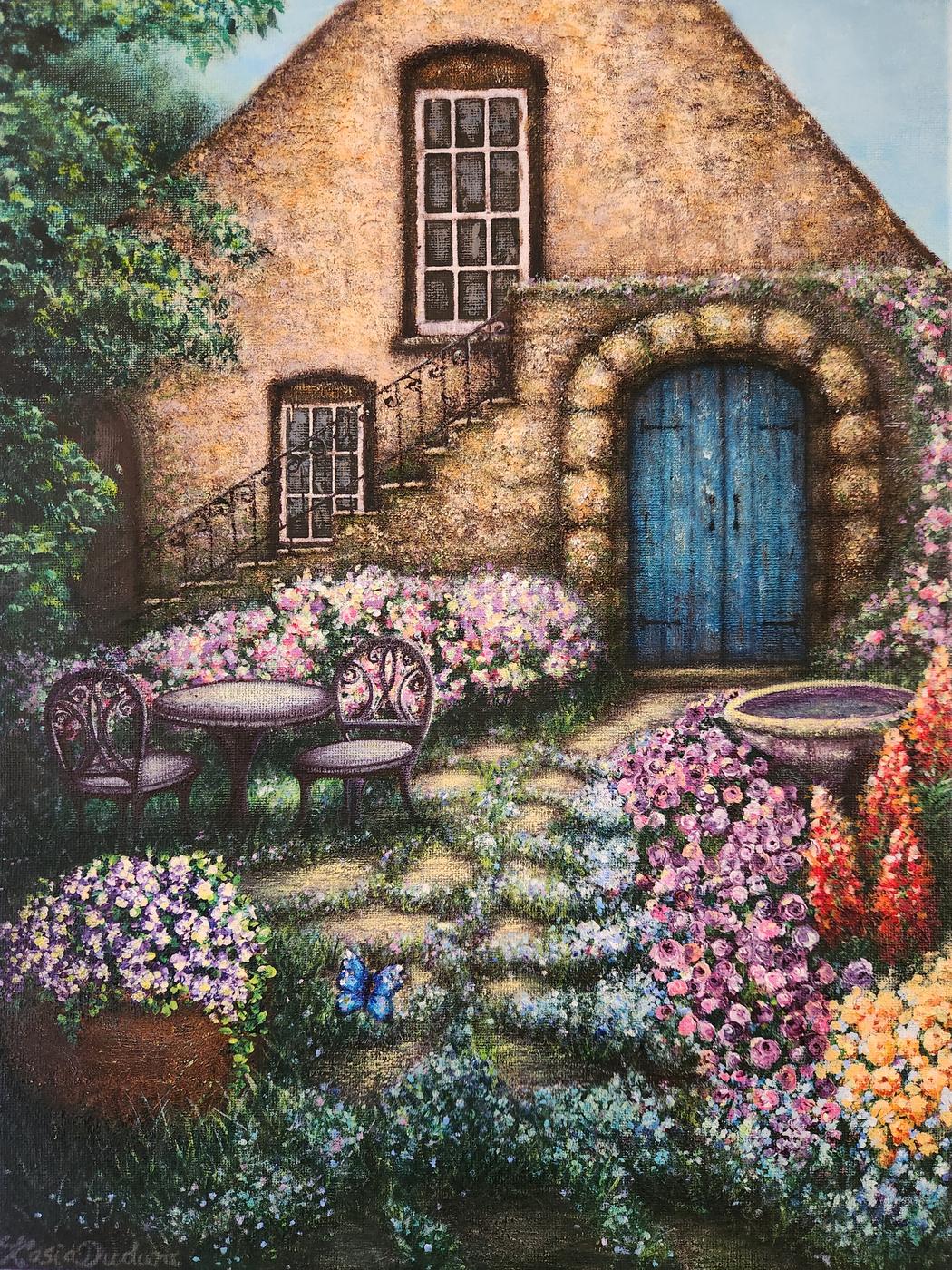 Kasia Dudura | Spring Cottage Garden
The presence of the cockatoos in Balcony Garden adds a narrative element. How important is storytelling in your work?
Storytelling is important to me, although I prefer it to remain open-ended and emotional rather than literal. I’m interested in creating paintings that feel inhabited and suggest a larger emotional world beyond the frame. In ‘Spring Cottage Garden’, storytelling and a sense of wonder appears more subtly through the winding path, hidden corners and inviting blue door, encouraging viewers to imagine themselves stepping into the scene.
Your work transforms everyday scenes into emotionally charged images. What do you hope viewers feel or take away from your art?
I hope viewers feel a sense of warmth, nostalgia and emotional connection. I’m interested in elevating ordinary moments and environments into something more atmospheric and emotionally resonant.


Leave a Reply
You must be logged in to post a comment.