
Fangfang Han
You were born in China and now work between China and London. How have these different cultural environments shaped your visual language and the stories you choose to illustrate?
Growing up in China, I was deeply influenced by traditional paper-cutting, hand-drawn animation,Chinese myth and peking opera which my parents love, all of which sparked my love for storytelling through images. Studying and working in the UK introduced me to a different visual tradition, British literature and theaters, printmaking artwork, architecture, and my fav museums which broadened my understanding of narrative and composition. Moving between these two cultures has shaped a visual language that combines the warmth and richness of Eastern storytelling with the structure and visual rhythm of Western illustration.
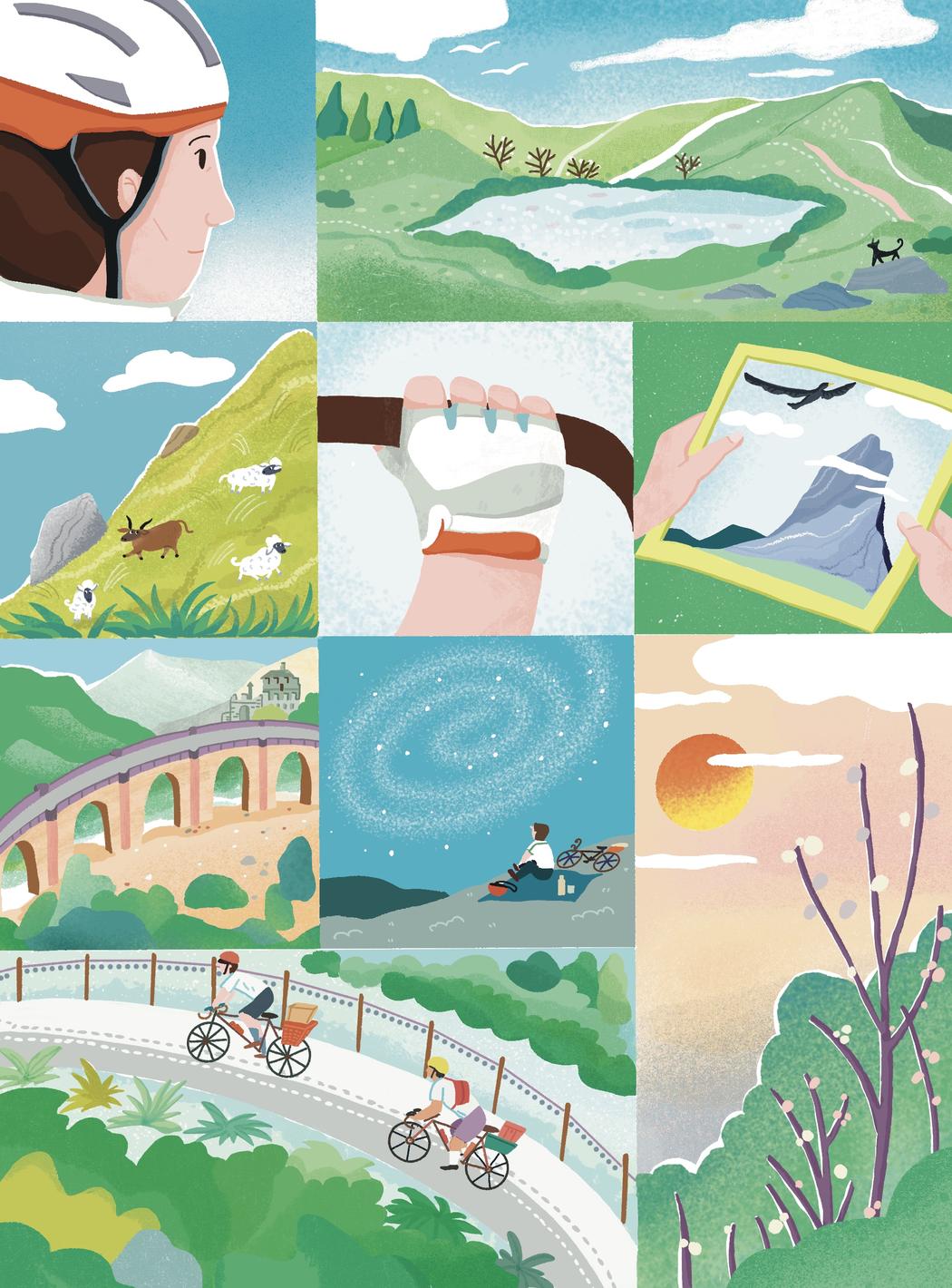 Fangfang Han | From Manchester To Highland | 2025
During your MA at Kingston School of Art, you were influenced by French comics and printmaking. Which qualities of these traditions continue to appear most strongly in your work today?
French comics taught me how to tell stories through sequences, pacing, and expressive characters and humor, while printmaking greatly influenced my use of colour, texture, and bold graphic shapes. Those two influences remain central to my work today. I still think in terms of narrative first, while using colour and texture to create atmosphere and emotion.
Your illustrations often contain many characters, architectural elements, and small narrative details. How do you organise such complex compositions while keeping them clear and visually engaging?
It comes quite naturally to me. Friends often tell me that my illustrations always have a clear visual focus, even when they’re full of details. I spend a lot of time thinking about composition at the sketch stage, carefully arranging the relationships between people, architecture, and negative space so that every element supports the story rather than competing for attention. I want viewers to know where to look first, and then gradually discover everything else.
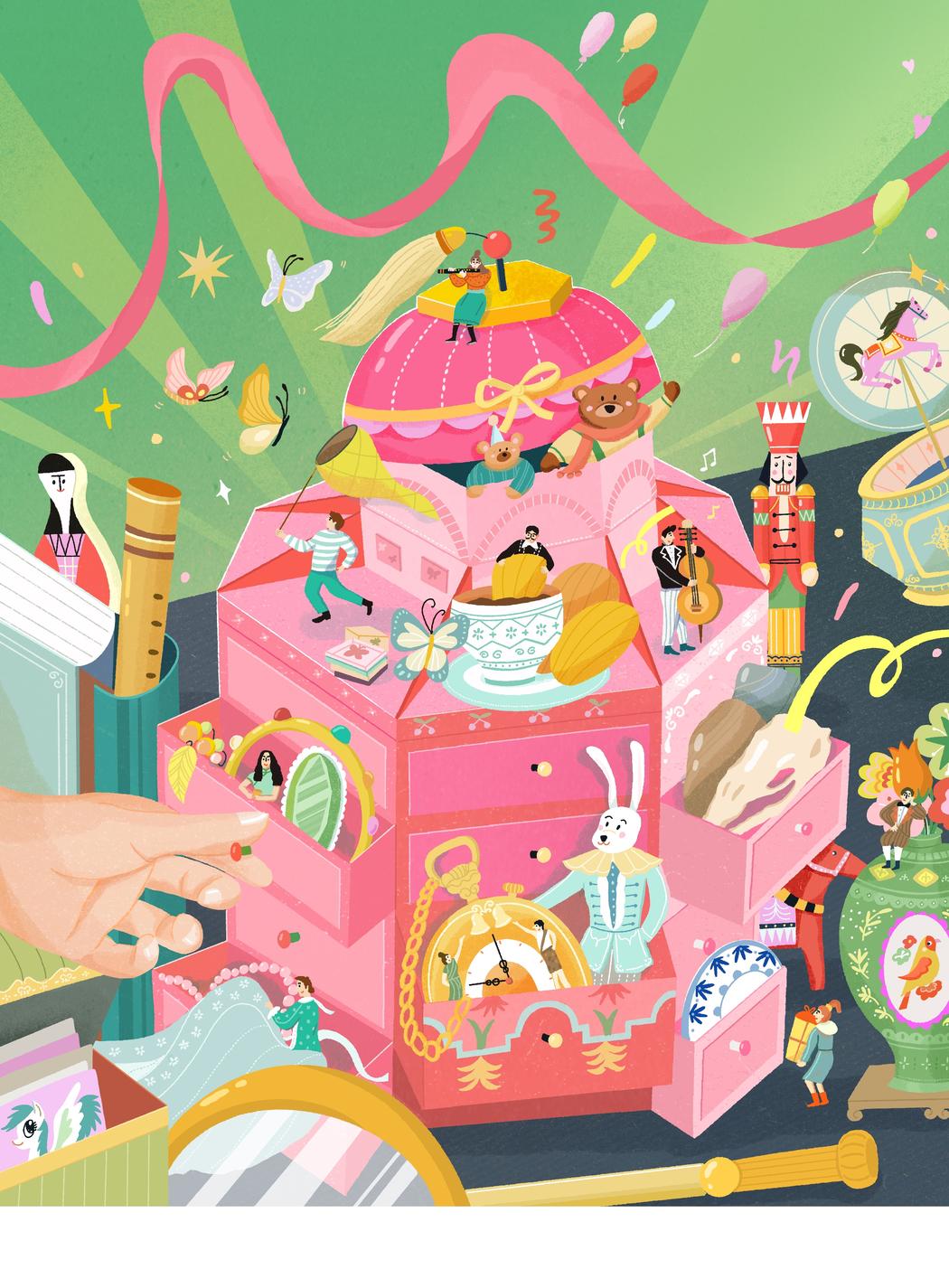 Fangfang Han | Story Of Treasure | 2025
How do you decide which recognisable landmarks and everyday details to include when representing a particular city or place?
I usually begin by asking what has the biggest influence on people’s everyday lives and what locals talk about most. Landmarks are important, but I’m equally interested in the cafés, markets, neighbourhoods, or daily rituals that make a place memorable. Those ordinary details often tell a more authentic story about a city than its famous attractions alone.
Your work invites viewers to discover small scenes and hidden details gradually. How important is this element of visual discovery to your storytelling?
It’s at the heart of my storytelling. Everyday life is full of tiny moments that are funny, touching, emotional or quietly meaningful. I’m less interested in grand, heroic narratives than in the small moments that reveal people’s personalities and relationships. Artists like Jean Jacques Sempé have had a lasting influence on me because they celebrated ordinary life with humour and humanity. I hope my illustrations encourage people to slow down, look closer, and discover something new each time they return to an image.
Colour plays a central role in creating the warmth and optimism of your illustrations. How do you develop a colour palette for each project, and how much is guided by intuition?
I’m inspired by Mid-century Modern design and its bold yet timeless colour palettes. I enjoy creating combinations that are vibrant and nostalgic without feeling overwhelming. Much of my colour selection is intuitive, I often imagine the emotional atmosphere first, then experiment with several palettes until one feels right. For client projects, I usually develop a few different options so we can choose the one that best supports the outcome.
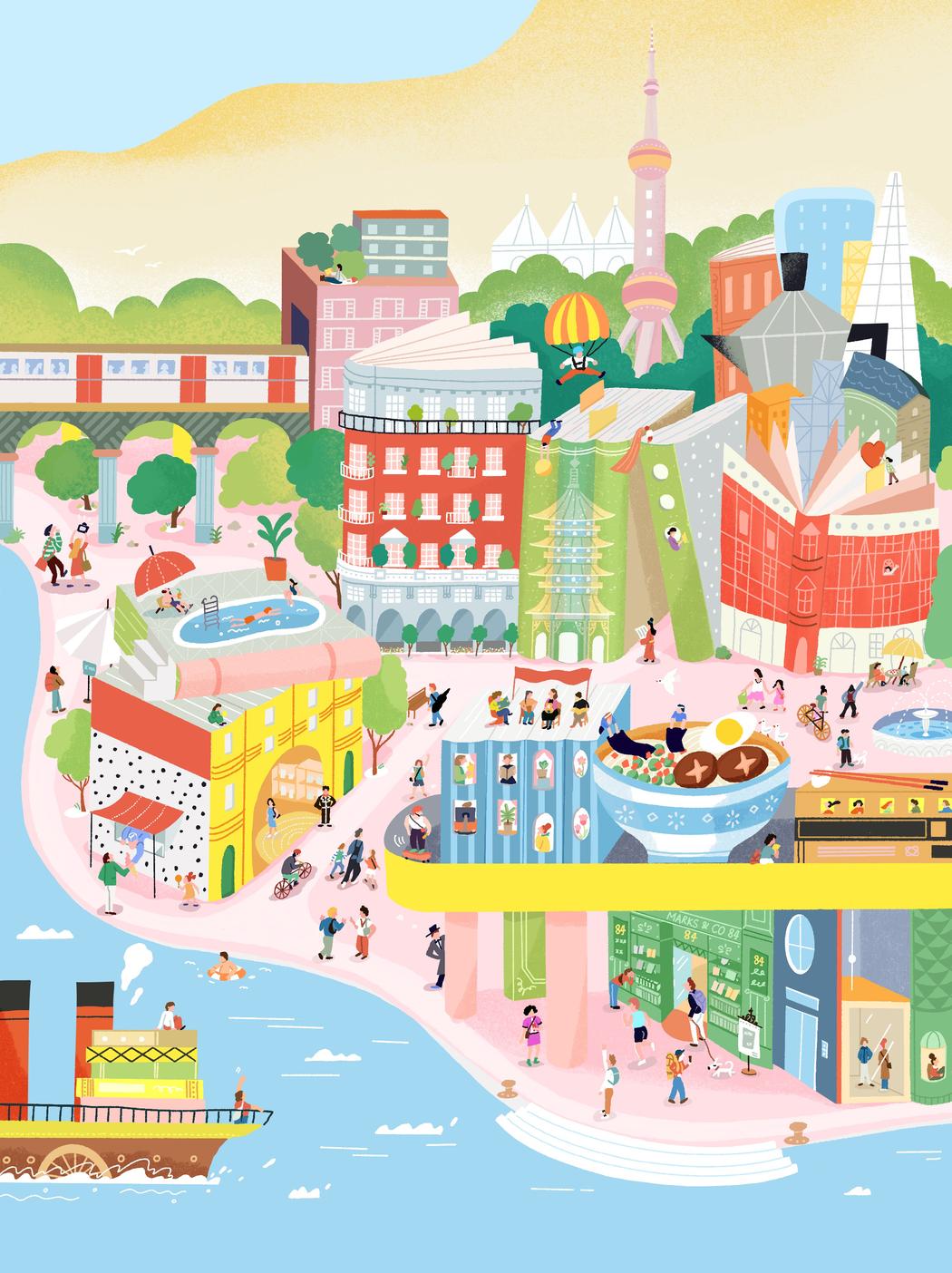 Fangfang Han | Where Reading Meets The City | 2025
You work across editorial illustration, publishing, branding, and public spaces. How does your approach change depending on the scale, audience, or context of a commission?
Editorial and publishing were the natural starting point for my career because they focus on communicating a single idea clearly and quickly where u start to get commission more easily. As I’ve worked on more branding and public space projects, I’ve realised they require a broader way of thinking and more skills. Beyond creating an individual illustration, I need to consider how the visual language functions across different applications, environments, and audiences. It has encouraged me to develop stronger design thinking alongside my illustration practice, and I see that as a natural and exciting direction for my work.