
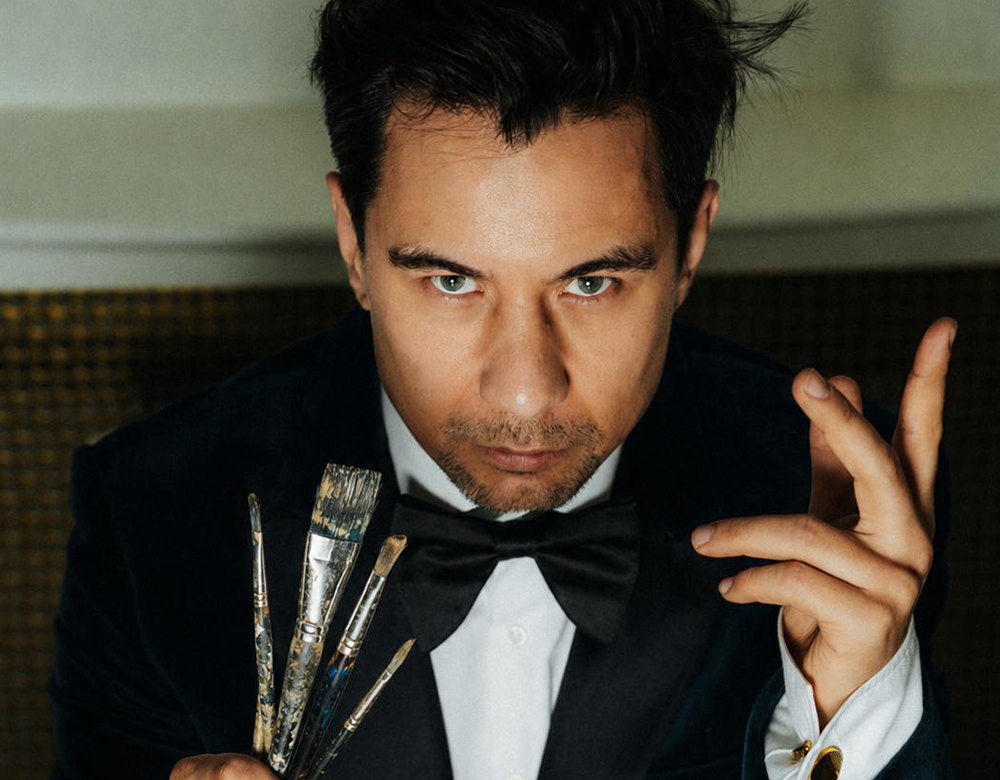
Alexey Savvin
You received your academic art education at the Surikov Moscow State Academic Art Institute. Which principles of the classical school remain important to you today, and which do you consciously move away from?
I entered the Surikov Institute as a mature student after moving to Moscow at the age of thirty. Perhaps because of that, I never saw academic training as a rigid system of rules, but rather as an opportunity to understand the language of classical painting from within.
The education was rooted in the traditions of the Moscow school: restrained colour, subtle silvery tonal relationships, rigorous compositional discipline, and a deep respect for academic structure. These principles became an important foundation of my practice, although I did not carry all of them into my own artistic language.
Today my paintings follow a very different colour logic. I deliberately moved away from the muted palette that characterised my academic training in favour of vivid, saturated colour. My attitude towards paint handling has also changed. During my studies expressive impasto was encouraged, whereas now I prefer a calmer and more restrained surface.
What has remained with me is the understanding of composition. The classical school gave me the ability to construct an image, and precisely because I know these principles, I feel free to challenge them—cropping compositions, shifting visual balance, or intentionally disrupting traditional harmony. For me, breaking the rules only becomes meaningful once you truly understand them.
I have also abandoned the academic distinction between “noble” and “ignoble” subjects. Contemporary art no longer needs such hierarchies. I am much more interested in discovering profound meaning within ordinary things, because everyday reality often carries surprisingly deep cultural and philosophical significance.
What has never changed is my respect for the craft of painting itself. The Surikov Institute gave me a profound understanding of technique and material, and that knowledge continues to underpin everything I do.
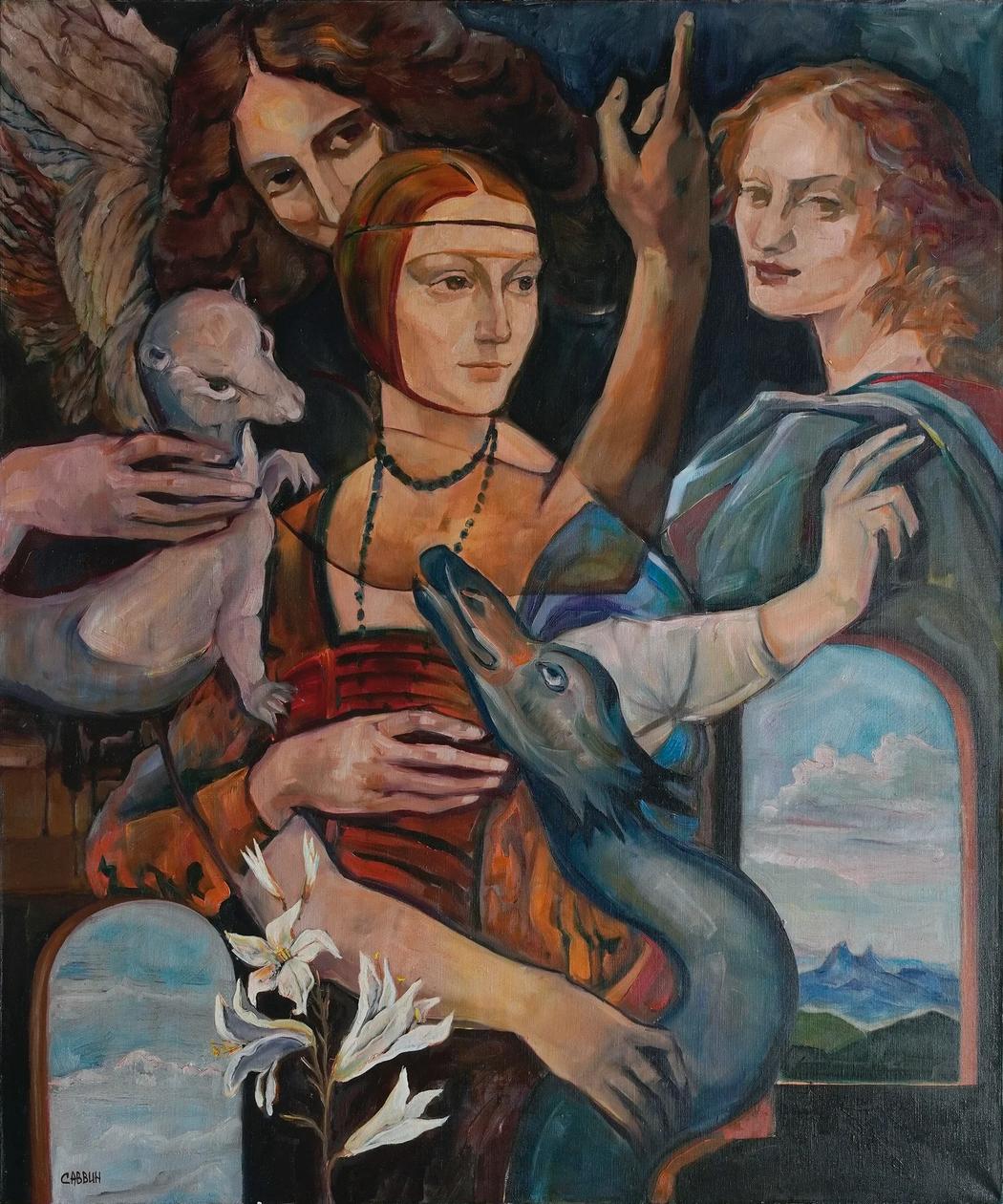 Alexey Savvin | Da Vinci | 2025
In addition to your artistic education, you hold a PhD in Philology. How has your work with language, texts, and interpretation influenced your visual thinking and the way you construct your painted compositions?
I believe that my background in philology has shaped the very subjects I explore as an artist.
For several years my life revolved around literature, language, and textual interpretation. That experience taught me to see every cultural object as a layered structure in which every visible meaning conceals another one beneath it.
For this reason, literature, biblical narratives, classical mythology, and the history of art frequently become the starting points for my paintings. I am not interested in illustrating stories. Instead, I seek to reinterpret them through a contemporary visual language.
My philological education gave me an extensive cultural framework. It allows me to work freely with symbols, to establish unexpected connections between different historical periods, and to build paintings that function almost like texts.
Perhaps that is why there are very few accidental elements in my work. Every image is intended to operate on several semantic levels simultaneously. I have always been fascinated by what I would call the “double language” of art: a painting first speaks through emotion, but gradually reveals additional layers of meaning as the viewer spends more time with it.
For me, the most interesting moment occurs when visual perception turns into interpretation, and the viewer becomes an active participant in constructing the work’s meaning.
In your works, fragments of classical paintings are combined with contemporary imagery, animals, and natural forms. How do you select your historical sources, and what happens to their original meaning when they are placed in a new context?
I do not believe it is possible—or even meaningful—to paint today exactly as artists did in the nineteenth century. Academic painting reached an extraordinary level of mastery, and simply repeating it would add very little. What interests me instead is entering into a dialogue with that tradition.
Historical paintings are not objects for imitation; they are part of our collective cultural memory. When I first visited the great Italian pinacothecas, the experience was almost overwhelming. That encounter eventually gave rise to my series Pinacoteca.
The works are neither quotations nor stylistic reconstructions. They are an attempt to visualise memory itself. When I place historical fragments into contemporary compositions, I invite them to continue their existence within a new visual and cultural context.
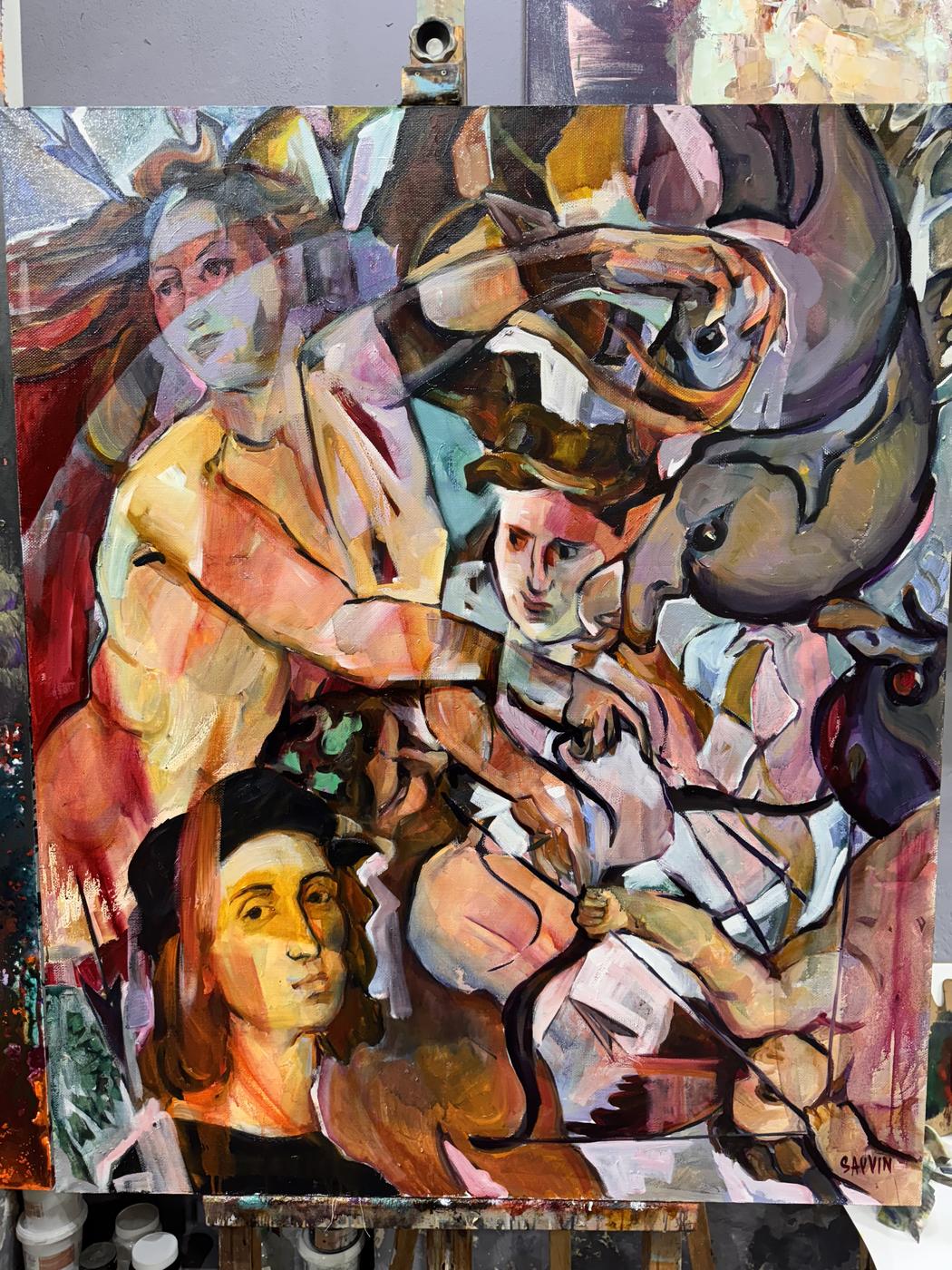 Alexey Savvin | Raphael | 2025
How does your work on a painting begin?
My paintings rarely begin with a finished sketch. Usually I have only a general direction rather than a clear image of the final work.
Painting is a way of thinking rather than executing a predetermined idea. The composition evolves through the process itself, often leading me somewhere completely unexpected.
Oil painting allows endless revision, and that freedom is essential to my practice. Each canvas becomes an act of exploration rather than the illustration of a fixed concept.
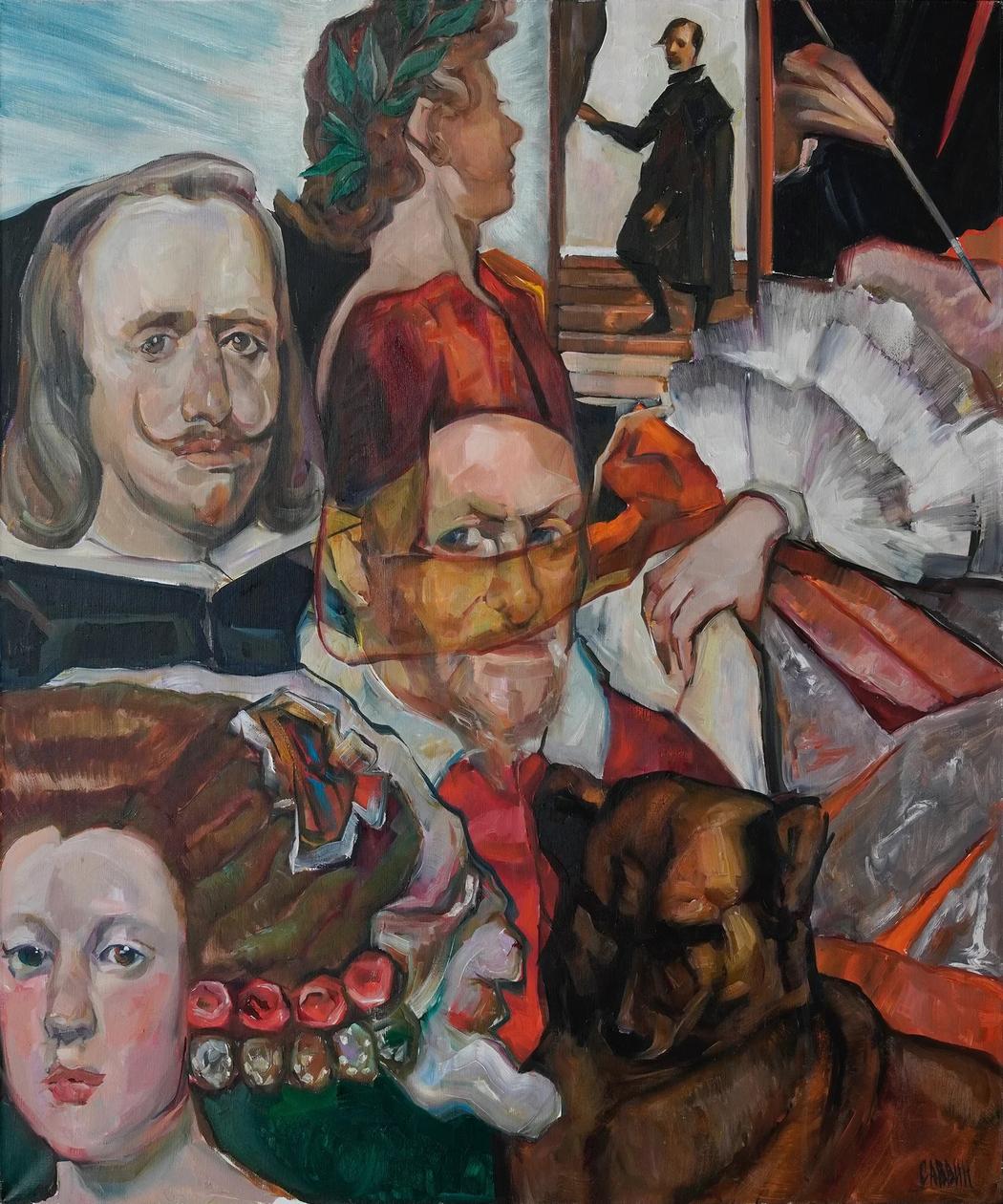 Alexey Savvin | VeláZquez | 2025
Why are you drawn to insects and biological forms?
My interest began while studying seventeenth-century Dutch painting, where insects often carried complex biblical symbolism.
I wanted to reverse that hierarchy by moving these almost invisible details to the centre of the composition.
This became the basis for my series The Tree of Knowledge, where a single insect becomes a way of speaking about memory, religion, culture, and human perception.
How important is personal biography in your art?
Personal biography is always present in art, even when an artist does not speak directly about themselves.
My work reflects not autobiography, but the biography of perception—the evolution of my understanding of culture, memory, religion, and art itself.
If an artist no longer changes, their work risks losing its vitality.
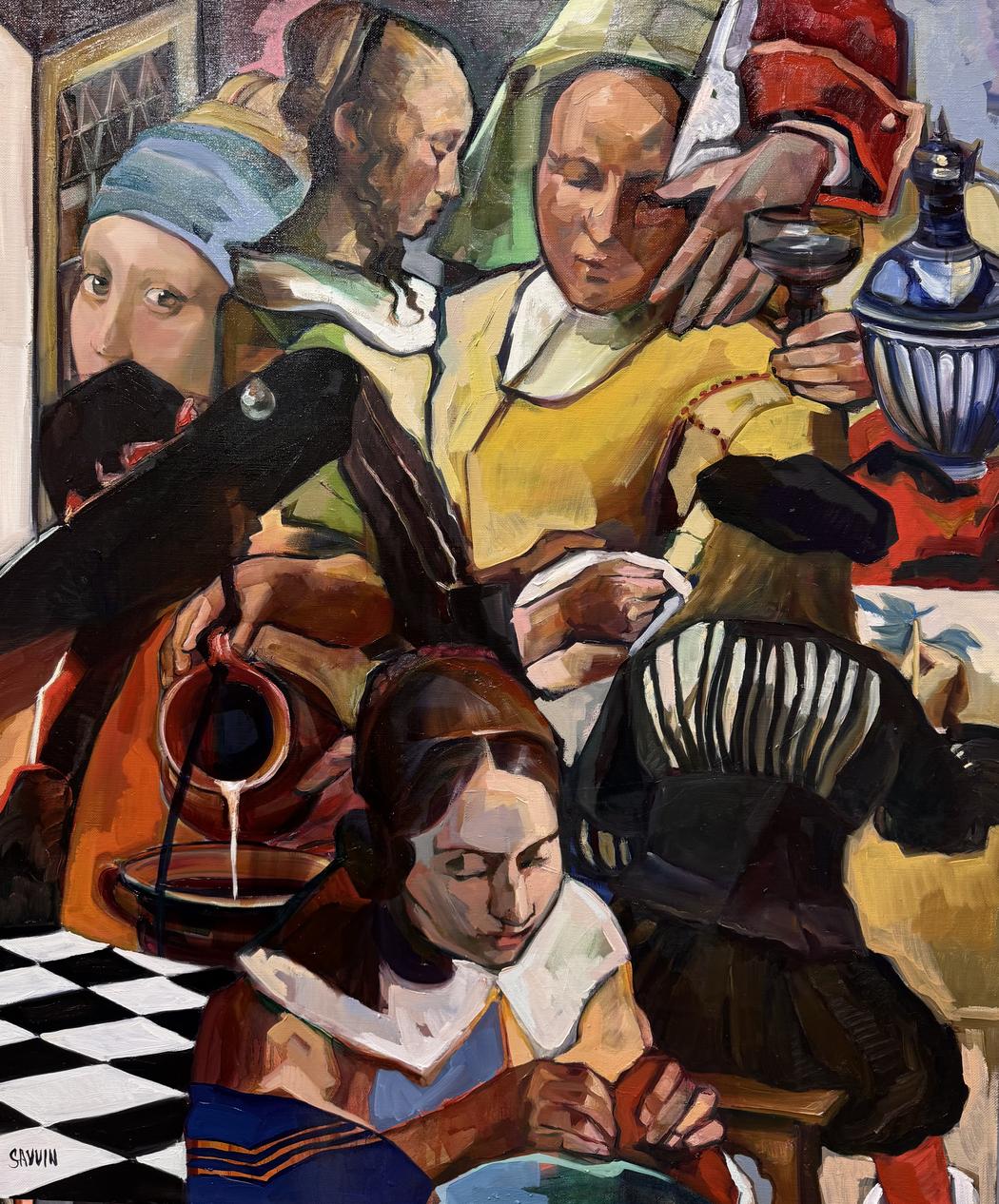 Alexey Savvin | Vermeer | 2025
Which themes are currently of particular interest to you as an artist?
I continue to explore cultural memory, religious narratives, philosophy, and symbolic systems. At the same time, I have become increasingly interested in the material nature of painting itself.
My current series, Eden. Epilogue, investigates not only the story of the Fall but also the memory embedded within the painted surface. Through layered techniques, I seek to create works that resemble archaeological strata or ancient frescoes.
Ultimately, my practice is driven by a simple idea: I am not interested in reproducing the past, but in rereading it through the language of contemporary painting.