
Olga Puzikova: “Questions and Answers”
Olga Puzikova: “Questions and Answers” — Between the Inscription and the Image
by Anna Gvozdeva
There is something quietly insistent about Olga Puzikova’s paintings. They ask to be read as much as seen. In her ongoing series Questions and Answers, the Dubai-based Russian artist constructs layered narrative tableaux in which text and image are not merely co-present but structurally interdependent — each interrogating the other’s authority.
Working in acrylic paste and acrylic on cotton canvas, Puzikova deploys a visual language of deliberate reductionism. Figures and objects are outlined in thick black line — a kind of painterly cloisonné — against gestural, washy backgrounds that carry the atmospheric memory of watercolour. Gold accents trace the rims of mason jars, the edges of stems, the outlines of vessels, lending a Byzantine undertone to what are otherwise thoroughly contemporary compositions. The tension between the sacred and the vernacular is never quite resolved, and this is precisely the point.
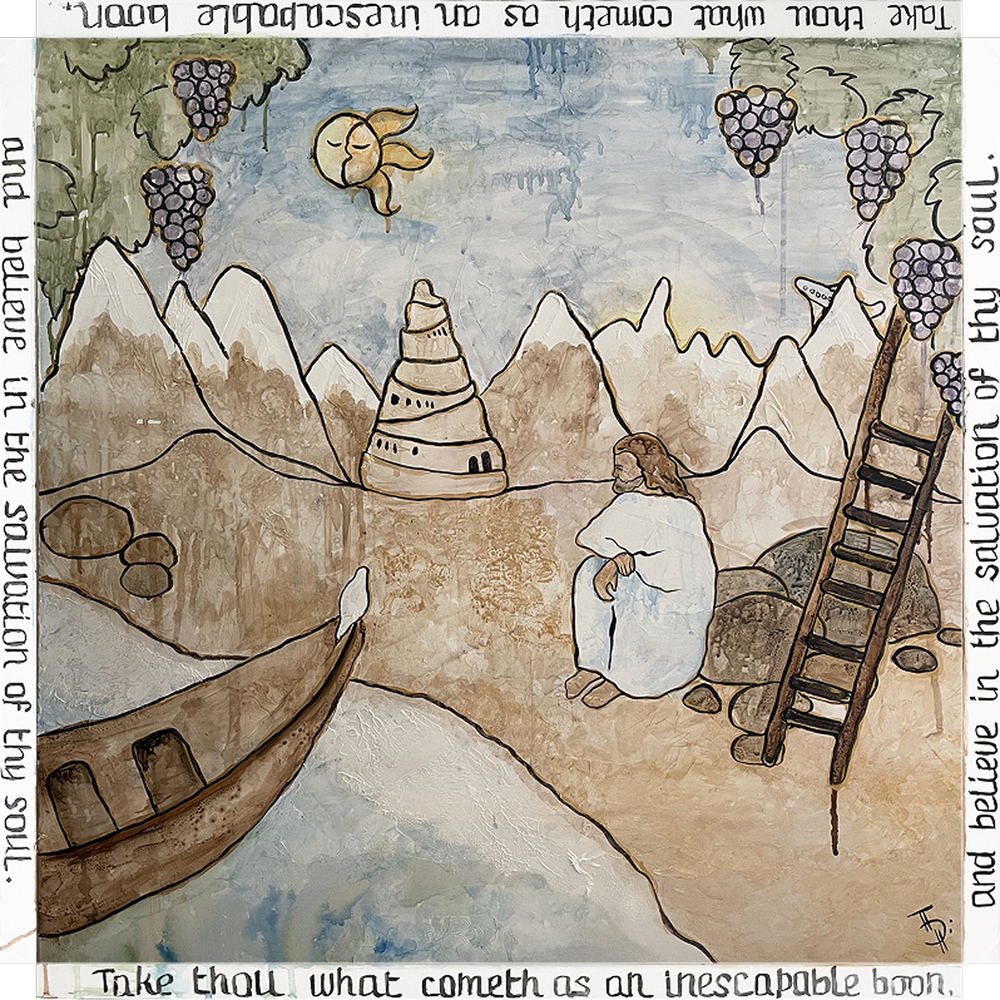 Olga Puzikova | Between Hope and Despair
The most distinctive formal feature of the larger works is the use of inscribed text running along all four borders of the canvas. Written in archaic English, these lines are presented both upright and inverted, right-reading and mirrored, so that the work must be physically circumnavigated to be fully legible. This is not decorative text; it functions as a moral frame, a theological caption. In Between Hope and Despair, the inscription — “Take thou what cometh as an inescapable boon, and believe in the salvation of thy soul” — encloses a scene of quietude that hovers between resignation and trust: a white-robed figure seated in contemplation amid a boat, a tower, a ladder, and grapevines beneath a drowsy golden sun. Each symbol carries allegorical weight drawn loosely from both Christian iconography and the broader mystical tradition.
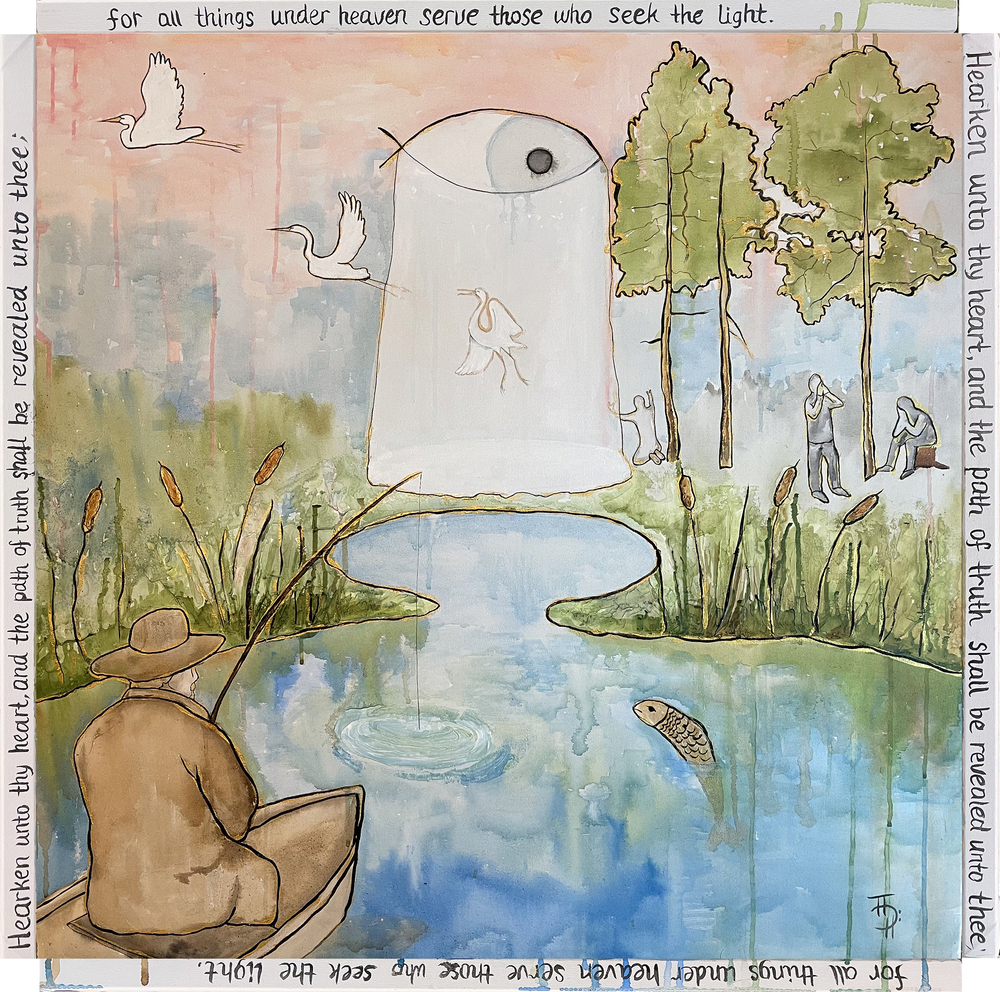 Olga Puzikova | Catcher (May the seeker be heard)
Catcher (May the seeker be heard) is perhaps the most compositionally ambitious of the group. An enormous ghostly eye — or vessel, or both — presides over a wetland scene teeming with herons, fish, a lone fisherman, and anonymous background figures. The inscription speaks of hearkening to the heart, of truth revealing itself to the seeker. The image enacts what the text prescribes: a world in which attentiveness is a spiritual act.
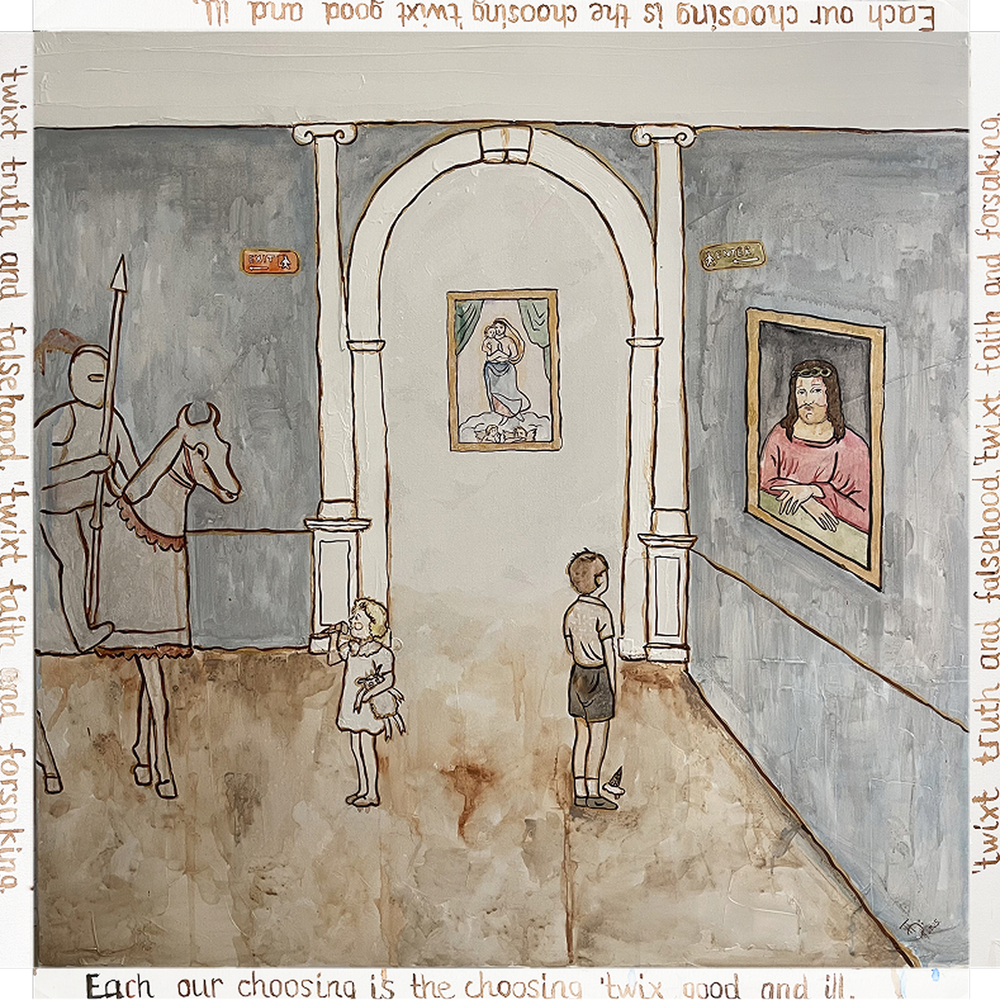 Olga Puzikova | Once at the Museum
Where the series is weakest is in Once at the Museum, where allegory becomes somewhat schematic. Two children stand before paintings of the Madonna and Christ in a grey institutional interior, flanked by an armoured horseman. The symbolism — institutional knowledge versus transcendence, heritage versus living belief — is legible to the point of didacticism. The work tells what others in the series show
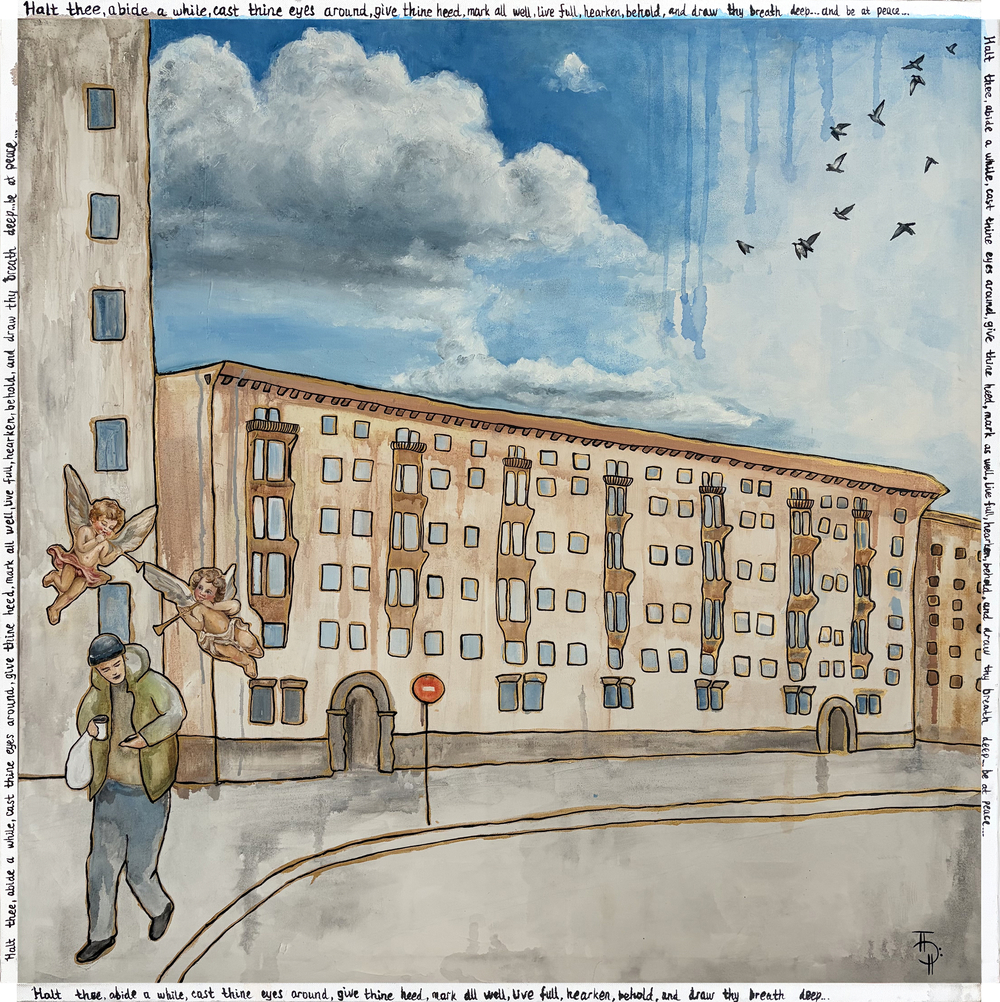 Olga Puzikova | The sky is blue
The sky is blue. introduces a welcome shift in register: a Soviet-style residential block rendered with documentary clarity, as cherubs crowd incongruously around a passing pedestrian. Here Puzikova’s experience of migration surfaces most directly — the familiar made strange, the everyday pressed into service of something larger. The painting participates in the philosophical urgency of the inscribed motto (“Halt thee, abide a while, cast thine eyes around”) with an irony the series rarely permits itself, and is stronger for it.
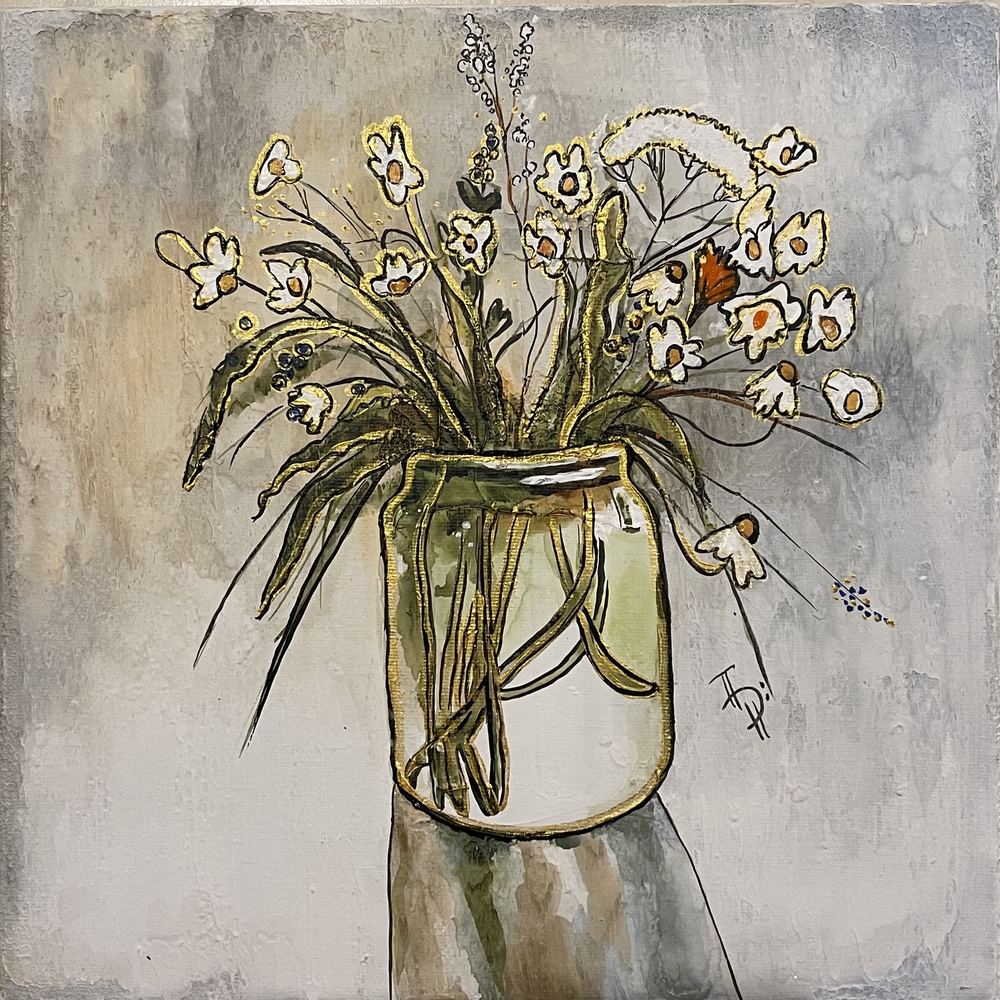 Olga Puzikova | Wildflowers
Taken as a whole, Questions and Answers is a formally coherent and conceptually earnest body of work by an artist in genuine dialogue with the deepest questions of her own experience. The series is at its most compelling where image and text pull apart rather than merely illustrate each other. Puzikova is still refining the balance between philosophical declaration and open-ended visual encounter — but the inquiry itself, unresolved and visually intelligent, is exactly where good painting begins.
Leave a Reply
You must be logged in to post a comment.