
Claudia Ungersbäck
Your project AINT COPY P begins with the question “What is an image?” How would you answer this question after completing the series?
The question „What is an image?“ became more and more complicated for me during the process of AINT COPY P. At the beginning, the series emerged form a very personal expierience: my computersystem was hacked. Suddenly, digital fragments of my life – photographs, scetches, old folders, private material – existed outside of my control. I found on desktop a folder with some of this data mixed together, out of context and order. I began asking myself: What kind of image do strangers construct of me though this remaining folder?
I started selecting photographs and materials from the remaining folders and placed them into an artistic context through the photocopier. The question „what image do the hackers have of me?, slowly transformed into a broader question about the image itself. In the end, an image becomes an independend entity – detached, autonomous, signed. Each sheed became a question: Do we recognize image as „real“ As a true image?
One work in the series references Magritte: No Ciggi „This is not a pipe“. Magrittes pipe is an image of a pipe. This Magritte is not a pipe, this an image Magritte painted and signed. The question continues endlessly. I have also works thematizing Kiki Kogelnik´s statement that art comes from artificial.
For me, the moment an artist signs a work, it enters another condition and becomes art. In cave paintings, traced hands functioned as signs of identity and presence. In the end, the question also became a quesiton of art itself. I started using everyday materials, objects I had collected in my flat also. The photographs were only photographs until I – and perhaps the hackers, which are criminals and do harm – loaded them with meaning. But which image I accepted as truly representing me? They do not know. Which images did I considered real? Which ones I rejected? When does an image become „real“? Is a signed image more authentic than a unsigned one? Does recognition create truth?
By reworking the selected material on the copier, I realized that art creates ist own sphere in which images circulate independently. Baudrilliard described this as the „Simulacrum“. Perhaps an image is only a fragment of reality hitting the retina, forming connections inside the brain that them produce conclusions. Real, unreal, art, artificial.
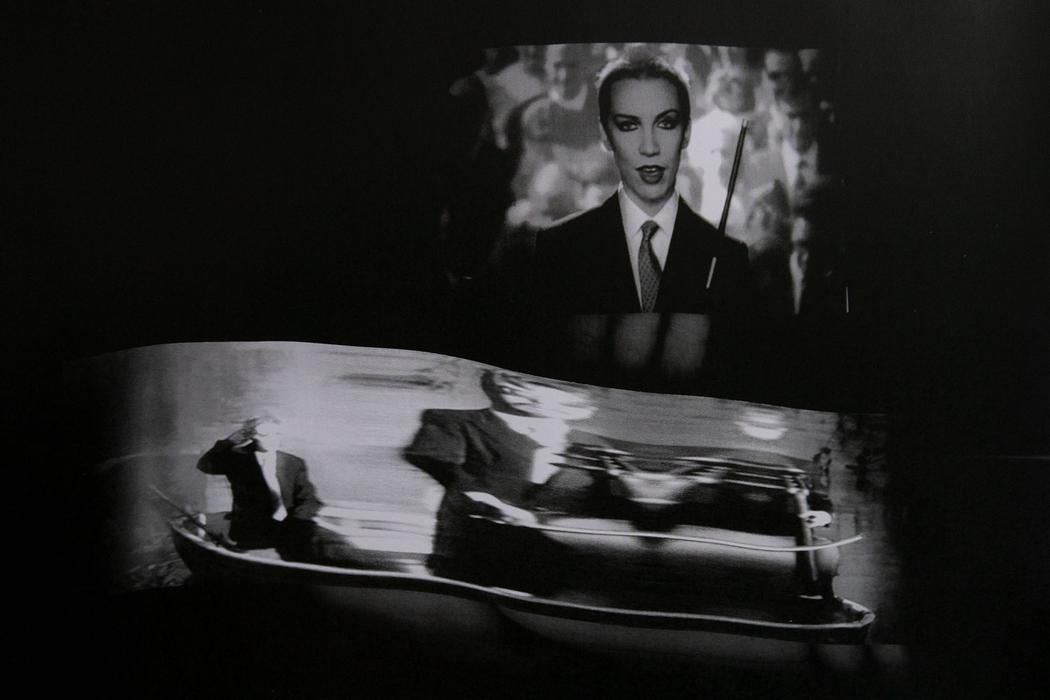 Claudia Ungersbäck | Still Move
Why did you choose the photocopier as the main tool for this series? What possibilities did it give you that traditional media could not?
The photocopier has been an instrument and a kind of dance partner for me for a long time. It felt natural to rework the photographs and other materials through the copier. It was a logical conclusion: image, image-reproducion machine, and the emergence of a new original. I wanted to bring the individual photographs I found inside the folders directly into the image itself. I see this photographs as sketches. I was interested in working physically with the printed materials – with paper as object – and transforming them trough the copying process. The photocopiere allowed me to move between reproduction and invention. Through distortion, repetition, gesture, and physical interaction with the machine, the copied image became something autonomous again. The copier was never just a technical device for me, it became part of the artistic process itself.
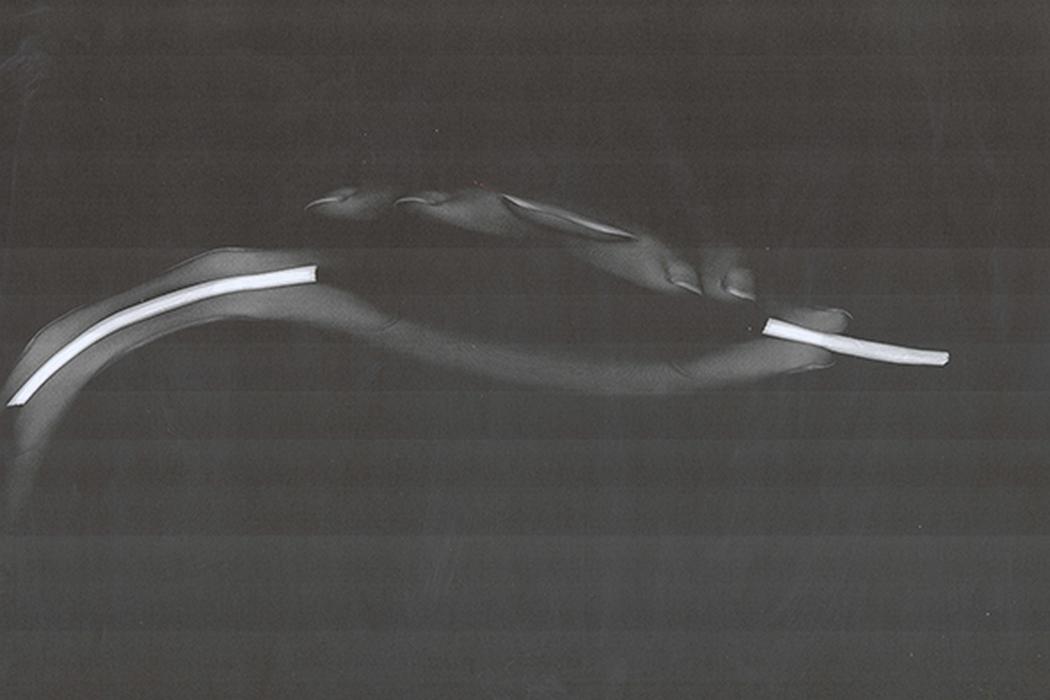 Claudia Ungersbäck | No Ciggi
Many works in the series appear as fragments, distortions, or traces of movement. How important is the element of chance in your process?
Chance is a very important factor in my work. Many of the pieces emerge accidentially, trough the process itself. Francis Bacon once said something similar – that he often had a fixed idea of what he wanted to produce, but in the end something compleately different appeared. Many works emerged from movement, rhytm, pressure, timing or technical imperfections that could never have been fully planned in advance. Sometimes a failded copy contains more thension than a perfectly controlled image.
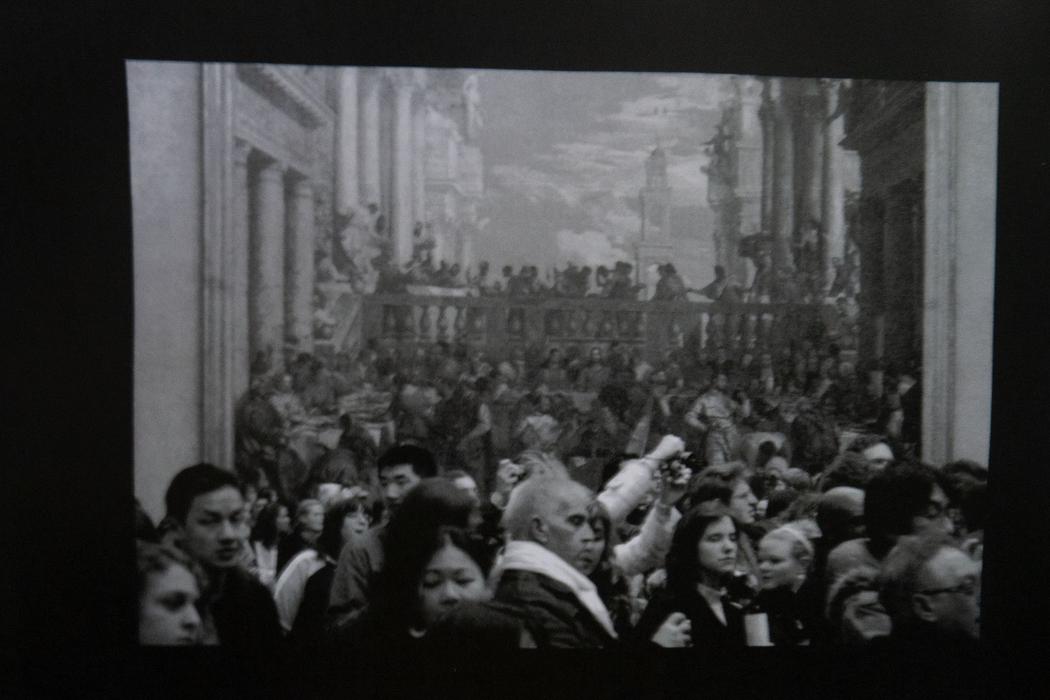 Claudia Ungersbäck | Mona Lisas Smile
The series works with the relationship between original, copy, and representation. Do you see the copy as a loss of the original, or as a new independent image?
The copy is definitely a new work – an original itself. Even through machines are highly precise, they are never precice enough to reproduce every shadow, light, trace, or movement in exactly the same way. There are always slight shifts, losses, disortions, or unexpected details.
I do not see the machine as a neutral tool, but as a partner within the process. Together with the machine and it´s own characteristics, imperfections, rhytms, and technical limitations, I create a new original.
Your images often create a sense of temporality, as if the picture is moving or disappearing. How do you work with time inside a still image?
Time in my works emerges through rhytmic movement. The process is similar to making music or dancing with this moving instrument of light that scans the image. I can directly and physically influence the movement, and every material I work with carries an inner sound – to quote Kandinsky.
The photocopier has ist own rhytm, and I have mine. The work develops trough the interaction between this two rhytms. Movement, timing, pressure, interruption, and repetition all become part of the process.
Form e, the copies are almost like frozen tones within a musical composition – brief moments of movement captured inside a static image. Even trough the final work appears still, the temporality of ist creation remains visible trough blurs, disortions, traces and gestures.
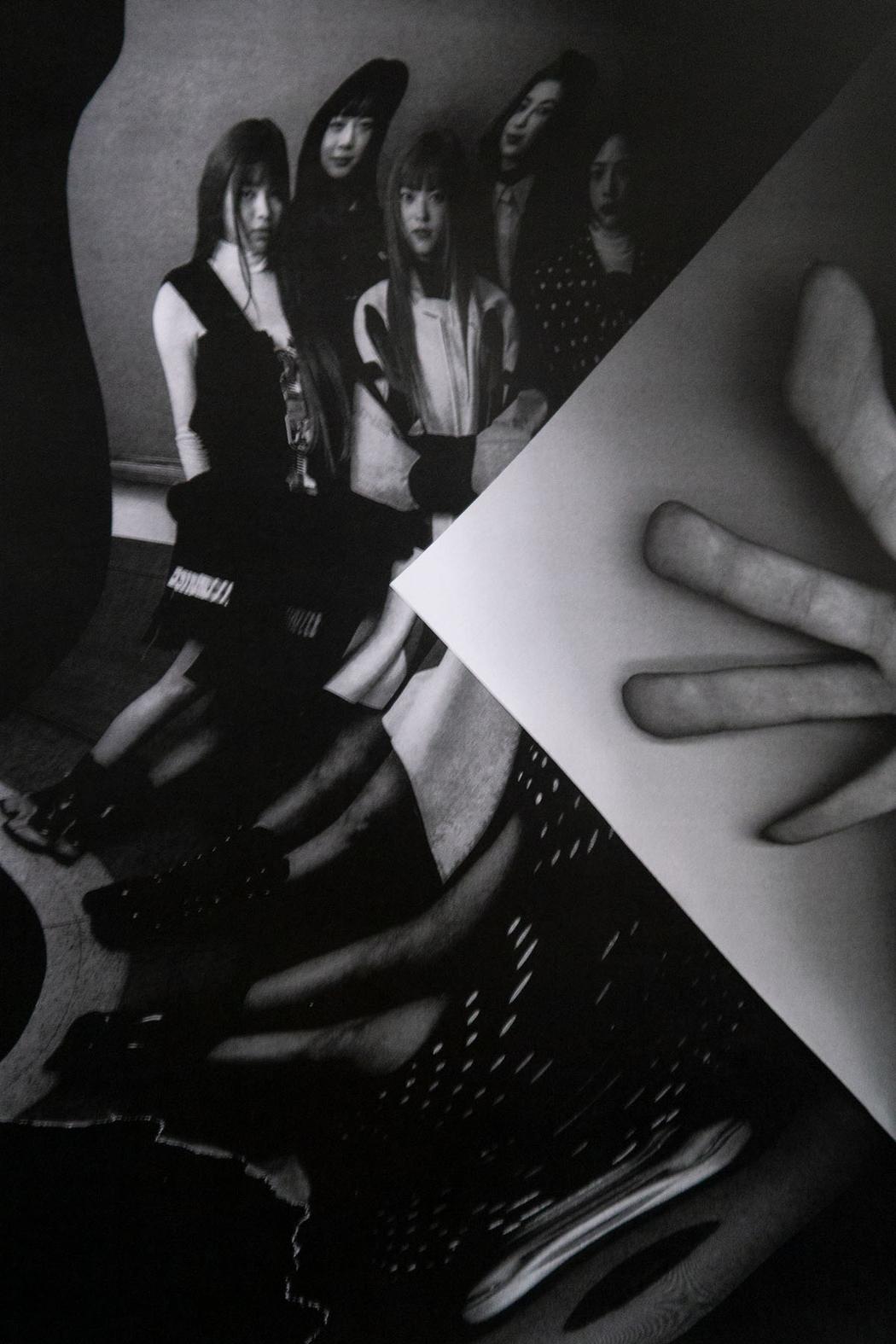 Claudia Ungersbäck | Circle
Your educational background includes fashion design, printmaking, animation, and philosophy. How do these different fields come together in your artistic practice?
I originally graduated in fashion design, which fundamentally involved a grad deal of drawing: sketches, technical drawings, pattern construction and finally sewing. All of this requires spatial imagination, geometry, craftmansship, and a strong sense of composition.
After studying printmaking and animation, I worked in costume departments for theatre productions. Through experimental theatre productions, I expanded my understanding of design, composition, atmosphere, and staging.
At the same time, philosophy, literature and poetry always deeply interested me. I decided to pursue another course of study. During that period, I realized that alongside reading, writing , and discussing ideas, I was missing something physical and tactile. This realisation made me understand that I would remain an artist.
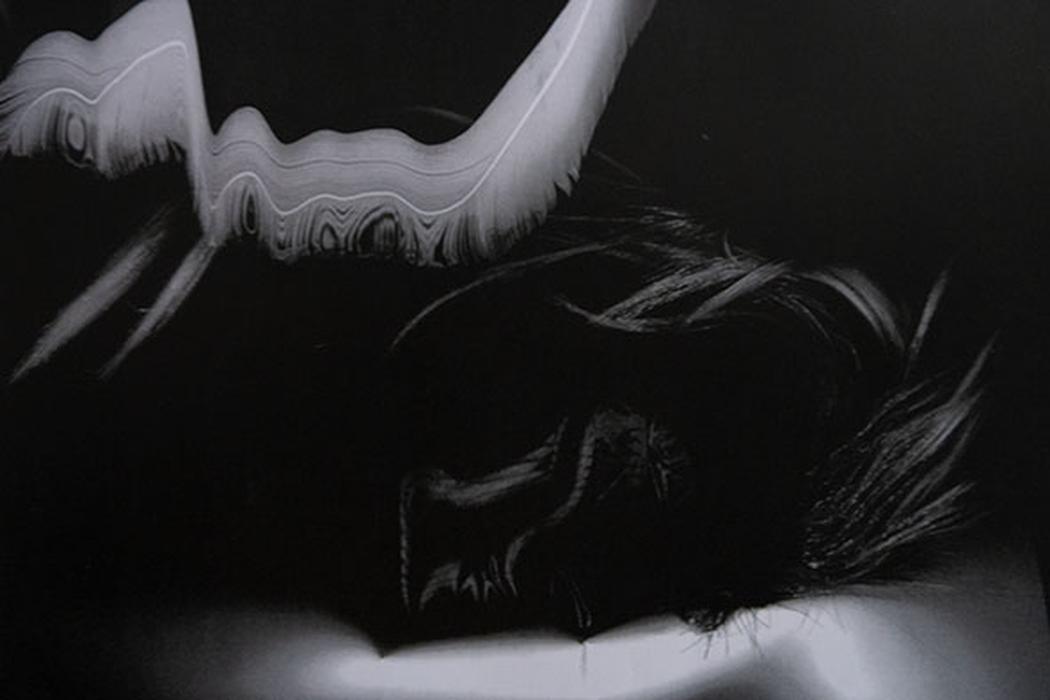 Claudia Ungersbäck | Fethleda
What do you hope viewers will experience when looking at these works: recognition, uncertainty, memory, discomfort, or something else?
I do not think very much about the viewer in a general sense. But during creation of AINT COPY P, there was also a great deal of anger connected to the intrusion into my data, my life, my work, and my privacy. Where does contact begin, and where does it become intrusion and violence? At what point des one begin to leave a position of powerlessness? And it is that even fully possible?
AINT COPY P is more than simply translating an experience into images or trying to provoke emotions. The series also became a reflection of perseption itself. I worked with sheets involving mirroring and reflections, ranging vom Velásquez to Gerhard Richter, who once said that art is like a mirror. I think the interpretation of that sentence depends entirely on who is looking.
What I truly want is to genuinely see when I look at something – whether at myself of at something unfolding before me. In a way, the folder left on the desktop revealed more about the hackers than about me, just as what others say about my art often reveals more about them than about the work itself.
AINT COPY P also gradually became a feminist series. This development emerged though the sketches, references and materials I consciously selected and transformed – not through the desktop folder itself.
AINT COPY P
PAINT COPY.
Leave a Reply
You must be logged in to post a comment.