
Anabel Morey
Your project began after moving to São Paulo. What was the first thing you noticed about the city’s visual rhythm and the way people occupy public space?
I arrived in São Paulo during the pandemic. My first impression was of an enormous, silent city, streets emptied of the 22 million people who supposedly lived there. A city holding its breath.
When restrictions lifted, something shifted. People didn’t just return to public space they reclaimed it. Weekends brought entire avenues closed to cars, filled instead with cyclists, skaters, dancers, vendors, families, artists. Every tribe, everybody, every story occupying the same asphalt. I had never seen anything like it coming from Caracas, Venezuela, Quito, Ecuador and, from Porto Alegre, Southern Brazil, cities that learned to contain themselves.
São Paulo doesn’t contain. It announces. And it was in that announcement in the way people dressed, moved, adorned themselves, that I found my project.
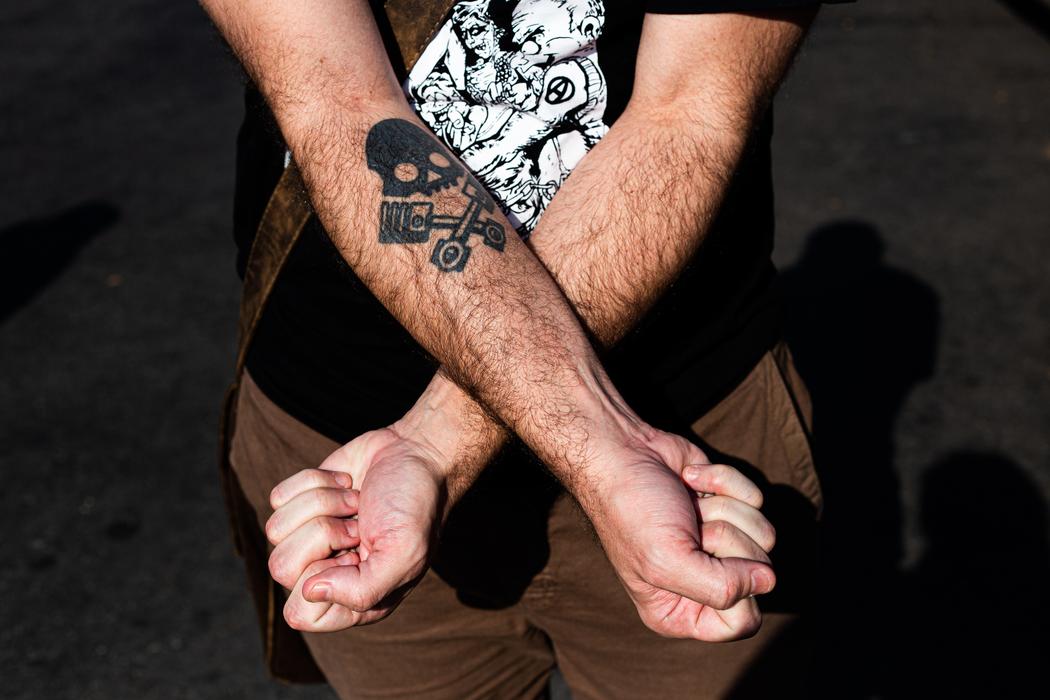 Anabel Morey | Identidad | 2025
You often photograph fragments of the body, clothing, tattoos, gestures, and small details rather than complete portraits. What attracts you to this fragmented way of looking?
When I photograph a fragment, a tattooed neck, a pair of crossed arms, a chest covered in symbols, I’m not hiding the person. I’m finding where their statement lives. People in São Paulo inscribe their identity on specific parts of their body deliberately, through tattoos, clothing, accessories, the way they layer jewelry or fabric. Each is a chosen territory. The fragment is not a reduction. It’s a precision.
I am drawn to that precision because it tells me exactly what the person wants the world to see and that, for me, is where the photograph begins.
How does São Paulo’s energy influence your perception of individuality and self-expression?
The first time I walked down Avenida Paulista on a Sunday, when the city closes its most iconic avenue to cars and opens it to everything else, I understood São Paulo. In a single afternoon I saw cyclists and skaters, artists painting on the sidewalk, musicians performing, Hare Krishna processions, capoeira circles, political demonstrations, families spread across the asphalt as if it were their living room. All of it happening at the same time, in the same space, without conflict. That avenue became my key to reading the city. This city has no interest in making you smaller. It simply makes room. And that freedom, that radical acceptance of coexistence, changed the way I look at people. I stopped seeing individuals and started seeing declarations. Every tattoo, every accessory, every gesture became legible to me as a form of self-authorship. The city gave people permission to be visible, and they took it completely. My camera followed.
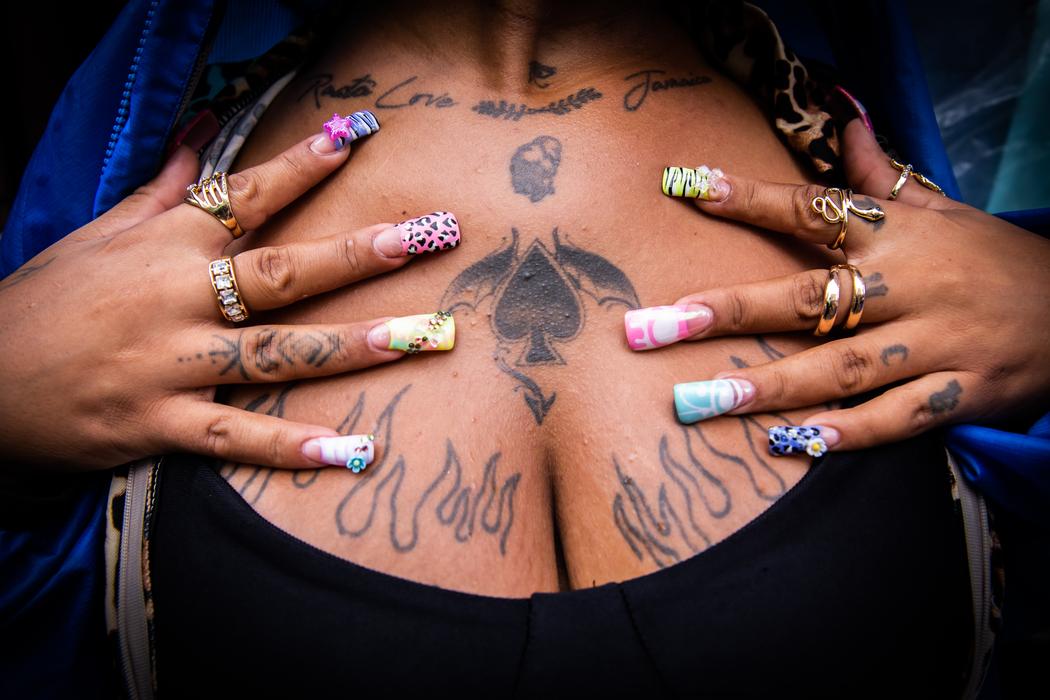 Anabel Morey | Identidad | 2024
Your images suggest identity without fully revealing the person. How do you balance anonymity and presence in your photographs?
Every image in this project is a collaboration. The person made a choice about their body, a tattoo, an accessory, a way of standing in the world. I made a choice about where to look. By not showing the face, I protect the intimacy of the encounter while honoring exactly what they chose to make visible. The face withheld is not an absence. It is an invitation to look more carefully. And in that careful looking, identity appears more completely than any conventional portrait could reveal.
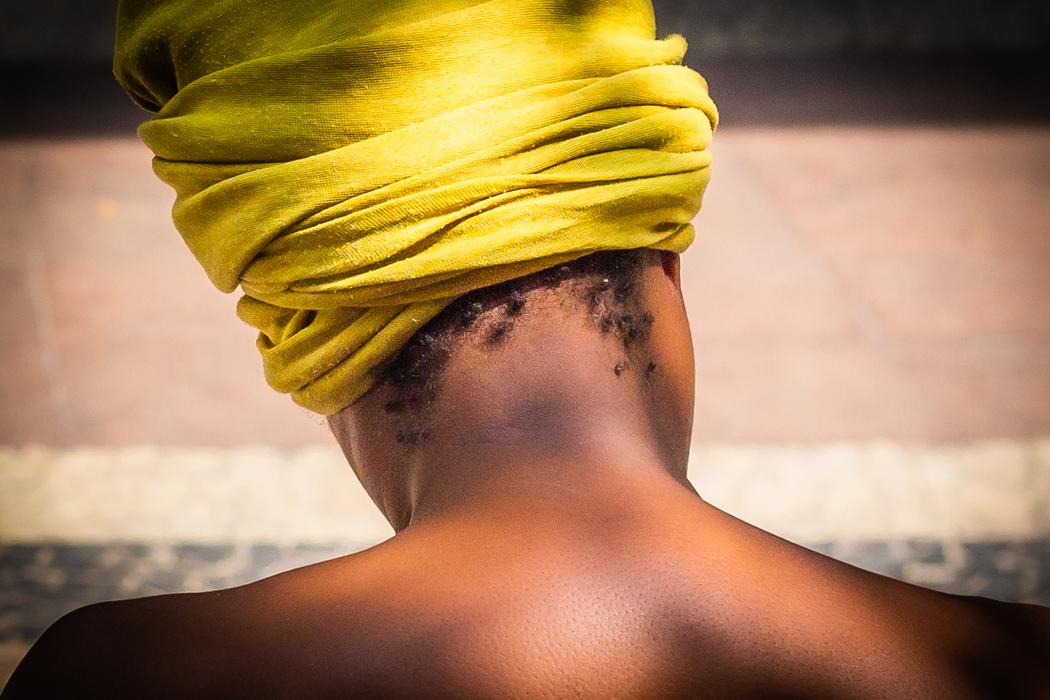 Anabel Morey | Identidad | 2024
Many of the works focus on visual markers such as tattoos, hair color, accessories, fabric, or posture. What do these details reveal to you about a person or a city?
A city is not only its skyline or its statistics. It is also the sum of the choices its people make about how to appear in the world. In São Paulo, those choices are radical, layered and unapologetic.
When I look at the details people choose to wear and carry, I’m not reading decoration. I’m reading autobiography. Each visual marker is a fragment of a personal history, a belief, a belonging. A tattoo tells me what someone considers permanent. An accessory tells me what they want the world to notice first.
Together, these details reveal a city of profound diversity, not just of origin or race or class, but of thought, of identity, of worldview. A place where people have decided, consciously or not, how to wear themselves in public. That is what draws my camera.
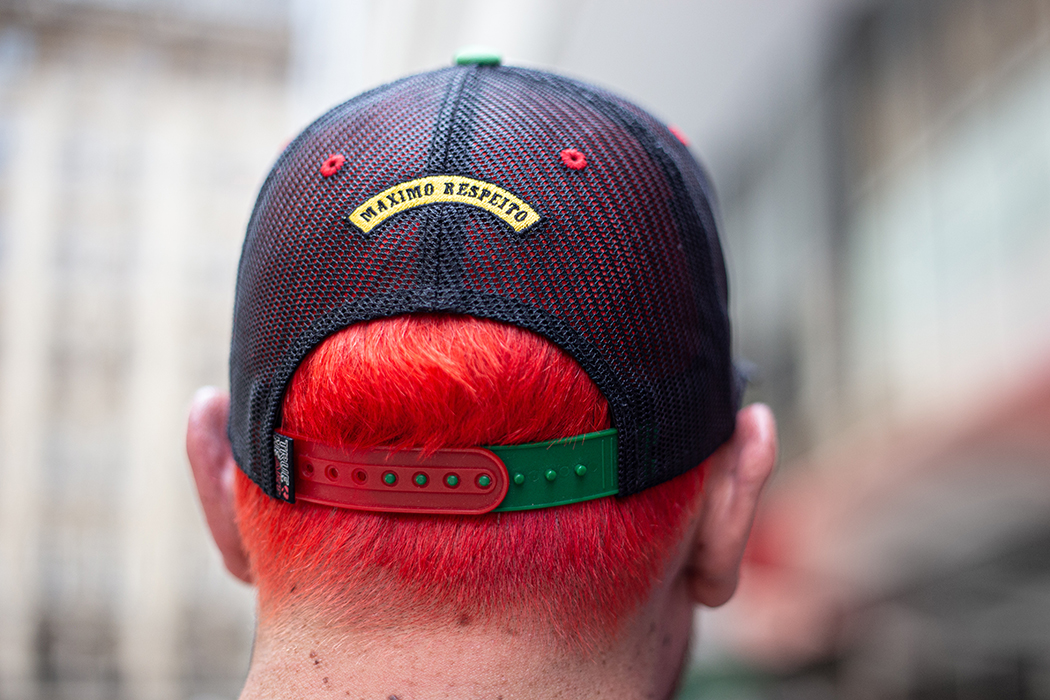 Anabel Morey | Identidad | 2024
Do you see these images as portraits, even though the faces are often absent or hidden?
Absolutely. A face can be performed. A tattoo chosen years ago, a piece of jewelry worn every day, these are harder to fake. They are, in many ways, more revealing than a face ever could be. When I photograph a detail of a body, I am making a portrait. Not of a face, but of a decision. Of a life that left its marks visibly, deliberately, on the surface of a body that moves through one of the most complex cities in the world. That, to me, is the most honest portrait there is.
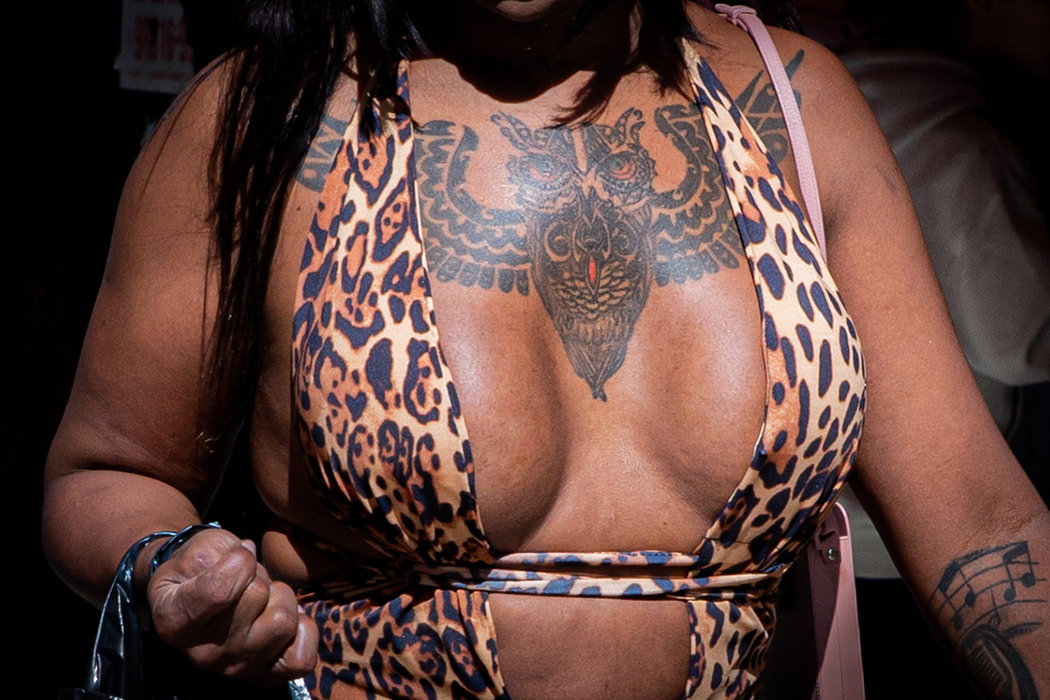 Anabel Morey | Identidad | 2024
What would you like viewers to feel or notice when they encounter these fragmented images of human presence in the city?
I want them to pause. Not just to look at a tattoo or an accessory or a detail of clothing, but to recognize that behind every fragment there is a person who made a choice, about their body, their identity, their place in the world. A person who, beneath all those layers, is still just a person. São Paulo taught me that diversity is not a problem to be managed. It is the natural condition of human life. Twenty-two million people, each one carrying their own history, sharing the same streets, the same Sunday avenues, the same city. And somehow, it works. Not despite the differences, because of them. If these images can do anything, I hope they make someone look at a stranger differently. To see the tattoo, the turban, the rings, the fabric, the hat, and instead of feeling distance, feel curiosity. Recognition. The understanding that we are all, in our own way, writing ourselves on the outside so that the world can begin to know us. The layers are different. The need beneath them is the same.
Leave a Reply
You must be logged in to post a comment.