Bart van Gompel
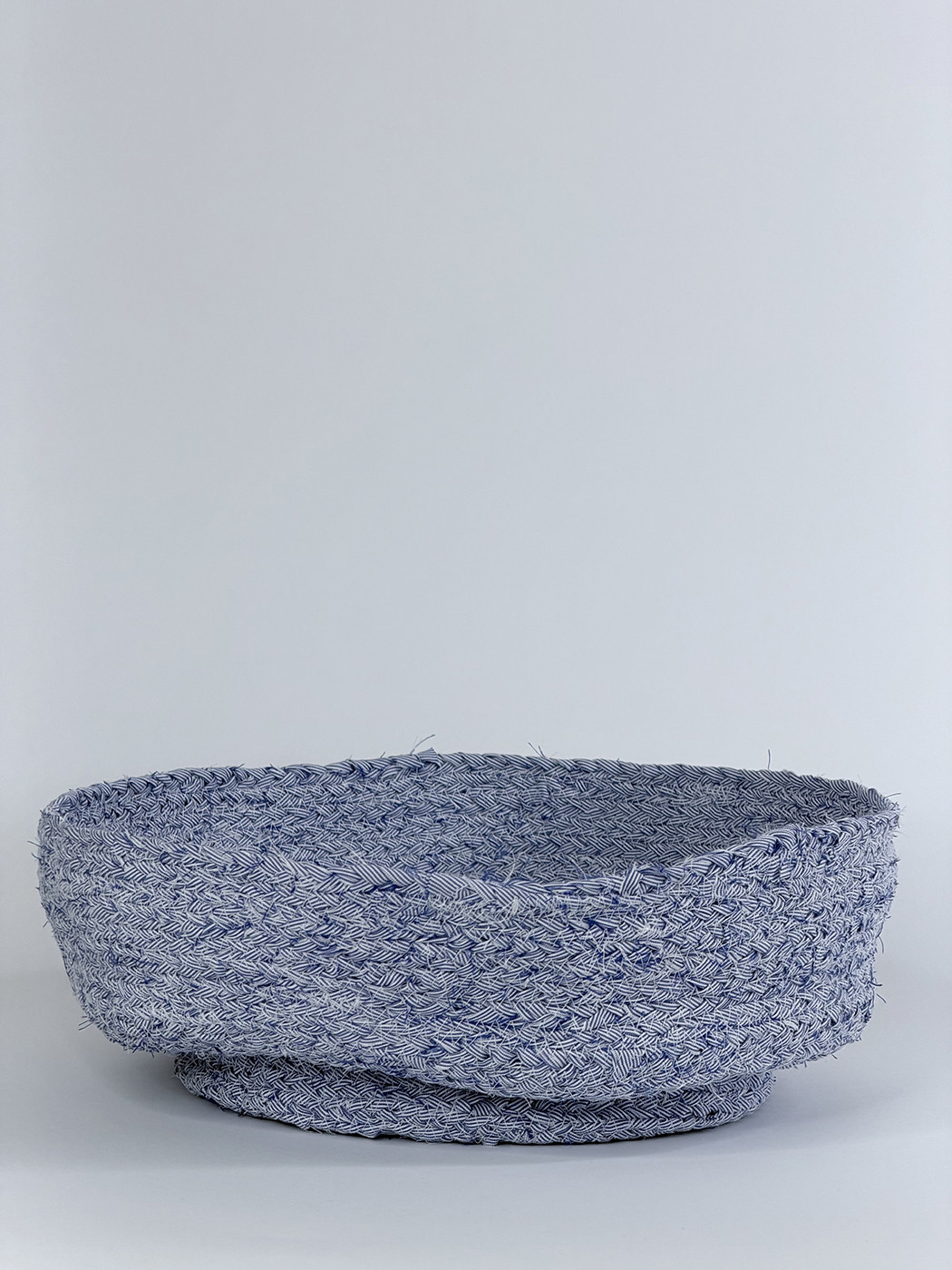 Bart van Gompel | Second Form | 2026
Your work begins with discarded textiles and second-hand clothing. How do you choose the materials you work with?
I choose materials mostly intuitively, starting from second-hand shirts, curtains, and other textiles that have already had a previous life. What attracts me is that a fabric carries a history through its earlier use, a presence of the past that subtly remains in the material. At the same time, the material also needs to be technically suitable to be cut, braided, and brought together again. I look for combinations of colors, patterns, and textures. Through small experiments, I explore how materials relate to one another when they are connected. This process of making and adjusting shapes the further development of the work.
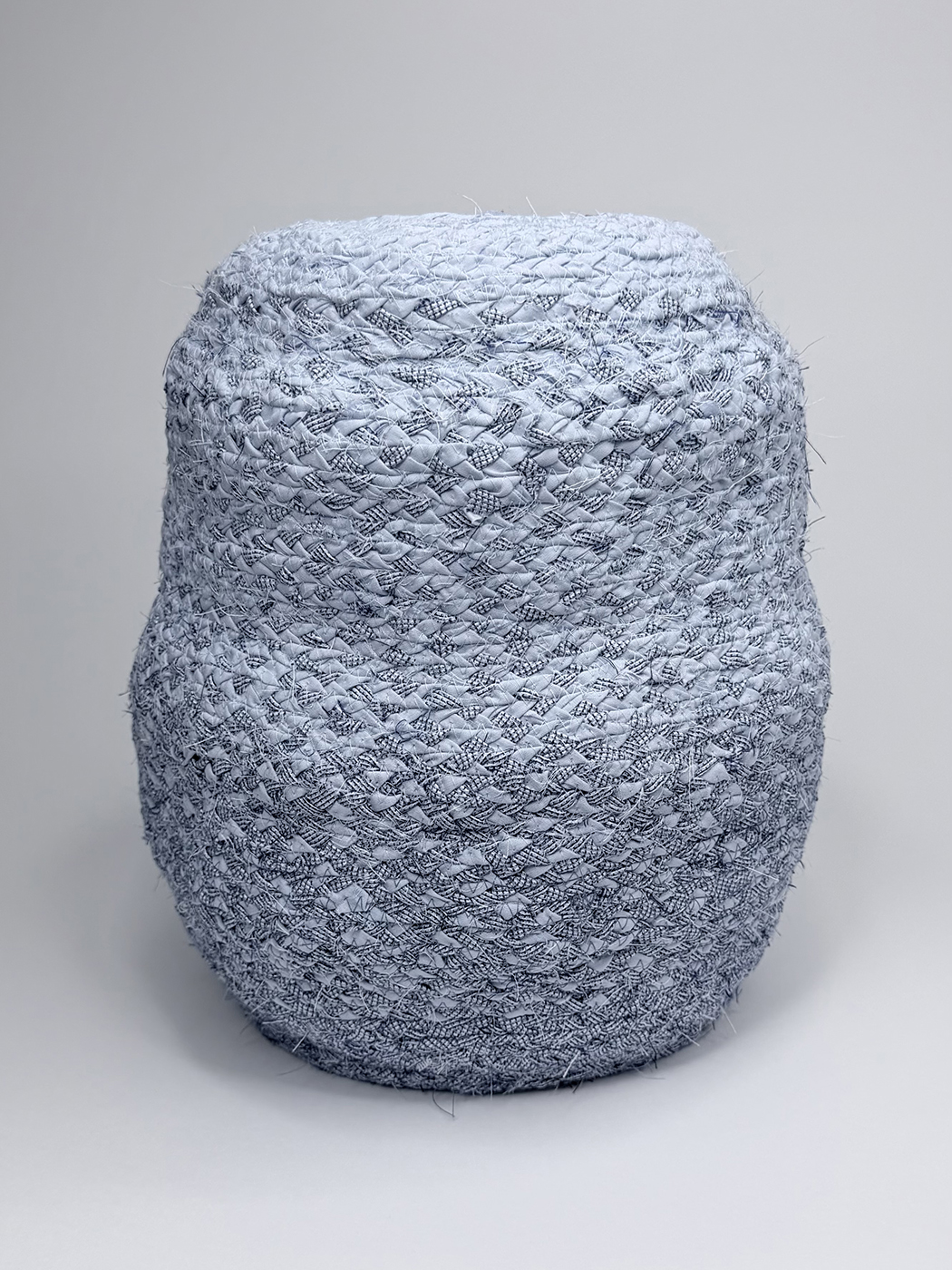 Bart van Gompel | Second Form | 2026
What draws you specifically to textiles that already carry traces of use, history, and previous function?
Used textiles already had a clear function and context before I started working with them. A garment has lived around a body, a curtain has divided or shielded a space. When the material is no longer in use, that function disappears, but for me something of that context still remains.
What attracts me is that a material can carry a history that does not have to be literally visible, yet still remains present. By reworking the material, its meaning shifts. It does not become a reconstruction of the past, but a new form in which that earlier context continues to resonate.
In your practice, used textiles are transformed into sculptural forms. At what point does the material stop being “clothing” and become sculpture for you?
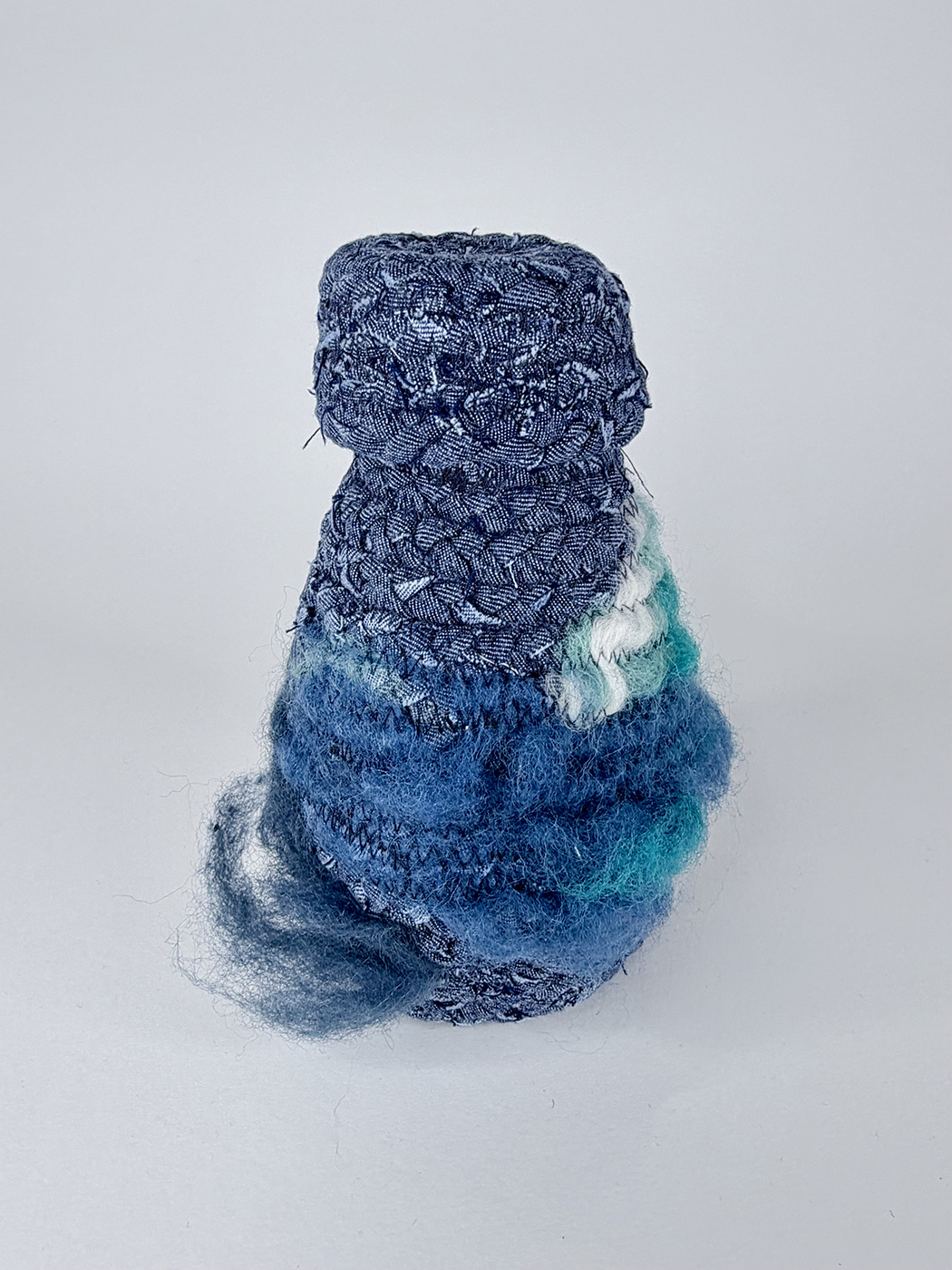
For me, the transformation begins as soon as the material is cut apart and loses its original function. Through braiding and connecting, a form gradually emerges that is no longer read as clothing, while it’s origin still remains perceptible. I am interested in how the material continues to balance between recognition of its original function and abstract form.
Many of your works refer to bowls, pots, urns, and vessel-like forms. Why are these shapes important in your artistic language?
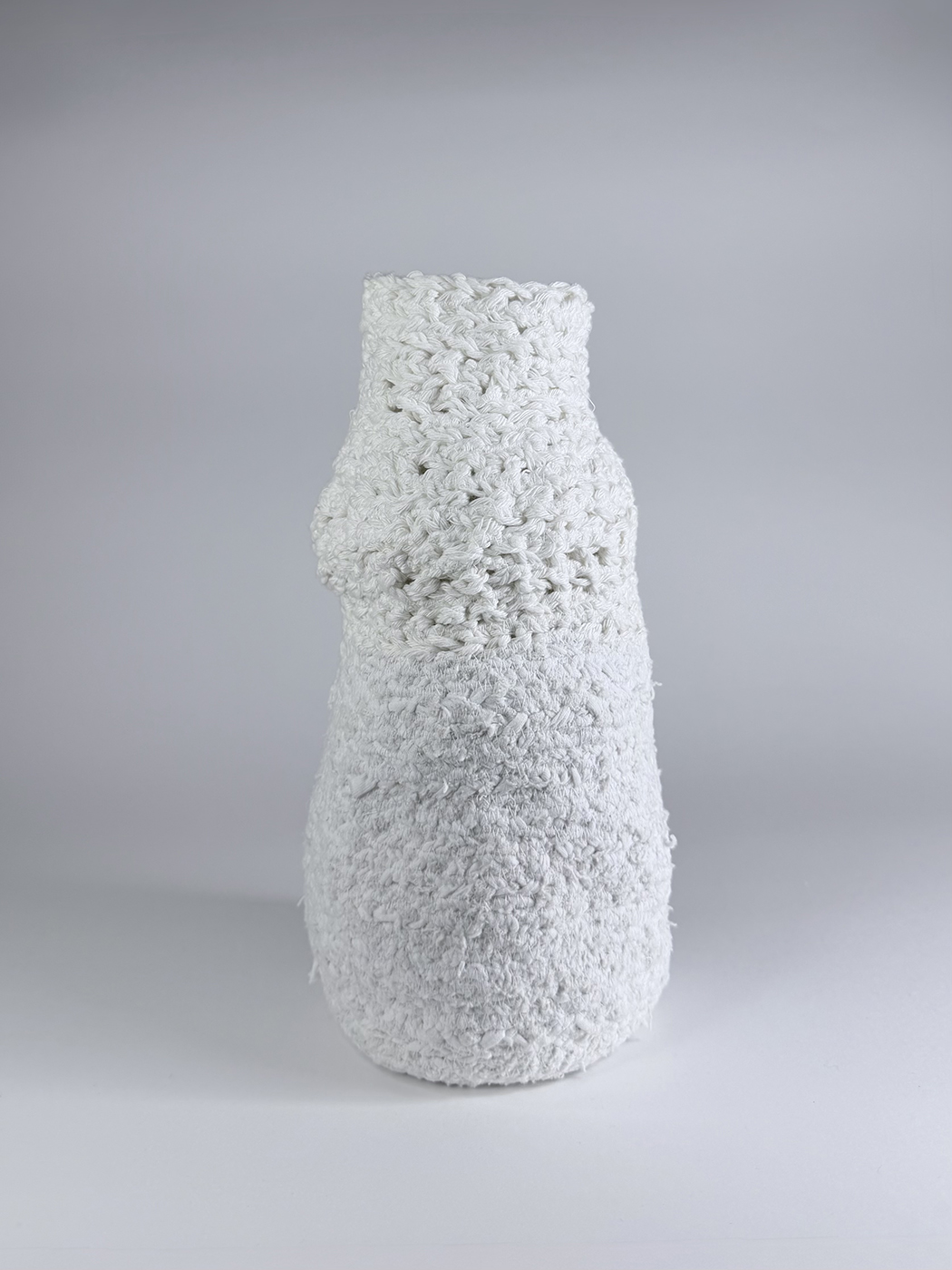
I often begin from a certain direction or form, although it can shift during the making process. Through building and weaving, organic forms emerge without hard edges, and it is precisely that softness and fluidity that appeals to me. As a result, many works refer to bowls, vases, pots, or urns. These forms continue to return in my work because they possess something recognizable and timeless, while also evoking a subtle sense of connection to the past.
 Bart van Gompel | Second Form | 2026
Although your objects refer to functional forms, they are not meant to be used. How do you understand the relationship between function and sculpture in your work?
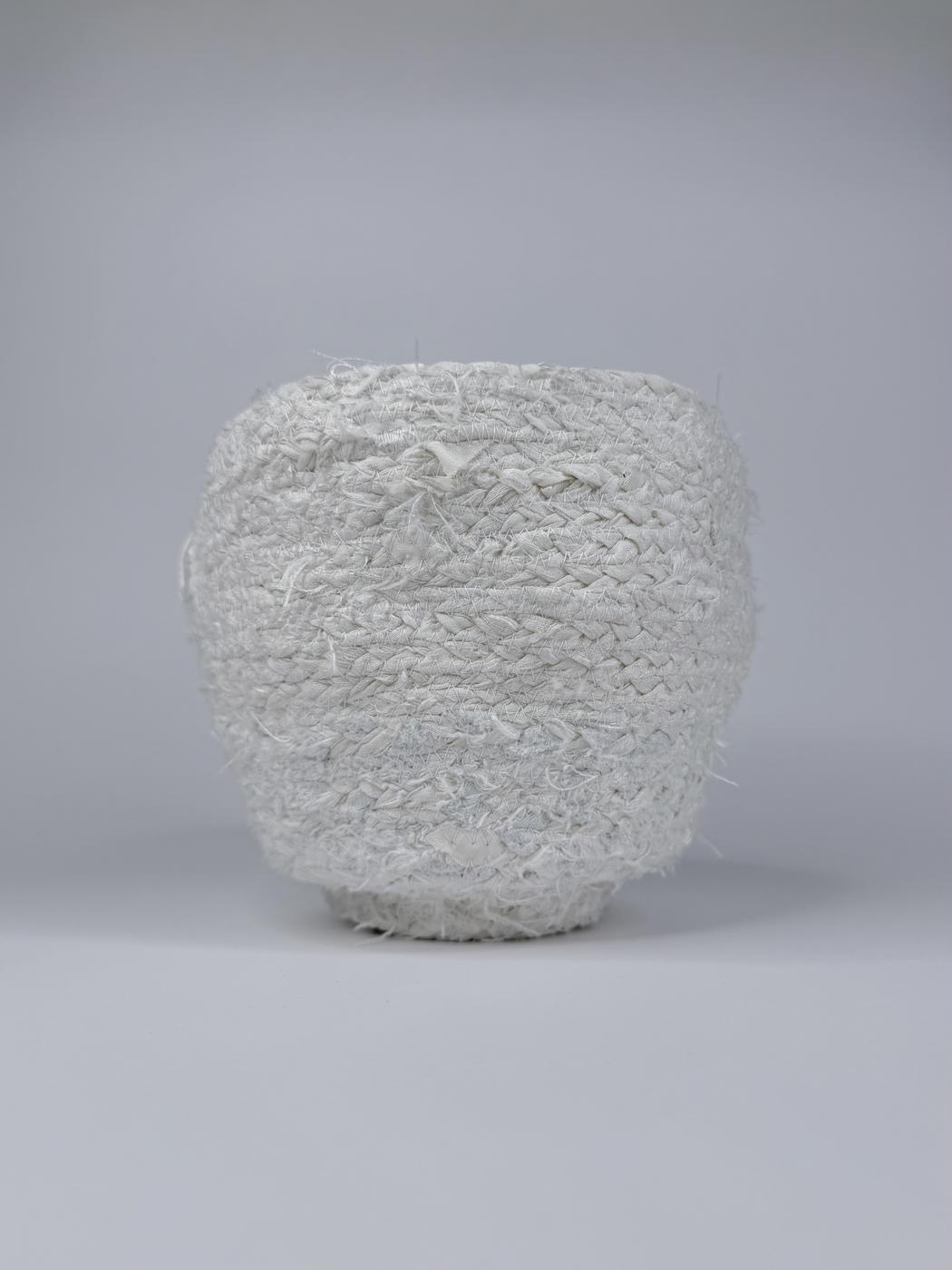
Although the forms sometimes refer to functional objects, they are not intended to be used. In my work, function shifts from practical value toward an attention to the form itself. The sculptures are not made to do something, but to exist as forms.
What interests me is that a form can suggest function while simultaneously existing as a sculptural presence. This tension between recognition and non-functionality is part of the work. Ultimately, the focus lies on the aesthetics and the presence of the form itself.
Sustainability is a natural part of your practice. Do you see your work as a response to the overproduction and waste of the fashion and textile industries?
I do not see my work as a direct response to overproduction and waste, although I do consider it an important global issue. That is one of the reasons why I choose not to use new materials when not necessary.
Used textiles carry a history and physical quality that are important within my work. I do not find that same layered quality in newly purchased fabrics.
Working with existing materials also comes with limitations, which can sometimes be inconvenient, but those limitations ultimately shape the process and strengthen the work.
 Bart van Gompel | Second Form | 2026
What do you hope viewers feel or think about when they encounter your textile-based sculptural objects?
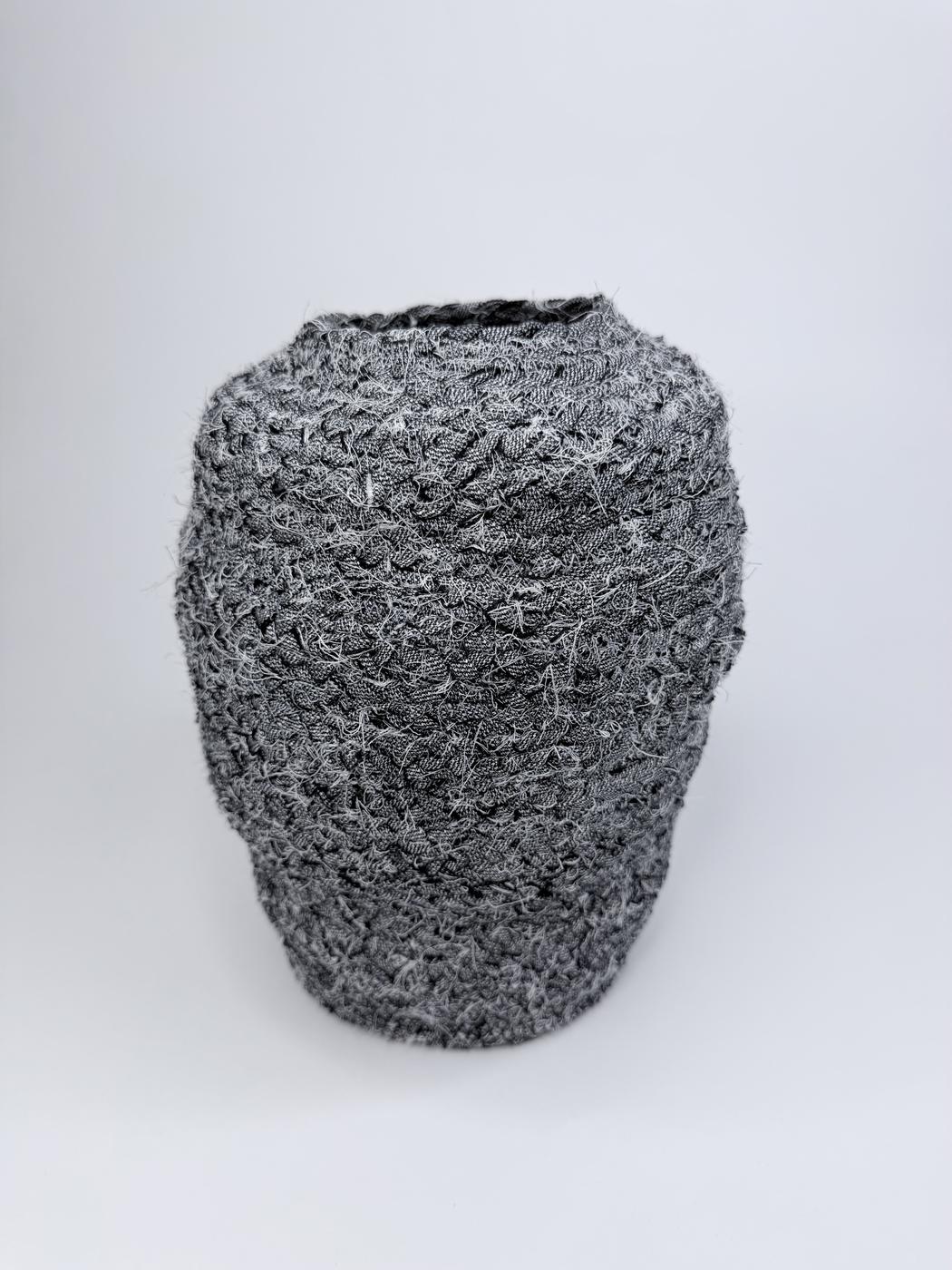
I hope a sense of recognition emerges through the materials and forms, without them being fully identifiable. The work balances between familiarity and estrangement, and I prefer to leave that tension open to interpretation.
Leave a Reply
You must be logged in to post a comment.