
Ksenia Pamphil
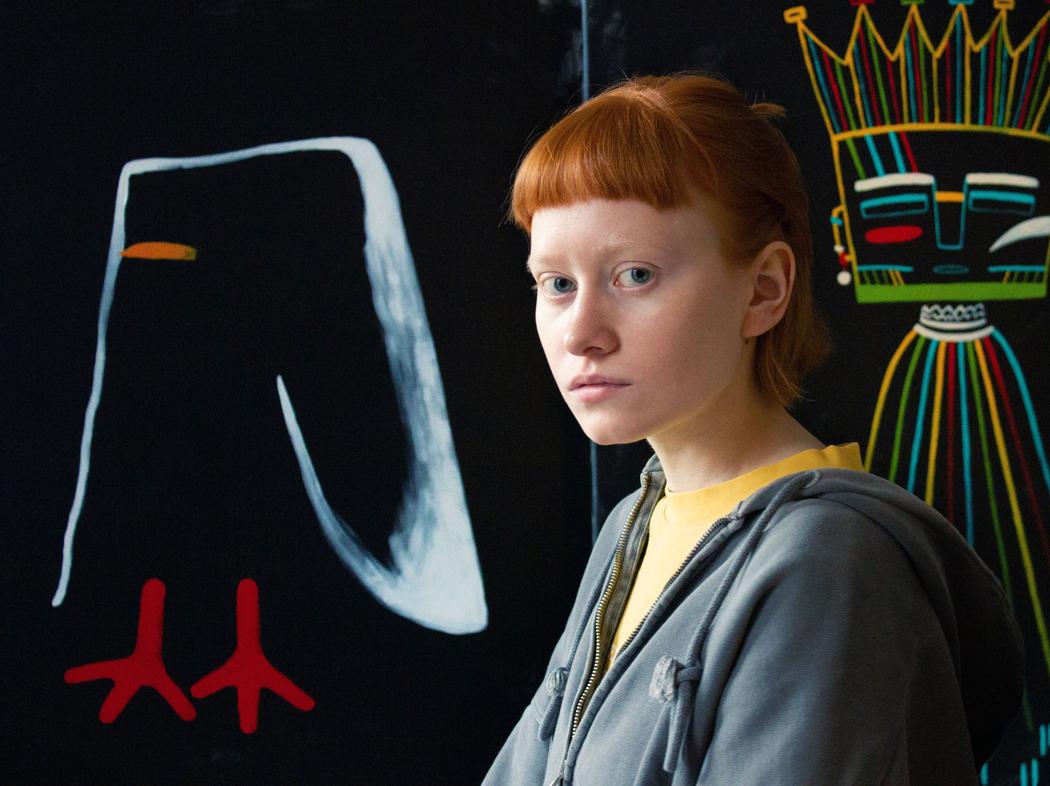
You describe yourself as a self-taught artist. How did the absence of formal art education shape your creative freedom and personal visual language?
I believe that creativity should initially be free from rules. A child does not know about composition or the relationship between color and tone. They create as they feel and as they see, and sometimes their works evoke more emotion and contain more depth than perfect paintings created according to the canons of academic art. An adult artist, especially one trained in art institutions, is often afraid to move away from the rules they have learned. Their art becomes mechanical and impersonal. The creation of a work turns into a clear sequence of steps.
As a child, I tried several times to attend classes at an art school, and each time it was difficult for me. I understood that I could draw vases and fruit, study the construction of objects — it was not difficult — but I did not enjoy it. I felt resistance and wanted to create something different. Eventually, after giving up those attempts, I felt a sense of freedom. I felt even greater freedom when I freed myself from the imposed idea of what a “real artist” should be and what and how they should paint. Gradually, my own style and visual language began to form. I started experimenting with different new materials, combining them, and, roughly speaking, breaking all the rules established in Russian art universities. Simple examples include the ideas that you should not use white watercolor, smudge pencil or charcoal with your fingers, or break the composition.
I know that some people believe you first need to master the basics and only then break the rules and introduce something new. But I feel closer to the opposite order. I think it is better to first understand what your soul is drawn to, what it wants to say or express, and then look for a way to realize it through trial and error, paying attention to your own feelings. After that, you can add theory if you still feel the need for it. In this order, you do not lose your voice. Besides, personally, I find it much more rewarding to come to discoveries and realizations on my own than to receive dry theory quickly without understanding it or arriving at it through practice.
Your works often feature unique characters — animals, masks, or mysterious beings. How do these characters usually appear: do you plan them in advance, or do they emerge intuitively during the process?
I never know what my next work will be about. I usually have prepared paper or canvas ready so that when inspiration suddenly appears, I can capture the idea. Usually, there is a general mood or state that I want to convey, and I sit down to make sketches in order to find a way to express it. At that moment, different characters are born from scribbles and sketches. Later, I may forget about them, see them again, and decide that the image should be transferred to a larger format. I do not try to copy them exactly, but their essence and inner content remain. At the same time, I like that they are a little “crooked” and imperfect. It catches the eye and adds life to the works.
There are also simply funny accidents. The work Penguin, for example, was born from accidental drops of paint that fell while I was customizing clothes. I saw the silhouette of a penguin in the white paint. Then I transferred it to canvas, adding a beak and feet. The initial accidental line acquired an image and emotional content already during the process of working on the canvas.
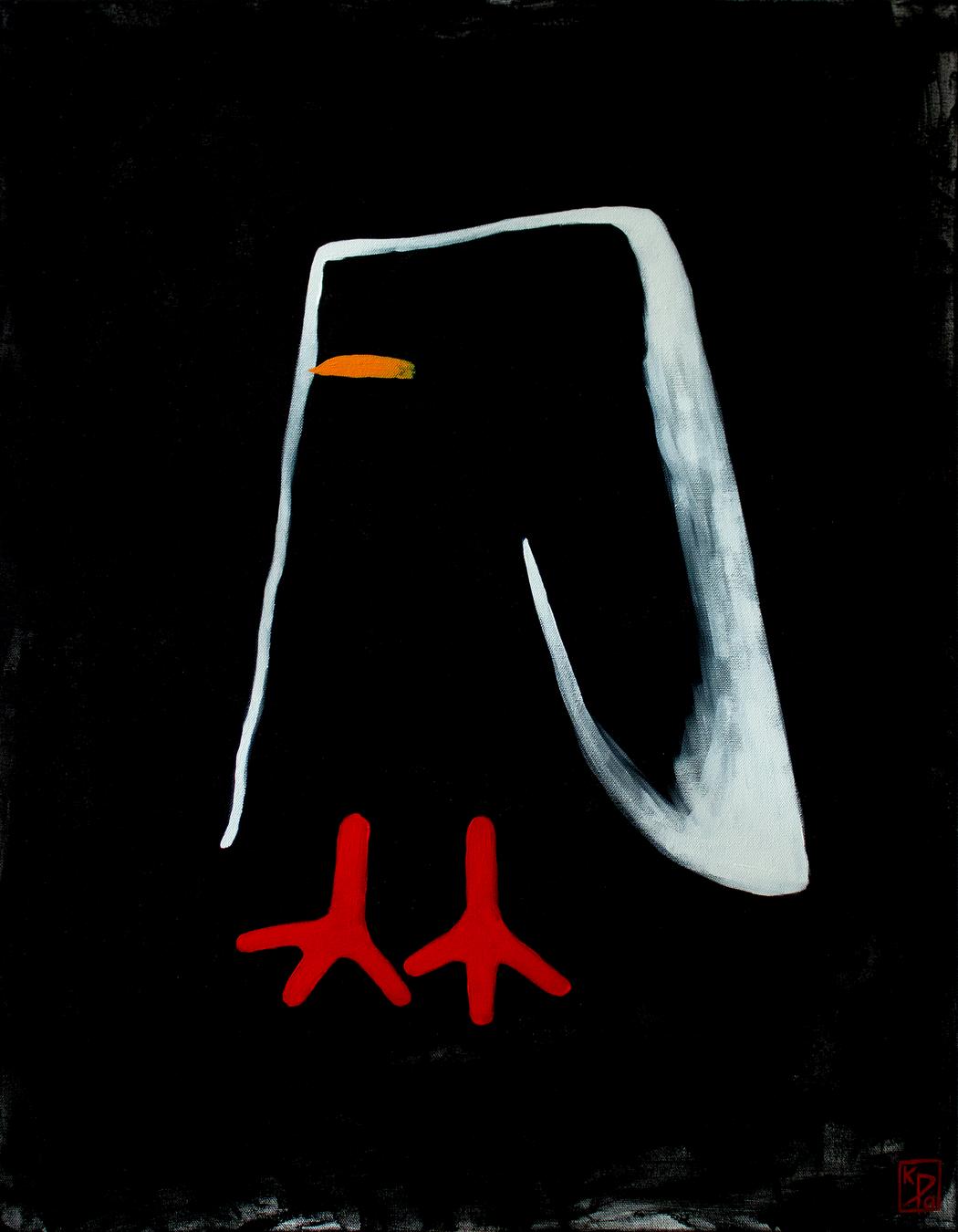 Ksenia Pamphil | Penguin | 2025
Many of your works combine a sense of naivety with deeper emotional tension. How important is this contrast in your artistic practice?
I like not saying things directly and not using loud, obvious symbols. It is more interesting to suggest and to hide deep feelings, an understanding of the world, and an attitude toward it behind a fragile and harmless character. People often do not notice such characters in life; they judge them superficially and think that everything is clear. But if you are more observant and curious, you can discover depth and be surprised. I think this is unconsciously one of the ideas I want to convey to the viewer through my works: that one should not judge by appearances. Kind does not mean stupid or weak. Strange does not mean bad.
Your visual language seems to bring together expressionism and symbolism. What attracts you to these directions, and how do they help you express inner states?
When I began creating my works, I did not know what artistic movements existed or what they were called. At some point, when I had to describe my art in words for the first time and find points of reference to explain it to viewers, I began to study and realized that my process of creating works is close to expressionism. I always experience a strong emotional surge when I paint. Even after going through a powerful emotional experience, with tears in my eyes, I may suddenly realize that I need to paint a picture right now, because my feelings and perception become heightened, and in such moments I can reflect this in the work.
Also, when I simply want to reflect and show different ways of perceiving the world, I have noticed that I often turn to symbols. I have already developed a small series of works with masks, and I never get tired of using them. Each of them not only captures an emotion and a feeling, but also refers to questions of human essence, the perception of reality, religion, culture, and mythology. A mask is an object that carries an incredible number of meanings. But how to interpret this symbol is up to the viewer.
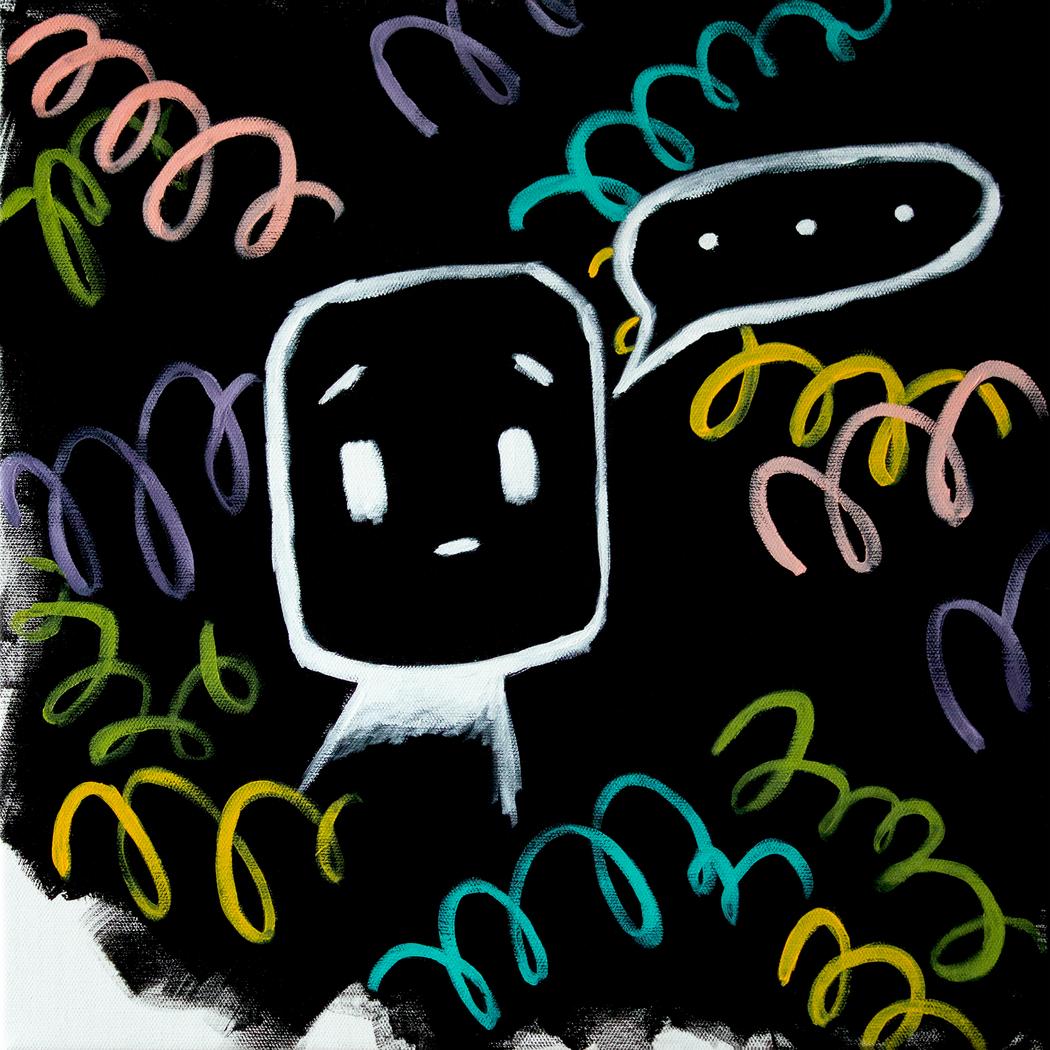 Ksenia Pamphil | … | 2026
The black background in your works creates a strong emotional and visual atmosphere. What role does darkness play in your compositions?
A black background can be a neutral element — for example, silence and emptiness in which an image is born. At other times, it represents darkness, the modern world filled with human vices, against which bright characters appear and enter into confrontation with it. Sometimes the pure canvas even shows through this black layer, which is also quite symbolic. It all depends on the prism of your perception when looking at the work. I myself see both versions at the same time.
Some of your characters seem fragile, silent, or isolated, while others feel playful or protective. Do you see them as reflections of personal emotions, universal feelings, or fictional beings?
At the beginning of creating a work, I am sure that I am reflecting only one emotion or feeling embodied in an image. But during the process, I notice that more and more facets are added — shades of feelings, emotions, and thoughts. Eventually, they transform into an independent image, separate from me. After that, which facet the image and the work as a whole will reveal depends only on the viewer’s prism of perception. The character may even become an observer itself and look at the viewers from the canvas.
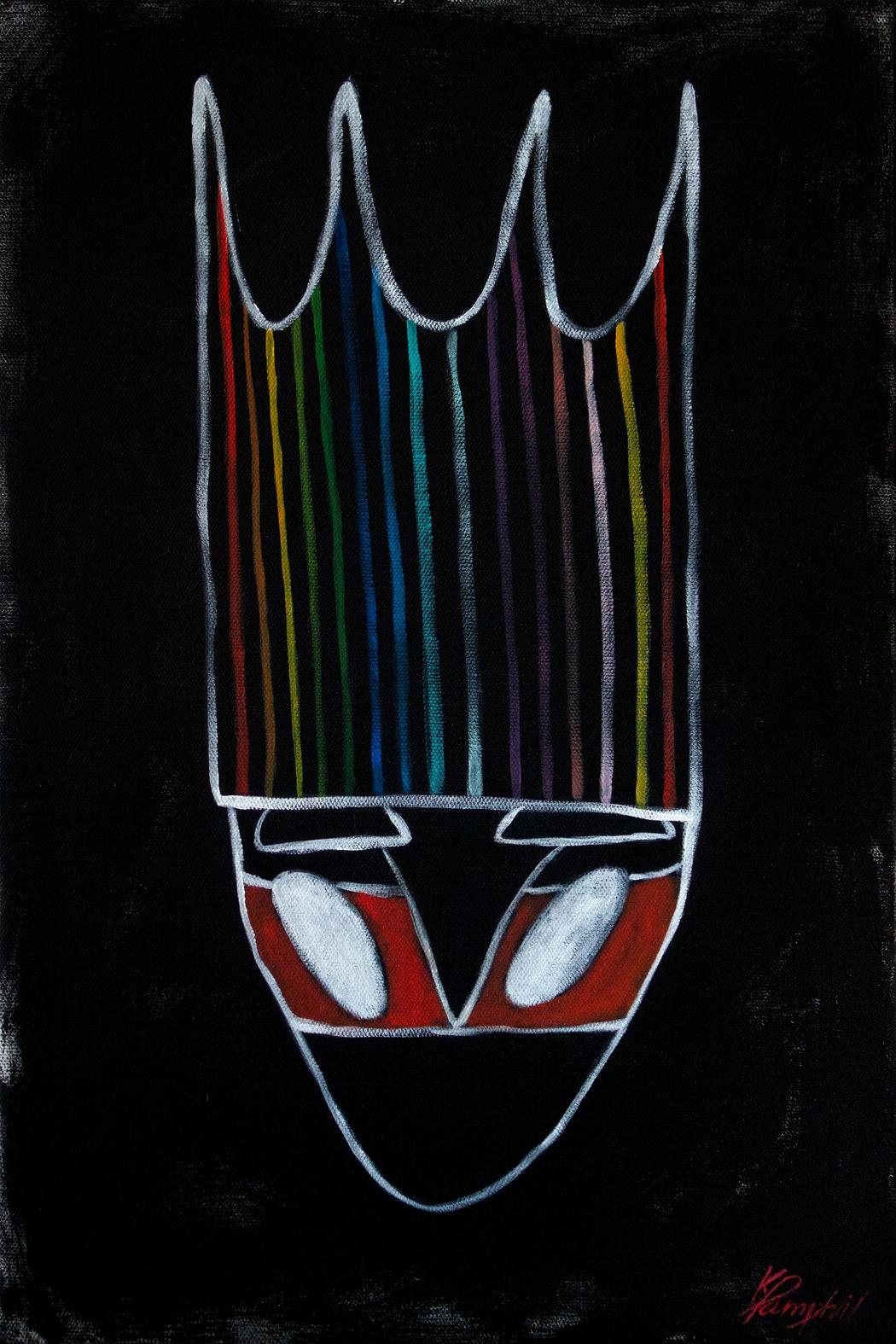 Ksenia Pamphil | When You Return | 2026
You work with painting, graphics, and mixed media. How do different techniques influence the mood and meaning of your works?
The choice of material depends on two things: time and freedom of use. Acrylic, which I use for large works, does not require a long wait before applying the next layer, so there is less chance that I will lose the mood and state needed to create the painting. However, I also like moving into graphics and combining it with any other materials I have at hand: acrylic markers, colored pencils, oil pastels, and so on. In this case, I am free to experiment with the texture and surface of the work, and different moods and atmospheres become mixed within it.
I also believe that a fresh perspective is important in creativity. When I work with the same material for a long time, sooner or later I get used to it and become tired of it. I want to switch to other techniques, and then inspiration appears again. It is like a breath of fresh air. And these feelings are reflected in the works.
Leave a Reply
You must be logged in to post a comment.