Caitlin Driver
Your education combines jewelry and metalsmithing with digital fabrication and design. How has the transition between these disciplines shaped your artistic language?
My artistic language broadened as I introduced rapid manufacturing to my skill set. Working with metal satisfied a pursuit of perfection that other media couldn’t fulfill. For example, when polishing metal, it is easy to discern a mirror finish. When I learned how to use technology, the ability to perfect in mass and detail became possible. There was less pressure on my body, and the time it took for fabrication decreased. I was empowered to create sustainably.
Your works often transform paper fragments and discarded printed materials into carefully constructed sculptural forms. What draws you to these materials, and what meanings do they carry for you?
I cut and shred material to demonstrate how erasure can be used constructively and is transformative. I think there is a feminine quality to destruction. For example, to witness a wave wash the sand flat, I see force happen in nature, and accept that what was there no longer matters. I see my shredded and cut artworks in this light; they are constructed of an aggregate that has undergone a process of neutralization, completely transformed, re-shaped, and re-formed into something new.
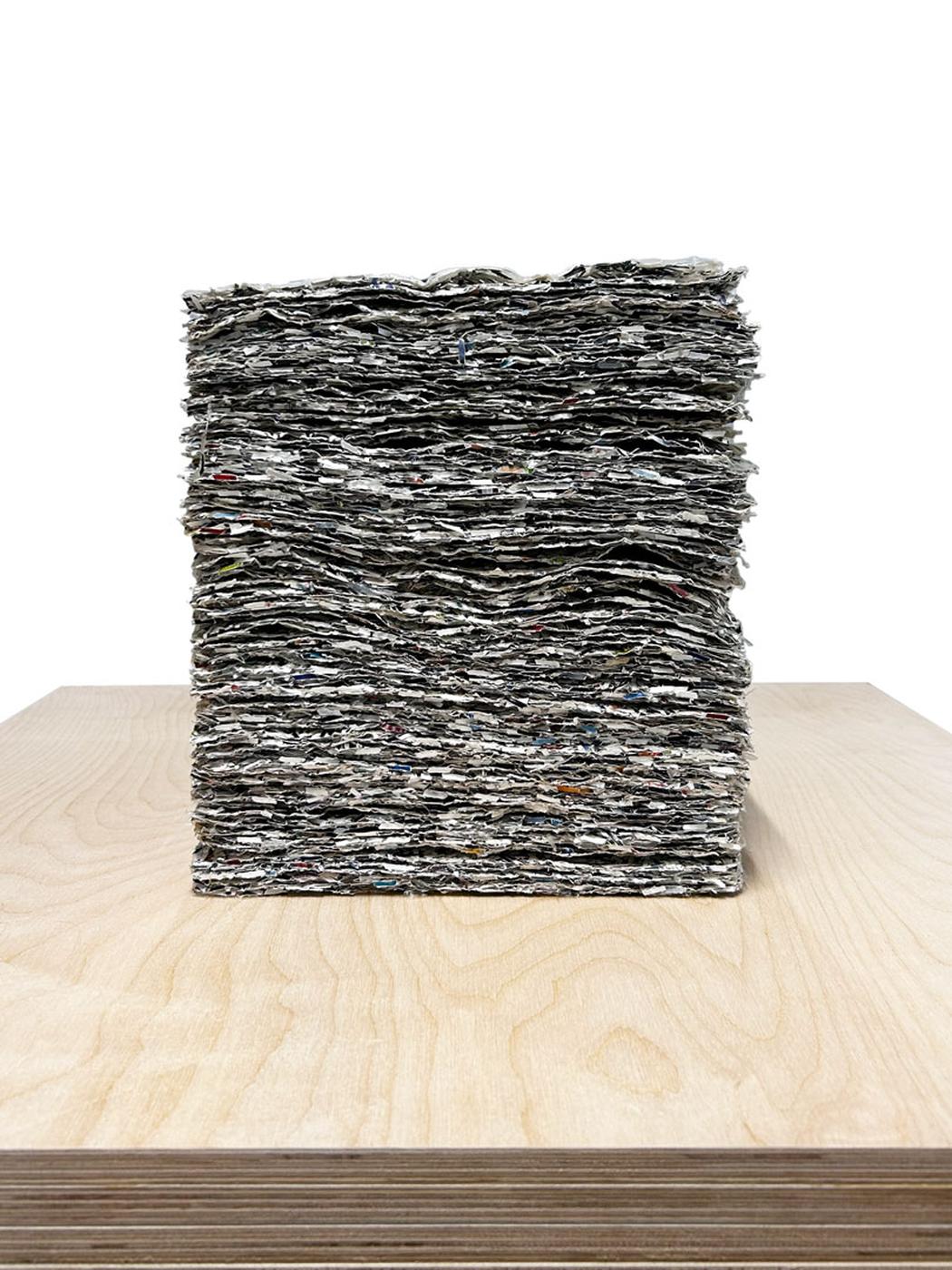 Caitlin Driver | Disintegration | 2022
Counsel Table Pieces for the Bench, Bar, and Gallery emerged from the loss of original art jewelry that was never returned after a store closed in 2018. When did you realize that this experience could become the basis of a new body of work?
In my solitude during the pandemic, I processed a lot of emotion. Experiencing the collective feeling of fear and grief allowed me to realize that I had other unresolved experiences I needed to grieve. I decided to confront my feelings of confusion, anger, disappointment, sadness, and frustration. By destroying materials and reshaping them into new forms, I experienced a feeling of liberation, which ultimately brought me peace and joy.
Each of the eight pieces contains shredded legal documents from the small claims court process. What did it mean to transform records of a legal dispute into physical artistic material?
I found cathartic liberation, infinite possibilities, and new beginnings when I transformed the legal documents into artworks.
Although you have extensive experience with digital fabrication technologies, the works shown here feel highly tactile and material. How do digital tools and hand processes interact in your studio practice?
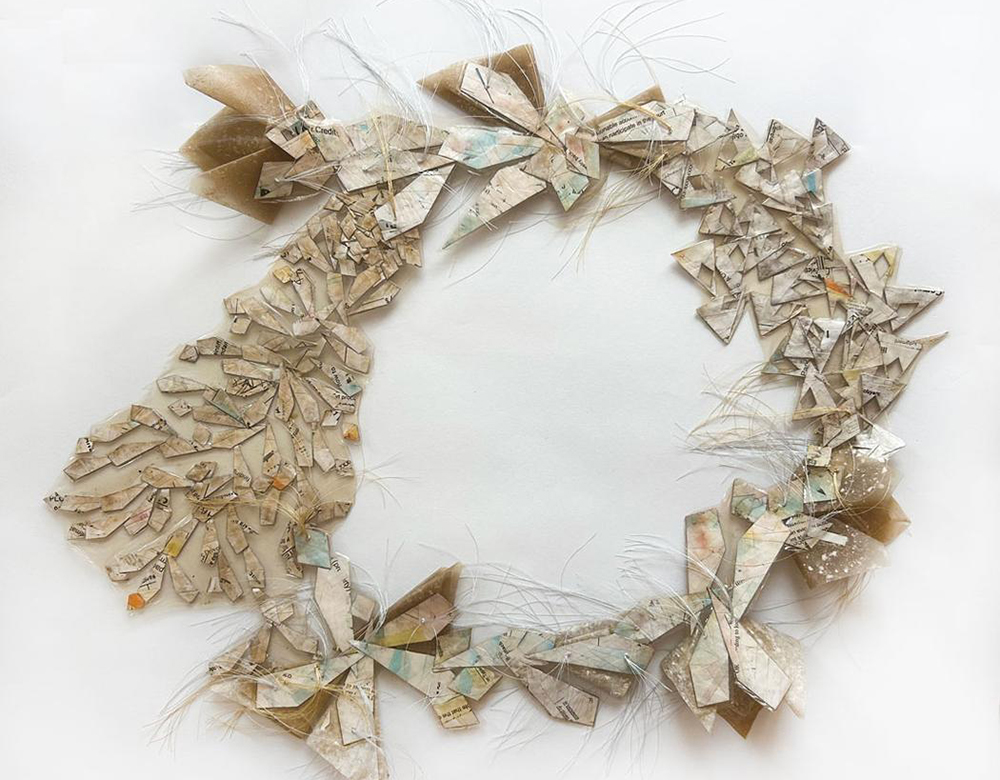
Suprisingly, I utilized a lot of technology when making Counsel Table Pieces. Thankfully, despite not having the original art jewelry, there were digital images. I imported images into Adobe Illustrator and created contour shapes. I used the vector file to laser-cut the paper I had made from cut-up legal documents, then embedded the laser-cut paper into the bioplastic.
Your professional practice includes research into biomaterials and sustainable fabrication. How do environmental concerns influence your choice of materials and the conceptual direction of your art?
I feel a strong connection to the environment, and that became amplified when I started researching bioplastics in 2019. Feeling deeply connected to the earth motivates me to make more informed and educated decisions about materials and processes.
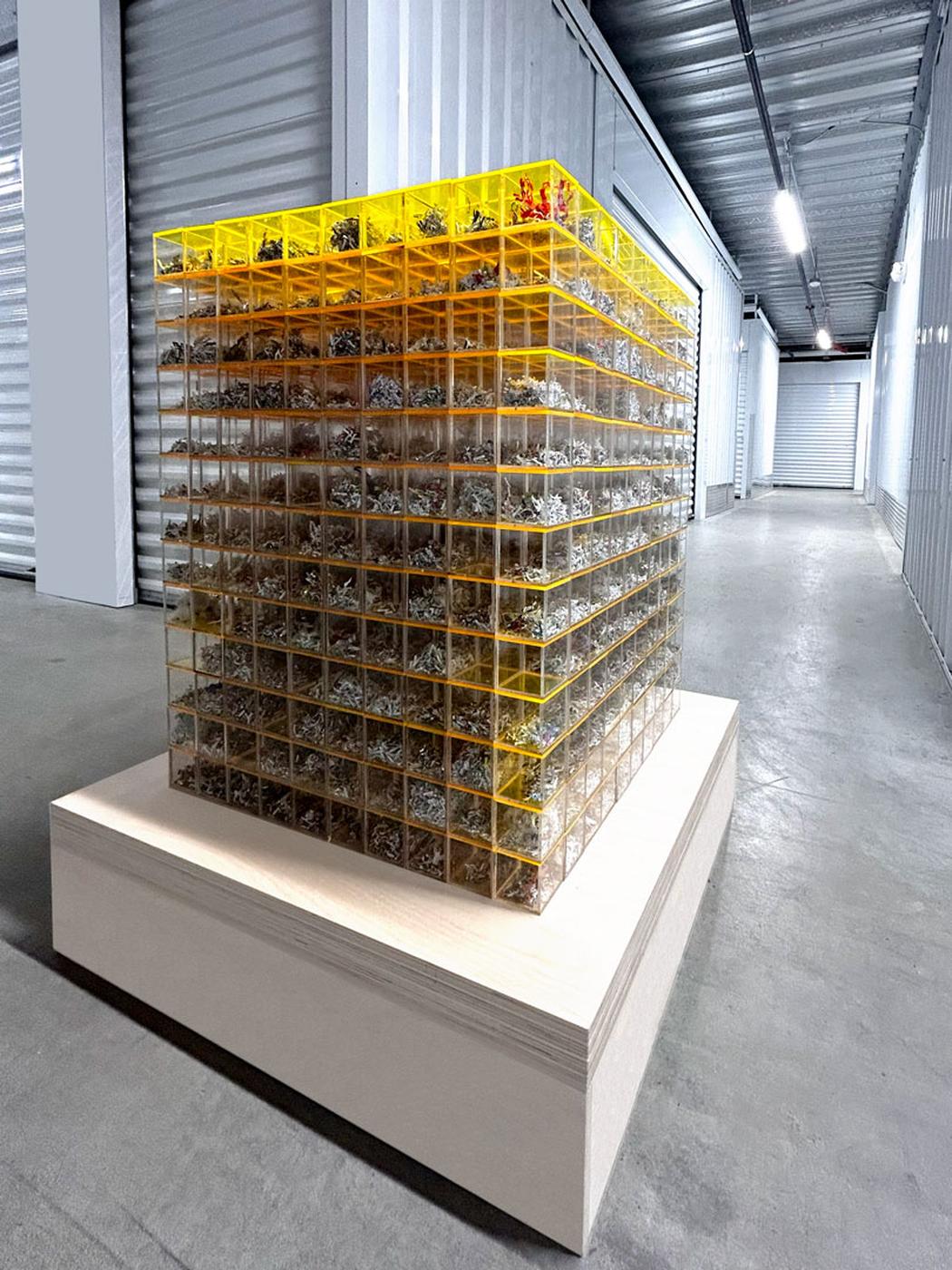 Caitlin Driver | Light Waves | 2025
You have taught art, design, fabrication, and mindful product development in different educational and cultural contexts. How has teaching affected the way you think about experimentation, responsibility, and accessibility in art?
Experimentation: Students adding their personality when projects were flexible led to innovations. This experience reminds me to be open to ideas and allows me to see the beauty of collaboration.
Responsibility: Realistically, there are endless things individuals can take responsibility for. I feel empowered when I get to choose what I want to think about, feel, judge, and perceive as important. When I get to choose my focus, I have energy and motivation to achieve, and it expands into abundance.
Accessibility: One word comes to mind: communication. Everyone communicates differently; therefore, having multiple ways to convey something is important. Every person chooses their own style—one of the easiest ways to recognize this is by witnessing how people use tools. In classes, I instruct how to do something in software, and often there would be several ways to achieve the same aim. Depending on the student’s preference, they would choose how to perform each task. For example, how to access a tool in Rhino: you can type in the command line, select the tool on a toolbar, or search in a menu. Each student chooses their own strategy to achieve the same end. How a student chooses, what a student prefers, says a lot about them, their style, and how they think.