
Sveta Silence
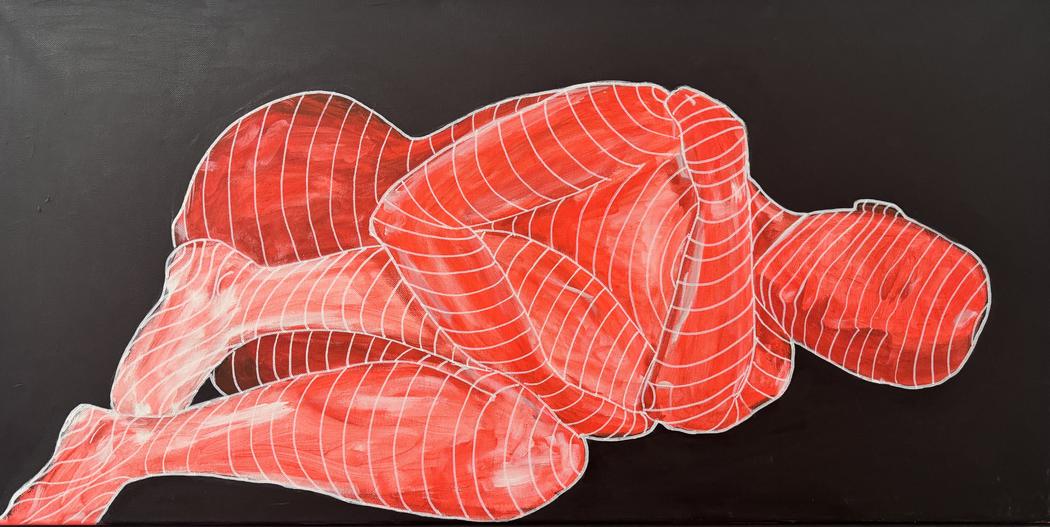 Sveta Silence | I Have Myself
The striped figures in your paintings feel both protected and trapped. What do these lines symbolize for you?
By the way, you noticed the ideas of protection and limitation very accurately. For me, stripes are a visualization of boundaries and external pressure. When the stripes in a painting move onto the body, it is about the moment when external pressure becomes internal. These stripes also carry the symbolism of traces and marks left by lived experience. In one of the works, the stripes are white — this is about rebirth: pain becomes experience, something that simply remains with you.
You describe your work as “psychological figuration”. How do body poses and physical gestures help you communicate emotions that words cannot express?
The body almost never lies. Imagine someone saying, “I’m fine,” while sitting completely hunched over — you would immediately understand that things are not quite so simple. In the series Living Through, I do not focus on faces; instead, I try to express the idea entirely through posture. These poses — the fetal position, a figure pressing against invisible walls, arms wrapped around oneself — are states that most viewers understand without translation. I do not need to explain what this red figure feels. The viewer either recognizes themselves in it, or they do not.
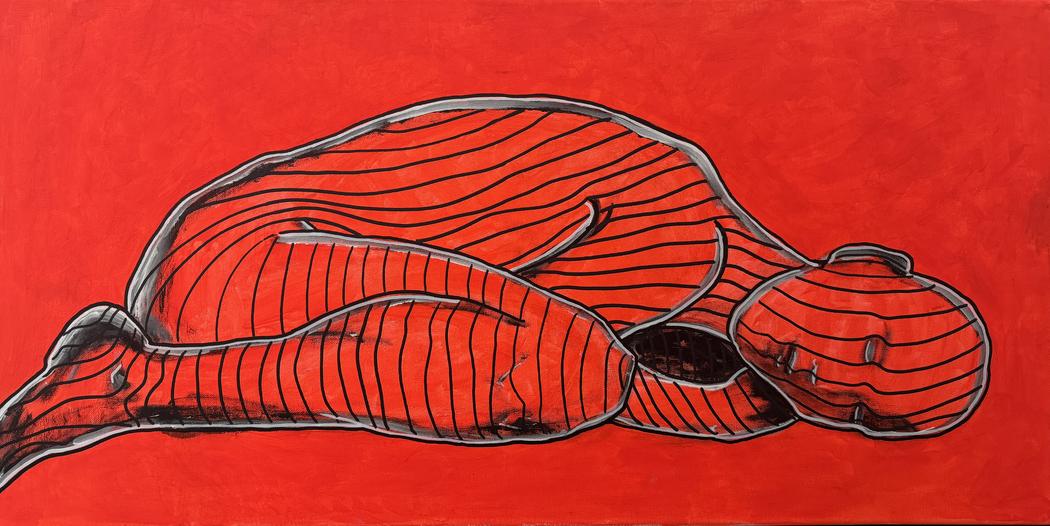 Sveta Silence | Keeping It All Inside
Red, black, white, and later blue and yellow play a major role in the series. How do you approach color as an emotional language?
Red is my favorite color. It is life and energy. It is not about aggression or blood at all. It is the color of vulnerability and of something alive. Black is silence, a safe emptiness, the darkness in which you can curl up, be alone with yourself, calm down, and stop being afraid. White is the external world — neutral, although sometimes oppressive. Blue is calm, exhalation, rebirth, and positive processes. Yellow is new energy, the first bright light after a long night.
Many of your figures appear compressed within the borders of the canvas. How important is the relationship between the human body and surrounding space in your compositions?
For me, this is a metaphor for how we exist in the world. Sometimes external circumstances press so strongly that you literally do not fit — this is the idea behind the work Nowhere to Breathe. Sometimes you shrink yourself in order to become small and invisible, and the surrounding space no longer matters — this became the work Everything Inside Myself. And sometimes boundaries become internal, and you focus on yourself, almost embracing yourself — not because there is no one else to do it, but because you need to come into harmony with yourself. This is exactly what the painting I Have Myself is about. I also think that the 40 x 80 cm format of the paintings, stretched horizontally, intensifies this feeling of compression.
Your background includes psychology and art therapy. In what ways do these disciplines influence your artistic process and the themes you explore?
My practical psychology education is currently at the diploma stage. It is not so much the education itself as the knowledge of the basics that gives permission for vulnerability. In psychology and art therapy, there is no shame in speaking about burnout, helplessness, or the feeling that you have curled up into a ball and do not know how to unfold again. When I began painting Living Through, I allowed myself to be as honest as possible with my emotions. That is why these works are not about looking at suffering beautifully. They are about the fact that suffering is part of the path. And, of course, they are also about the fact that it is possible to emerge from a difficult moment and continue moving forward.
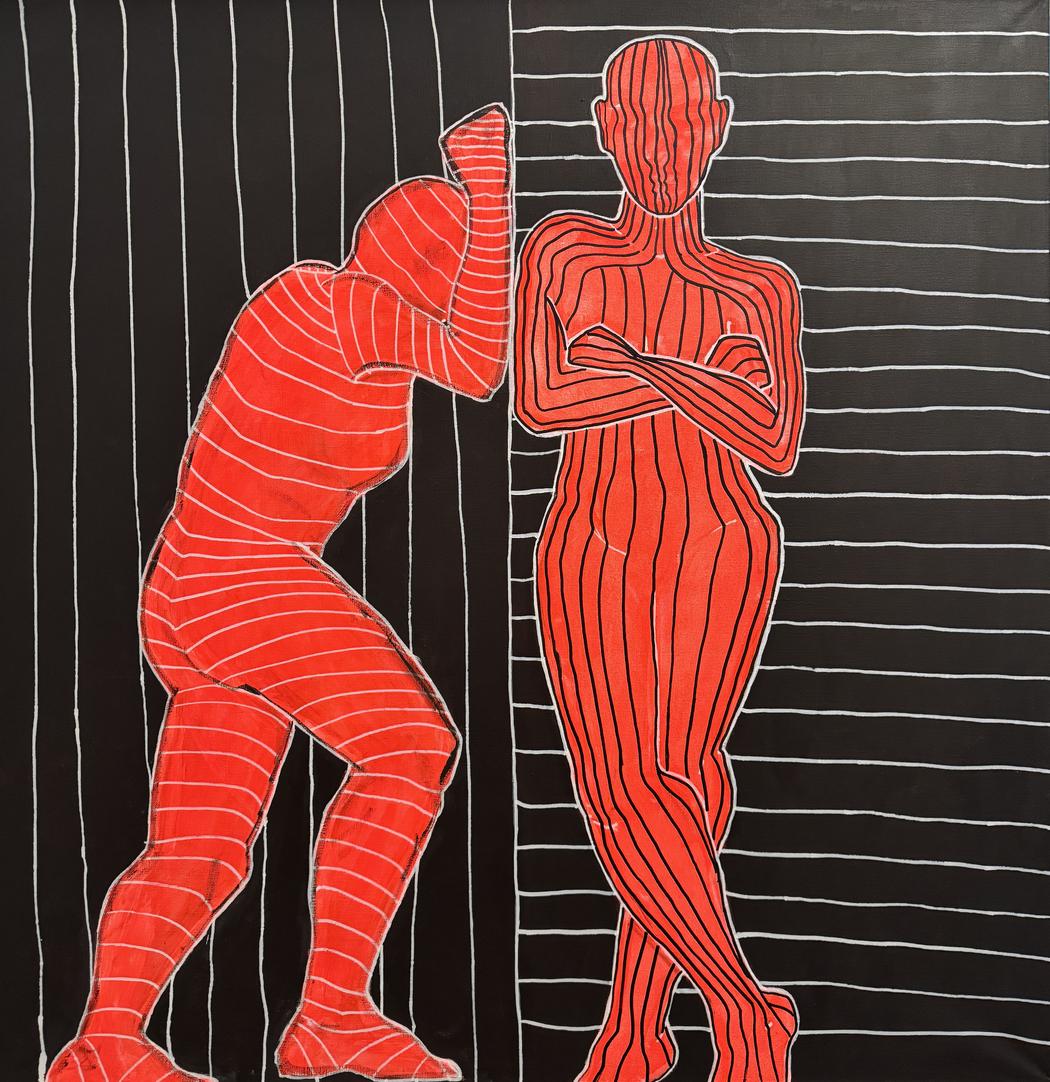 Sveta Silence | I Am My Own Border
Your works often balance minimalism with deep emotional intensity. How do you decide what to leave out of an image in order to strengthen its impact?
I simply remove everything that distracts and paint only the essence. No faces, no details, no unnecessary colors. I leave only the figure, the posture, and the color. I think that behind this minimalism, the most important and honest things remain.
Viewers online described your works with words such as “rebirth”, “cocooning”, and “the darkest hour before dawn”. How important is audience interpretation in your practice?
For me, this was a very valuable moment in the creation of the series. I showed the works without explaining anything and asked, “What do you feel when you look at them?” Many people wrote exactly what I had intended. Many also added their own meanings connected with “cocooning” and “rebirth.” After all, art does not end on the canvas — it lives in dialogue. And if a viewer saw in one of the works not simply a person curled up, but someone ready to spread their wings, then it means I did everything right, and our dialogue took place.
Leave a Reply
You must be logged in to post a comment.