
Thomas Occima
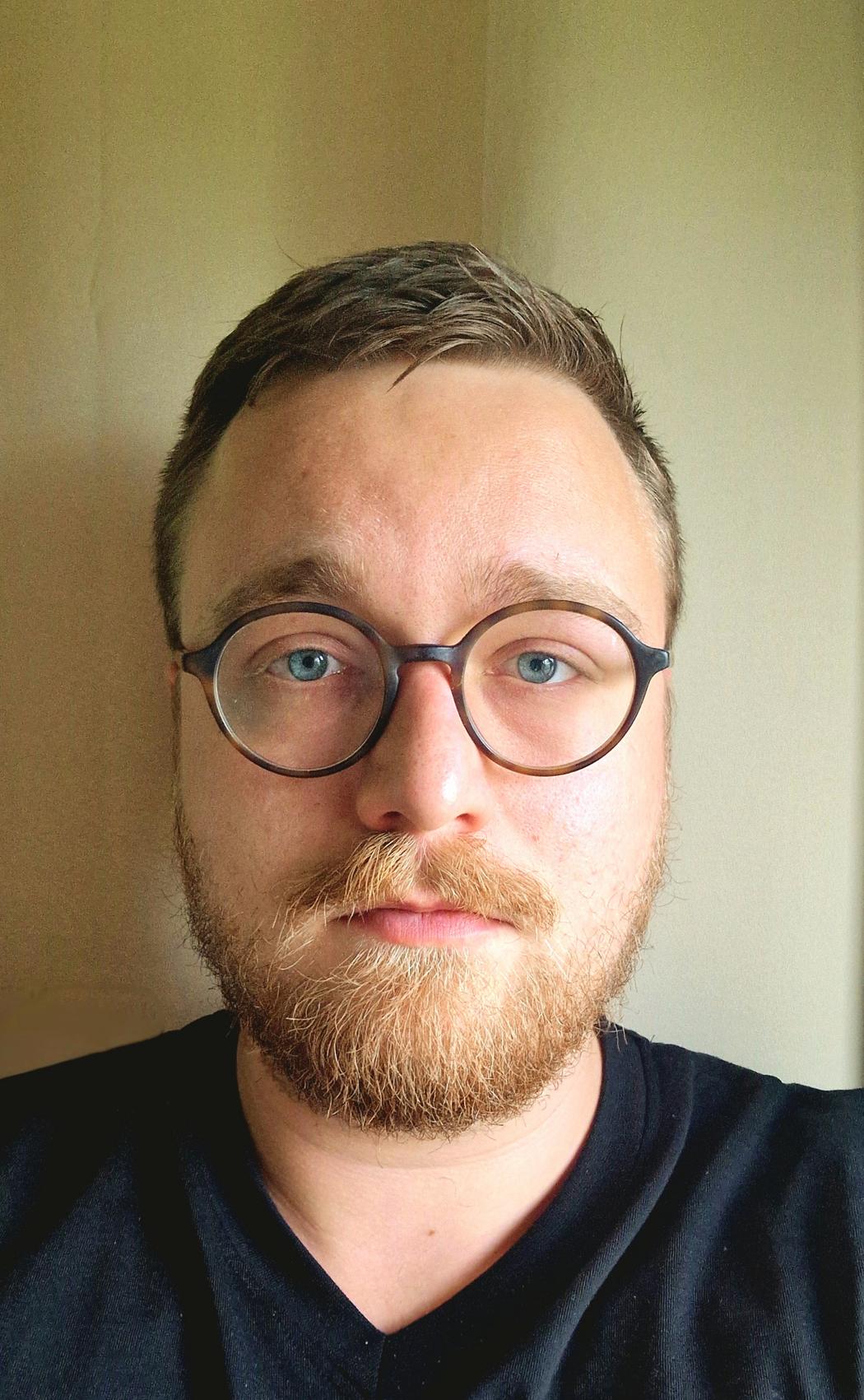
Your work explores the tension between structure and dissolution. How do you understand this tension in relation to your creative process?
For me, this tension is at the core of the creative process itself. I often begin with a sense of structure, direction, or control, but during the act of painting, parts of that structure begin to break apart, transform, or dissolve. I do not see this as destruction, but as something necessary and alive. The work becomes more honest when it moves beyond pure control.
I am interested in the balance between intention and unpredictability — between what I consciously build and what emerges instinctively through emotion, movement, and reaction. In many ways, the painting develops through this constant negotiation. The tension between structure and dissolution is not something I try to resolve; it is what gives the work its energy and depth.
Many of your compositions seem to balance chaos with an underlying sense of order. How do you decide when to let the work become spontaneous, and when to regain control?
It is not a decision that belongs entirely to me. The process is more like an ongoing dialogue between myself, the work, and the canvas itself. I often think of it as a dance — no single element is fully in control. The painting develops step by step through tension, reaction, and intuition. Sometimes spontaneity takes over, and sometimes structure naturally returns. I try to listen to the work rather than force it into a fixed direction.
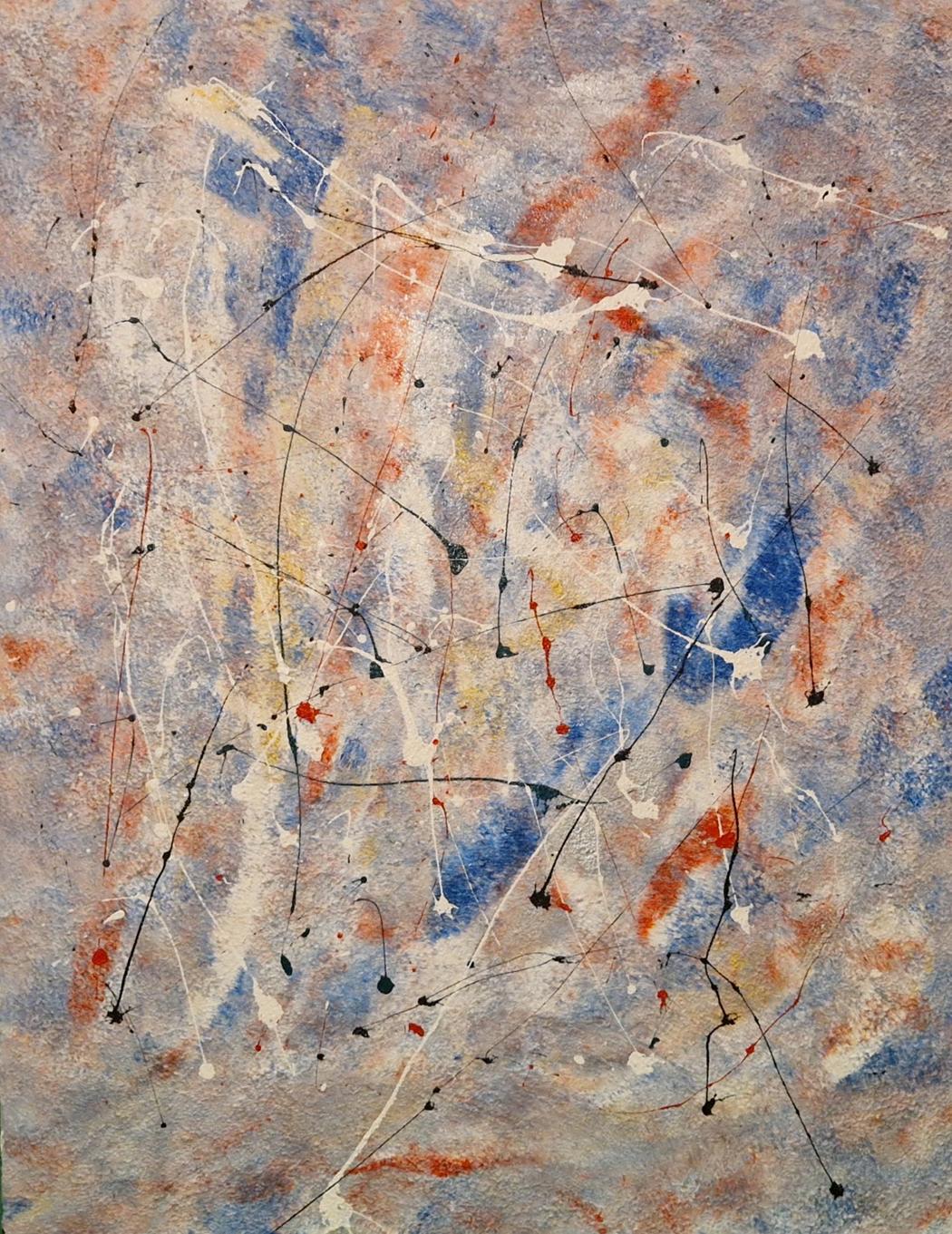 Thomas Occima | Angelo | 2023
You describe abstraction as a way to approach what resists direct visibility. What kinds of invisible forces or states are you most interested in translating into visual form?
Emotions are at the center of my work. Almost all of my paintings emerge from strong emotional states. Emotions are often invisible in everyday life — you may recognize anger, sadness, or tension on the surface, but you rarely know what is truly happening inside another person. That hidden inner world deeply interests me. I see painting as a way of giving form to those invisible emotional forces that cannot always be expressed through language or direct representation.
The Capricorn appears in your practice as a conceptual anchor rather than a literal symbol. How did this idea enter your work, and what does it allow you to express?
The Capricorn represents a combination of how I see myself and what I want to communicate through my paintings. To me, it symbolizes resilience and persistence. It is a figure capable of surviving and creating life even in hostile or difficult conditions. If I had to summarize the idea in one word, it would be resistance — not only in the sense of struggle, but also endurance, discipline, and the ability to continue moving forward despite obstacles.
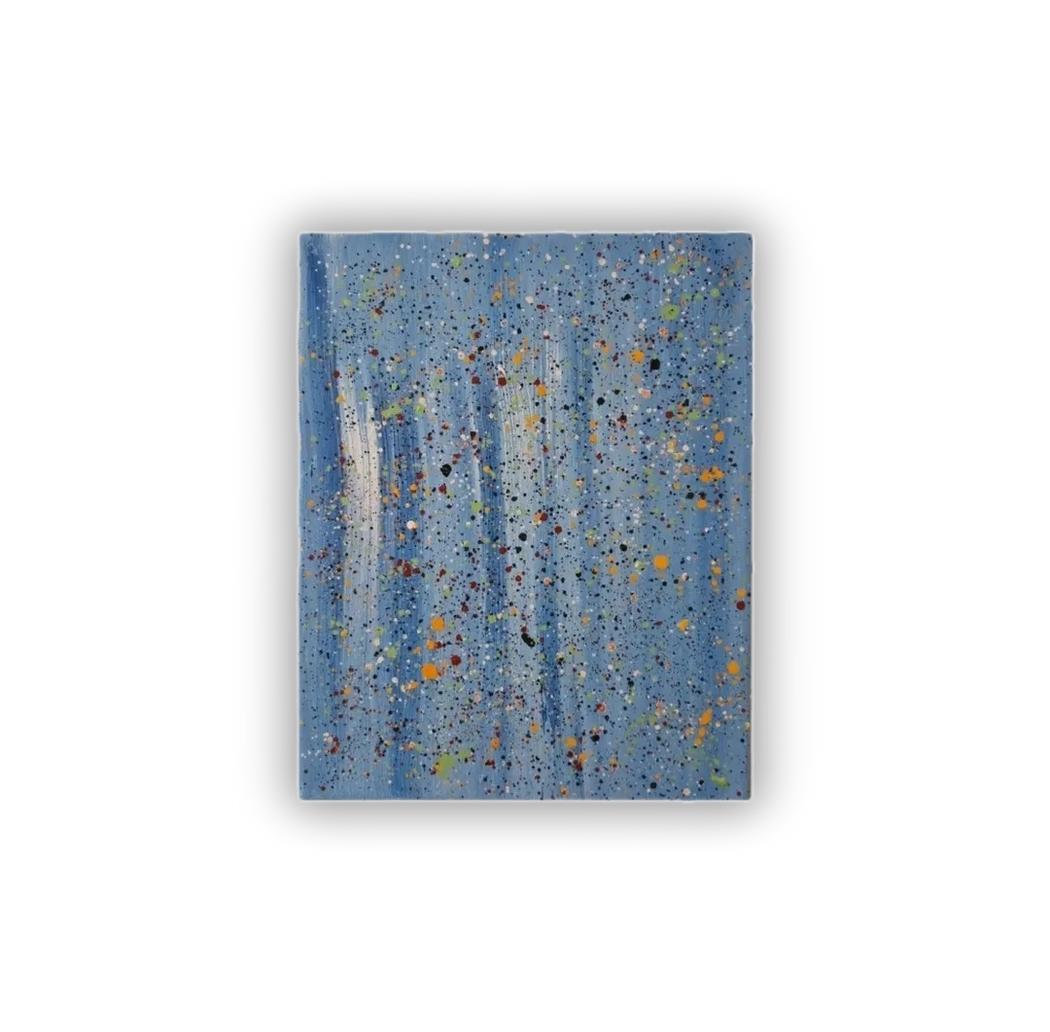 Thomas Occima | Blue | 2020
In your paintings, lines, splashes, and layered surfaces often create a sense of movement or mapping. Do you see these marks as traces of energy, memory, or something else?
I see them as traces of emotion, energy, and life itself. The marks are not purely formal elements for me; they are physical remnants of a moment, a movement, or an emotional state. They carry intensity and rhythm, almost like fragments of lived experience transferred directly onto the surface.
How important is the physical act of painting in your practice – the gesture, the rhythm, the repetition, and the contact with the surface?
It is extremely important. The act of painting is almost a sacred ritual for me. I usually work with only limited planning because I want to leave space for instinct, emotion, and discovery. The physical movement, the repetition, the direct contact with the surface — all of it becomes part of accessing a deeper emotional and creative state. The process itself is just as important as the final image.
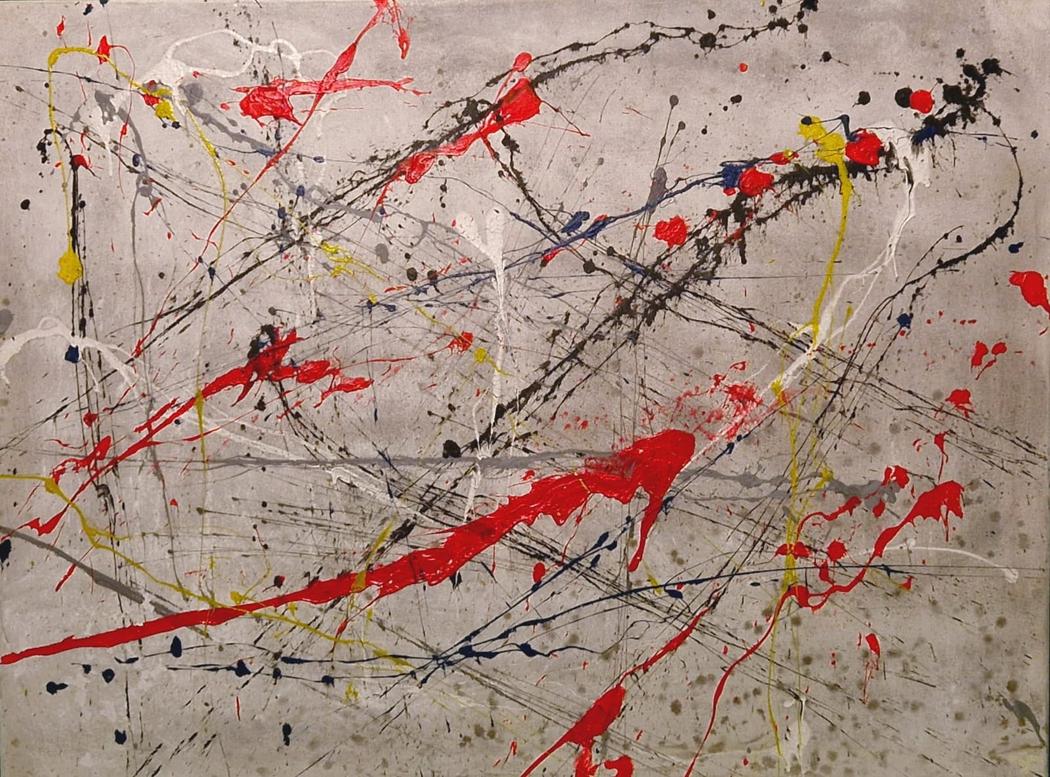 Thomas Occima | Chaos | 2016
Your works invite prolonged engagement rather than immediate interpretation. What kind of experience would you like viewers to have when they spend time with your paintings?
I want viewers to feel that things are not always what they seem at first glance. Some experiences require time and attention before their deeper layers become visible. I hope my paintings encourage people to slow down, look longer, and discover different emotional dimensions within the work. Even though the paintings originate from my own emotions, I believe they can also function as mirrors for the viewer — reflecting something personal back to them if they are willing to spend enough time with the work.
Leave a Reply
You must be logged in to post a comment.