
Charis Makri
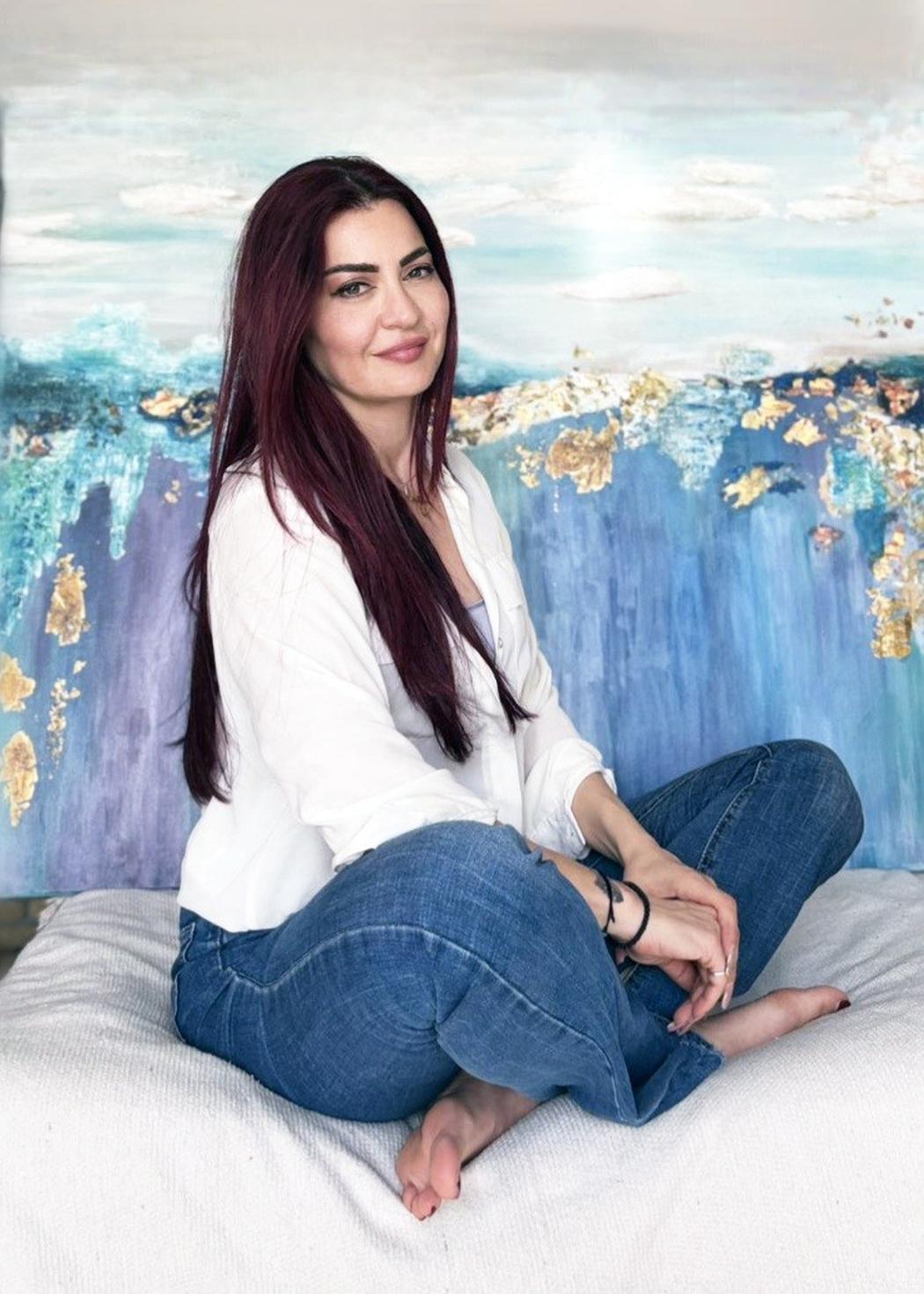
Your work blends abstraction with symbolic storytelling. How do you balance intuition and narrative when creating a piece?
I usually begin with a specific idea or symbol that I want to express. From there, I build the composition in a way that supports that meaning, placing the symbols clearly so they are present and readable within the work.
At the same time, I do not follow a strict plan. I allow the process to guide me, and the piece develops naturally as I work on it. The narrative is there from the beginning, but it remains open and flexible, allowing the work to evolve organically.
What matters to me is not to define a single interpretation, but to create space for the viewer to approach the work through their own perspective and experiences.
As a self-taught artist, how has your independent journey shaped your visual language and creative confidence?
Being self-taught gave me the freedom to explore and experiment without limitations. I learned by observing, trying different approaches, and following what felt right to me at each stage.
Without a structured academic path, my visual language developed in a more instinctive and personal way, which I consider an essential part of my identity as an artist.
My confidence grew gradually through practice and by trusting my instinct. Over time, I realized that this way of working allows me to stay connected to what I truly want to express.
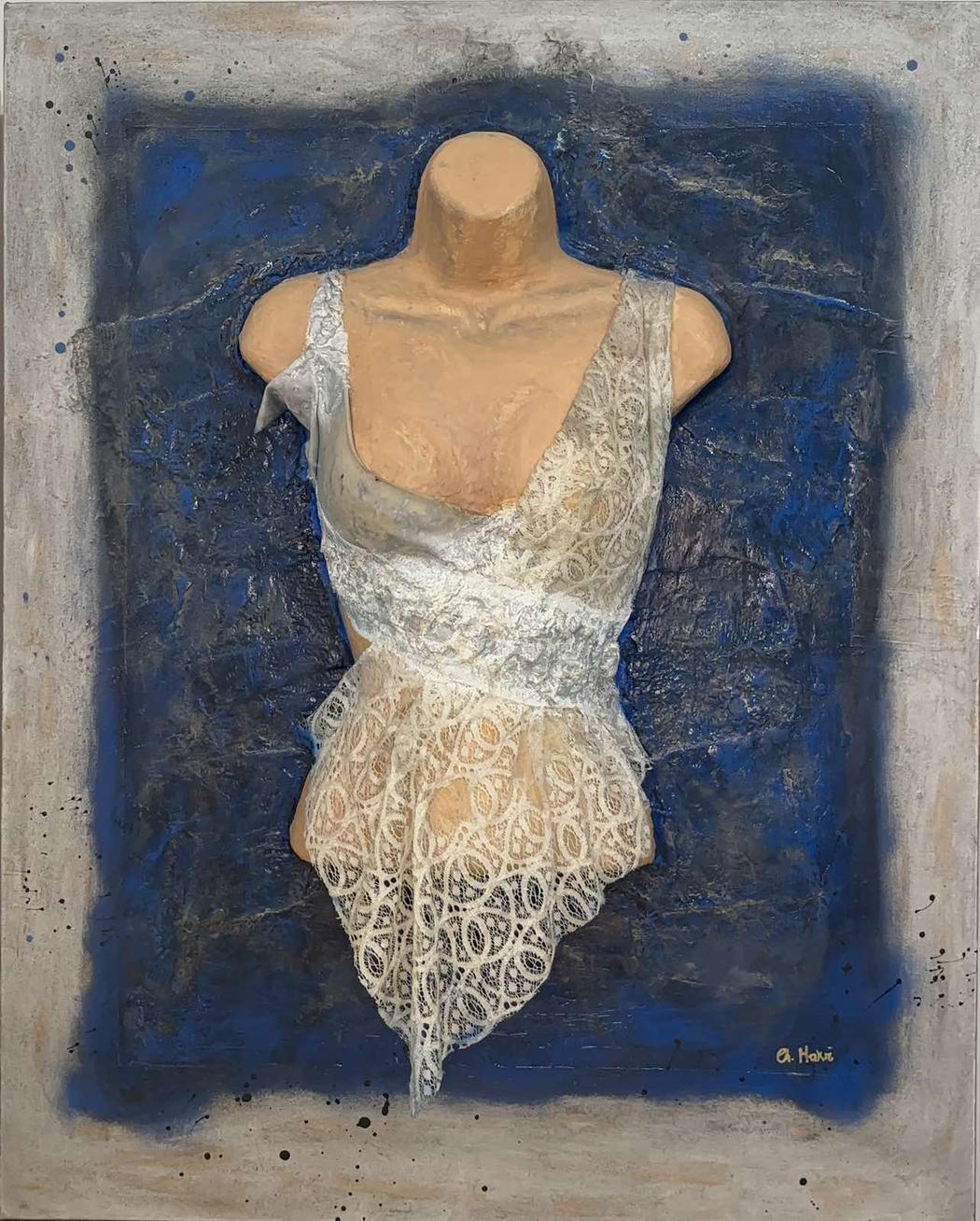 Charis Makri | Untamed | 2026
Your paintings often feel emotionally intense. Do you begin with a specific emotion, or does it emerge during the process?
I usually begin with a certain feeling or idea, but it does not remain fixed. As I work, that feeling can grow, combine with other emotions, or even change depending on what I experience during the process.
Sometimes something new emerges while I am painting, and I choose to follow it. In that sense, the emotional aspect develops together with the work rather than being defined from the beginning.
What I feel while I am creating has a strong influence on the final result and becomes part of the overall expression of the piece.
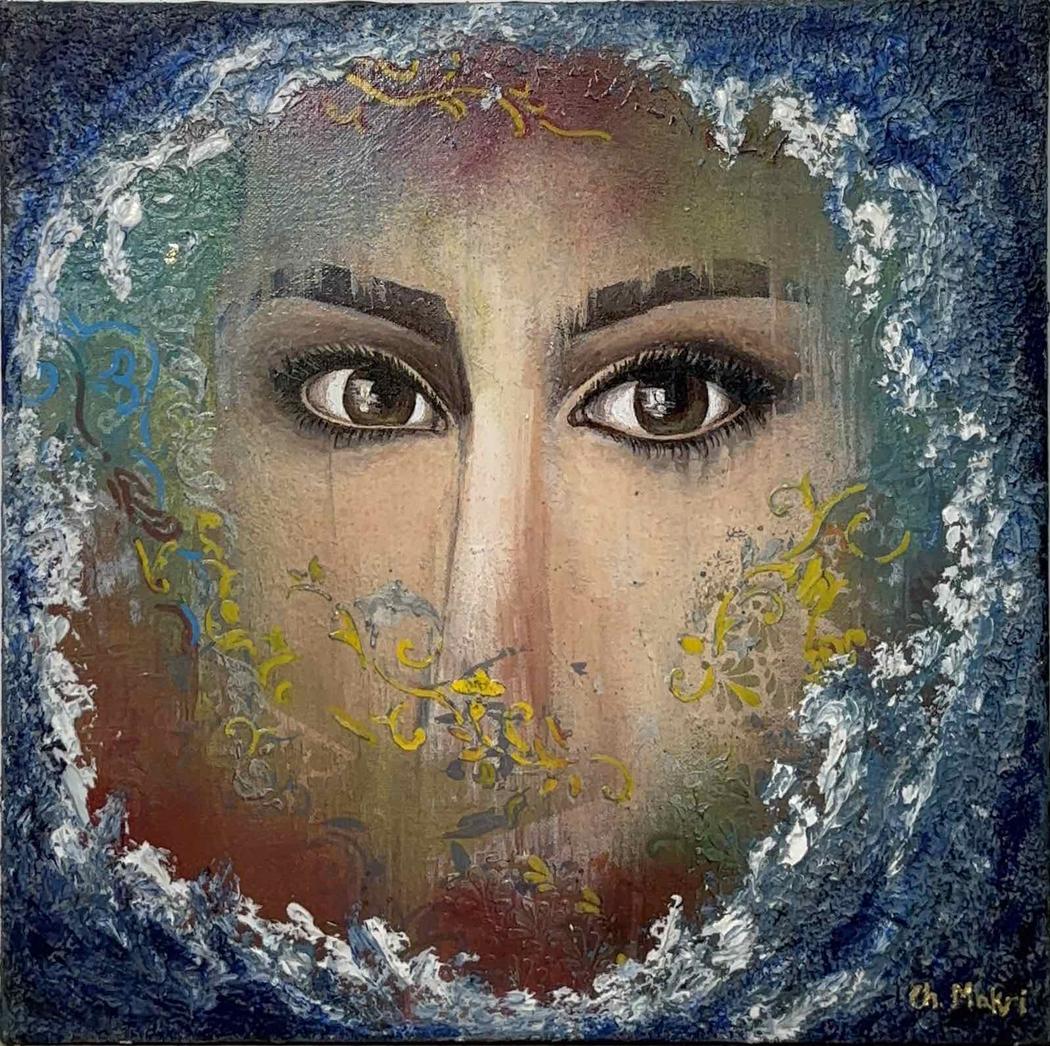 Charis Makri | Through The Silence | 2020
Can you describe how texture and layering contribute to the storytelling in your work?
I use texture and layering to create depth, both visually and conceptually. They help build the structure of the painting and support the meaning I want to communicate.
In some works, texture becomes more prominent when I want to introduce a stronger sense of realism while still maintaining the symbolic dimension of the piece. For example, in Endurance, the texture on the olive tree trunk enhances its physical presence, while at the same time supporting its symbolic meaning. The layering in that work, including the use of gold leaf and red paint, was intentional and adds a stronger symbolic weight to the overall idea.
For me, these elements allow the surface of the painting to connect with what exists underneath it, both visually and conceptually.
The human figure appears frequently in your art. What role does it play in expressing identity and vulnerability?
I use the human figure because everything ultimately relates to the human experience. Emotions, memories, and personal journeys are all connected to our inner world. The body becomes a way to express these elements through posture and movement. I sometimes focus on the gaze, as it creates a direct and immediate connection with the viewer, as seen in works like Gaze.
I believe this makes the work more relatable. Even though each person experiences things differently, there is a shared emotional ground that allows the viewer to recognize something of themselves within the work.
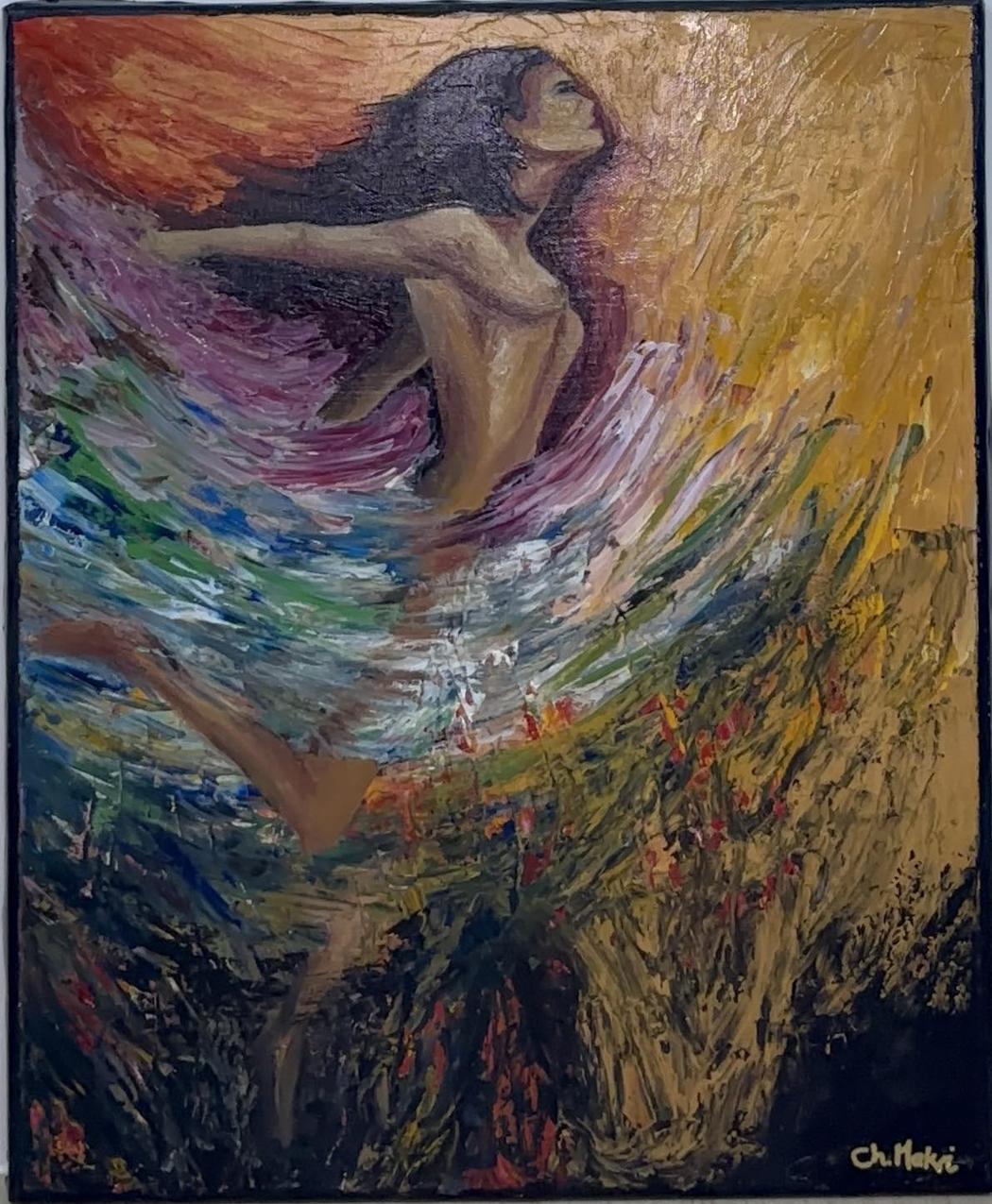 Charis Makri | Rising | 2016
How does your environment in Cyprus influence your color palette, mood, or themes?
I believe that Cyprus influences my work in a subtle and often unconscious way. Living in a Mediterranean environment, surrounded by the sea, strong natural light, and constant sunshine, I find myself naturally drawn to color palettes based on blues, turquoise, and similar tones, even when I initially intend to explore something different.
The presence of the sea, which has been an essential part of life since childhood, along with the landscape and atmosphere of the island, shapes this connection.
At the same time, my process remains intuitive. I do not consciously try to reflect my surroundings, but they become part of the work naturally as I follow the flow of the painting.
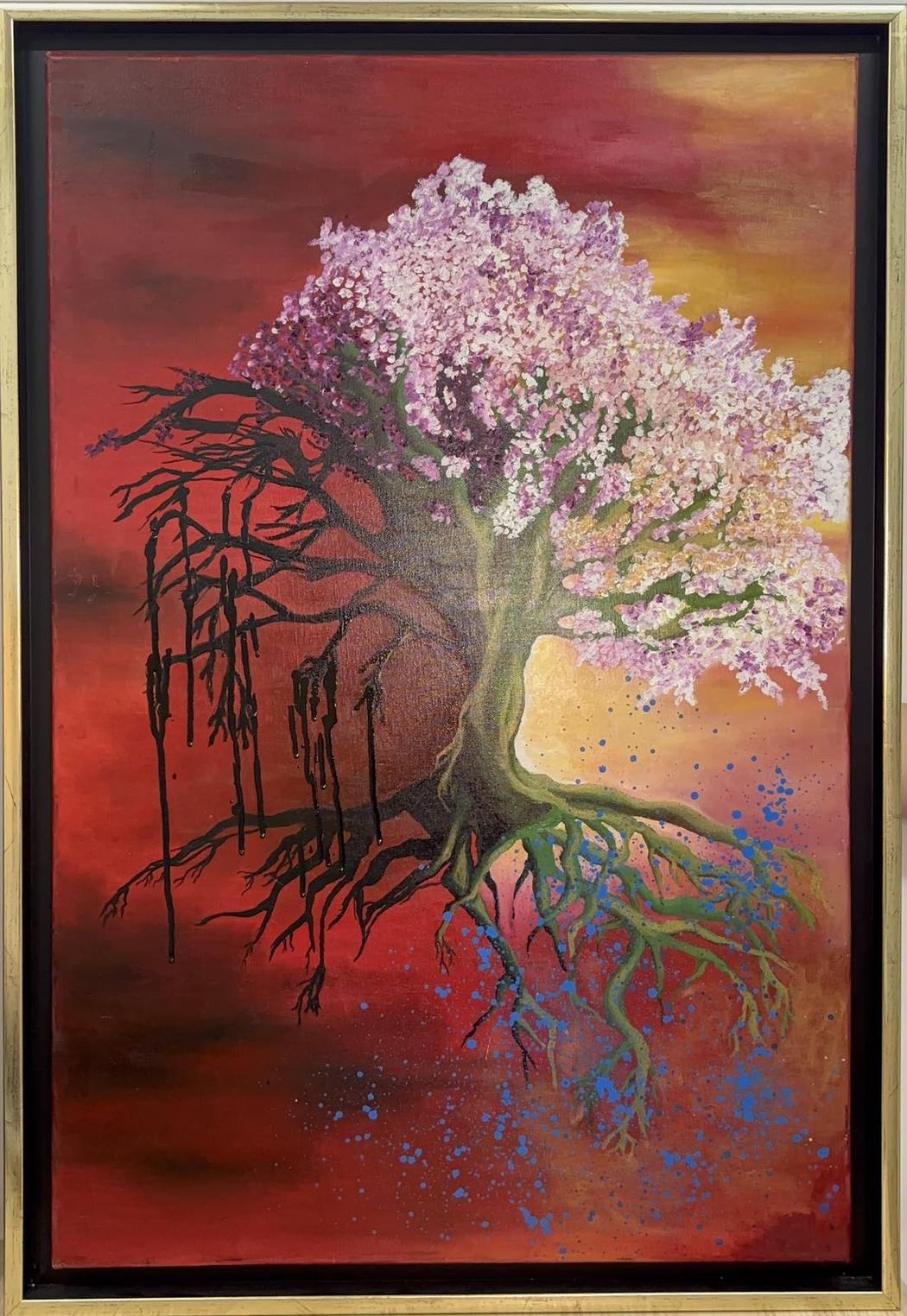 Charis Makri | Journey Of Life | 2016
What do you hope viewers feel or reflect on when they encounter your work?
I hope that viewers feel a sense of connection when they encounter my work. I want them to engage with it through their own experiences and form their own interpretation. For me, it is important that the work feels like it is communicating with them, creating a kind of dialogue between the viewer and the painting.
I am not interested only in the technical aspect. I want the work to evoke something deeper, whether it is a feeling, a thought, or a personal reflection. I place my own energy and symbols into the work, but what matters most is what the viewer receives and takes away.
Leave a Reply
You must be logged in to post a comment.