Monica Miranda
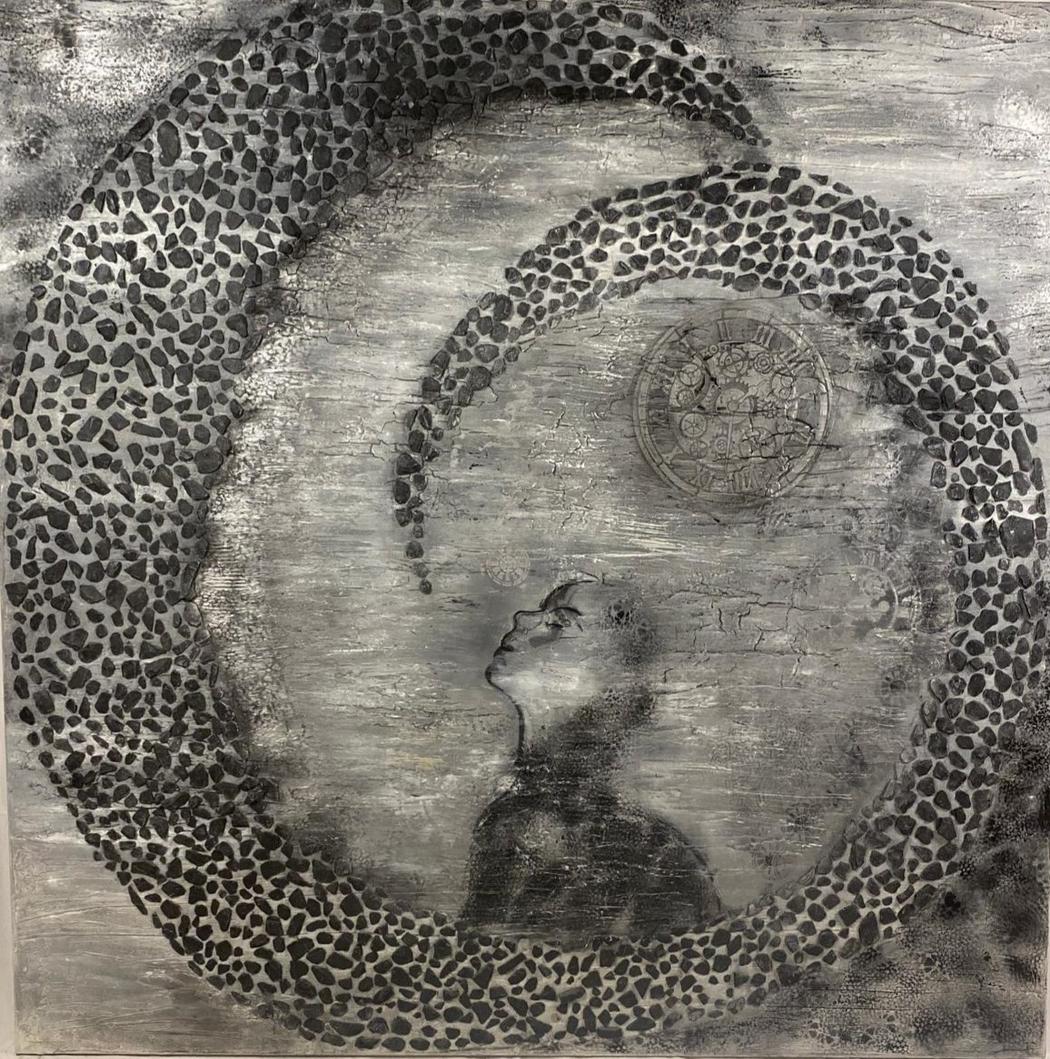 Monica Miranda | LLEGADA | 2025
Your artistic journey includes a long pause before returning to art. How did this period shape your current practice and vision?
It was not a pause; it was an incubation to dismantle an inherited fate.
More than a hiatus, my distance from drawing was a response to the weight of a destiny others had written for me. I grew up in a humble, artisan environment where art was not seen as an option, but as a risk to one’s security. For years, I lived a double life: inhabiting what I had inherited while my true inner world continued to grow forcefully in solitude. That time away from drawing was, in reality, a period of observation and collection. I did not simply return to art; I conquered my right to it. My current practice is not born from the academy, but from the need to be the author of my own story, transforming decades of silence into a visual language filled with intention and legacy.
You describe your work as an act of reclamation and courage. What does reclaiming yourself through art mean to you?
Choosing the uncertainty of creation over the security of what is inherited.
Reclaiming myself through art is the most significant act of sovereignty in my life. It means having the courage to choose the lack of certainty in creation over the safety of the established. For a long time, my place in the world was denied to me by the expectations of others; today, every piece is a space I allow myself to inhabit with total freedom. For me, art is the territory where I stop being what was expected of me to become who I decide to be. It is a reclamation that is not only personal but human: the right to exist outside the patterns and archetypes that attempt to define us.
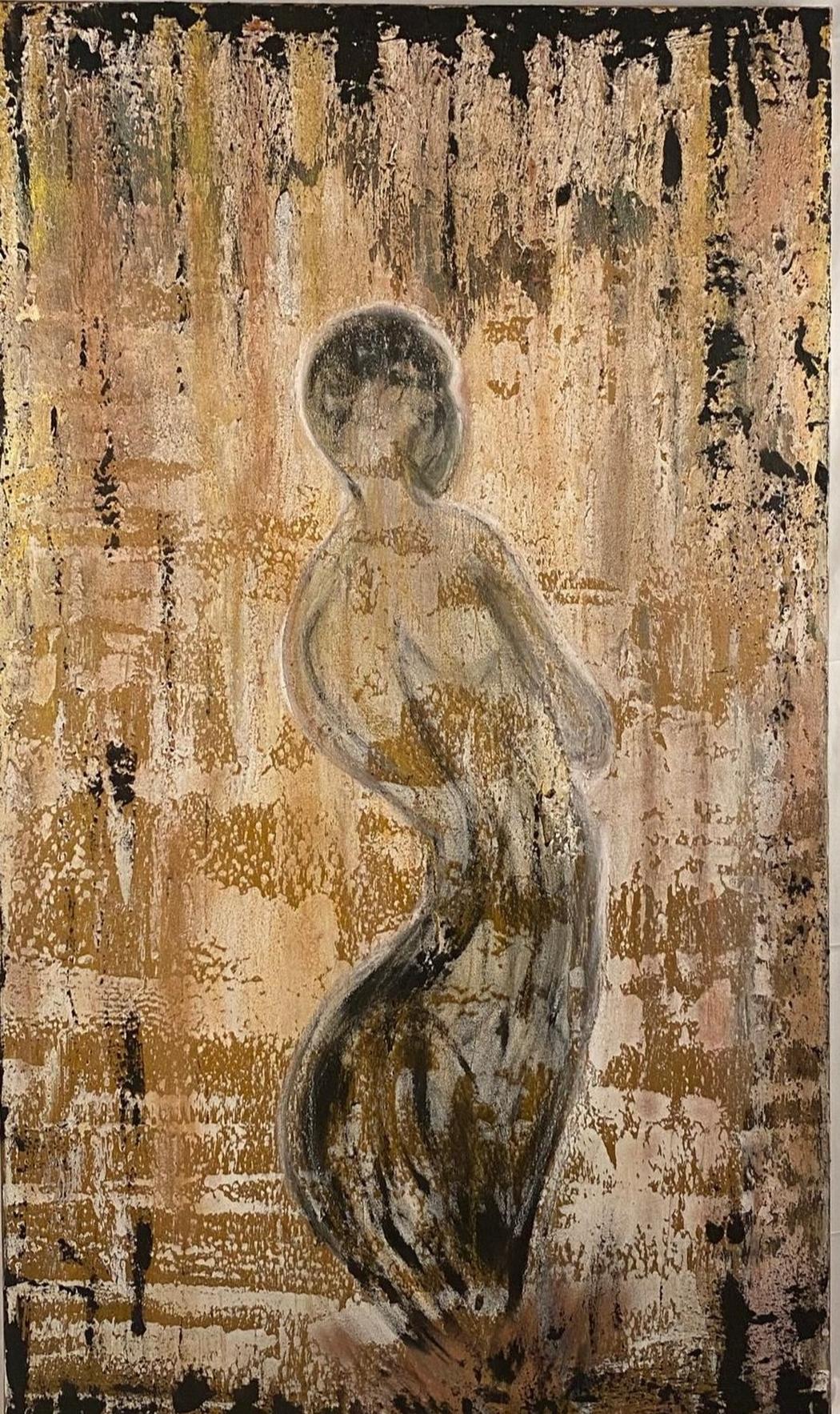 Monica Miranda | RECONSTRUCION | 2025
How did your experience with illness influence the themes of rebirth and resilience in your work?
Illness as a language and sanctuary transformed into art.
Illness has been a constant in my biography, but its meaning has evolved alongside me. For a long time, it was my only sanctuary—the only place where I was allowed to rest, to fail, and to be cared for without demands. After years of deep research into the origins and language of pathology, I understood that what we are unable to make conscious, the body finds a way to manifest. My tumor and my crises were the language of a self screaming to be born. In my work, resilience is not about overcoming illness, but about alchemizing it. I use my art to translate those bodily messages into matter, turning fragility into a form of knowledge and constant rebirth.
Your process is deliberately slow and material-focused. Why is slowness important in your artistic language today?
Resistance against the acceleration that dehumanizes us.
My process is deliberately slow because I understand that every vital process needs its own time to mature and manifest. We live in an era of collapse and extreme acceleration where, between birth and death, there seems to be nothing more than a carousel of directionless moments. My sensitivity perceives this acceleration as an extinction of what is truly human. Therefore, working slowly is my form of resistance. My works are born from a lived and reflected time; they are an invitation to the viewer to stop the stopwatch and recover the sense of waiting. In my art, slowness is not a lack of rhythm; it is presence.
Your works often feel aged, as if they carry memory and time. What role does texture play in conveying this sense of history?
Texture is the archaeology of life; what appears old is actually lived.
To me, texture is the skin of memory. In my work, what appears aged or worn is not an aesthetic device, but a representation of the traces of time on the human being. My pieces carry layers, reliefs, and roughness because our identity is not smooth; it is made of strata of experiences, fears, and conquests. I use matter to create a visual genealogy: every crack in the work is an accepted scar. Texture allows the work to stop being an inert object and become a body that has lived, reminding us that our history, with all its marks, is what makes us deeply beautiful and real.
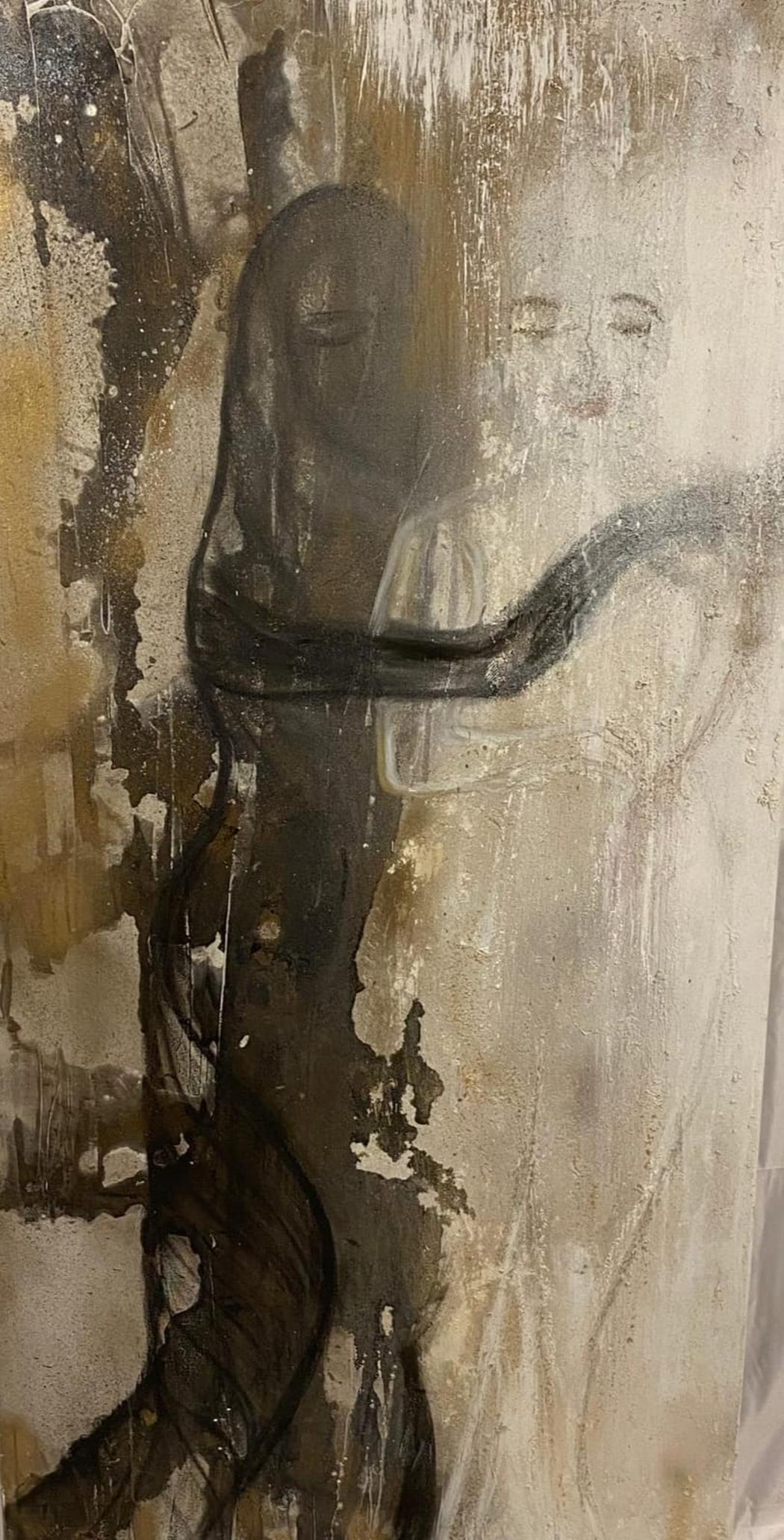 Monica Miranda | LUZ Y SOMBRA | 2025
You speak about resisting the acceleration of the modern world. Do you see your art as a form of quiet resistance?
Against the carousel of acceleration, an anchor for the present.
Absolutely. My art is a resistance against that carousel of directionless moments that I perceive in our era of collapse. In a world that pushes us toward the extinction of what is truly human through haste, I choose presence. My resistance does not scream; it stands firm through silence and observation. Creating with intention and slowness is my way of saying that my life does not belong to the inertia of the system, but to my own choice. My work is an anchor—an attempt to recover meaning and direction amidst the accelerated noise.
What do you hope viewers experience when they pause in front of your work?
A sanctuary to grant oneself the permission to exist and heal.
I hope viewers find in my work the permission that was so hard for me to conquer. I would like my pieces to function as a sanctuary where there are no expectations to meet—a mirror where they can see their own capacity for reconstruction. I want them to feel, as they pause before the work, that their own lights and shadows are worthy of being shown. My greatest wish is for the viewer to experience an inhabited pause and, upon walking away, carry with them the certainty that the world is as big as their courage allows them to imagine.
Leave a Reply
You must be logged in to post a comment.