
Volha Naruta-Johnson
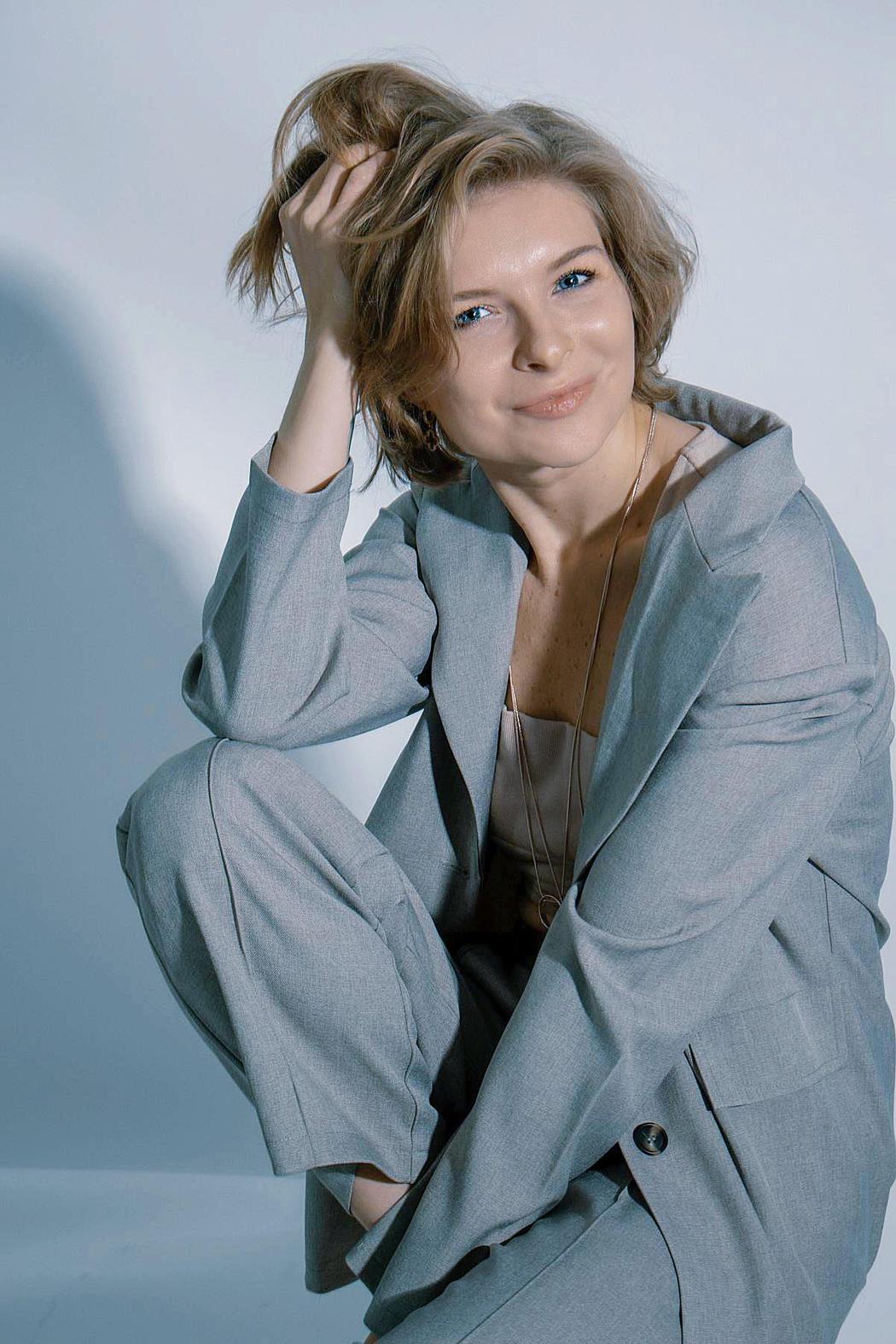
Your work explores the psychological dimensions of contemporary womanhood. What personal experiences most strongly shaped this focus?
I didn’t choose this theme — I lived it.
For years, through my work in psychology and my own life as a woman, a wife, and a mother, I kept encountering the same quiet tension: the gap between who we are expected to be and who we actually are.
There is a moment many women recognize — when you realize you’ve been performing roles so well that you’ve lost contact with your own truth. My work begins exactly there.
Painting became the place where I could stop being “correct” and start being real.
In your series Being a Woman, you address tensions between societal expectations and inner identity. How do you translate these abstract conflicts into visual form?
I translate tension through the body.
The body doesn’t lie — even when the face is calm. So I work with posture, pressure, repetition of gestures. Hands pulling, holding, reaching. Figures stretched between directions.
I’m not illustrating an idea. I’m reconstructing a feeling.
Color becomes emotional temperature. Composition becomes psychological pressure. And texture holds memory — almost like the surface remembers what the person cannot say.
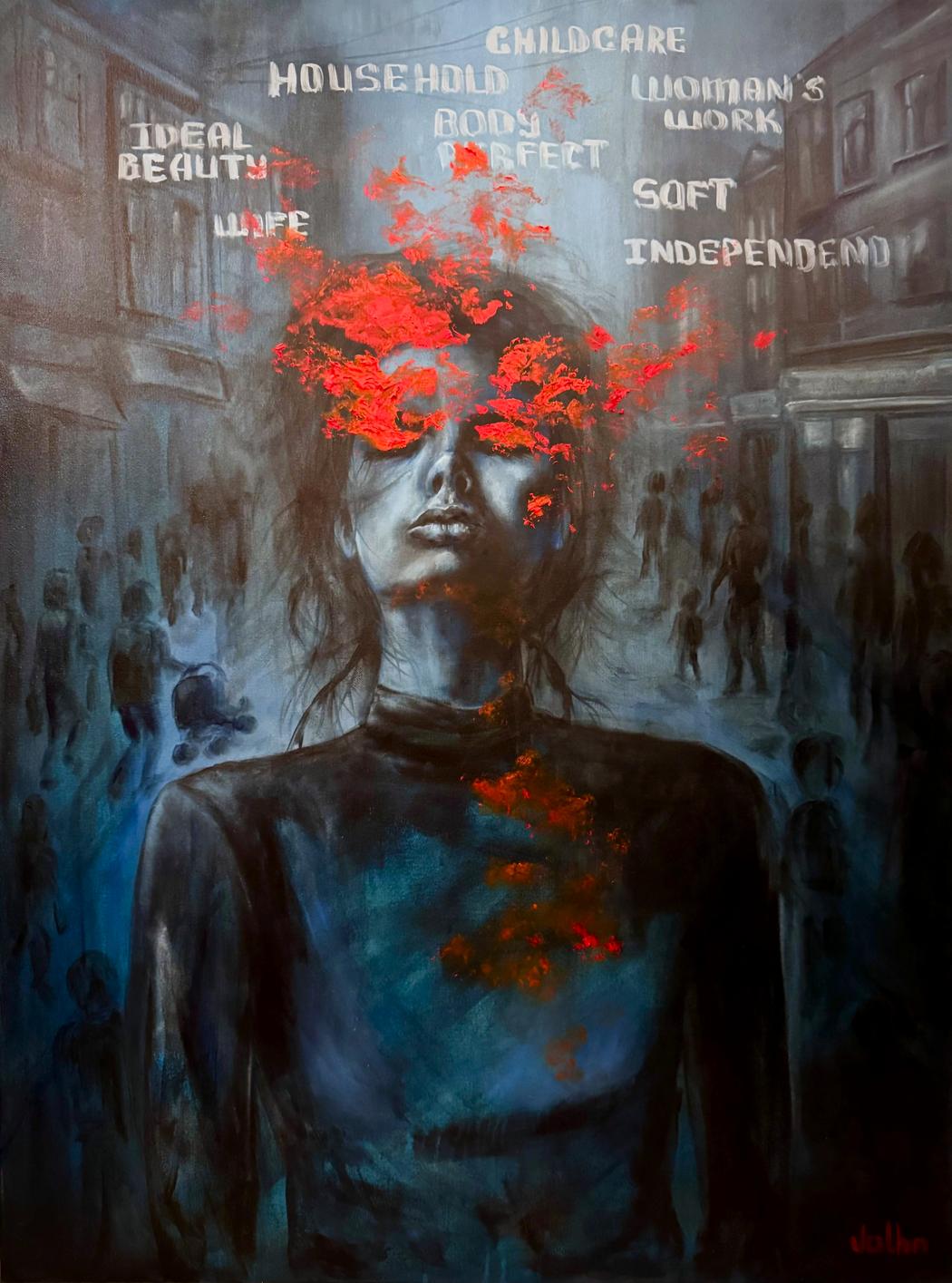 Volha Naruta-Johnson | Being A Woman | 2025
Many of your paintings feature intense emotional states and almost theatrical compositions. How has your background as a performing artist influenced your painting practice?
I spent more than ten years on stage as a singer, and that experience shaped everything I do now.
On stage, I learned that the voice never exists on its own — it moves through the body. And only when the body is involved, when it is open, tense, trembling, alive — the voice can truly reach people. Nothing is separate.
I always carried a desire to go beyond singing — to create something more immersive, almost like staging emotions themselves. I was drawn to the idea of building theatrical scenes through songs, and later through images. Around the same time, I was studying psychosomatics and working with metaphorical cards, which deepened my understanding of how the inner world expresses itself through symbols and the body.
The body never lies.
It supports, it resists, it freezes, it screams — but it always tells the truth.
That’s why the body became the central language in my work.
In my paintings, I don’t try to explain emotion — I construct a moment where it becomes visible. A gesture, a tension, a position that holds something unspoken.
The theatrical quality comes from that same instinct: to bring everything to a point of presence. Not narrative, not sequence — but a single, concentrated moment where the inner state is undeniable.
There is often stillness in my work, but it is not calm.
It is the stillness of something that is being held — right before it shifts, breaks, or transforms.
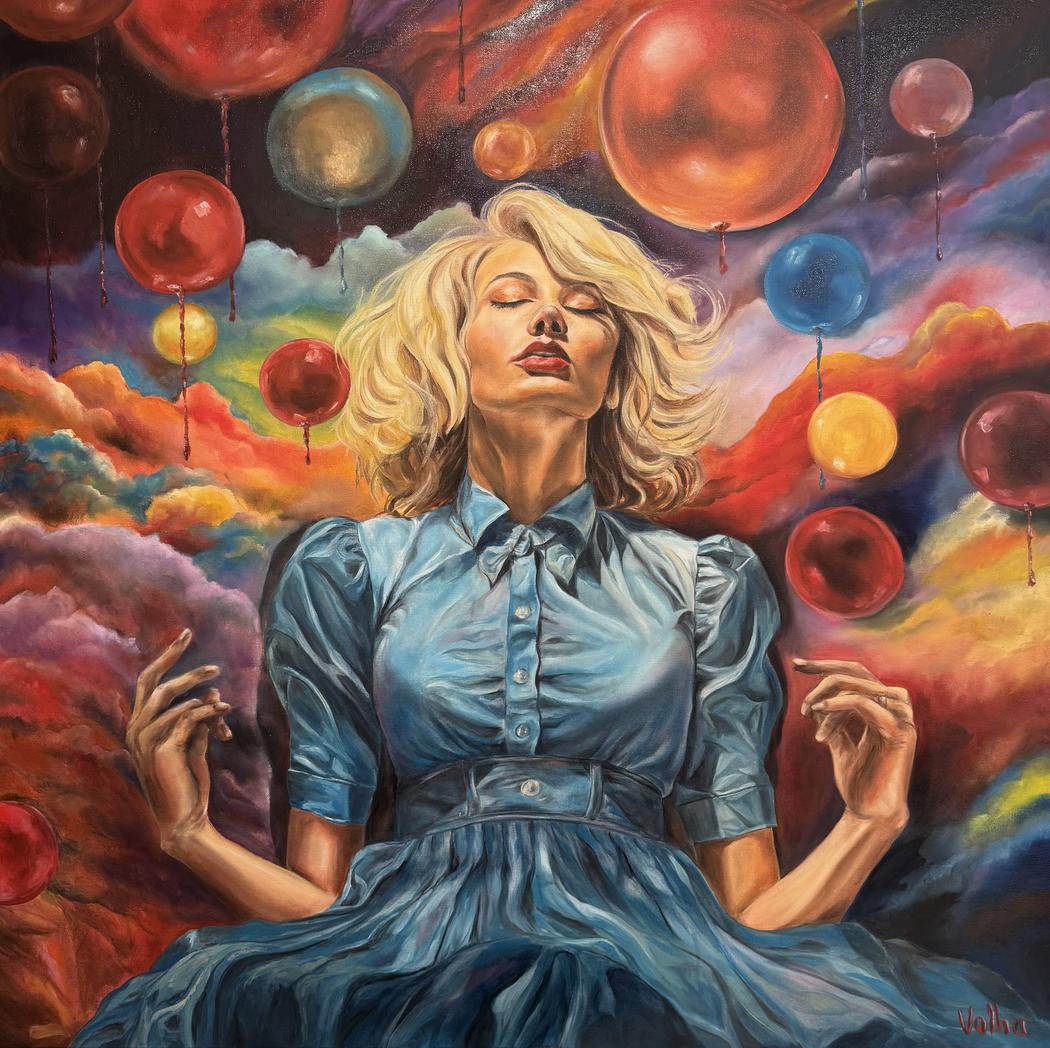 Volha Naruta-Johnson | Inner space | 2025
The use of saturated color and surface is very striking in your work. What role do materiality and surface play in conveying emotion?
I am drawn to surfaces where oil dissolves into the canvas or wood, leaving almost no visible brushstrokes. For me, excessive painterly marks can distract from the emotional experience.
Even when the subject carries intensity — grief, tension, inner conflict — I want the surface to remain visually gentle. I want the painting to feel safe to be next to it. Not invasive, not overwhelming, but inviting.
Color, however, carries the emotional weight.
I use saturated tones not to decorate, but to hold and transmit inner states. Red, for example, often appears as something deeply human — it can be warmth, lineage, pain, or life itself. Darker tones create containment, a sense of inner space, while muted neutrals allow the viewer to stay present without being overwhelmed.
Color becomes a quiet language of emotion — one that can be felt before it is understood.
This is important because I work with the theme of women’s inner lives. And I believe women must be approached with care. Life has already asked a lot of us. Many women, especially those shaped by Eastern European culture, carry deep layers of endurance and unspoken emotional history.
In the Being a Woman series, I don’t want the material to add pressure. I want it to hold space.
I do have another direction in my practice — textural painting — where I use heavy materials, creating 3d effect. But there I explore very different states.
Here, restraint is intentional. Smoothness becomes a form of respect. It allows the emotional depth to be experienced without resistance — while color carries what cannot be said.
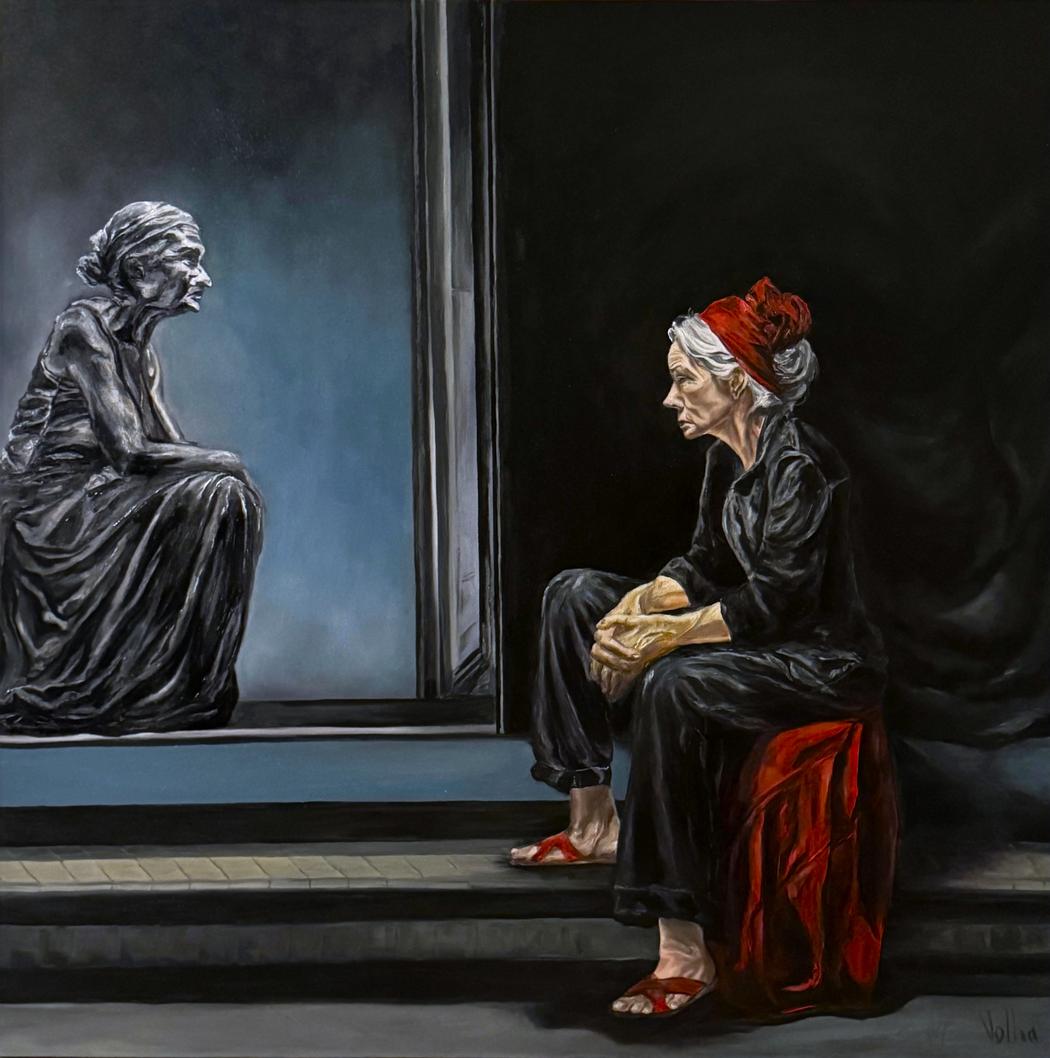 Volha Naruta-Johnson | Mom I became you after all | 2026
In some works, we see fragmentation of identity — masks, reflections, or distorted figures. What does this fragmentation represent for you?
Fragmentation is not brokenness — it is awareness.
It is the moment when a woman realizes she is not one identity, but many. Daughter, mother, partner, self — and they do not always align.
Masks appear where we adapt to survive. Distortion appears where truth begins to press through those roles.
I’m not interested in exposing the mask for drama. I’m interested in what happens after — when a person begins to recognize herself again. How the pain shaped you after all, because it always does.
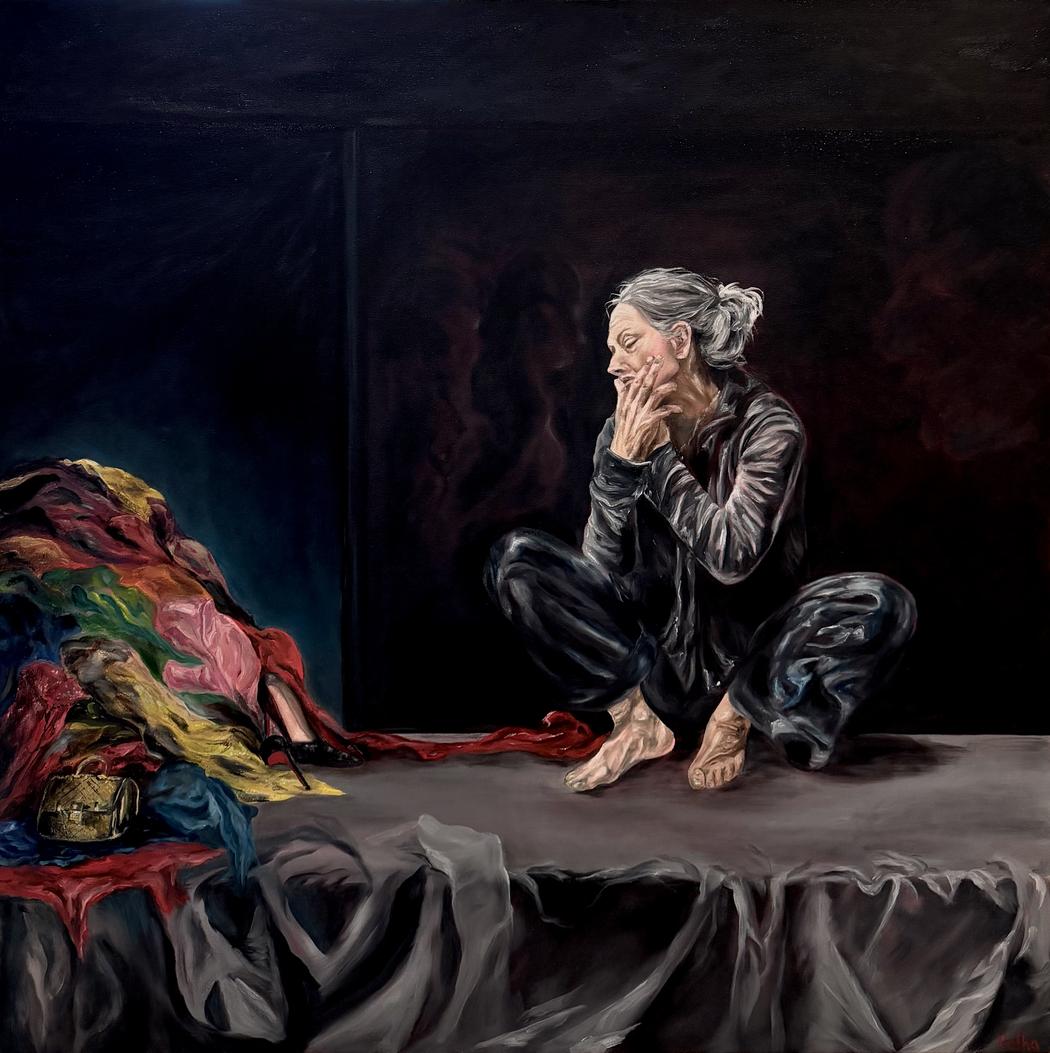 Volha Naruta-Johnson | The Price of Being Seen | 2026
How has your international background — from Belarus to California — influenced your artistic voice and perspective?
I started traveling when I was 17, and since then I’ve been to more than 40 countries. In many of them, I didn’t just visit — I lived, observed, and became part of everyday life, even if only for a while.
Through these experiences, I met so many people — different cultures, languages, personalities, ways of living. But over time, I realized something very simple and very profound: despite all the differences, we are all moving through the same inner stages of becoming.
The same questions. The same pain. The same longing to be seen, to be understood, to be loved. In a way, it feels like we share one soul.
But California became something more than just another place I lived — it became my home as a painter. It is here, when I moved to California in 2025, that I began painting seriously, and it completely transformed my life.
There is a certain openness here — a culture of support, creative communities, and a genuine love for life that I felt immediately. Being surrounded by people who create, share, and celebrate expression gave me permission to fully step into my own voice.
In a very short time, this environment allowed me not only to grow, but to become visible as an artist.
And yet, everything I experienced before continues to live in my work. I don’t see women as defined by geography or culture. I see shared emotional landscapes — expressed in different languages, but rooted in the same human experience.
That’s why my work is not about a specific place. It is about recognition.
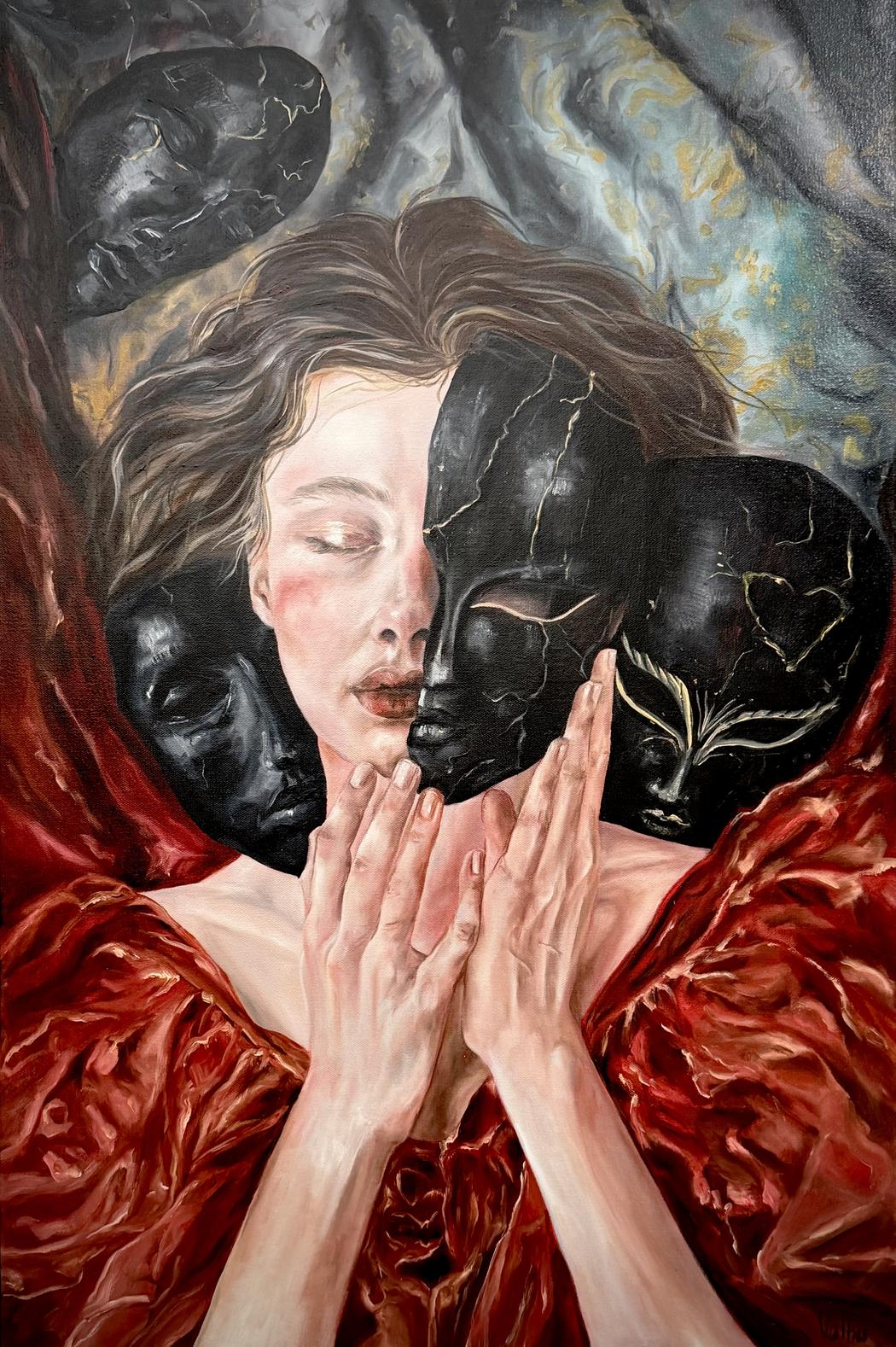 Volha Naruta-Johnson | The masks falls where truth begins | 2026
You mention painting as a space of recognition and reflection. What do you hope viewers recognize within themselves when they encounter your work?
I don’t want them to simply understand the work.
I want them to feel seen by it.
To stand in front of a painting and recognize something they have never been able to say out loud.
If a woman feels less alone in her inner experience — even for a moment — then the work has already done what it was meant to do.
Leave a Reply
You must be logged in to post a comment.