
Vanessa Del Bel
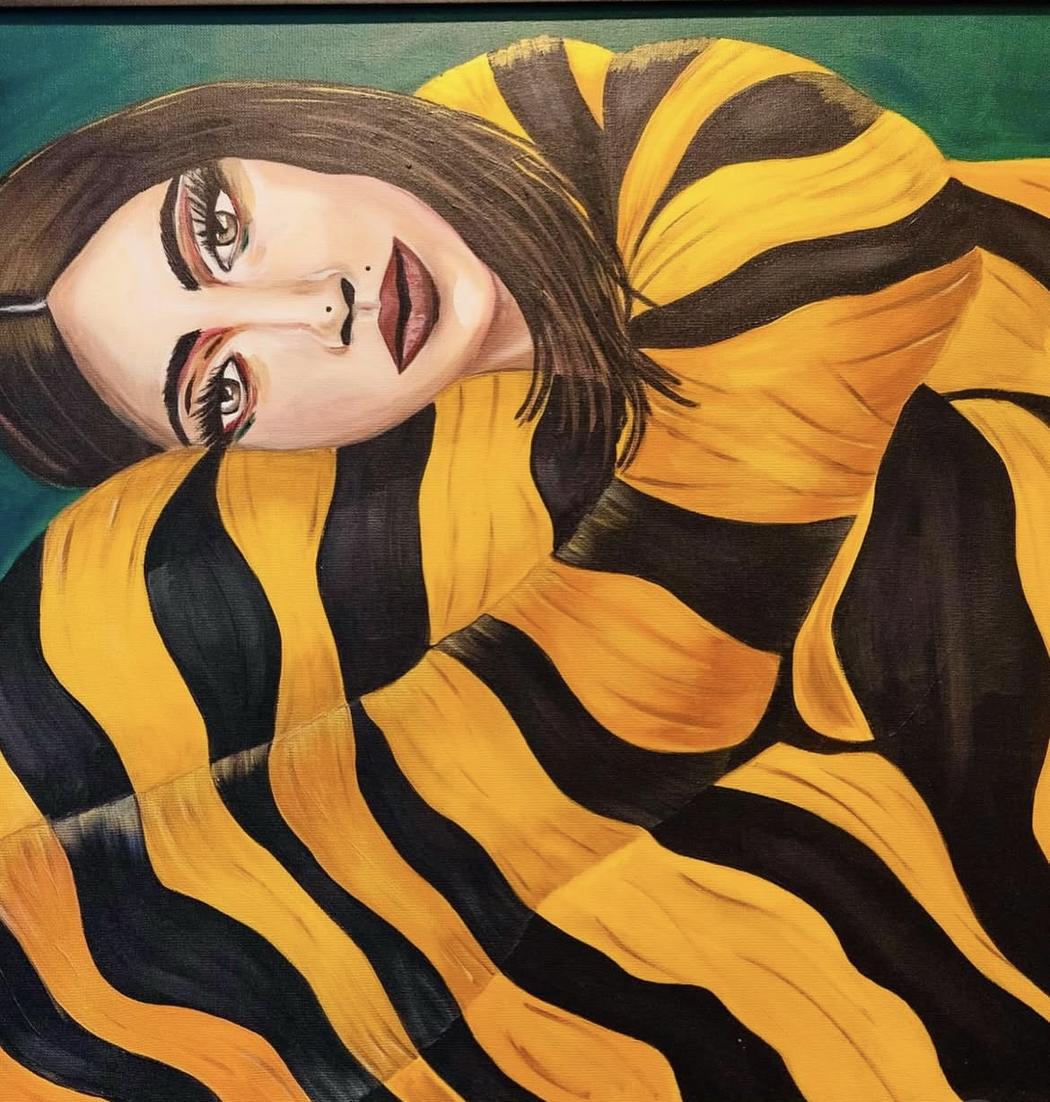
Your artistic journey began after 25 years in the corporate world. What was the turning point that led you to fully embrace art?
The turning point came after a period of burnout, coupled with the death of my father. These events made me deeply reassess my life and my priorities. It was at that moment that I decided to seek what was most true within myself—and I found in art that path of expression, meaning, and reconnection.
How does your background in psychology influence the way you construct your portraits and visual narratives?
My background in psychology profoundly influences how I construct my portraits and visual narratives. For me, the gaze is the true window to the soul—it is through it that I seek to reveal emotional layers, unspoken stories, and the most intimate essence of each woman I portray.
There is also a very strong movement of reconnection with my femininity and with our ancestry. When painting, I access memories, strengths, and sensitivities that transcend generations, bringing to the surface a more intuitive, wise, welcoming, and, at the same time, powerful dimension.
Furthermore, I have a genuine commitment to the diversity and plurality of the feminine. My art seeks to represent different experiences, bodies, identities, and stories, broadening the perspective on what it means to be a woman and valuing this multiplicity in all its richness.
The gaze in your portraits is very powerful and direct. What role does eye contact play in your work?
There’s a layer where I identify with each archetype of woman I paint. It’s this sensitivity that permeates my art. I seek to express shared experiences, feminine issues, memories, and ancestries through the gaze, creating a space for recognition and connection. Thus, each portrait not only shows a face but reveals a presence—alive, complex, and profoundly human.
For me, the gaze is one of the most powerful elements in revealing the soul of each woman portrayed. It’s more than an anatomical detail. When I’m painting eyes, I create a bridge between my inner world and the observer. The direction of the gaze, its intensity, the light reflected in the eyes, and even small asymmetries can suggest strength, vulnerability, introspection, freedom, sadness, or resistance. It is at this point that the painting ceases to be merely an image and becomes an emotional narrative.
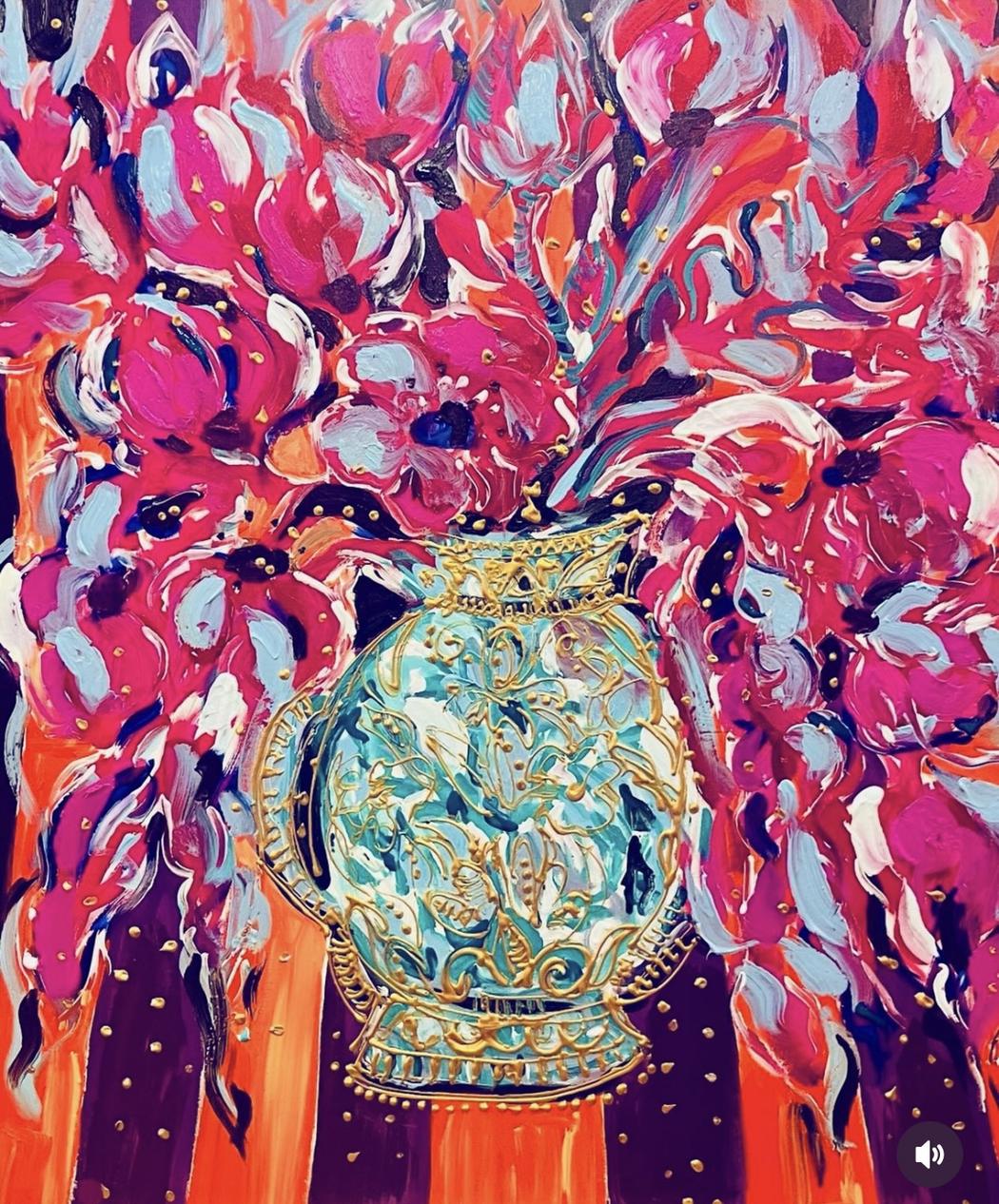
You explore femininity in its many dimensions. How do you approach representing such a wide spectrum of identities and experiences?
In exploring femininity in its multiple dimensions, I seek to draw upon a deeper and more symbolic understanding of the feminine. I see each woman I paint not only as an individual, but as the expression of archetypal forces that traverse the unconscious—such as the wild woman, the healer, the mother, the elder, the lover, the creator. These archetypes help me access more universal layers of the feminine experience, while respecting the uniqueness of each story. In my process, it’s not about fitting women into fixed categories, but about allowing these energies to reveal themselves intuitively, often coexisting within the same figure.
I also bring a keen eye to the diversity and plurality of feminine experiences, understanding that each body, each identity, and each trajectory carries its own narratives. Painting then becomes a space for listening and expression—where the visible and the invisible meet—and where different ways of being a woman can exist with power, depth, and truth.
Your works combine elements of figurative art, expressionism, and impressionism. How do you balance these different styles within a single piece?
I am still in the process of properly integrating figurative elements with a more impressionistic aspect in my work. It’s a path of experimentation, listening, and discovery within painting itself.
For now, I’ve been exploring my impressionistic side more in floral works, where I allow myself a looser approach, with free brushstrokes, focusing on light, colors, and the feeling of the moment. In figurative work, especially portraits, I still maintain a more structured construction, very connected to expression and narrative.
Gradually, you will seek points of convergence between these two universes—letting intuition guide how and when these styles can intersect within the same piece.
Your art emphasizes inclusion and recognition rather than conventional beauty. How do audiences usually respond to this message?
In Brazil, we still face many challenging aspects, such as structural sexism, racism, misogyny, homophobia, transphobia, ageism, among others. These issues permeate how bodies and identities are seen, valued—or often made invisible.
Within this context, my art emerges as a space of resistance and affirmation. I seek to highlight the importance of all people being respected and legitimized in their pluralities and diversities, beyond beauty standards. The audience’s reaction is often very touching. Many people feel seen, recognized, and welcomed in the works. It is common for them to identify with the narratives and express a deep emotional connection, precisely because they perceive that there is a perspective that validates their existence in a sensitive and truthful way.
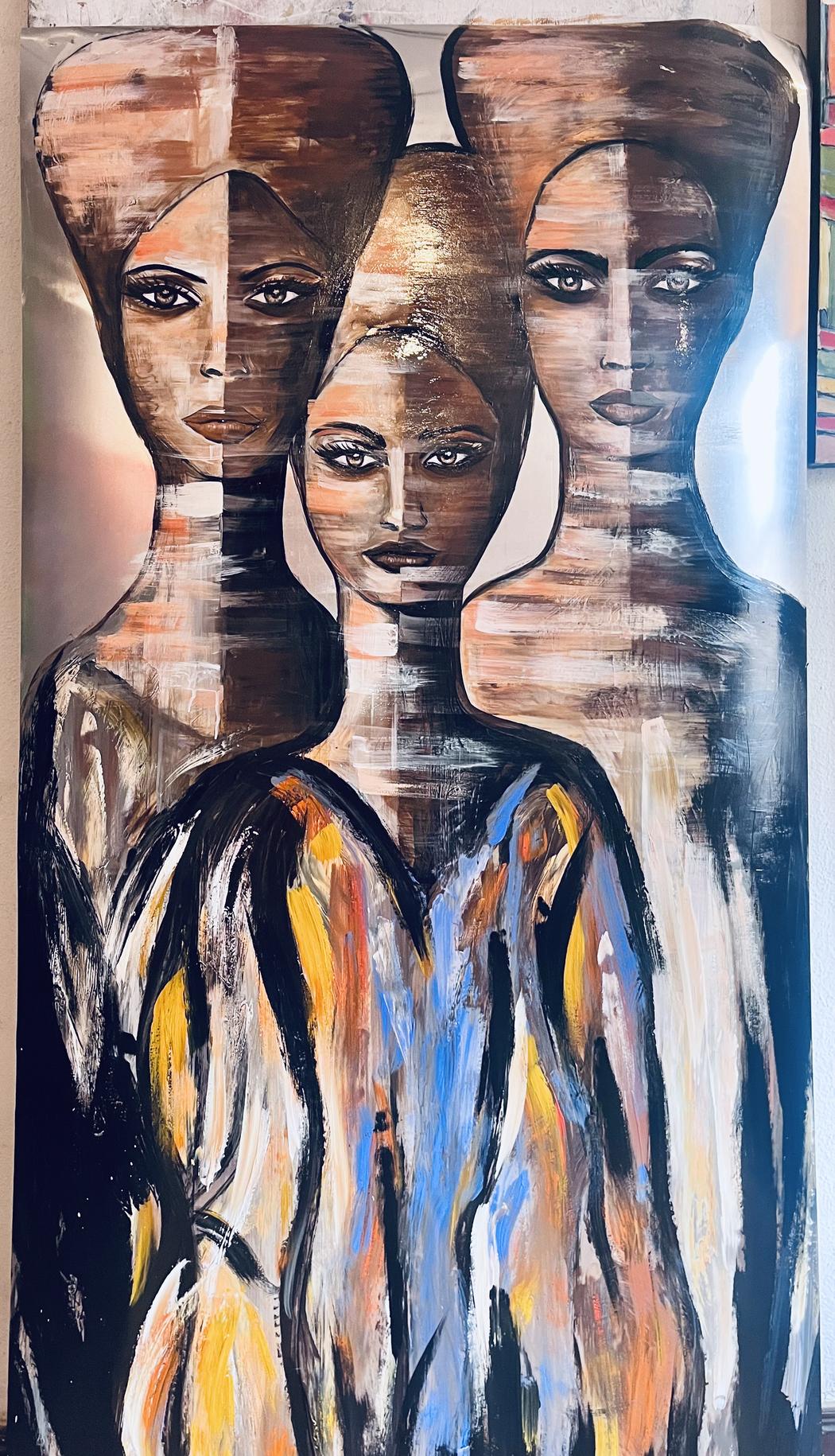
Having exhibited internationally, how do different cultural contexts influence the interpretation of your work?
Having exhibited internationally, I realize that different cultural contexts greatly influence how my work is interpreted—and this greatly enriches the experience of my art.
In some places, the interpretation focuses more on the aesthetic and emotional aspects of the portraits, the use of color, and the power of the gaze. In other contexts, the issues I raise—such as identity, belonging, diversity, and the feminine—are perceived in a more political and social way.
Even so, something that touches me is realizing that, regardless of culture, there is a universal connection with humanity. The gaze, the emotions, and the narratives that emerge from the works cross borders. Each audience interprets them from their own references, but many recognize themselves in the experiences portrayed. I see this as a dialogue: my art carries my experiences, my culture, and my intentions, but it gains new layers of meaning from the perspective of others. And it is in this encounter that it expands.
Leave a Reply
You must be logged in to post a comment.