
Zuzana Sickova
Your work combines text and image in a very distinctive way. When did you first realize that writing could become a central visual element in your paintings?
This fascination of using text in paintings started in France. I was influenced by the study of the Middle Ages and especially its illuminated manuscripts during my university studies in Clermont-Ferrand in France in 2002 where I obtained valuable material for my thesis “Depiction of the creation of the world according to the book of Genesis “. I created The Graphic Series “Seven days of creation” by dry-point engrave. And later, when I was writing my doctoral thesis about Lettrism in post-graduate studies Didactics of Visual Art where I was also focused on text and image. Image and text in the interference of French culture on Slovak fine arts of the present. My objective was Comparison and analysis of the artistic direction of Lettrism in French and Slovak painting today for better orientation of students and teachers of art education in the era of multiculturalism.
You often use biblical texts in your work. What draws you specifically to these words, and how do they influence the emotional tone of your paintings?
I am writing phrases or just a single word from Bible, sometimes by repeating the same word or I copy the entire text. Using text in my paintings is not a rule that I follow strictly. During the painting process I meditate about text I scrape out in acryl. Biblical text doesn’t influence the emotional tone; it is more about the used colours. My handwriting text arises in wet acryl paint which is drying quickly. Sometimes it’s a race against time which force me to be fast and concentrated.
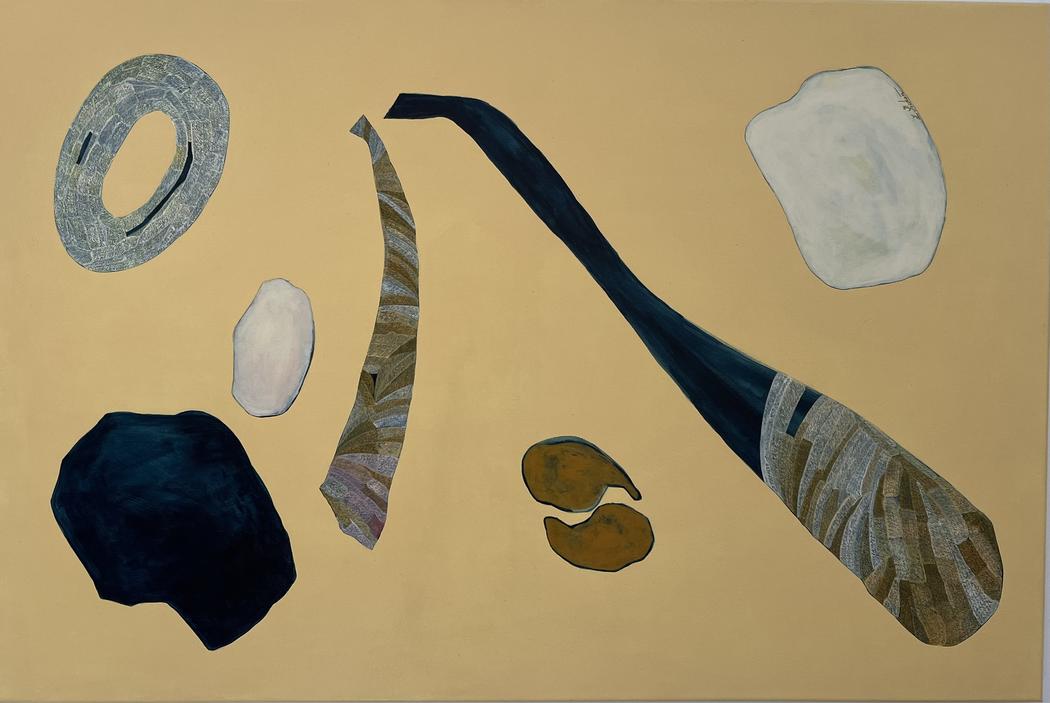 Zuzana Sickova | Spring | 2025
The process of scraping layers of acrylic to reveal handwritten text is very physical and meditative. Can you describe what you experience during this process?
The first step is the foundation of one colour like a base. Then I am searching for the right solution of the strategy of arrangement of colour and shape for each of the painting because every painting has his own story, own way of formation. …
Like a child I loved colouring books. I can compare my painting to creating and colouring the books which quiet my mind.
The research of the right shape is based on creating the fragments which represents my inner world, my thought bubbles. The fragments are isolated, alone but with invisible harmonic connection with others.
You don’t use sketches before painting. How do you navigate composition and balance directly on the canvas?
It is through inner vision; I see in spirit. I called it „ personal revelation “. I focused on details, on accuracy of depiction, on purity of expression. I am seeking peace and flow. I realize that the outside world reflects our inside by mirroring. I try to eliminate tension and create the harmony.
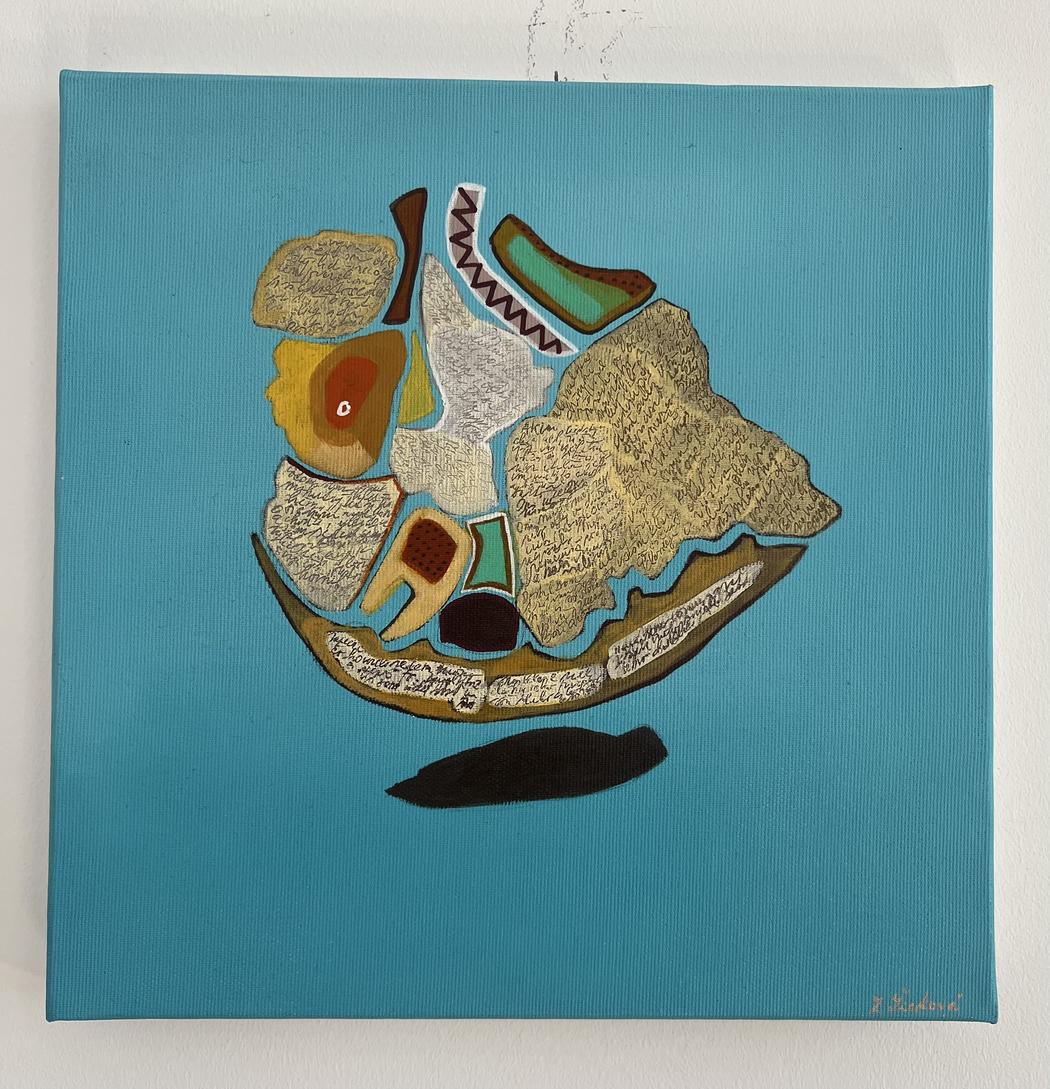 Zuzana Sickova | Fruit Bowl | 2025
Nature and your personal photographs play an important role in your inspiration. What do you look for when capturing images during your walks?
I take inspiration from my own photos taken during my long walk in nature. In the beginning there is a searching of the beauty of creation around me. I try to capture the atmosphere of joy and freedom and the instant moment. It is also special quest for the atmosphere where the light reveals the essence of created things around me. And in the end, there is analysis of the right composition, where shape, light and colour are in harmony. There photos are just basis for the painting, in the following process of creation they no longer play a role.
Working on multiple paintings simultaneously and in different spaces is quite unique. How does this shifting perspective shape your final works?
It allows me to take a distance from them and change the point of view, or to find the solution. This spatial variation helps me to think more about the painted canvases. So, every day by looking at them it helps me to see what needs to be changed or added. I return to some painting day by day, to another ones I come back after months and I work on some of them for a year, until suddenly it’s “it”.
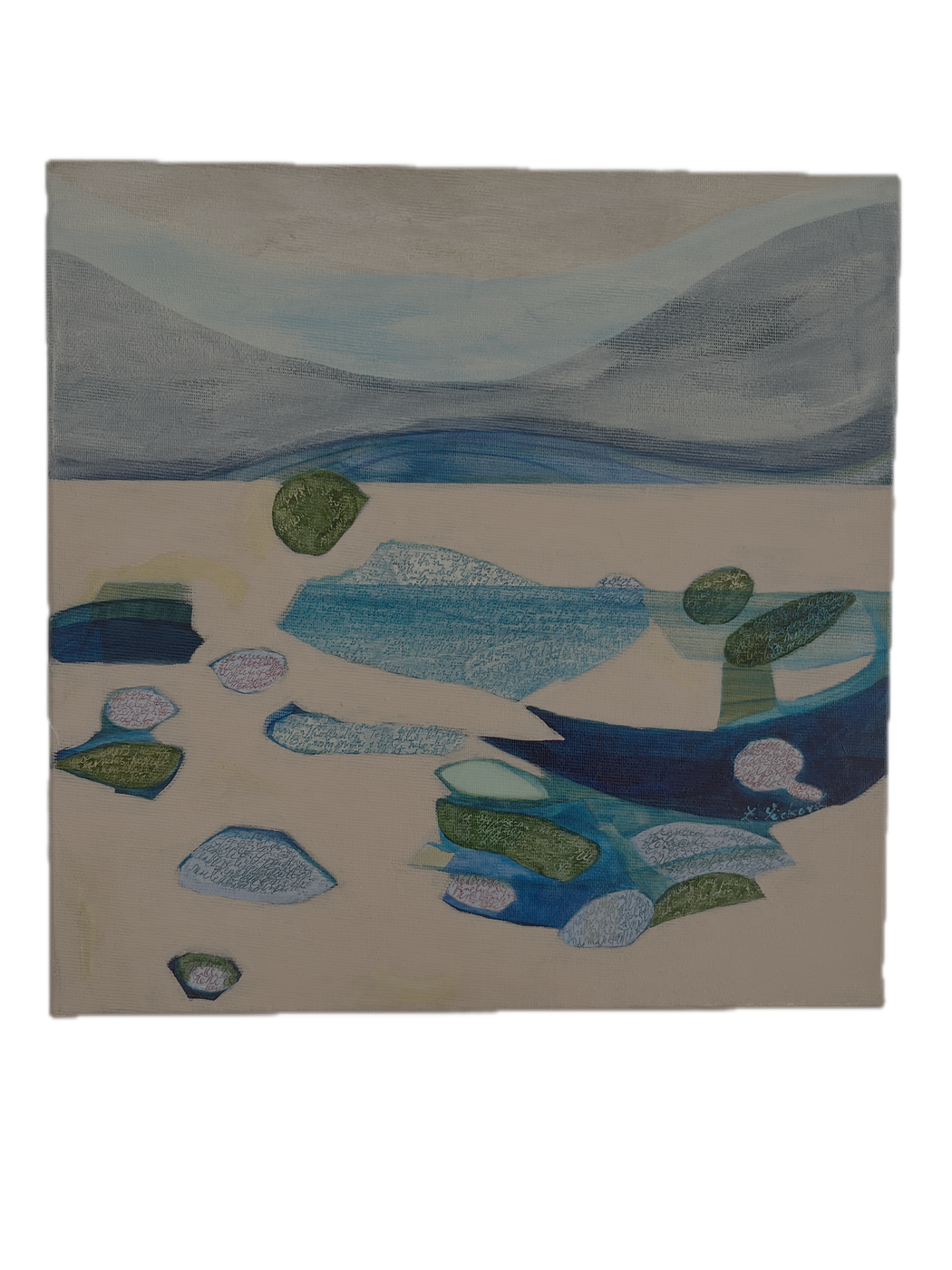 Zuzana Sickova | Beach | 2025
You compare your process to that of a medieval monk or embroidery. Do you see your work as a form of ritual or devotion?
It is a thin line approaching devotion, but it is rather a depiction and revelation then ritual. I try to depict beauty of created world according to the biblical affirmation (John 1:1) and to connect spirituality with visualization and creativity.
Leave a Reply
You must be logged in to post a comment.