
Kristian Angelov
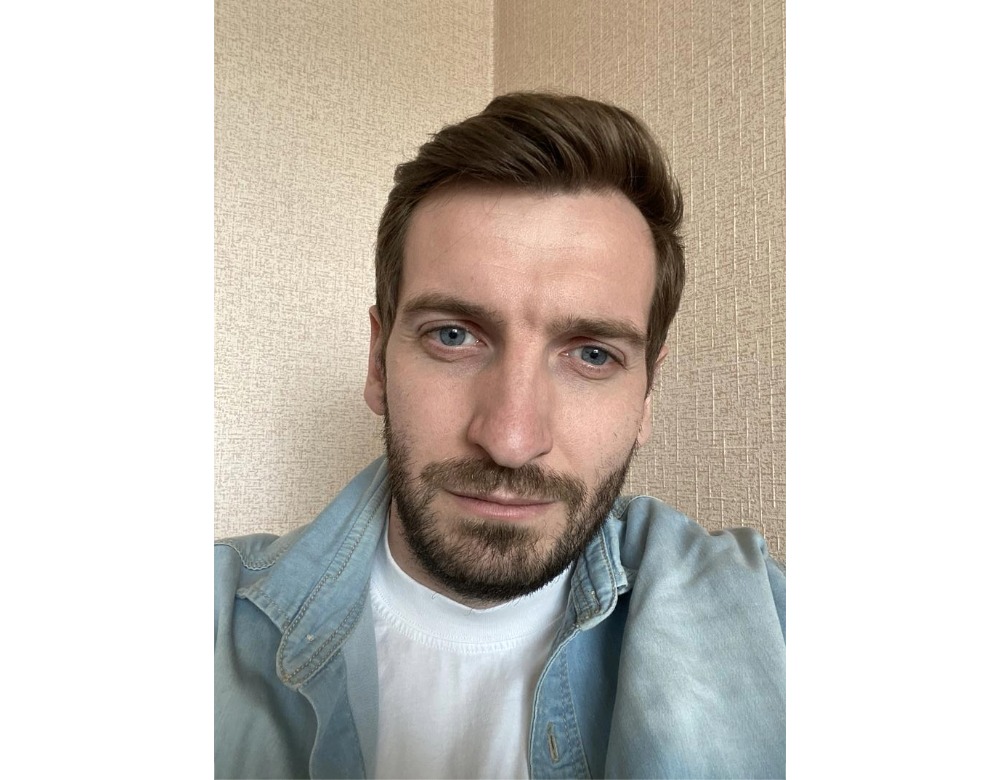
Your work blends urban culture, automotive imagery, and graphic design. What first attracted you to this combination of visual languages?
It actually started quite spontaneously. One day I decided to experiment with a billboard that I had taken from the advertising agency where I was working. It was from a Guess campaign, and I began adding my own elements to it using acrylic paints and markers. While working on that piece, I realized how interesting it would be to combine the street culture that often inspires me with cars, which have always been a big passion of mine. After a few experiments, the collages started to come together naturally, and that combination slowly became a central part of my visual language.
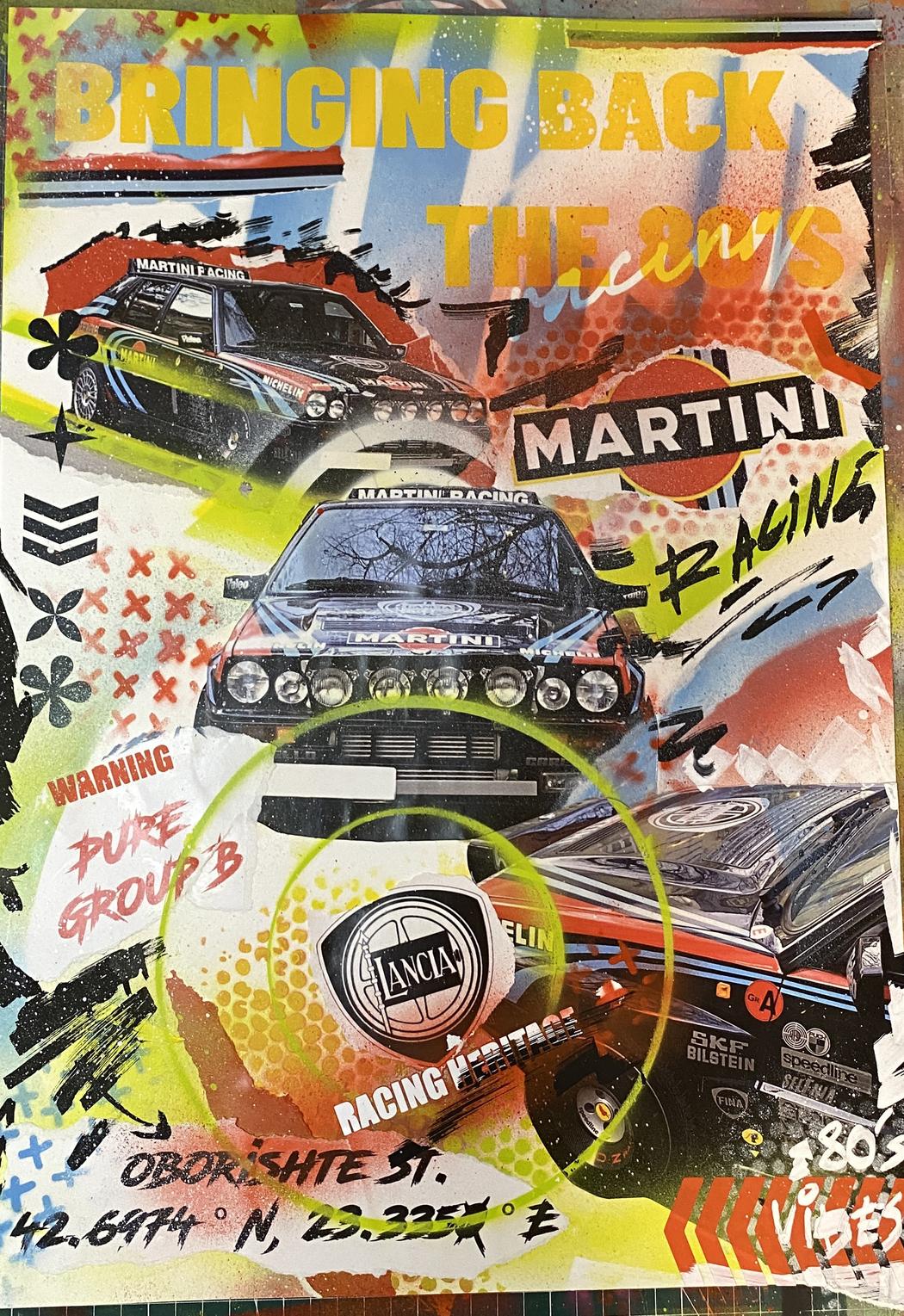 Kristian Angelov | Bring Back The 80s | 2025
Cars appear frequently in your compositions. What do automobiles symbolize for you within the context of contemporary culture and identity?
Cars are much more than a means of transportation. In contemporary culture they often represent identity, freedom, and personal expression. People often express themselves through the cars they choose to drive.For me it’s very similar. I’ve been passionate about cars since I was a child. In my work they function almost like cultural icons that carry stories about status, speed, nostalgia, and the emotional connection people have with movement and progress.
Many of your works incorporate fragmented typography, logos, and editorial elements. How do these graphic fragments contribute to the narrative of your pieces?
Typography and graphic fragments reflect the visual noise of modern life. We are constantly surrounded by advertisements, headlines, brands, and digital imagery.By taking these elements apart and recombining them, I try to recreate the way we actually experience visual culture — fragmented, layered, and fast. These fragments become part of the narrative, suggesting ideas about media, identity, and the influence of branding in everyday life.
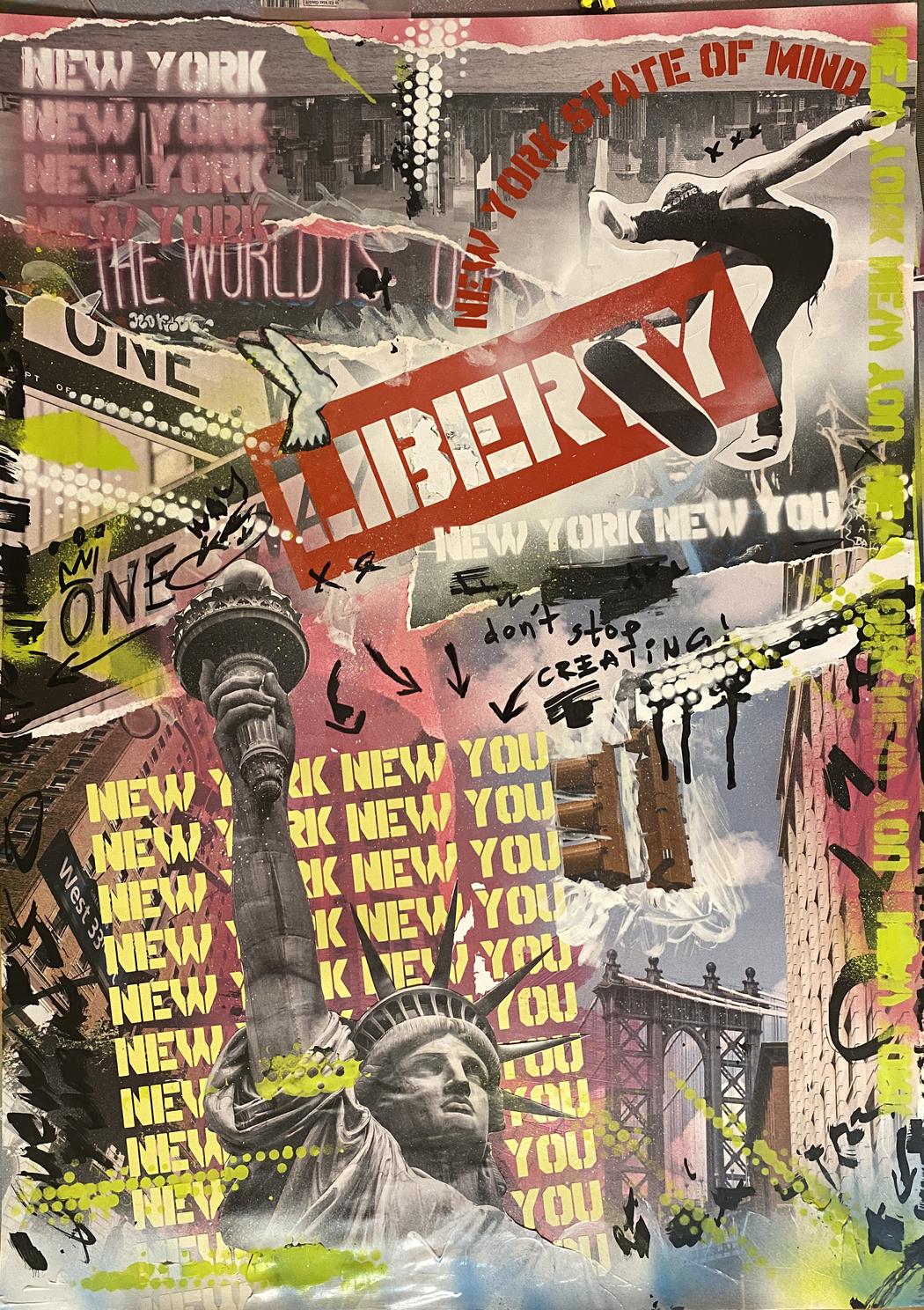 Kristian Angelov | Liberty | 2024
Your compositions often feel fast, energetic, and dynamic. How do you visually translate the concept of speed into a static artwork?
Speed is not only about motion, but also about rhythm and tension. I translate this idea through composition — diagonal lines, overlapping layers, strong contrasts, and cropped imagery.These visual choices create a sense of movement within the frame. Even though the image itself is static, the viewer’s eye continues to travel through the composition, which creates a feeling of momentum.
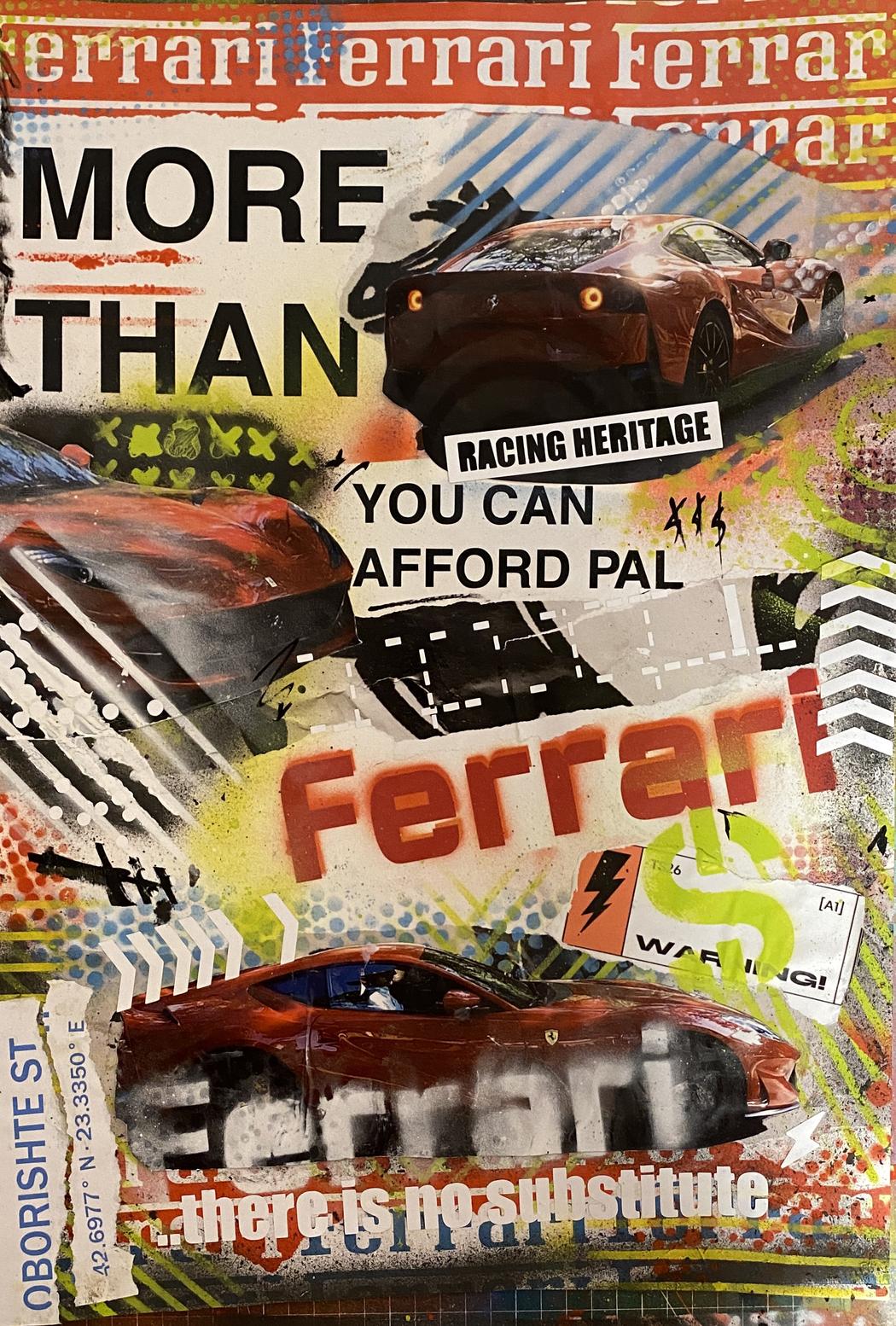 Kristian Angelov | More Then You Can Afford | 2025
Your practice sits somewhere between street art, poster design, and contemporary collage. How do you personally define the artistic space in which your work exists?
I see my work existing somewhere between contemporary art and visual culture. It borrows elements from street art, graphic design, and editorial imagery, but uses them to build more layered narratives.Rather than fitting into a single category, I’m interested in exploring the boundaries between these disciplines and how they influence one another. Many of my works are presented as posters, because the way I combine collage with graphic elements is similar to designing a poster in a graphic design program.
Branding and luxury symbols appear alongside raw urban textures in your works. Are you critiquing consumer culture, celebrating it, or exploring the tension between the two?
I’m more interested in exploring the tension between those two worlds. Luxury symbols and branding are powerful cultural signals, but when they appear next to raw urban textures they begin to tell a different story.The contrast between them is very strong, especially today. For me, that combination creates an interesting visual dialogue, and I enjoy experimenting with that contrast in my work.
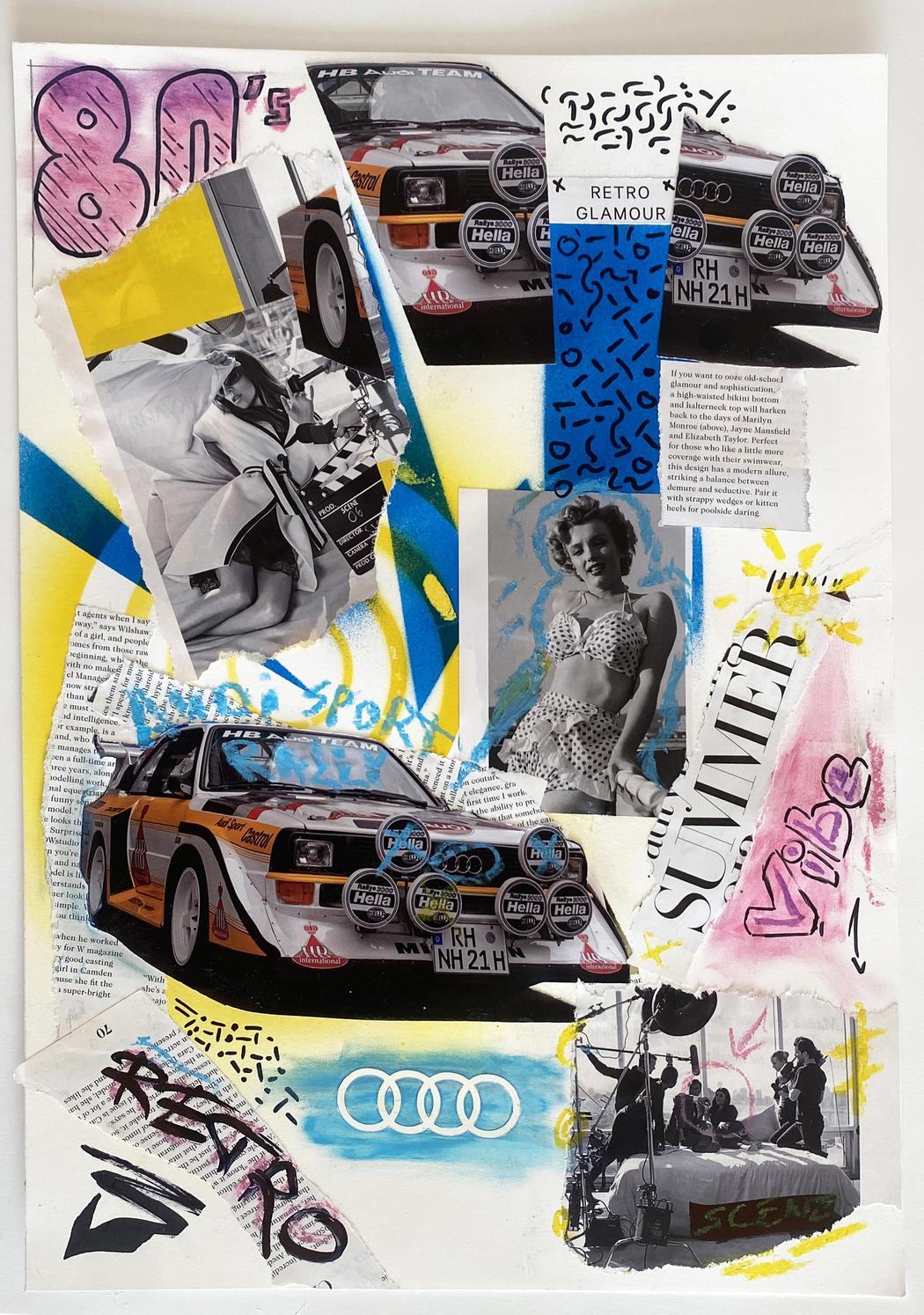 Kristian Angelov | Retro Glamour | 2026
Urban environments seem to play a strong role in your visual imagination. Are there particular cities or places that influence your work the most?
Cities have always been a major source of inspiration for me, especially places with a strong visual identity.
New York and some of the larger American cities have a big influence because of their history and connection to street culture. At the same time, many European cities inspire me as well. Sofia, where I currently live, is also an important part of my inspiration. I enjoy combining influences from both cultures, because they are quite different, yet they create a very interesting dialogue when brought together.
Leave a Reply
You must be logged in to post a comment.