
Gala Reya
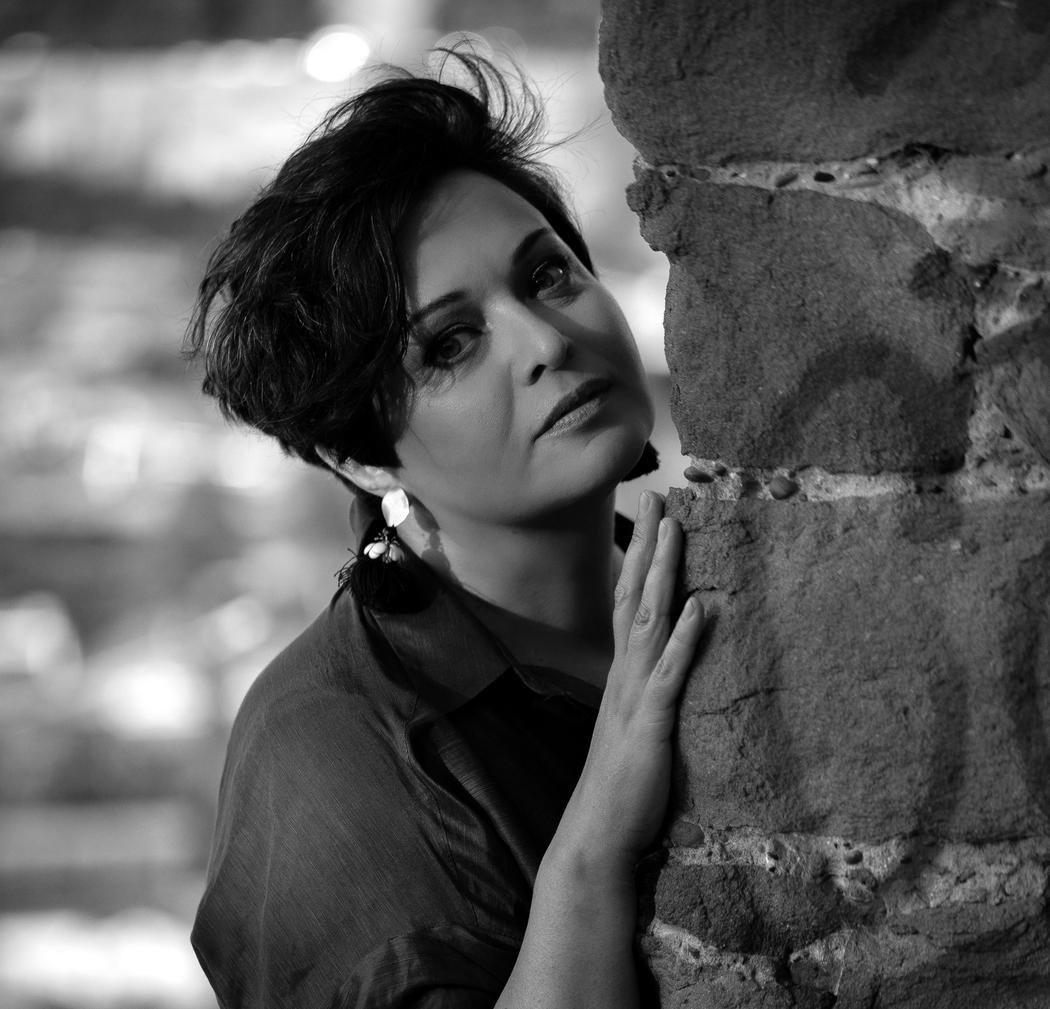
Your work often operates through the idea of superposition – between “I” and “We,” material and immaterial. When you begin a new project, what usually comes first: a philosophical concept or a sensory experience?
At the core of my practice lies not an abstract concept, but a continuous observation of how attention and sensory experience shape reality. This is not a separate stage, but a paradigm I never step outside of, which makes it difficult to say what comes first. However, each specific project is almost always initiated through sensory experience. It is this experience that creates a point of tension from which an image takes shape and an idea for the work emerges.
I often perceive a future work immediately as a visual model — not as a sensation, but as an already assembled structure. This image, of course, arises within the broader logic of my practice. Frequently, a project begins as an exploration of a theme: once the thinking process is set in motion, the means of its realization appear almost simultaneously.
When I begin working directly, rational control gradually weakens, and the process turns into a flow in which the sensory comes to dominate. One of the most important moments for me is recognizing the need to stop and bring the work to completion.
It is precisely at this point that the dialectic of my practice emerges: a personal, bodily experience of the “I” passes through form and becomes part of a shared language — a space in which individual experience can be shared and read by others.
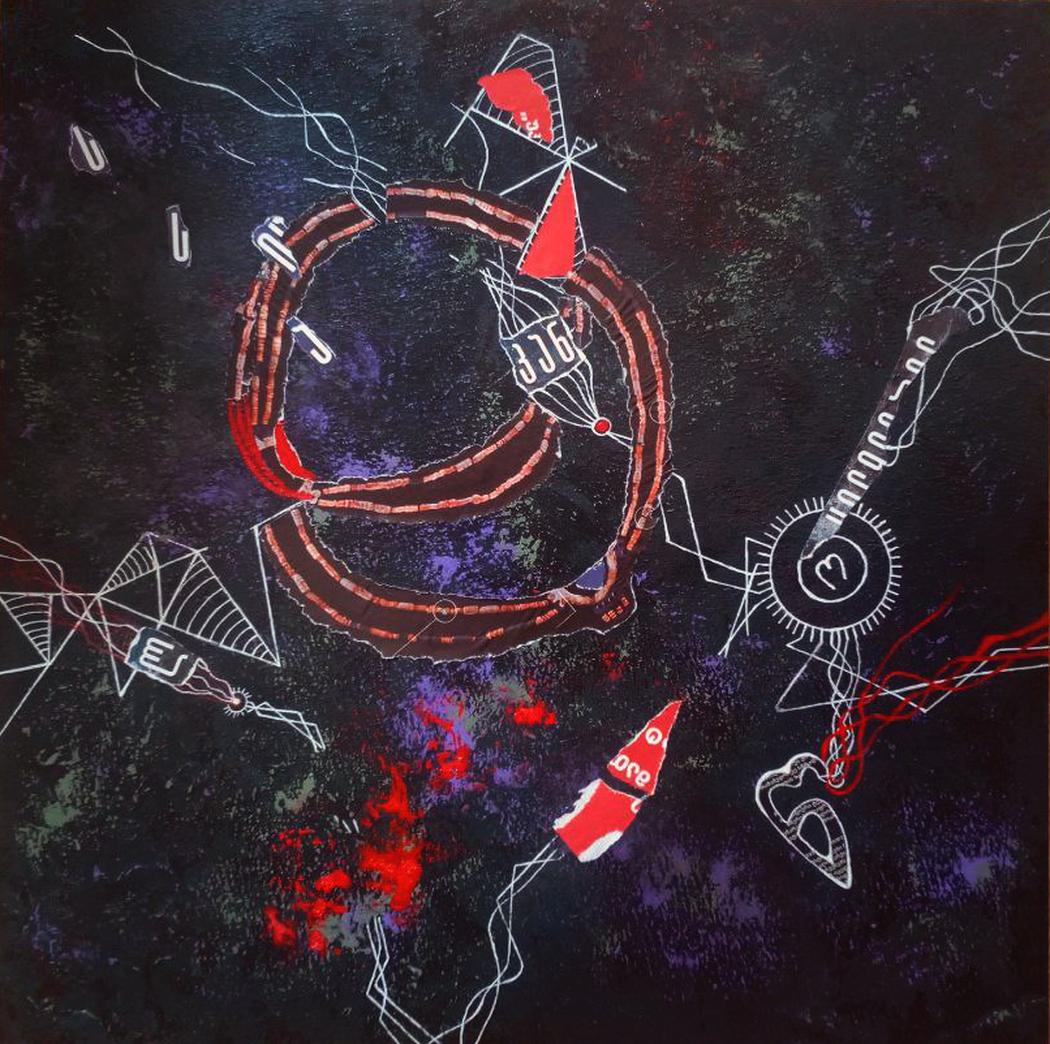 Gala Reya | The Birth of a Thought
You use quantum physics not as science, but as a system of metaphors. Where do you personally draw the line between scientific inspiration and artistic intuition?
My practice is largely shaped through vulnerability and the sensorial depth of personal experience — in this sense, I consciously work with what might be described as a “feminine” way of knowing the world. For this reason, the boundary between scientific inspiration and artistic intuition is unclear for me; it is fluid, or rather shifted.
I am genuinely interested in quantum physics not as a set of striking metaphors and not as an abstract theory, but as a way of thinking about reality as it is experienced from within. Consciousness — as something ephemeral and ultimately unknowable, yet at the same time as an active energy — has always been the subject of my personal inquiry and practice.
Thus, I would say that in my work I tend to erase this boundary. Science, for me, is not a distanced system of knowledge, but an experience refracted through conscious personal perception. As a result, my works become an act of imagistic fixation of an invisible process that unfolds within each of us, but which I observe first and foremost through my own qualia.
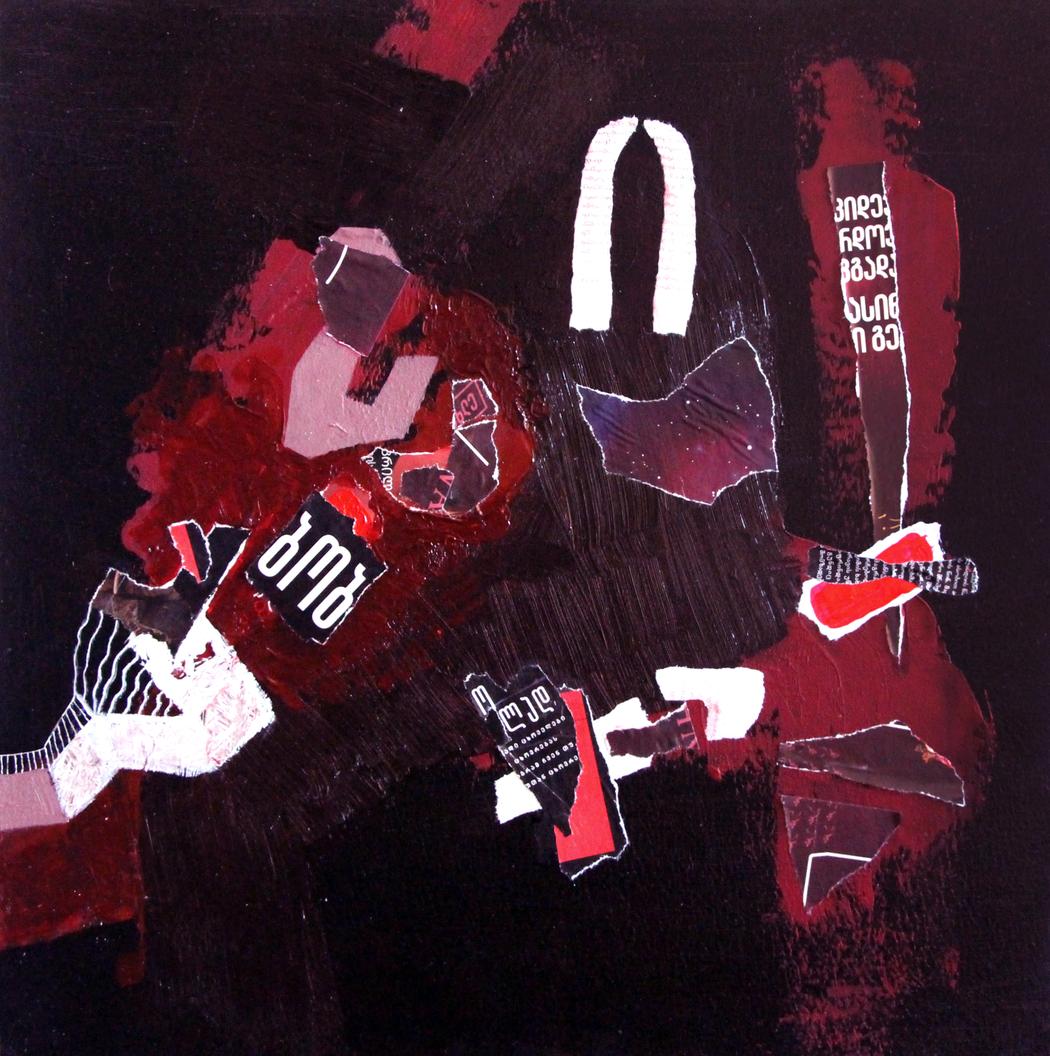 Gala Reya | The Color of Chocolate Taste
Moving to Georgia became a turning point in your practice. How did the Georgian alphabet transform from language into a visual and conceptual code in your work?
Relocating to Georgia truly became a decisive moment in my practice, though not so much as a change of geography, but rather as a resolution of an inner conflict and the determination of my own place in life. This state of harmony became the foundation for the development of a narrative that had been forming within me long before.
I am half ethnically Georgian, yet I spent most of my life in another country. Returning to the Georgian cultural and linguistic context, and encountering the local nature, people, and environment, gave me a sense of inner alignment. It felt as though I finally allowed myself to be fully myself. This period coincided with a rethinking of my artistic practice.
Almost intuitively, I began to use Georgian letters and script in my works—at first as collage elements, as a visual structure. Over time, this approach transformed into a deeper level of expression. The Georgian alphabet, which I consider unique and aesthetically self-sufficient, became for me not a language in a utilitarian sense, but a code of consciousness.
In my works, I perceive these signs as a universal code, connected to the idea of a unified field of consciousness. I deliberately do not translate them into everyday communication, preserving their sacred status for me as a language that remains not fully deciphered. This is neither folklore nor a decorative device, but a way of recording personal experience—a method of working with what exists at the boundary between individual experience and a universal structure of meaning.
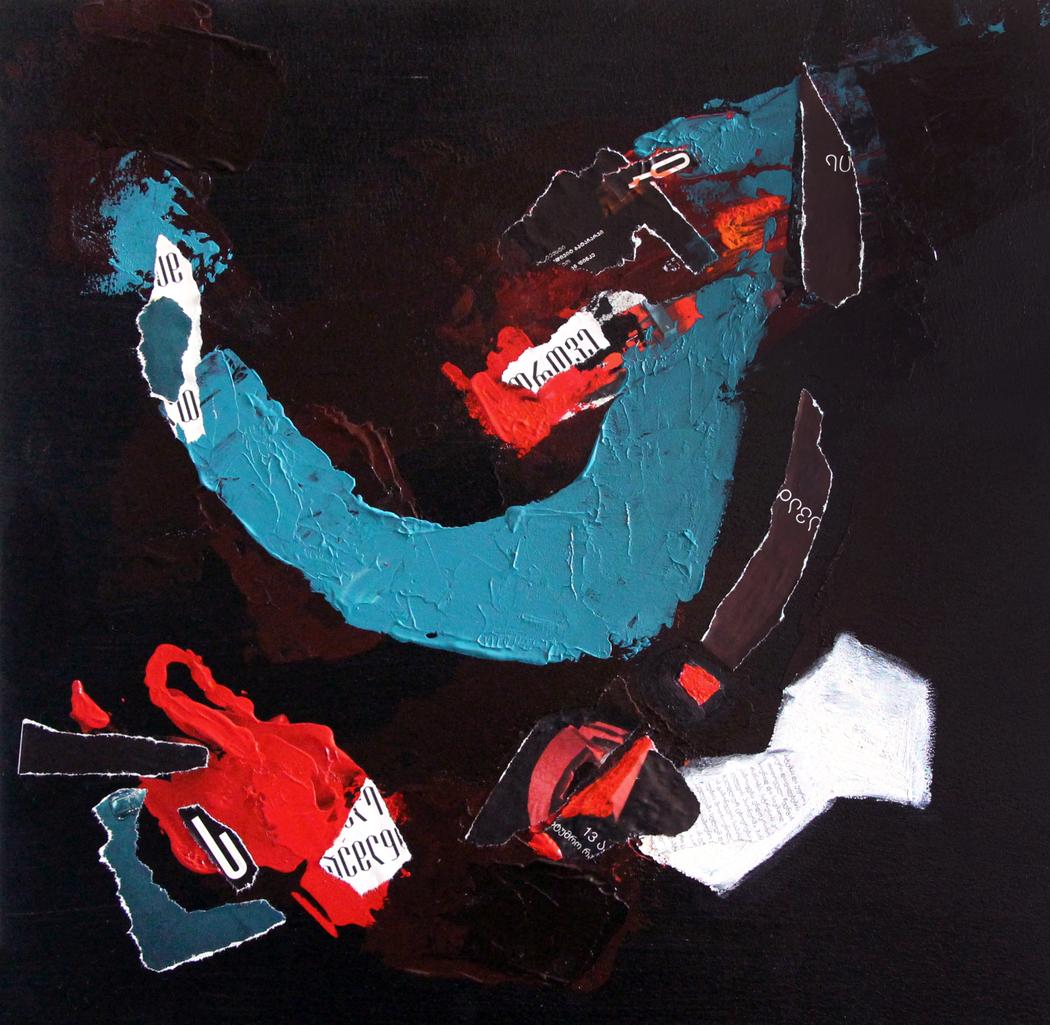 Gala Reya | The Color of Passion
You describe consciousness as a quantum field where the personal and the universal constantly interpenetrate. Do you see art as a way to synchronize individual consciousness with a collective one?
Yes, I do indeed conceive of consciousness as a quantum field with an infinite number of potential states, in which emotional surges, thought-forms, long-entrenched patterns, and the most luminous visions of beauty coexist simultaneously. This field is in constant motion and encompasses both individual and collective experience.
Within this framework, the question of the ecology of the mind is particularly important to me. The individual “I” does not exist in isolation, but in a state of continuous superposition within the “we” — if this “we” can be fixed at all as a stable category. Our inner states are inevitably woven into a shared field and influence one another, even while remaining invisible.
In my paintings and installations, I do not so much seek a direct synchronization of the personal and the collective as I create conditions for their temporary convergence. In this sense, art becomes a space of attunement — a moment in which the viewer’s individual experience can resonate with broader, universal structures of consciousness. This point of resonance is not predetermined; it emerges through the act of experience itself, as a fleeting state of coherence.
Many of your works visualize processes that cannot be directly observed – thought, memory, entanglement. What role does ambiguity play in your visual language?
In my works, ambiguity is intentional—just as it is inherent in the quantum structure itself. Any angle of perception at a given point is always a bifurcation of the personal “self” in relation to the wave of information, whether it takes the form of a word, an image, or another mode of interpretation. Visible reality does not exist outside individual experience; it is reconstructed anew each time through sensation, memory, and the inner states of the perceiving subject.
We tend to believe that through symbols, signs, and language we are able to share our experience with others. For me, however, this process always remains incomplete. In truth, every act of perception is personal, and in this sense we are far more alone than we are inclined to think. It is precisely this tension between the desire to share and the impossibility of complete overlap that lies at the core of my visual language.
My exploration of invisible processes is merely one of many possible ways to visualize them. I draw upon my own experience and my own qualia, without proposing universal interpretations. At the same time, I allow for the possibility that these images may become, if not an answer for the viewer, then a bridge—a means of touching upon the experience of their own deeply personal inner states.
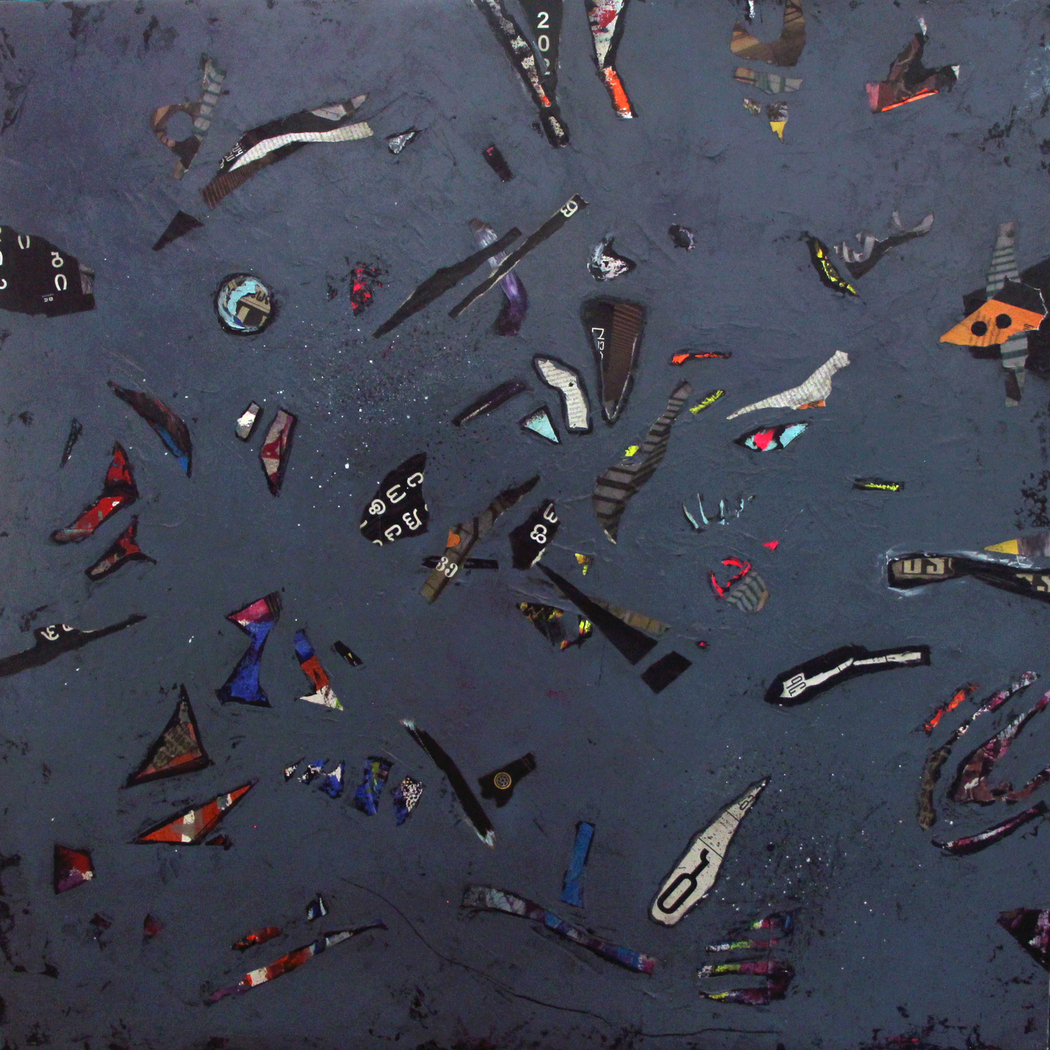 Gala Reya | Bifurcation Point
Augmented reality plays a crucial role in extending your paintings and installations. What does AR allow you to express that the physical object alone cannot?
In my practice, augmented reality does not function as an extension of visual spectacle and does not aim to impress the viewer through technology. On the contrary, it is used as a tool for reducing external stimulation and re-tuning attention. The physical object establishes a point of presence, while AR makes it possible to work with what cannot be materially fixed — the inner state of perception.
For example, in one of the installations the AR layer is activated only after the viewer remains motionless for an extended period of time. At first, the viewer encounters only a static physical composition. Only in the moment of pause do signs and structures begin to slowly emerge in augmented reality — they do not flash or move actively, but seem to “surface” from emptiness. Any sudden movement or shift of focus causes them to disappear. In this way, the viewer physically experiences the necessity of stopping: the image exists only for as long as the state of inner silence is sustained.
In another project, augmented reality operates as an unstable field: visual elements are in a constant process of disintegration and re-assembly, never forming a fixed shape. The viewer cannot “hold” the image — it responds to the slightest fluctuations of attention. This creates an experience of the fragility of perception and emphasizes that the image does not belong to the object, but arises in the moment of attunement between body, consciousness, and space.
Such states cannot be conveyed through the physical object alone, which always remains stable and complete. AR allows me to work with processes rather than forms — with temporal, transitional states between the visible and the perceived. It is not an additional layer of information, but an in-between space where the viewer is left alone with their own perception.
In this sense, augmented reality in my practice does not intensify the image, but dilutes it. It does not add stimuli, but creates a pause — a moment in which the sensory flow is suspended, making a deeper and more personal experience possible.
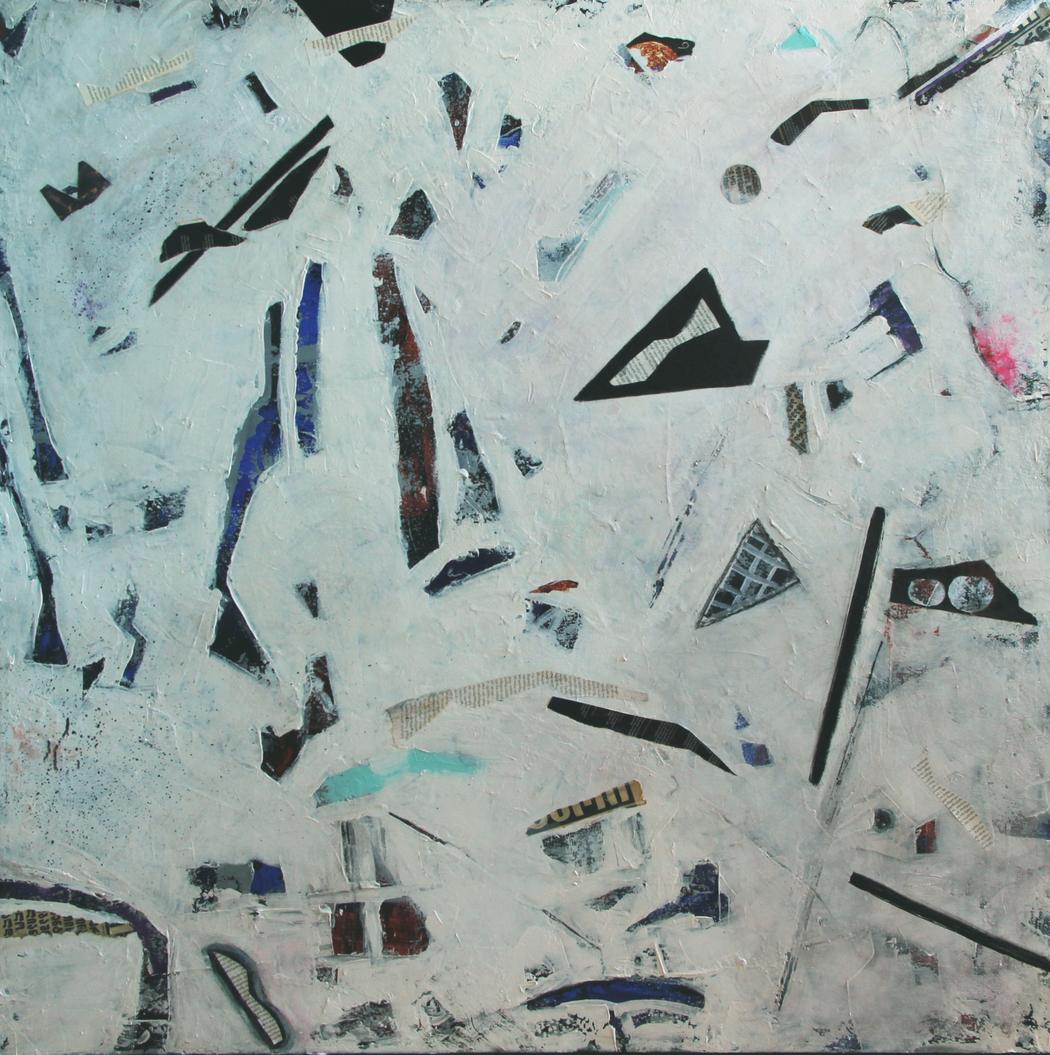 Gala Reya | White Noise | 2025
Your installations often invite the viewer into a state of participation rather than observation. What kind of inner experience do you hope the viewer leaves with?
I do not set out to lead the viewer to a specific conclusion or a predetermined emotional state. What matters more to me is creating conditions in which a person can temporarily step out of their habitual mode of interpretation, evaluation, and control. In my installations, the viewer is not given ready-made meanings; instead, they find themselves inside a process where attention becomes the main active element.
In this context, I am interested in a new form of mediation of the viewer: not as an interpreter decoding a message, and not as an active participant performing an action, but as a presence. The viewer becomes the mediator of their own experience — the one through whom the work unfolds, but not the one who is required to decipher it.
If we speak of a possible outcome, it is neither catharsis nor an emotional peak, but a state of quiet attentiveness. A certain slowing down, in which the sense of one’s own presence and the perceived moment becomes sharper. In this state, a person may notice how they look, feel, and think — without the need to immediately explain or name it.
It is important to me that after the experience, what remains with the viewer is not knowledge, but a trace — a barely perceptible shift in perception. An awareness of the fragility of one’s own states, their impermanence, and their connection to the surrounding context. This is not a moment of collective unity, but rather an honest encounter with oneself within a shared field. And if, upon leaving the space of the work, a person carries with them a little more quiet and sensitivity to their inner processes, then for me this is the point at which the work has truly taken place.
Leave a Reply
You must be logged in to post a comment.